























When Moscow announced a 32-hour Easter ceasefire — from Saturday afternoon until the end of Sunday — it briefly looked like one of those rare moments when the war might lower its voice, if only for a day. Kyiv responded with restraint. Volodymyr Zelenskyy made clear that Ukraine was prepared to observe the pause on a reciprocal basis: no Russian strikes would mean no Ukrainian response. On the political level, that created at least a narrow opening for a temporary silence. In practice, the silence almost immediately became another object of dispute.
Within hours of the truce taking effect, both sides were already counting its violations. Ukraine’s General Staff said that by Sunday morning it had recorded 2,299 breaches of the ceasefire. Russia’s Defense Ministry answered with a nearly symmetrical figure of its own, accusing Ukraine of 1,971 violations. Those numbers say more than any diplomatic formula could. The two sides did not merely fail to create an atmosphere of trust; they almost instantly returned to the familiar logic of battlefield accounting, in which every declaration of calm becomes a new register of blame.
In that sense, the Easter ceasefire failed not only because it was allegedly broken, but because it never had a real political foundation to begin with. This was not an agreed architecture of de-escalation with monitoring, mediation and minimal guarantees. It was a short religious pause announced in conditions where the two sides no longer share even a basic understanding of what good-faith compliance would look like. As Daycom’s earlier assessment suggested, the core problem is not the length of the truce, but the near-total absence of any living mechanism of trust between Ukraine and Russia that could turn a symbolic gesture into a political process.
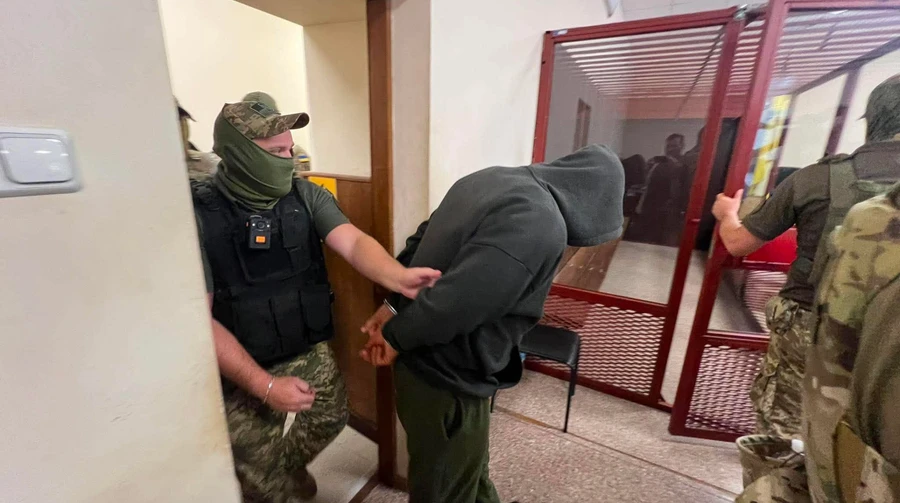
What made the moment especially revealing was the contrast between two overlapping developments. On the same day the ceasefire began, the two sides still managed to complete a 175-for-175 prisoner exchange — one of the few tangible humanitarian results of recent months. Yet the attempt at a brief Easter calm was almost immediately swallowed by claims of drone attacks, shelling and repeated violations across the front. The implication is stark: humanitarian channels can still function in narrow, technical ways, but the military and political logic of the war remains unchanged. Exchange is possible. Trust is not.
For Kyiv, the pause was also a test of political initiative. Zelenskyy did not simply agree to mirror Russia’s conduct; he also signaled openness to extending the truce beyond the initial deadline. That position matters because it allows Ukraine to demonstrate that it is not rejecting the idea of humanitarian de-escalation as such. But the course of events quickly exposed the limits of that gesture. Without a real halt to attacks, even the most open language about prolonging the ceasefire ceases to look like the beginning of peace and starts to look like an attempt to document who sabotaged even the briefest pause.
For Moscow, the ceasefire carried an equally obvious political purpose. Short, unilaterally announced pauses allow Russia to occupy the morally advantageous position in rhetoric without changing the basic logic of military action. If the silence holds even partially, it can be presented as evidence of Russian willingness to pause. If it collapses, responsibility immediately dissolves into symmetrical accusations. That is why both sides moved so quickly into the arithmetic of violations: in this war, control over the interpretation of an event is often nearly as important as control over territory.
What happened over Easter also captures the broader state of diplomacy around the war. Large political frameworks remain blocked. A full ceasefire regime does not exist. The only mechanisms that still function are narrow and technical: prisoner exchanges, isolated humanitarian arrangements, rare and fragile windows of silence. But these pieces do not add up to a peace process. They soften particular consequences of the war without altering its political trajectory.
That is why the main conclusion of this Easter is both restrained and severe. Ukraine and Russia showed that they can still exchange prisoners even in the middle of a full-scale war. But they also showed, just as quickly, that they cannot turn even a religiously charged short pause into the smallest framework of mutual predictability. The Easter ceasefire was supposed to offer a respite. Instead, it became another reminder that the war continues even when silence is formally declared.
And that may be the clearest truth of the moment. The front can produce temporary gestures, limited exchanges and brief symbolic pauses. What it still cannot produce is confidence that either side sees these gestures as the beginning of something larger. Until that changes, every ceasefire will remain less a path toward peace than a short-lived intermission inside the war itself.