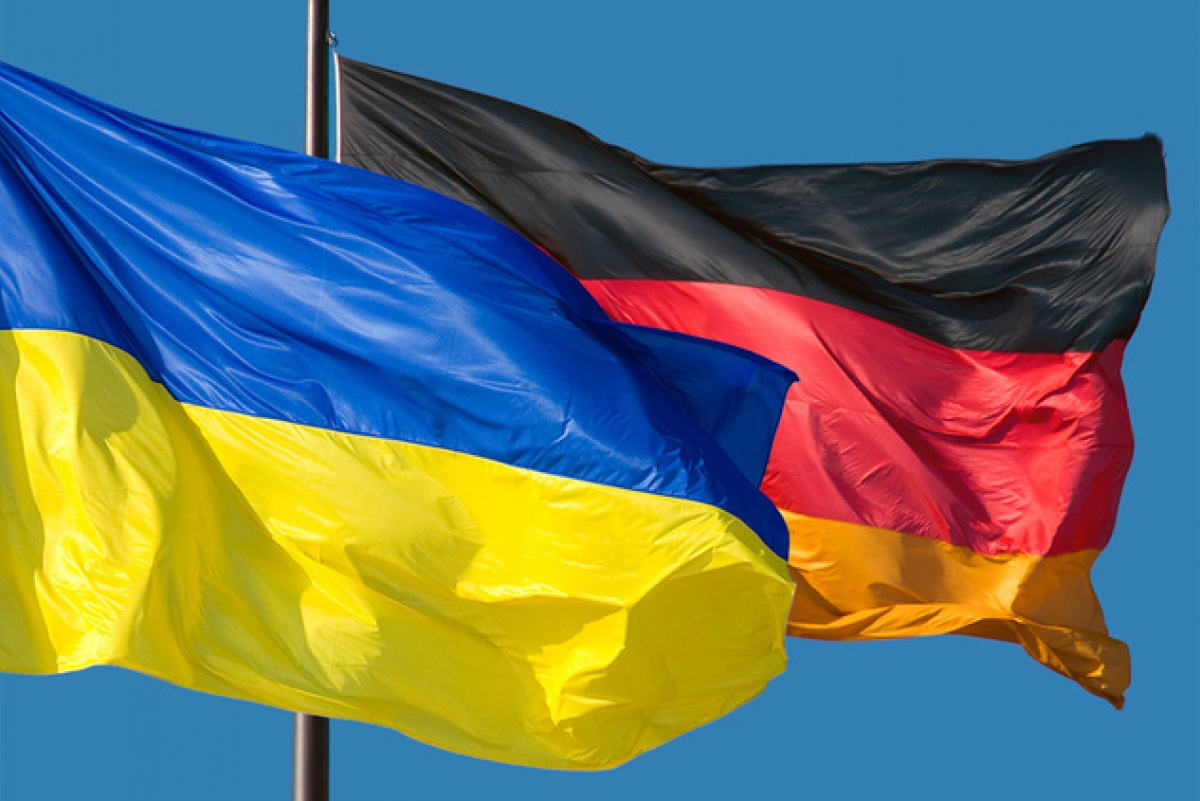


















Ukraine’s path toward the European Union has long been blocked not only by war, reforms and the complexity of enlargement itself. One of the narrowest bottlenecks has been Hungary — a country that for years used the issue of the Hungarian minority in Zakarpattia as leverage over Ukraine’s European integration.
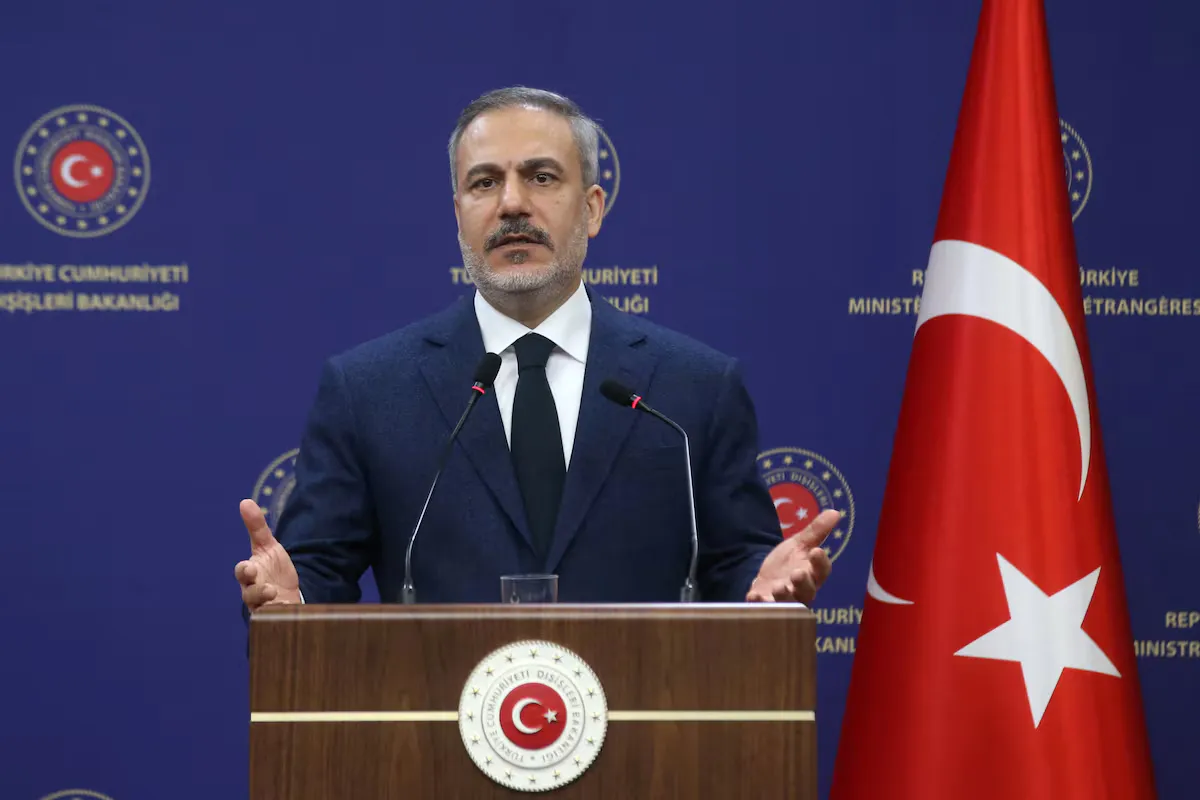
Now that barrier appears to be shifting. Hungarian Prime Minister Péter Magyar announced an agreement with Kyiv to expand the linguistic, educational, cultural and political rights of roughly 100,000 ethnic Hungarians in Ukraine. If the deal is written into Ukrainian law, Budapest will support the opening of the first negotiating cluster.
This does not mean Ukraine will join the EU quickly. Magyar himself made clear that the full process could take years, and that after all 33 negotiating chapters are closed, Hungary may still hold a referendum. But the political meaning is already clear: the main Hungarian blockade no longer looks immovable.
According to Daycom’s earlier analysis, the importance of this agreement is not that it instantly removes every risk. It shows something else: Ukraine and Hungary have, for the first time in a long while, found a formula that allows them to move from mutual grievances toward a legally framed compromise.
The rights of the Hungarian minority in Zakarpattia became one of the most painful issues in relations between Kyiv and Budapest after Ukraine strengthened the role of the state language in education. For Kyiv, this was a matter of national resilience and social integration during war. For Budapest, it was a matter of protecting a community Hungary sees as part of its own sphere of political responsibility.
Under Viktor Orbán’s government, the issue increasingly became not a legal dispute, but a tool of obstruction. Hungary slowed Ukraine’s rapprochement with the EU and NATO, linking almost every major step by Kyiv to demands over language, education and cultural autonomy.
Magyar is now trying to present a different model. His claim that in three weeks he had achieved what Orbán failed to do in 10 years is not only a statement about the Ukrainian-Hungarian agreement. It is also a domestic Hungarian political gesture: the new government wants to distance itself from the legacy of blockage and demonstrate effectiveness in relations with Brussels.
For Ukraine, this change matters deeply. In the EU system, even one member state can halt a candidate’s progress. Opening negotiating clusters requires unanimous support from all 27 members. That makes the agreement with Budapest not a peripheral diplomatic detail, but a key to a door that could otherwise have remained closed.
The first negotiating cluster has a fundamental character. It covers the rule of law, democratic institutions, the judiciary, human rights, public administration and the basic standards of statehood. It is where the EU begins its serious test of whether a candidate country can not only aspire to membership, but withstand the rules of the Union.
That is why a compromise on minority rights is not a separate episode. It fits into the broader logic of the first cluster: the European Union wants to see Ukraine building a state capable of defending its own language, guaranteeing the rights of national communities and resolving conflicts through institutions rather than ultimatums.
Kyiv remains cautious on the details. But the reaction from Ukrainian diplomacy has already shown a readiness to present the agreement as the beginning of a new chapter in relations with Budapest. The language of mutual respect, trust and a shared European future sounds especially important after years in which Ukrainian-Hungarian dialogue often collapsed into public accusations.
For Brussels, this is also a useful moment. The EU is advancing Ukraine and Moldova together, keeping their accession tracks within a shared political package. This sends a message not only to Kyiv and Chișinău, but also to Moscow: eastern enlargement remains part of Europe’s answer to Russian aggression and attempts to keep the region in a gray zone.
Moldova’s place in this process is no less significant. Its European path is unfolding under pressure from Russian influence, domestic political vulnerability, energy risks and the unresolved issue of Transnistria. Moving together with Ukraine allows the EU to preserve the eastern track as a whole and prevents Chișinău from being left alone under pressure.
Ukraine’s EU path does not become simple just because the first barrier has weakened. Ahead lie dozens of negotiating chapters, each of which may become a field of political bargaining. Agriculture, transport, the environment, competition, public procurement, judicial reform and anti-corruption policy will all be difficult.
Nor has Hungary given up its leverage entirely. Even after supporting the opening of the first cluster, Budapest can return to the issue of minority rights at later stages. Magyar has explicitly left room for a future referendum, which means domestic Hungarian politics may again influence Ukraine’s European path.
That is why Kyiv must not treat the agreement as a one-time diplomatic victory. It must be turned into a stable legal structure: legislative changes, consultations with the community, transparent education rules, guarantees for cultural life and mechanisms that prevent every dispute from becoming an international crisis.
For Ukraine, this is also a question of maturity as a European state. War does not cancel difficult internal balances. On the contrary, it makes them more important. A state fighting for its own agency must prove that its strength lies not only in its army, but also in its ability to guarantee the rights of citizens of different backgrounds.
For the EU, this moment is a test of its own consistency. If the Union truly wants to see Ukraine and Moldova as part of its future, it must not only open clusters, but help them pass through them — with expertise, financing, political protection and an honest explanation that enlargement is not a gift, but a shared investment in security.
The agreement between Kyiv and Budapest does not complete Ukraine’s European integration. It merely removes one of the sharpest stones from the road. But in wartime, even that movement carries weight: Ukraine is not standing in a waiting corridor, but gradually entering the EU’s negotiating architecture.
Now the essential task is not to lose momentum. If the agreement on the Hungarian minority is implemented, the first cluster can become not a symbolic showcase, but the real beginning of a long process. Ukraine has its first chance to pass through a door Budapest kept closed for years. That chance must be used not as a gesture, but as the start of serious institutional work.