




















Yurii arrived at a market in Kherson early in the morning. He raised an umbrella, began unloading crates of vegetables and heard a low mechanical buzz. The drone was not yet visible, but within seconds an ordinary roadside stall had become the scene of a hunt.
The aircraft circled the van and pursued him as he tried to stay behind the vehicle. Yurii attempted to show the camera his produce, signaling that he was an unarmed civilian vendor. He then ran for cover. The drone exploded nearby, driving shrapnel into his legs and back.
His wife managed to escape without injury. Yurii, 52, survived with blast trauma, shock and multiple wounds. From his hospital bed, he described the simple geographical fact that defines life in much of Kherson: the surrounding ground is open, and there is almost nowhere to hide.
Daycom’s assessment is that the video matters far beyond this single incident. It does not appear to show a munition falling accidentally or a building being misidentified from a distance. It shows the deliberate pursuit of a particular person whom the operator could observe in real time.
That ability to see the target changes both the legal and moral character of the attack. An FPV drone transmits images of the terrain, a person’s movements, clothing and immediate surroundings. The longer a pursuit continues, the less plausible it becomes to describe the strike as a momentary identification error.
Yurii was not carrying a weapon. He was not standing beside military equipment or performing an evident combat function. He was surrounded by boxes of produce and tried to display them to the camera. Nothing visible in the footage appears to make him a lawful military target.
International humanitarian law requires combatants to distinguish between civilians and military objectives. Intentionally attacking a person who is not directly participating in hostilities can constitute a war crime. A final legal determination would require an investigation, but the prolonged pursuit strongly suggests a conscious decision to continue the attack.
For the residents of Kherson, such incidents are no longer exceptional. Small Russian drones have struck people on streets, inside private cars, on buses and in ambulances. Volunteers, utility workers, rescuers and evacuation teams have all faced the same threat.
Residents call the practice “drone safari.” The phrase is brutal, but it captures the essential feature of these attacks. The operator does not simply launch a munition toward an area and lose control of it. The operator searches for a person, watches that person move and can adjust the approach until the final second.
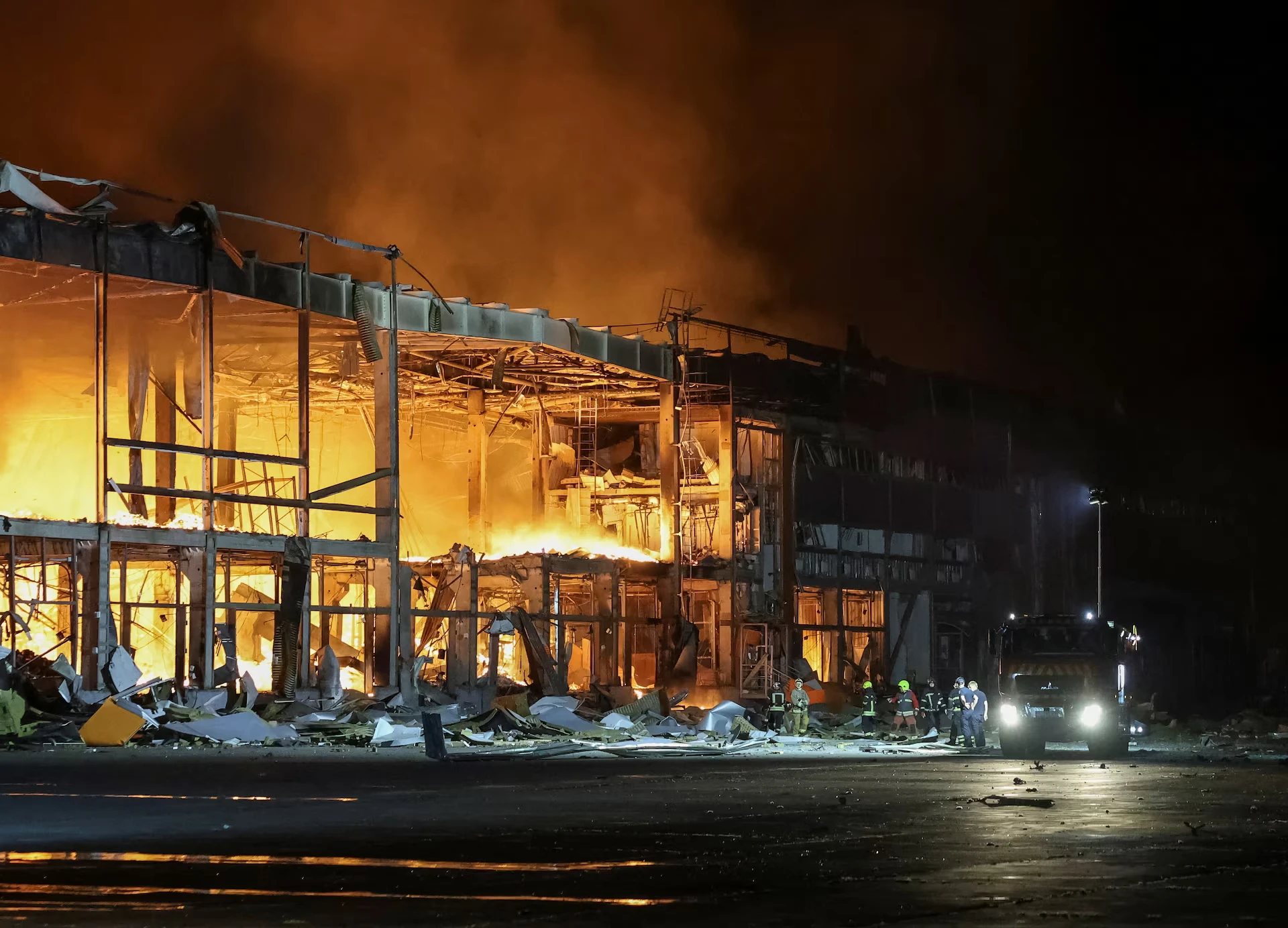
The repeated attacks indicate a broader pattern across Kherson and other Ukrainian-held communities on the western bank of the Dnipro River. Pedestrians, homes, humanitarian points and medical vehicles have all been targeted, making ordinary civilian activity increasingly dangerous.
The pattern has strategic value. A drone costing hundreds or a few thousand dollars can do more than wound one individual. It can close shops, reduce bus services, interrupt food deliveries and make every outdoor job a potentially fatal undertaking.
An attack on a vegetable seller is therefore directed not only at the man being chased. It sends a message to everyone deciding whether to open a stall the next morning, deliver bread, repair a power line or help an elderly neighbor. Fear becomes an instrument for gradually emptying the city.
The technology is changing the meaning of the rear area itself. Kherson lies across the river from Russian-occupied territory and remains within range of short drone flights. The city has been liberated from occupation, but not from the constant presence of an enemy camera overhead.
Artillery creates danger across a general area. A piloted drone makes that danger personal. The person below knows that the aircraft may be watching them specifically—not as an incidental figure near an explosion, but as an object being tracked and pursued.
Even the sound of a motor acquires psychological power. Residents learn to distinguish altitude, direction and pitch. They search for trees, entrances and concrete shelters. Yet the rules of survival are unstable: a drone can hover, circle an obstacle or wait for someone to emerge.
Anti-drone nets, electronic warfare systems, detectors and mobile firing teams can reduce the danger, but they cannot create seamless protection. A city is too large, and the weapons are too cheap, to shield every road, market, courtyard and bus stop.
Those least able to leave remain the most exposed: older residents, people with illnesses, workers maintaining critical services and families without the money to relocate. Evacuation means more than physical movement. It can mean losing a home, employment, community and the last structure of an ordinary life.
At least 1,396 civilians were killed and 7,978 injured across Ukraine during the first half of 2026. The total number of civilian casualties rose by 37 percent from the same period in 2025 and more than doubled compared with 2024.
Much of that increase was caused by long-range missile and drone strikes on cities far from the front. In frontline regions, however, short-range drones have created a separate crisis because they can select, follow and attack individual people.
The Kherson region remains at the center of this form of warfare. A large share of recorded civilian casualties from short-range drones has occurred there. The unmanned aircraft has become not only an instrument of reconnaissance or battlefield support, but a weapon for controlling civilian behavior.
That broader context is why the market attack cannot be treated as an isolated episode. One video merely makes visible what usually happens without a camera: a brief flight, an explosion in a courtyard, a wounded person whom an ambulance cannot reach because another drone may be waiting.
Visual evidence carries particular weight because Russian military channels have sometimes published footage of similar strikes themselves. Violence becomes content: the pursuit of a human being is displayed as technical skill, while a civilian death is reduced to a successful hit.
Such images serve two audiences. Within pro-war military circles, they can reward cruelty with approval and status. For civilians across the river, they communicate a direct warning: you can be seen, you can be reached and no ordinary activity is necessarily safe.
A video alone is not enough to identify the individual responsible. Investigators would need to establish the unit involved, the launch area, the drone model, the operator and the commanders who authorized the mission. Digital records, intercepted communications and repeated operational patterns could all become evidence.
The absence of an immediately identified perpetrator does not erase the legal character of the act. War crimes are often documented long before a specific soldier is named. Investigators first establish the method and the responsible formation, then work toward individual and command responsibility.
Russia and Ukraine regularly accuse each other of causing civilian casualties with drones. Every incident requires examination under the same legal standards. There is, however, a fundamental difference between debris falling after an interception and a piloted aircraft maneuvering after an unarmed person.
Intent is therefore central to Yurii’s case. The footage does not show an instantaneous strike against an indistinct object. It shows time for observation, several changes in direction and a final movement toward a man attempting to hide behind a vehicle.
That time also represents an opportunity to abandon the attack. The operator could have raised the drone, changed course or redirected it toward a military target. Instead, the pursuit continued. In such a case, the potential war crime begins not with the explosion, but with the decision to keep hunting.
Yurii survived, so his experience has a voice. Thousands of comparable incidents remain only a line in hospital records or a crater in a road. The absence of footage does not make them less real, but this recording exposes the logic of the campaign without military euphemism.
Russian drones over the western bank are being used for more than surveillance of the front. They steadily narrow the space available for civilian life until a city becomes unsuitable for commerce, transport, medical care and ordinary movement. It is a strategy aimed at territory through the people who still inhabit it.
The vegetable seller survived because several meters separated him from the center of the blast. But the central fact remains unchanged: he came to sell food, showed the camera what he was doing and was pursued anyway. That sequence is the clearest description of Kherson’s “drone safari.”
Its purpose is not only to kill. It is to make every resident feel observed before leaving home. When a market becomes a battlefield and a crate of vegetables cannot distinguish a civilian from a target, terror achieves its deeper objective: replacing ordinary life with the permanent expectation of a strike.