




















At midnight in Lebanon, the 10-day cease-fire between Lebanon and Israel formally took effect. Both states confirmed that they would implement the truce after an intense American diplomatic push. Yet the arrangement looked fragile from the moment it began: it was announced faster than all those actually fighting had agreed to live by its rules.
That weakness lies at the heart of the deal. On paper, two states have agreed to stop the fire. In reality, southern Lebanon and northern Israel are shaped not only by governments, but by Hezbollah, which acknowledged the cease-fire without offering a clear and unconditional pledge to obey it. The group said only that its conduct would depend on how events unfold on the ground.
The American formula itself reveals how provisional the pause really is. Israel retains the right to take what it calls all necessary measures of self-defense, while refraining from offensive operations by land, sea, and air. Lebanon, for its part, is expected to demonstrate that it can prevent attacks from being launched from its territory. This is not yet a structure of peace. It is a temporary regime of restraint in which both sides preserve room to interpret the limits for themselves.
As Daycom’s earlier analysis noted, the weakest cease-fires in the Middle East are often born where the legal signatory to an agreement and the real holder of force are not the same. Lebanon is close to a textbook case. The state can sign, welcome, and promise. But the question of fire and control on the ground has long been divided between official institutions and an armed non-state actor that does not have to think in the language of cabinet diplomacy.
That is also why this pause matters to Washington less for Lebanon itself than for the wider crisis surrounding Iran. In recent weeks, the Lebanese front has become one of the most dangerous risks to the broader regional arrangement. As long as Israel and Hezbollah continue exchanging fire, any cease-fire on the Iranian track remains unstable. This silence, then, is not so much a solution to the Lebanon problem as an effort to stop the wider crisis from folding back into a single expanding war.
Israel entered the pause without any real sense of closure. Benjamin Netanyahu has already made clear that Israeli forces will remain inside Lebanon in what he describes as a security zone stretching between the coast and the Syrian border. For his domestic politics, the logic is obvious: having accepted a cease-fire under American pressure, he cannot afford to look like a leader who is simply pulling back. But that same decision makes the truce more brittle. What Jerusalem calls deterrence will be read in Beirut and by Hezbollah as proof that the agreement is incomplete from the start.
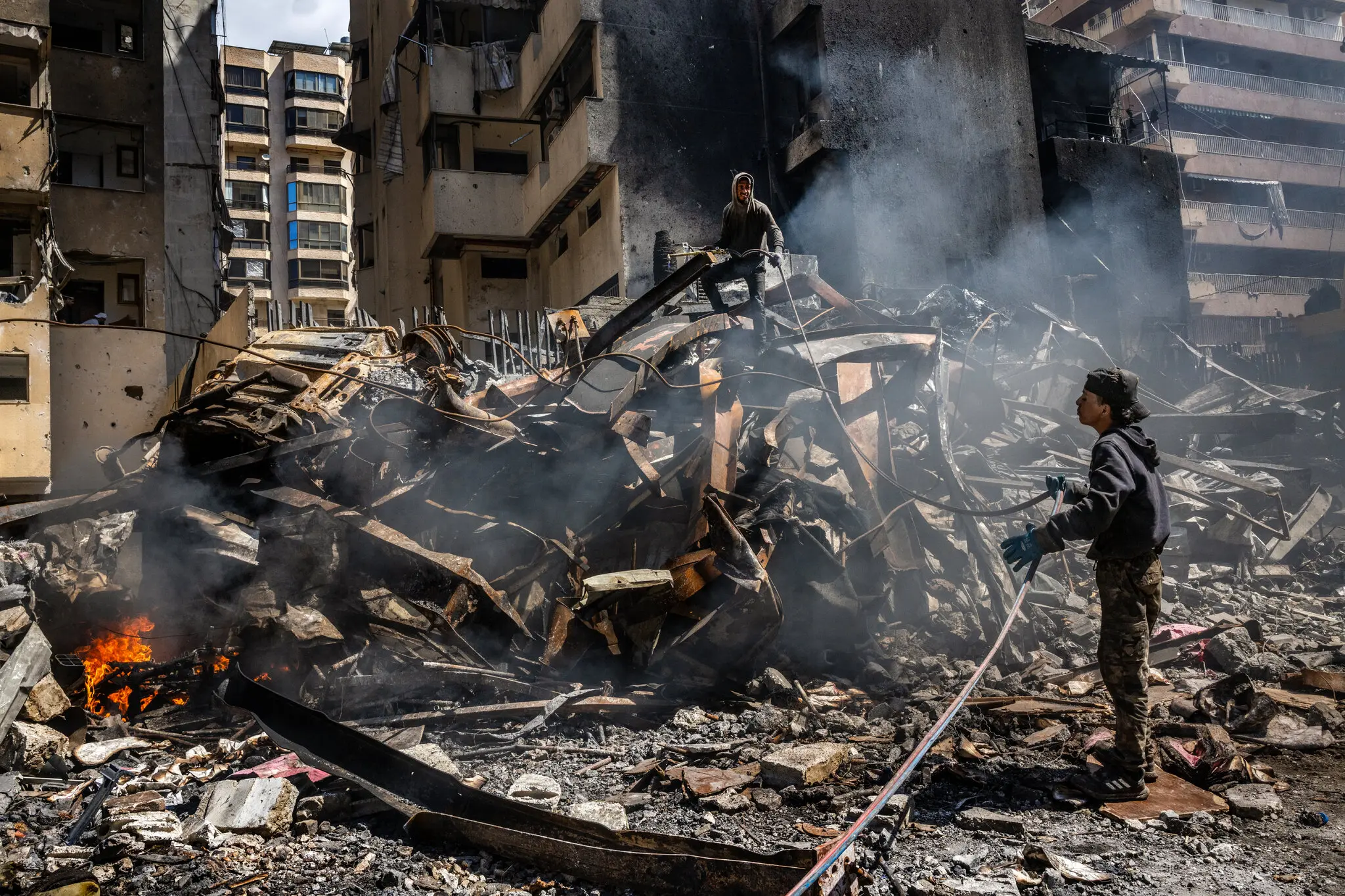
The behavior of civilians offers another precise measure of how weak the arrangement remains. Even after the formal start of the cease-fire, residents of southern Lebanon were urged not to rush back to their homes. That says something essential. Real peace begins when people trust quiet more than they fear the next strike. Here, the opposite still holds. Even those welcoming the pause are speaking the language of caution, not confidence.
After weeks of near-daily exchanges of fire, this moment should not be mistaken for the beginning of a stable peace. It is a technical pause inside a conflict too deeply woven into the wider war surrounding Iran. If ten days of silence hold, Washington will call it a success. If they do not, the region will receive another reminder of an old truth: in the Middle East, the hardest part is not announcing a cease-fire. It is making the war itself accept it.