























Russia launched one of its largest combined attacks on Ukraine in recent weeks overnight on April 25, firing 47 missiles and 619 drones in a barrage that turned the air alert into a long trial for cities, energy systems, rescue crews and air defenses. Dnipro became the main focus of the strike.
The assault carried both military and psychological intent. Russian forces used different types of missiles and drones, stretching the attack across time and geography in an attempt to overload Ukraine’s air defense network. Most of the targets were intercepted, but some missiles and drones reached Ukrainian cities.
The heaviest consequences were recorded in Dnipro. After a strike on a residential building, rescue workers searched through the rubble, looking for survivors and recovering the dead. More than two dozen people were wounded in the city; homes, urban infrastructure and ordinary civilian spaces were damaged.
According to Daycom’s earlier analysis, this attack fits into a broader Russian pattern: nightly drone strikes have become an almost constant background to the war, while periodic large-scale missile and Shahed barrages are used as a tool to exhaust Ukraine’s defense capacity.
The purpose of this campaign is not limited to physical destruction. It forces Ukraine to defend major cities, industrial centers, critical infrastructure, border communities and rear regions at the same time. Each overnight attack becomes a test not of one city, but of the country’s entire system of survival.
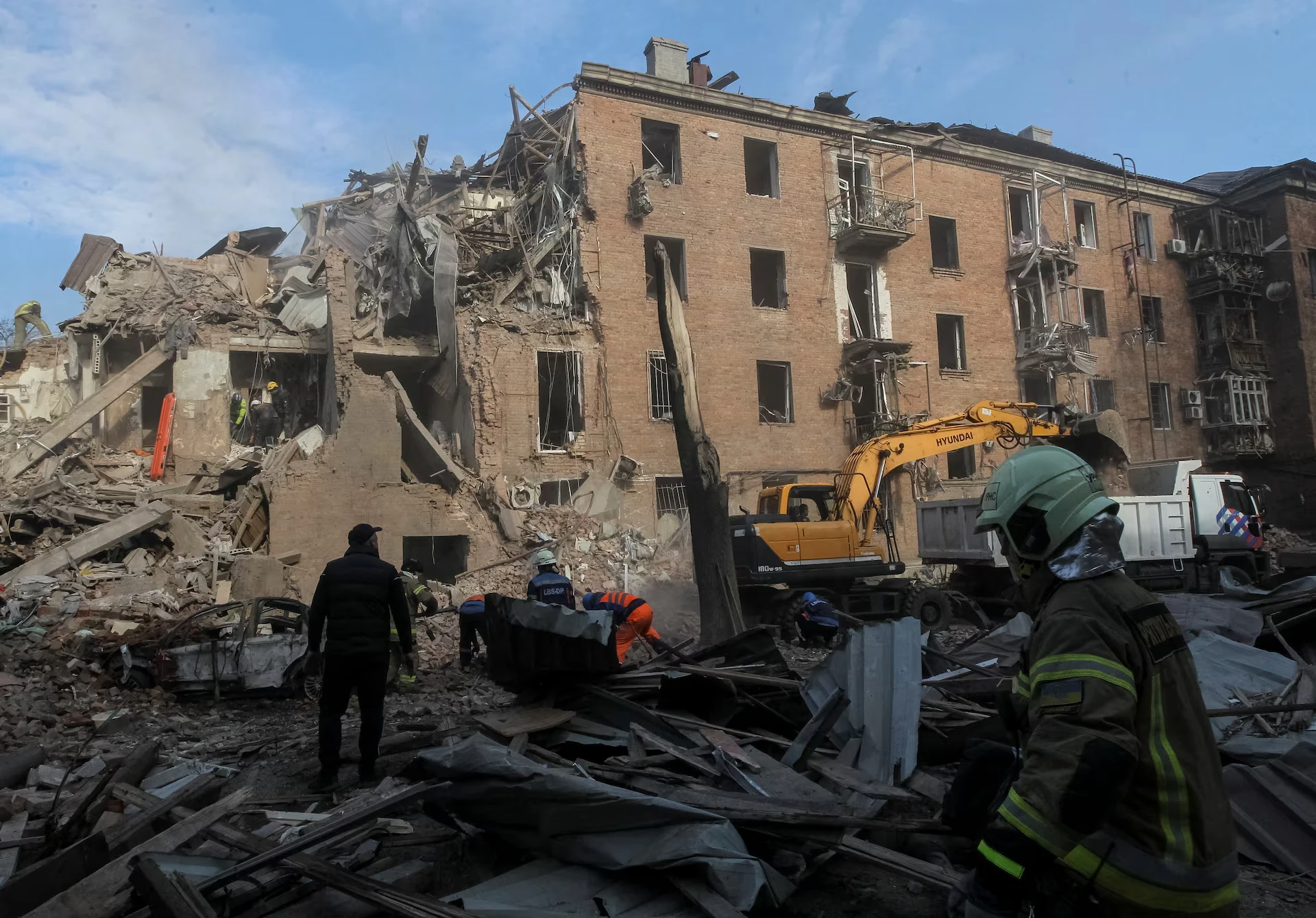 Рятувальники працюють на місці пошкодження житлового будинку внаслідок удару російського безпілотника та ракетного обстрілу на тлі нападу Росії на Україну в Дніпрі, Україна, 25 квітня 2026 року — Stringer
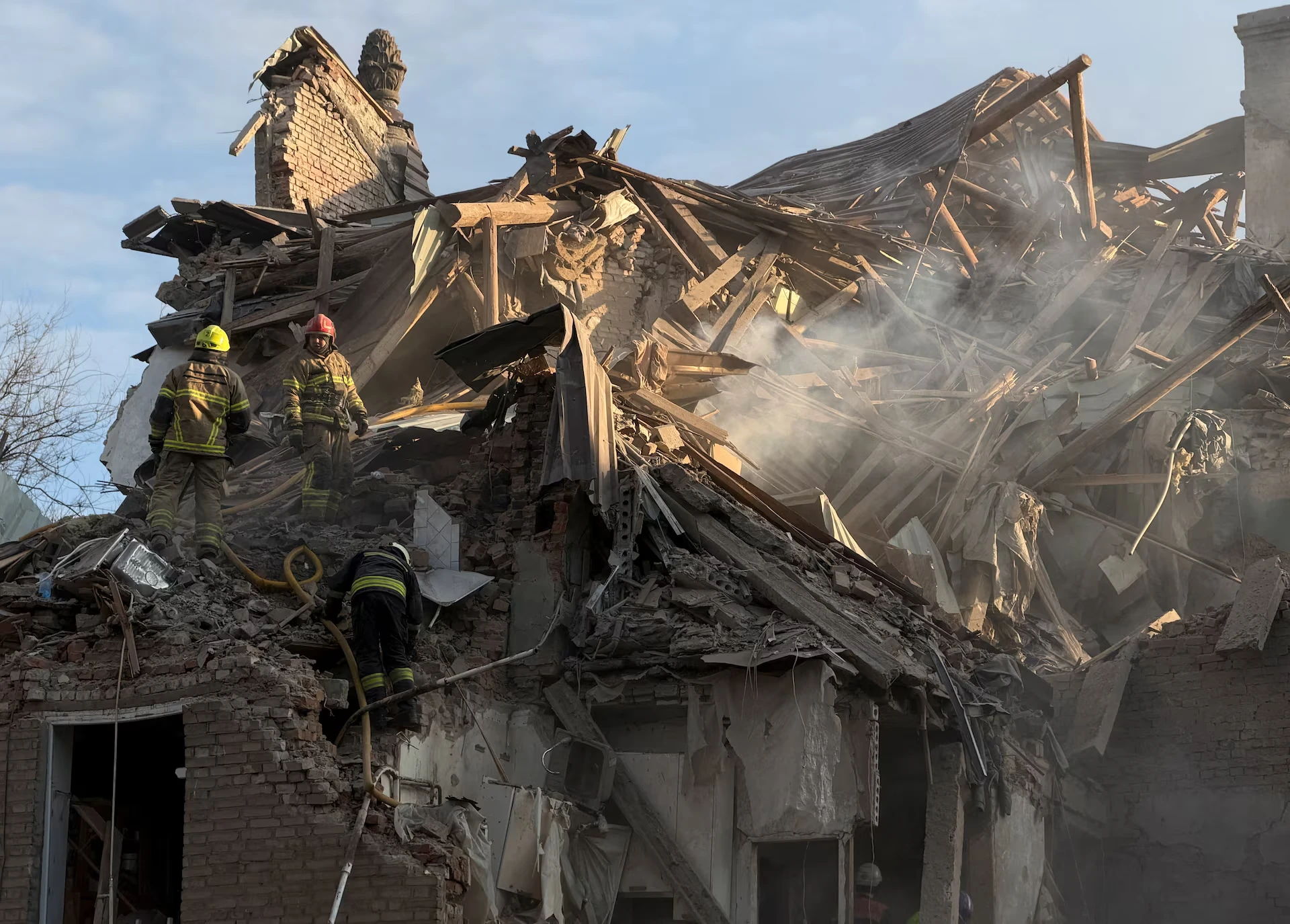 Рятувальники працюють на місці багатоквартирного будинку, постраждалого внаслідок удару російського безпілотника та ракетного удару на тлі нападу Росії на Україну, у Дніпрі, Україна, 25 квітня 2026 року. Фото зроблено за допомогою мобільного телефону — Сергій Чалий
Dnipro has particular weight in this logic. It is a major industrial, transport and humanitarian hub, a city through which people, aid, production and recovery efforts continue to move. A strike on Dnipro is an attempt to hit the middle of Ukrainian resilience, not merely a single address.
Chernihiv region was also attacked, with missile and drone strikes killing and wounding civilians. The geography of the assault matters: Moscow is not trying to concentrate pressure in one place, but to spread it across the country, forcing Ukraine to maintain a dispersed and constantly active defense.
The interception rate remained high: Ukraine’s air defenses destroyed 580 drones and 30 missiles. Yet the arithmetic of the night points to a dangerous trend. Even when most aerial targets are shot down, a limited number of breakthroughs, or falling debris, is enough to kill civilians and damage homes.
The problem of ballistic missiles remains especially difficult. Unlike attack drones, which can be countered by a wider range of tools, from mobile fire groups to electronic warfare systems, ballistic targets require scarce high-end interceptors. Kyiv’s calls for stronger air defenses are therefore practical, not rhetorical.
In this war, air defense has long ceased to be a purely military issue. It determines whether a hospital can function after a night attack, whether a city keeps power, whether rescuers can reach a strike site without facing a second threat, and whether children can return to school after another alert.
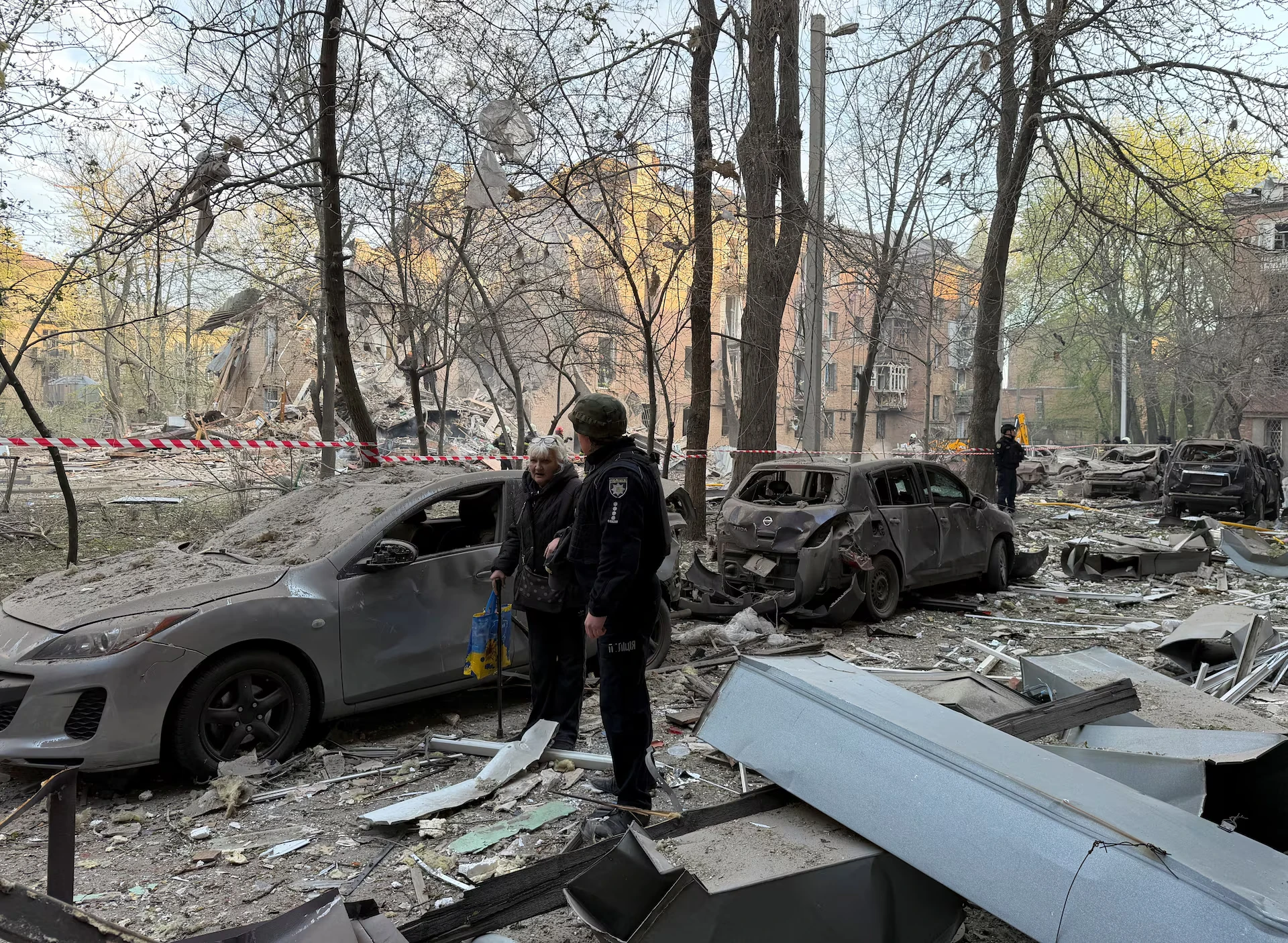 Поліцейський евакуює мешканця на місці багатоквартирного будинку, постраждалого внаслідок удару російського безпілотника та ракетного обстрілу на тлі нападу Росії на Україну, у Дніпрі, Україна, 25 квітня 2026 року. Фото зроблено за допомогою мобільного телефону — Сергій Чалий
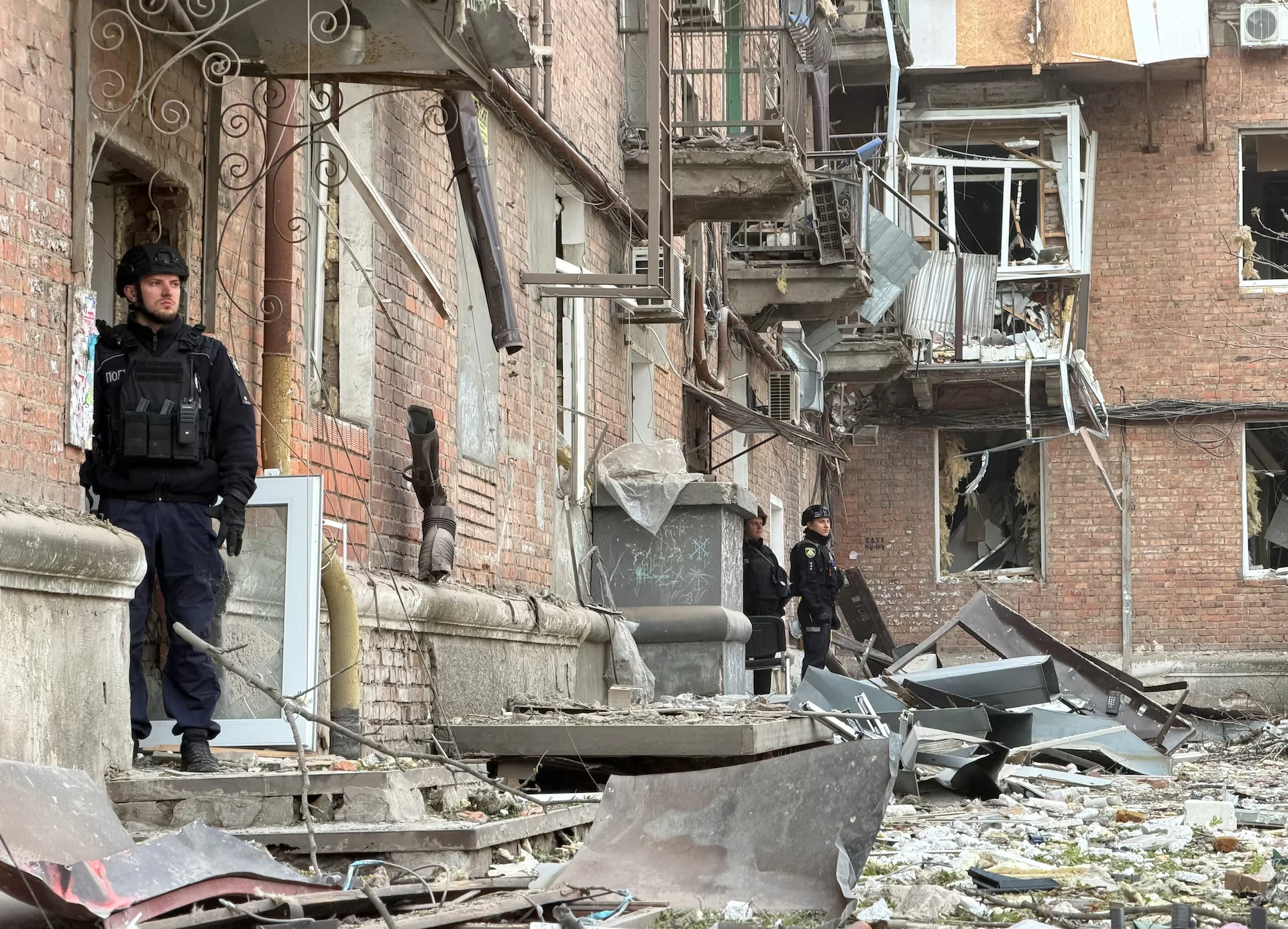 Поліцейські ховаються під час авіанальоту на місці багатоквартирного будинку, постраждалого від російського безпілотника та ракетного удару на тлі нападу Росії на Україну, у Дніпрі, Україна, 25 квітня 2026 року. Фото зроблено за допомогою мобільного телефону — Сергій Чалий
Russia’s strategy increasingly relies on mass: hundreds of cheaper drones, several launch waves, mixed routes, decoys and missiles of different classes. This is not chaotic terror. It is a technologically organized attempt to locate weak points in Ukraine’s sky.
Ukraine’s response is changing as well. Its air defense is no longer just a combination of Western systems and Soviet-era equipment. It has become a layered structure involving air defense systems, aircraft, mobile fire units, electronic warfare and a growing share of domestic technological solutions.
But even successful adaptation has limits when the scale of attacks exceeds the pace of ammunition replenishment and the delivery of new systems. Each massive strike exposes the same problem: Ukraine learns faster than its partners make decisions, while war punishes delay.
The April 25 overnight attack did not change the nature of the war, but it revealed it sharply once again. Russia is trying to make the sky over Ukraine a space of permanent threat. Ukraine is fighting to return at least a minimum of predictability to the lives of its cities.
That is why the issue of new air defense systems, interceptor missiles and protection for critical infrastructure can no longer remain inside diplomatic language. After nights like this, it becomes a matter of bodies under rubble, destroyed apartments and cities that begin the morning by counting their losses.