
















Iran’s downing of an American combat aircraft and the subsequent U.S. operation to extract a wounded crew member created a rare and combustible situation in which both sides came away convinced they had won. For Tehran, it was proof that even after weeks of bombardment it could still puncture American military superiority. For Washington, it was evidence that the United States could not only fight over Iran, but reach deep into hostile territory and bring its people home alive. It is exactly this symmetry of confidence that so often opens the door to a more dangerous phase of war.
For Iran, the episode matters first as a psychological event. After a month of conflict in which the United States and Israel tried to project an image of uncontested air dominance, the loss of the F-15E became a powerful countermessage: Iranian air defenses and the broader defensive system have not been broken. That is why the incident was presented in Tehran not as a single tactical success, but as a turning point. A country cast as battered and cornered had shown that it could still inflict pain and shape the narrative of the war.
For Donald Trump, the same episode carried the opposite meaning, but one no less dangerous. The rescue mission gave the White House a vivid image of control, resolve, and technological reach. Almost immediately, Trump shifted from celebrating the extraction to issuing new threats against Iran, including warnings about strikes on power plants and bridges if Tehran refused to reopen the Strait of Hormuz. In that logic, tactical success became not a reason for restraint, but an argument for broader coercion.
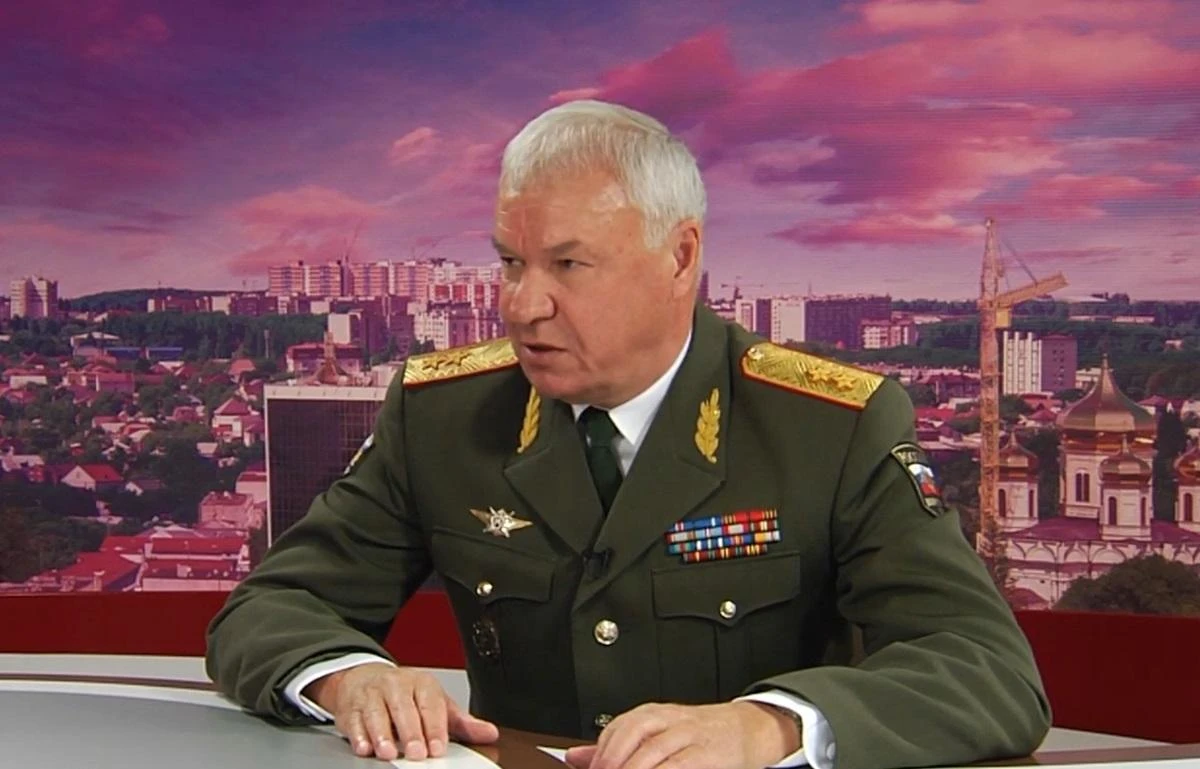
In Deykom’s assessment, this is the most perilous moment in the conflict: the point at which neither side reads the latest episode as a warning. Instead, both Tehran and Washington see in it confirmation of their own strategy. Iran concludes that it can hit American targets and withstand pressure. The United States concludes that it can raise the stakes further without losing the initiative. When one incident reinforces two opposing certainties at the same time, diplomacy almost always loses ground to escalation.
Trump’s latest threats matter not because of their tone alone, but because they shift the category of the target. Once the president of the United States begins speaking not only about missiles, launchers, or military sites, but about power infrastructure and bridges, the conflict moves into a different phase. It ceases to be only a war for military advantage and becomes a war over whether a society can continue to function with electricity, water, transport, and basic governability. That is the kind of transition that turns a regional confrontation into a deeper and longer destabilization.
This is also where the legal line becomes critical. International humanitarian law requires a distinction between military objectives and civilian objects; power plants, bridges, and other civilian infrastructure do not become lawful targets simply because they are important to the state. That is why expansive interpretations of “dual use” are so dangerous. They blur the boundary between military necessity and the punishment of civilian life. In modern wars, it is often the destruction of interconnected civilian systems that leaves the longest humanitarian shadow.
At the center of this crisis remains the Strait of Hormuz, which is why the rhetoric so quickly acquires a global dimension. Any escalation involving Iran, shipping, energy infrastructure, or sea lanes spills beyond the Middle East almost immediately. It reaches oil markets, maritime insurance, gas logistics, fertilizer supply chains, and political decision-making far from the Gulf. The more the conflict shifts toward infrastructure, the less likely it is to remain regionally contained.
This is also where the real limit of American power begins to show. The rescue mission demonstrated that the United States can operate with precision under severe risk. But it did not prove that Washington controls the direction of the war itself. On the contrary, every time strength must be demonstrated through riskier missions or broader threats, the temptation of mission creep grows—from recovering aircrew to striking critical infrastructure, from an air campaign to the prospect of deeper special operations or limited ground incursions.
Iran, for its part, is entering the same logic without any real margin for error. Its success against an American aircraft and its ability to strike across the region may encourage Tehran to believe that a harder response deters its adversaries better than negotiation ever could. But that model works only until the other side decides that the cost of restraint has become higher than the cost of a new attack. When two capitals simultaneously believe that escalation is what will force the other to back down, war usually enters a stage in which miscalculation becomes almost inevitable.
That is why the central meaning of this episode lies not in who looked stronger in public statements or propaganda images. It lies in the fact that the downing of the aircraft and the rescue of the pilot did not lower the temperature of the conflict; they raised it for both sides at once. Iran saw that it could crack the image of American invulnerability. The United States saw that it could respond with even riskier force. In such a configuration, war stops being a chain of separate incidents and becomes a struggle for psychological superiority, where every next move is broader, costlier, and more dangerous than the last.
That is what makes this moment especially alarming. When success is read not as a limit, but as permission for the next risk, war rarely moves toward resolution. It moves toward expansion. And at that point, the real question is no longer who won the last episode, but how much destruction the next one is likely to unleash.