




















Donald Trump has effectively acknowledged what was already visible on the map of strikes: the cease-fire with Iran has stopped restraining the war. After several days of reciprocal attacks, the U.S. president notified Congress that hostilities had resumed, ordered the naval blockade back into force and declared that shipping through the Strait of Hormuz should pay for American protection.
The decision changes more than the military dynamic in the Persian Gulf. It undermines Washington’s central argument of recent weeks: that Hormuz must remain an open international waterway without Iranian permissions, fees or coercion. The United States is now proposing a model in which safe passage becomes a paid service backed by force.
Trump called the United States the “guardian” of the Strait of Hormuz and said he intends to collect 20 percent on all cargo moving through the route. The president’s logic is familiar: America protects a wealthy region and should therefore be reimbursed. But in international politics, that formula sounds less like order than a shift from freedom of navigation to paid military control.
According to Daycom’s assessment, this is where the crisis enters its most dangerous phase. The United States is no longer merely responding to Iranian attacks on ships. It is proposing its own Hormuz regime — with blockade, strikes, fees and a claim to act as arbiter. That blurs the line between defending a global maritime corridor and effectively appropriating it.
The paradox is that Trump’s administration had only recently rejected the very idea of charging for passage through Hormuz. When Iran threatened similar fees, Washington treated them as an unacceptable violation of the international order. Now the American president is using almost the same logic, only from the opposite side.
That gives Tehran a political gift. Iran can argue that the United States is not defending freedom of navigation, but simply replacing Iranian coercion with American coercion. Foreign Minister Abbas Araghchi has already turned that argument into sarcasm, suggesting that whoever provides safe passage should indeed be compensated, while insisting that Iran has always been and will remain the strait’s true guardian.
This exchange reveals the central flaw in the entire cease-fire arrangement. The original document was supposed to bring ships back to Hormuz and reduce the risk of a wider war. But its wording left Iran room to interpret the deal as recognizing its role in organizing safe passage. Washington is now answering not by clarifying the rules, but by imposing its own model of force.
The result is two competing claims of control over a single waterway. Iran insists on the right to decide which routes are acceptable. The United States insists that the strait is open “with or without Iran.” For shipowners, insurers and energy traders, the difference between those formulas matters less than the fact that both sides may now demand obedience to their own rules.
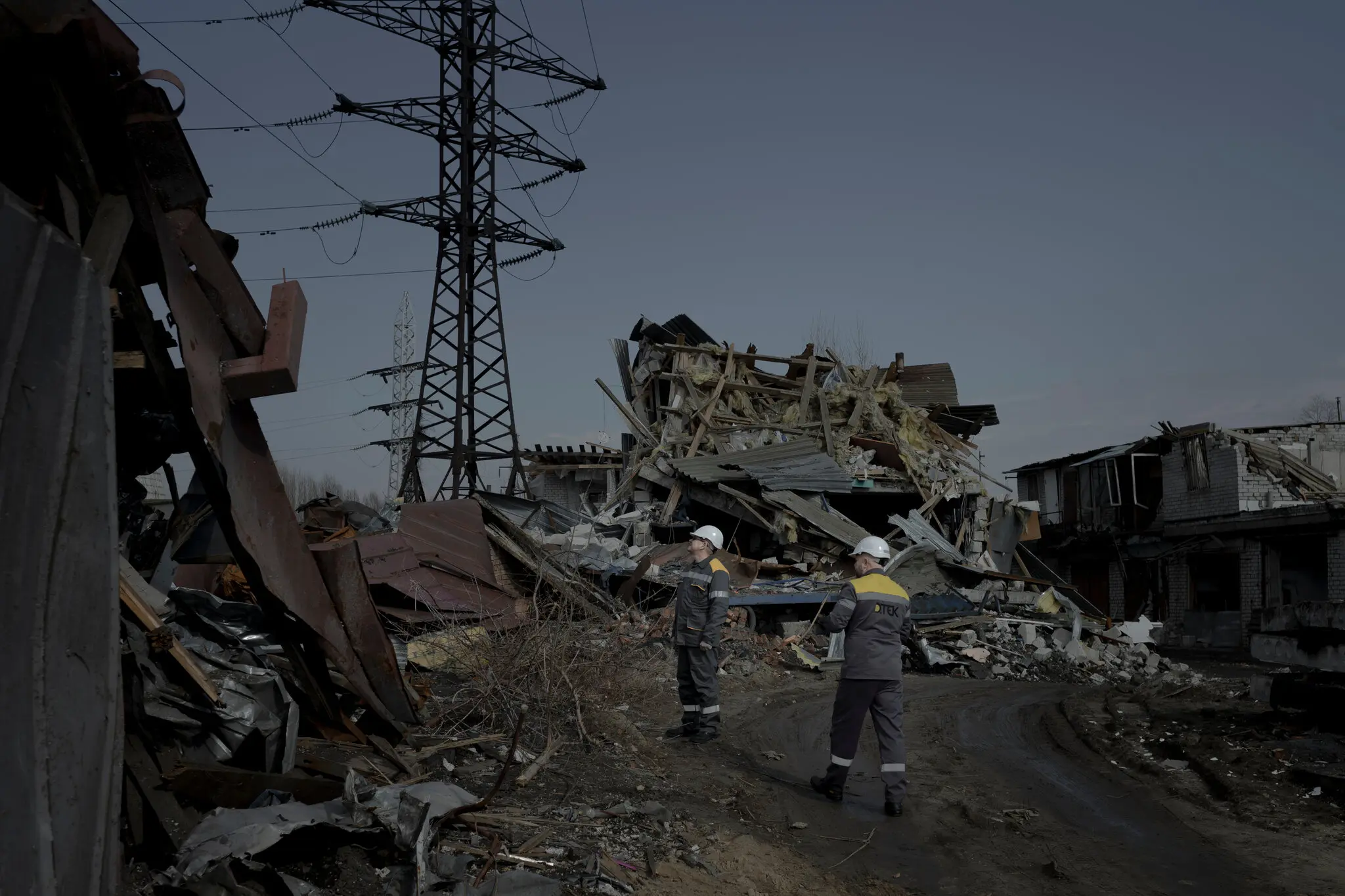
The military side of the crisis is already moving quickly. American forces have struck Iran for three consecutive nights. In his notification to Congress, Trump acknowledged that since July 7, the United States had resumed attacks on missile launch sites, air defenses, naval assets, command posts, support infrastructure and command-and-control facilities.
The president calls these strikes “limited” and “measured.” But the political meaning of the letter is broader: the White House has formally confirmed that hostilities are no longer a pause, an incident or a technical response. The war with Iran has returned to active mode, even if the administration still tries to describe it in the language of restraint.
Congress has already passed resolutions requiring Trump either to end the war or seek lawmakers’ authorization to continue it. The president, like many predecessors, rejects that interpretation of war powers and insists he has authority to act on his own. But the restoration of blockade and strikes makes the dispute sharper.
A blockade is not an ordinary operation to protect shipping. It means coercive restriction on vessels moving to or from Iranian ports and coastal areas. In international practice, such a step is almost always seen as a sharp expansion of war. That is why its return inevitably raises the question of who in the United States has the authority to open this level of conflict.
For Trump, it is also a domestic political trap. He entered the election season promising strength without long wars, but the Iran conflict is already hitting markets, oil prices and voter sentiment. After the blockade and tolls were announced, oil climbed, stocks fell and Republicans who wanted to return the campaign agenda to domestic issues found war again at the center of the debate.
Trump is trying to present the new line as a simple bargain: the United States protects, the region pays. He names Saudi Arabia, Qatar, Bahrain and the United Arab Emirates as wealthy partners that can afford the cost. But allies may see this not as a security guarantee, but as a demand to finance an American war whose consequences they do not control.
That difference matters. It is one thing for the United States to patrol an international corridor to prevent an Iranian blockade. It is another for Washington to declare itself the guardian and send the bill to everyone passing through the strait. In the first case, America defends order. In the second, it becomes the actor setting the price of order.
The international maritime reaction has been predictably firm but measured. The principle of free passage through international waterways remains basic to global trade. If one actor, even the strongest, begins charging for security in Hormuz, other states gain an argument for similar behavior in other straits, canals and maritime chokepoints.
That creates a dangerous precedent. China may look at the Taiwan Strait, Turkey at the Bosporus in a crisis, Russia at northern routes, Iran at Hormuz itself. If the security of an international corridor becomes a commodity, order at sea quickly becomes a negotiation among force, geography and fear.
For Iran, Hormuz has long been its strongest weapon. Tehran cannot win a symmetrical war against the United States, but it can raise the price of that war for the entire world. A significant share of global oil and liquefied gas passes through the strait. Even a partial decline in traffic forces markets to price risk into every barrel.
That is why strikes on Iranian infrastructure do not solve the problem entirely. The United States can destroy radars, missiles, drones, ports and command nodes. But it cannot move the Iranian coastline. Geography remains on Tehran’s side, and each new wave of strikes only confirms that Hormuz cannot be stabilized by bombs alone.
Trump appears to understand this, but he has no clean exit. The massive 38-day campaign at the beginning of the war did not force Iran to abandon pressure on the strait. Diplomacy produced a memorandum that the president now devalues, saying such agreements do not mean much. The new blockade creates a sense of action, but it does not create a political end state.
That is visible in the president’s rhetoric. He promises to hit Iran “very hard,” speaks about possible attacks on fortified sites near nuclear infrastructure and at the same time leaves negotiations open. This mixture of threats, strikes and distrust of his own cease-fire creates the impression of an administration moving from crisis to crisis rather than toward strategy.
For Tehran, American statements also narrow the room for maneuver. If the United States restores the blockade and charges for Hormuz, Iranian hard-liners can more easily argue that negotiations merely concealed an effort to strip Iran of control over its own maritime threshold. That strengthens those who want to respond with missiles, attacks on ships and strikes through allied forces.
This is the main risk of the coming days: both sides may simultaneously believe that raising the stakes is the only way to save face. The United States does not want to look like a state forced by Iran to negotiate passage. Iran does not want to look like a state whose right to set order near its own shores has been taken away by Washington.
In that logic, every ship in the strait becomes a political test. Does it pay? To whom? Does it travel on a route Iran recognizes? Is it escorted by American forces? Can Tehran attack it without inviting another wave of strikes? Can Washington respond without pulling more allies deeper into the conflict?
Global companies must now plan not only for security, but also for law. If the American fee is introduced, who will pay it — the cargo owner, the charterer, the insurer, the state of origin? Will European and Asian partners recognize it? Could payment itself become political recognition of American control over Hormuz?
These are not technical questions. They determine whether the new regime works as a shared security arrangement or as American military rent. If it is the latter, Washington risks losing part of the moral advantage it held in its dispute with Iran. A country cannot denounce paid passage as illegal and then introduce it under its own flag without weakening its own case.
The strongest blow to the American position may be legal rather than military. When international organizations insist on free passage, they are recording a broader anxiety: Hormuz must not become a place where law changes depending on who controls the guns. That was the foundation of Washington’s criticism of Iran. Now that foundation is weakening.
For Trump himself, the situation is a test of whether he can end conflicts, not merely open new phases of pressure. He can bomb Iran, restore the blockade, demand payment and speak of victory. But as long as shipping has not returned to stability and markets react with fear, victory remains a political claim rather than a fact.
Hormuz again shows the limits of coercive diplomacy. A strike can destroy a target, but it does not always change an adversary’s calculation. A blockade can raise the price for Iran, but it also raises the price for the global economy. A fee may look fair to Trump, but to the world it looks like the dangerous normalization of paid passage through an international corridor.
The resumption of hostilities with Iran is therefore not just another wave of strikes. It is the moment when American policy in Hormuz lost part of its own logic. Washington wanted to prove that Iran could not monetize the strait through coercion. Now it wants to monetize the strait through protection.
That difference contains the fragility of the new course. The United States has the power to keep the strait open, but power does not automatically create legitimacy. Iran has geography, but geography does not give it the right to blackmail shipping. Global trade is trapped between these two incomplete claims.
If no clear political mechanism for Hormuz emerges soon, the war will continue in waves: an Iranian attack on a ship, American strikes, an Iranian response against allies, another rise in prices, another fight in Congress. This is no longer a cease-fire. It is managed instability, and it is becoming harder to manage.
Trump has declared that Hormuz will remain open “with or without Iran.” But the real question now is different: can the strait remain open if both sides simultaneously see themselves as its guardians, and both are ready to prove that claim by force? Until there is an answer, the blockade and the tolls do not end the war. They merely give it a new form.