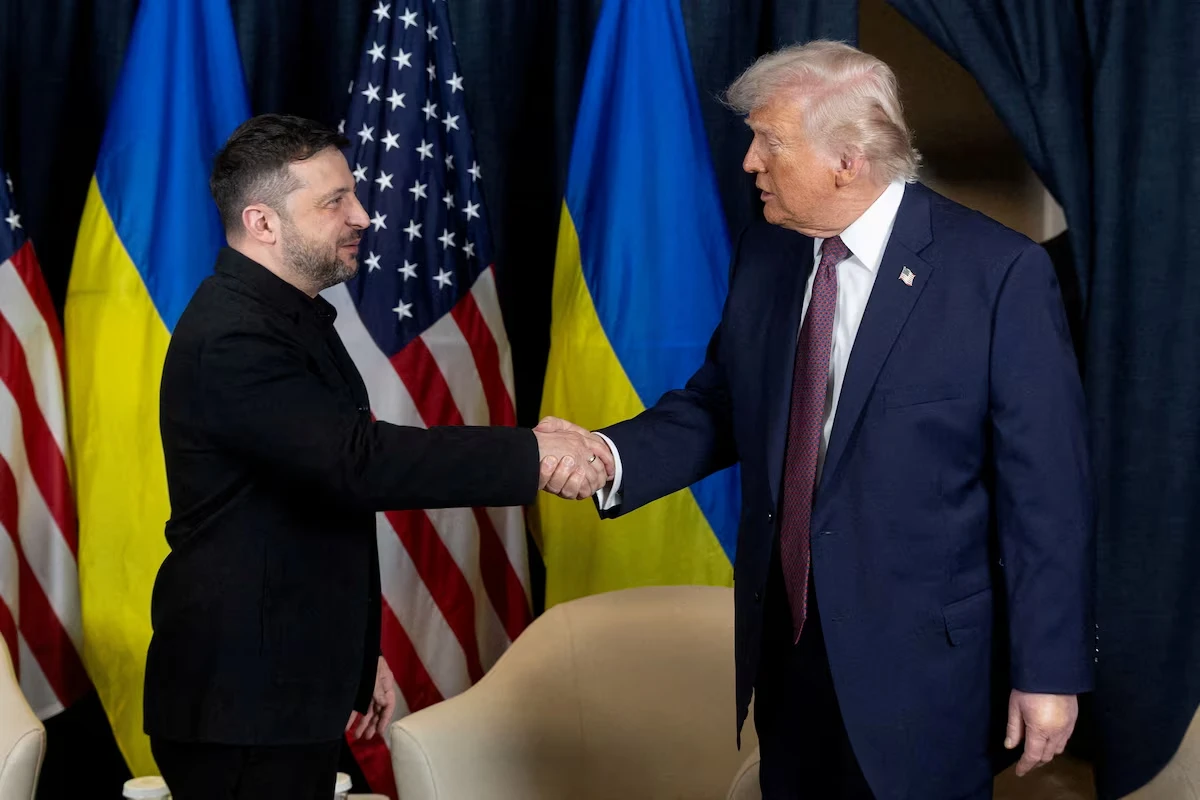
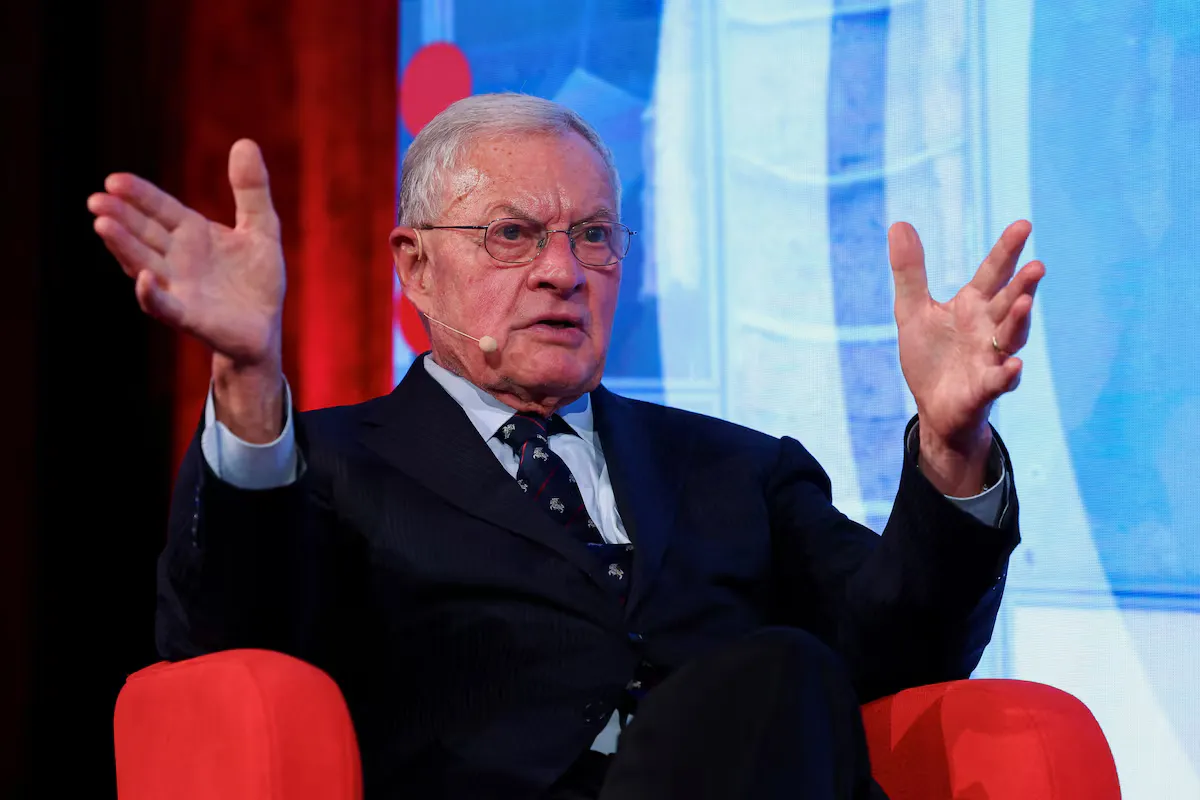






















Donald Trump is again trying to present Russia’s war against Ukraine as a conflict that can be moved by the force of personal contact. In his political language, negotiations often look like a deal between powerful leaders, not a complex process involving law, armies, territory, guarantees and the trauma of millions of people.
In an interview with Fox News, the U.S. president said he has “good conversations” with both Vladimir Putin and Volodymyr Zelensky, but did not say when he last spoke with the Russian leader. He said Washington was working on the “Russia situation” and hoped to get a result.
The most revealing part was not the reference to contacts itself, but Trump’s remark about “hatred” between Putin and Zelensky. He called it crazy and said hatred makes settlement harder. In that judgment, one can see his familiar way of simplifying war: reducing it to the psychology of two men.
According to Daycom’s analysis, that is the central weakness in the current American rhetoric. The war in Ukraine did not begin because of personal hostility between presidents. It began with the Kremlin’s decision to destroy Ukrainian sovereignty by force. That is why it cannot be ended simply by lowering the emotional temperature between Kyiv and Moscow.
For Trump, the image of the negotiator remains part of his political brand. He promised to end the war quickly, restore the United States as the decisive arbiter and force the parties to the table. But more than a year into his second term, the central result is still missing: the fighting continues, and diplomacy has not become a durable peace framework.
That does not mean contacts are irrelevant. Channels between Washington, Kyiv and Moscow are necessary, especially at moments of escalation risk. But a conversation is not peace in itself. It can be a tool of pressure, a signal, a probe of intentions or a way to buy time. Its substance matters more than the fact that a call took place.
For Ukraine, the main question is not whether Trump is ready to speak with Putin. The real question is what he is prepared to say. If the negotiating logic is reduced to a demand to “make a deal,” Kyiv risks being pushed toward a quick peace without sufficient guarantees. If Washington links dialogue with strong support for Ukraine, the conversation can become part of real deterrence.
The problem is that Putin has long used negotiations not only as a route to compromise, but as a way to lock in what Russia has seized by force. For the Kremlin, a pause in combat without political accountability may become not the end of war, but preparation for its next stage. Any peace plan must therefore answer what happens after a ceasefire.
Zelensky, for his part, cannot accept a peace that looks like a reward for the aggressor. Ukrainian society has paid too high a price to accept a formula in which occupation becomes a new normal and security guarantees remain political promises without enforcement.
Kyiv’s position is that cooperation with Russia is impossible until Moscow decides to end the war and move toward genuine diplomacy. That is not emotional stubbornness. It is the conclusion of a country that has already seen Russian promises collapse under missile and drone attacks.
Trump’s remark about “hatred” is also risky because it creates a false symmetry. It places aggressor and victim side by side, as if both were equally responsible for the continuation of the war because of personal animosity. But there is no moral balance between a state trying to defend itself and another state trying to subjugate it.
In Washington, that distinction has practical consequences. If the White House sees the conflict as a quarrel between two leaders, it will look for a quick gesture of reconciliation. If it sees the war as an attempt to revise Europe’s order by force, then negotiations must be backed by weapons, sanctions, financial support for Ukraine and long-term security guarantees.
Europe cannot remain a passive observer either. It will live with the consequences of any deal, strong or weak. If peace is built in haste, European capitals will inherit not stability, but a new line of instability on the continent’s eastern edge. If peace is built on Ukraine’s strength, it may become not a pause, but deterrence.
For Putin, conversations with Trump have value of their own. They return him to the center of great-power diplomacy, soften his isolation and allow Moscow to show its domestic audience that Russia is speaking directly with Washington. That is not a small thing. For the Kremlin, status is often as much a part of strategy as territorial control.
For Zelensky, such contacts are both an opportunity and a risk. The opportunity is that Trump could pressure Moscow if he decides Putin is obstructing his promise of peace. The risk is that the American president may begin demanding concessions from Ukraine faster than he can force Russia toward real accountability.
That is why the key question will not be the tone of the next conversation, but its consequences. Will there be a concrete mechanism to monitor a ceasefire? Will Ukraine receive security guarantees? Will sanctions against Russia remain? Will Kyiv have enough weapons to ensure that negotiations do not become a form of coercion? Will Washington recognize that peace without deterring the aggressor only postpones war?
Trump likes to describe deals as moments of personal breakthrough. But the war in Ukraine is not a business dispute in which the parties bargain over a final price. It is a war for the survival of a state, the borders of Europe and the principle that the stronger power cannot rewrite the map with impunity.
Good conversations can be the beginning of diplomacy. They can reduce the risk of miscalculation, open channels for prisoner exchanges, humanitarian arrangements or local ceasefires. But they cannot replace strategy. And they cannot hide the fact that peace depends not on the mood of two presidents, but on Russia’s willingness to stop its aggression.
Trump again wants to be the man who “ends the war.” But the task before him is harder than arranging Putin and Zelensky inside one diplomatic frame. He must avoid a peace that becomes defeat for the victim and a respite for the aggressor. That is the difference between a loud conversation and a real settlement.