





















Washington is changing not only the size of its military presence in the Middle East, but its structure. In recent days, the Pentagon has moved thousands of additional troops into the region, including Marines aboard the USS Tripoli and paratroopers from the 82nd Airborne Division. Multiple U.S. outlets now place the American force posture in the region at roughly 50,000 troops, significantly above the usual baseline.
What matters here is not the number alone. It is the mix of forces. Marines, airborne infantry and, according to recent U.S. media reporting summarized by The Guardian, possible special operations elements give President Trump not an occupation army, but a menu of rapidly deployable options: coercive signaling, short raids, maritime security missions and the seizure of specific strategic assets. That is what a military posture looks like when a White House has not yet decided where deterrence ends and a new phase of war begins.
The shift is even more striking because it comes alongside a partial weakening of the carrier picture. The USS Gerald R. Ford has left the immediate combat zone and gone into maintenance after a long deployment marked by a fire and other technical problems, first stopping in Crete and then arriving in Croatia. That does not erase U.S. striking power, but it does change the political optics: away from one oversized symbol of force projection and toward a more flexible set of tools that can be used in increments.
In Daycom’s assessment, the central question is not whether Trump is preparing a classic ground invasion of Iran. The current force package does not resemble that. The more important point is that the administration is assembling instruments for several limited but strategically explosive operations, each of which could be framed as temporary, targeted or necessary while still widening the war in practice.
Those scenarios are already visible through the reporting. Among the options discussed publicly are moves connected to the Strait of Hormuz, possible action involving Kharg Island, which is central to Iran’s oil exports, and a mission tied to Iran’s highly enriched uranium. Recent coverage has described Trump openly talking about taking Kharg Island “easily,” while other reporting has focused on contingency planning for operations linked to Iran’s nuclear material.
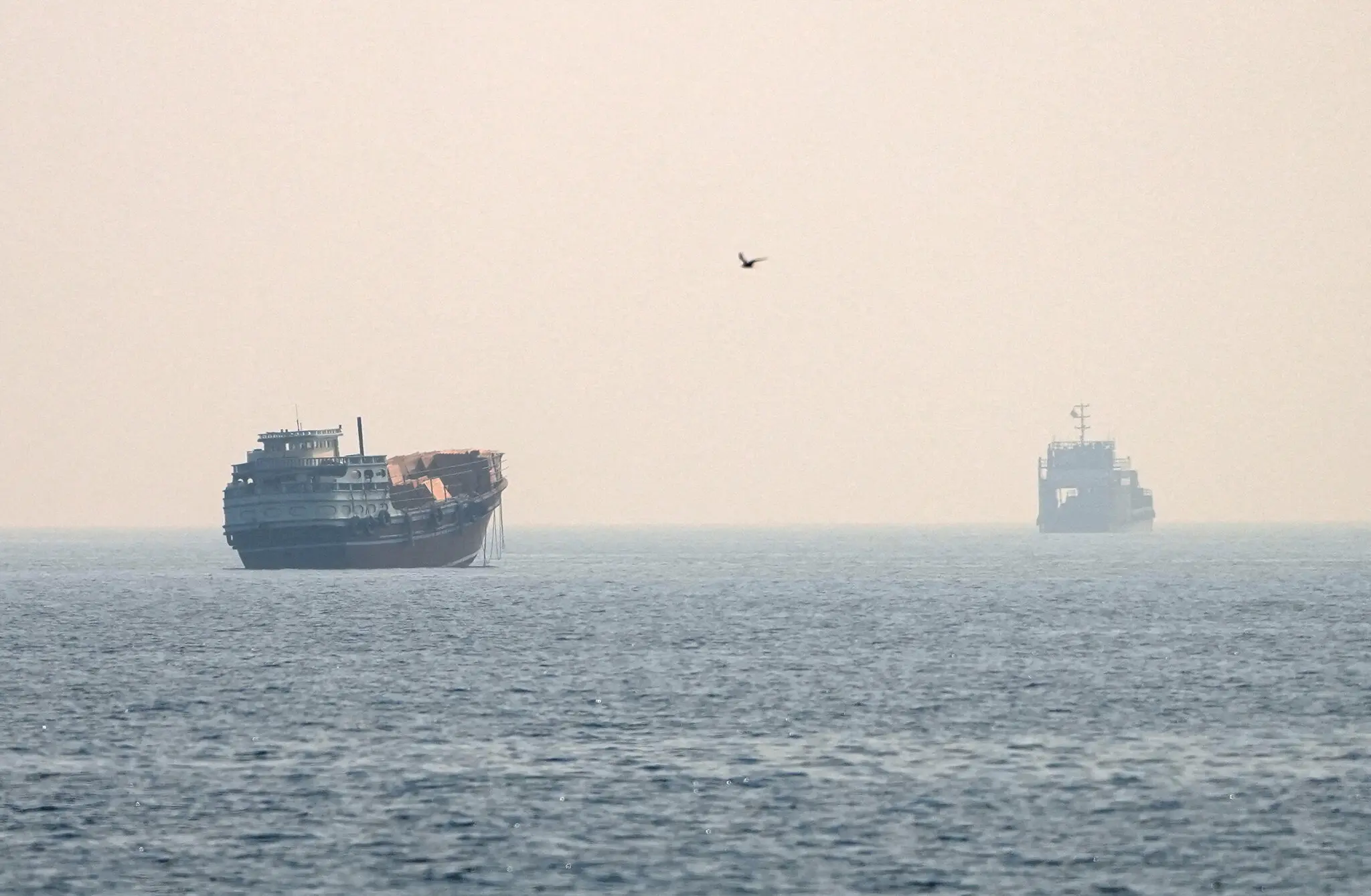
Hormuz is what makes this more than a regional military story. According to the U.S. Energy Information Administration, oil flows through the strait averaged about 20 million barrels a day in 2024, roughly 20 percent of global petroleum liquids consumption, with liquefied natural gas flows also critically exposed. The EIA has also warned that a prolonged closure or effective shutdown of Hormuz would be a primary upside risk for oil prices.
This is also why reports of special operations planning matter so much. Forces of that kind are not built to occupy a country the size of Iran. They are built for compressed, high-risk missions: securing a chokepoint, striking a hardened target, facilitating the removal of sensitive material, or helping create a narrow corridor for follow-on action. The strategic danger is precisely that such missions can be presented as limited while producing consequences that are anything but limited.
Nor is this merely a military argument. Iran has warned that any U.S. ground presence would trigger severe retaliation, while Pakistan has been floated as a channel for possible U.S.-Iran talks. That is the revealing dual track of the moment: diplomacy is not replacing escalation, it is running beside it. The administration is probing for negotiations while simultaneously increasing the credibility of military action.
Inside the United States, the buildup is already straining the political consensus. Lawmakers have questioned the legal basis, the objective and the exit logic of any ground-linked mission, with critics warning that “limited” action in Iran could become another open-ended Middle East war. Even among Republicans, the concern is no longer simply whether pressure on Tehran should increase, but where the line lies between a short operation and a new strategic entanglement.
From Trump’s perspective, this posture offers exactly what he tends to value most: several hard options on the table without the need to declare in advance which one he prefers. Strategically, that is more alarming than a clearly advertised march toward large-scale war. A major invasion is visible from far away. A sequence of supposedly narrow operations can begin almost quietly and transform the conflict before diplomacy has time to catch up.
That is why the current buildup should not be read as just another troop movement on a crowded regional map. It is a moment when a campaign that has largely been understood through airpower, naval pressure and coercive signaling begins to test a ground dimension, first as a contingency, then as an instrument, and, if misjudged, as a new normal. For Hormuz, for global energy markets, for Iran’s nuclear file and for the wider American role in the Middle East, this may be the most dangerous threshold of the past several days.