

















Mykhailo Fedorov’s dismissal turned a cabinet reshuffle into one of the sharpest crises inside Ukraine’s wartime leadership. In just six months at the Defence Ministry, he had become the public face of technological acceleration. He left accusing Commander-in-Chief Oleksandr Syrskyi of blocking reform.
The language was extraordinary even for a political system exhausted by more than four years of full-scale war. Fedorov spoke of sabotaged initiatives, dysfunctional management, evasions of responsibility and a culture of distorted reporting. Syrskyi did not address the accusations directly, limiting his response to a formal expression of thanks and a call to focus on the war.
Behind the personal bitterness lies a conflict far larger than a clash of temperaments. Ukraine’s defence establishment is being pulled between two competing visions of victory: a centralised military hierarchy built around command, and a technology-driven model based on speed, data, decentralised initiative and constant experimentation.
According to Daycom’s earlier analysis, such a confrontation was becoming almost inevitable. Fedorov’s reforms demanded more than new drones or digital platforms. They threatened to redistribute influence across the defence system, reducing the space for opaque decisions, informal control and administrative inertia.
Fedorov entered the Defence Ministry in January 2026 after years spent building Ukraine’s digital state. His political appeal rested on a simple proposition: even rigid bureaucracies can move faster when decisions are turned into measurable processes. In the armed forces, that logic collided with an institution in which mistakes cost lives and caution is often treated as a virtue.
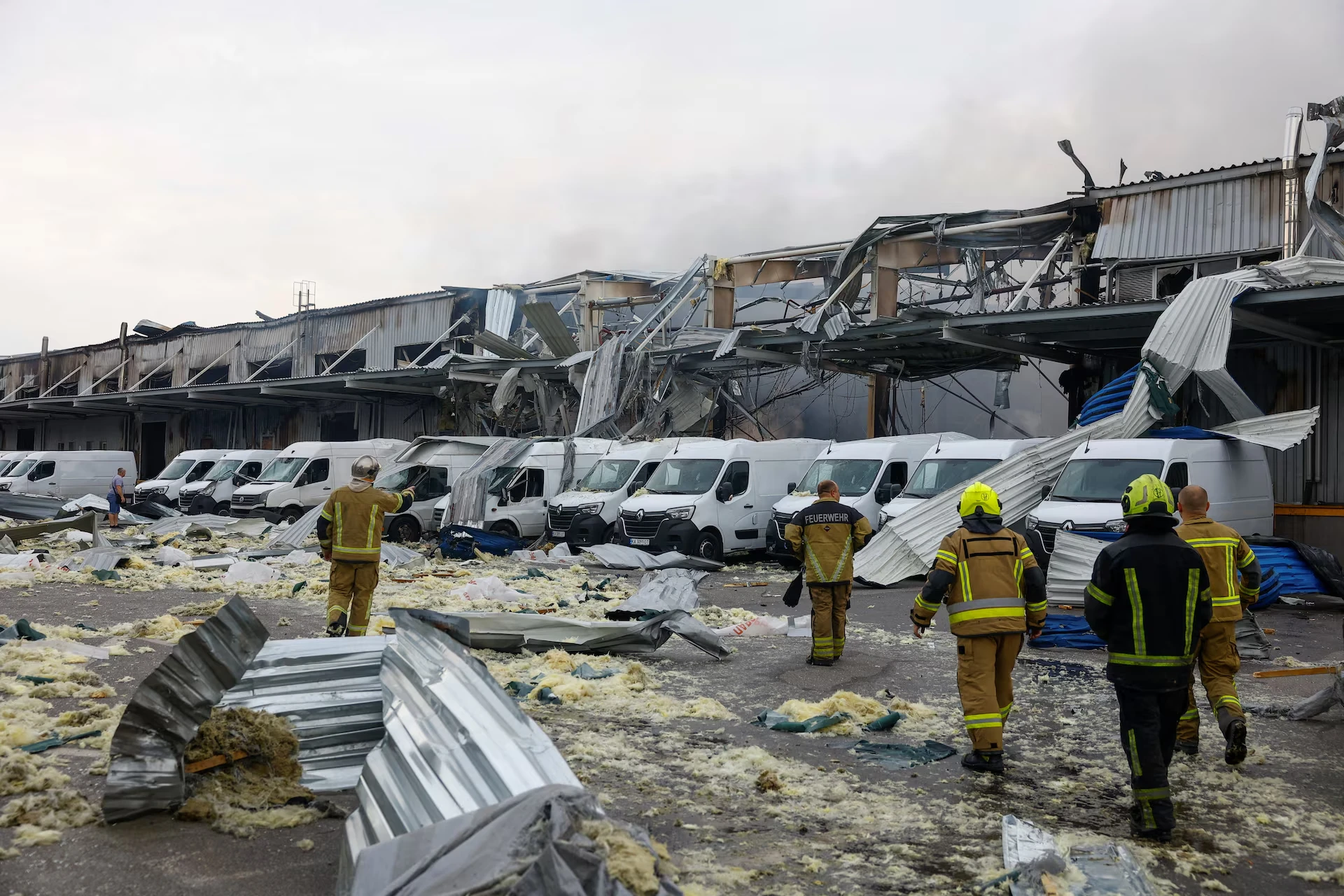
His team accelerated procurement, drone production and the development of long-range strike capabilities. Unmanned systems ceased to be a supporting tool and became the backbone of Ukraine’s asymmetric warfare. They helped compensate for shortages of aircraft, ammunition and personnel while extending Kyiv’s reach deep into Russian logistics, military infrastructure and energy facilities.
Yet technology cannot replace infantry. Drones can reduce casualties, slow an offensive and widen the battlefield’s kill zone, but they cannot independently hold towns, trenches or defensive lines. This is where Fedorov’s model ran into the central crisis facing the Armed Forces of Ukraine: a shortage of trained personnel and an increasingly divisive mobilisation system.
For Syrskyi, that shortage means holding the front with the forces available, even when the necessary decisions are harsh and politically costly. For Fedorov, it is evidence that the old system has exhausted itself and is trying to compensate for weak management with more manpower. Both positions begin with the same threat, but lead to opposing strategies.
Syrskyi represents the continuity of the military chain of command. He played a central role in the defence of Kyiv, helped shape the 2022 Kharkiv counteroffensive and took command of the armed forces in February 2024. His career was formed in the Soviet military tradition, where centralisation was seen as the foundation of control.
That background does not make him an automatic opponent of technology. Under his command, Ukraine expanded drone units, battlefield awareness systems and long-range strike operations. The real dispute concerns who sets the pace of change, who controls resources and which commanders are trusted with genuine operational freedom.
Fedorov promoted a model in which units could be compared by performance and resources redirected toward those producing the strongest battlefield results. For a traditional hierarchy, such an approach is threatening not merely because it is new. It exposes poor decisions, uneven weapons distribution and failures that were previously buried in closed reporting chains.
His accusation of a “culture of lies” struck at the weakest point of any rigid command system. When junior officers fear reporting bad news, battlefield reality gradually disappears from official briefings. Headquarters may then make internally coherent decisions based on a picture that no longer exists.
Fedorov’s public attack, however, created a danger of its own. In wartime, a dispute between the civilian head of the Defence Ministry and the commander-in-chief cannot remain an ordinary personnel conflict. It affects discipline, trust inside the officer corps, the authority of orders and the confidence of foreign partners supplying weapons.
Formally, the division of responsibilities is clear. The minister oversees defence policy, resources, procurement and civilian control. The commander-in-chief directs the armed forces and military operations. Modern warfare has blurred that boundary. A decision about drone production or ammunition allocation is simultaneously political, technological, financial and operational.
Volodymyr Zelensky faced a choice with no neutral outcome. Keeping Fedorov would have weakened the authority of the commander-in-chief. Backing Syrskyi meant accepting the risk that reform would slow and that one of the most visible figures of Ukraine’s new managerial generation would be pushed aside. The president chose stability in the chain of command.
The public reaction showed that the dismissal had moved beyond internal politics. Hundreds of people, many of them young, gathered in Kyiv to support Fedorov. To them, he represented more than a minister. He embodied the possibility that the state could still change during war—quickly, rationally and without ritual deference to closed institutions.
More troubling for the government was the response from within the military. Several officers backed the demand for continued reform, while Deputy Air Force Commander Pavlo Yelizarov announced his resignation. The conflict had therefore begun to affect not only political loyalties but the functioning of specific defence structures.
Fedorov’s popularity does not prove that his programme was flawless. Technological systems require reliable funding, secure communications, trained operators and the ability to scale successful experiments across hundreds of units. Startup speed is useful during development, but a large army cannot change its rules every week without risking cohesion.
Battlefield experience, however, cannot justify institutional paralysis. The war is evolving faster than traditional planning cycles. Systems that worked six months ago may now be neutralised by electronic warfare, new frequencies or adapted interceptors. A command structure that punishes initiative risks losing before the first shot is fired.
The deeper consequence of the crisis is not the departure of one minister. Ukraine still lacks a durable mechanism capable of reconciling technological revolution with military hierarchy. Reform remains dependent on strong personalities, which means that every personnel dispute can threaten an entire strategic direction.
The answer is not simply to choose between Fedorov and Syrskyi. Ukraine needs clearer rules governing the relationship between the Defence Ministry, the General Staff and the armed forces command. It must define who measures combat effectiveness, who controls resource allocation, how commanders are protected when they report failure and when operational mistakes require accountability.
Russia possesses more manpower, a larger industrial base and deeper stocks of equipment. Ukraine cannot defeat it by reproducing the Russian model on a smaller scale. Its advantage can exist only where it learns faster than its opponent and turns technological innovation into tactical change without delay.
The public rupture between Fedorov and Syrskyi exposed the price of postponing that transformation. A new army already exists inside Ukraine’s defence system: engineers, drone operators, younger commanders and technology-led units. Alongside it stands the old vertical of command. The decisive question is no longer which side wins the bureaucratic struggle, but whether the two can learn to function together before Russia exploits the divide.