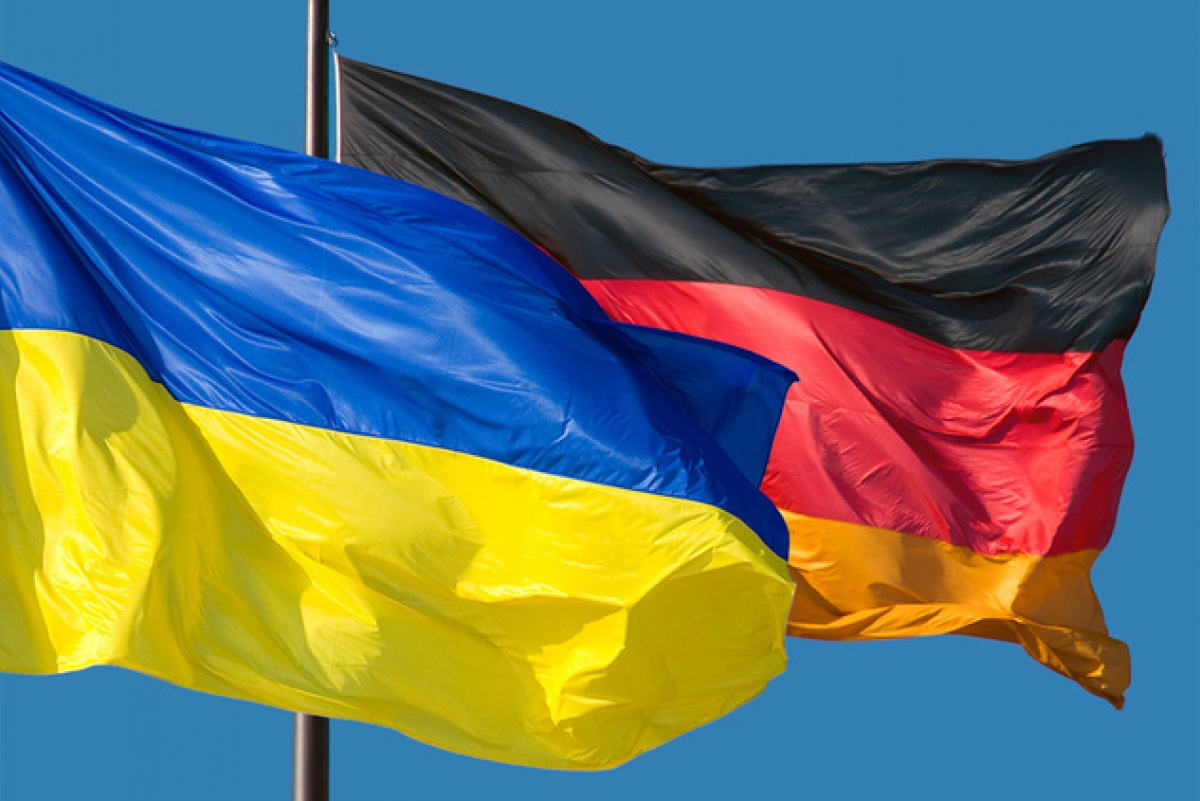

















Ukraine has received a long-awaited signal from Brussels: formal talks on joining the European Union can finally move from political promise to actual procedure. Hungary has lifted the block that for years slowed Ukraine’s path toward the EU.
But the victory immediately revealed its limits. Hungary’s new prime minister, Peter Magyar, agreed not to obstruct the opening of talks, but rejected the idea of fast-track membership. For Kyiv, the door is opening — yet the corridor beyond it may stretch for decades.
Ukraine sees EU membership not only as an economic or institutional goal. Since Russia’s full-scale invasion, it has become part of national security: a way to leave Russia’s orbit permanently and anchor the country inside Europe’s political space.
According to Daycom’s assessment, Budapest’s decision is an important breakthrough, but not a strategic guarantee. It removes the first barrier while leaving the main question unresolved: can Europe integrate a country at war faster than Russia can try again to change its future by force?
The normal path to EU membership is long and exhausting. A candidate country must move through dozens of negotiating chapters, reform its courts, economic rules, public administration, anti-corruption system, competition standards, minority protections and regulatory framework.
For a country at peace, that is a major reform project. For a country fighting for survival, it is a double burden. Ukraine must hold the front, restore energy systems, defend cities, pay soldiers, sustain the economy and rebuild institutions to meet European standards — all at once.
That is why Volodymyr Zelensky insists on an accelerated process. The NATO path remains blocked, partly because Washington does not want to provoke a direct confrontation with Russia. In that situation, the European Union becomes for Kyiv not a substitute for NATO, but a political line of defense.
Magyar, however, speaks the language of classic bureaucratic Europe: no shortcuts, all 33 accession chapters, full compliance with standards and, eventually, a legally binding referendum in Hungary. In his formula, Ukraine could join in 10 to 15 years if it meets all conditions.
That is a radically different time horizon from the one Kyiv lives in. For Ukraine, ten years is not an administrative cycle. It is an entire era of war, reconstruction, demographic pressure, the threat of new Russian attacks and the struggle to keep society believing in its European future.
Hungary’s shift became possible after agreements on the rights of ethnic Hungarians in Ukraine. The issue concerns linguistic, educational, cultural and political guarantees for a community concentrated mainly in the Transcarpathia region. For Budapest, this has long been not only a humanitarian question, but a political weapon.
Viktor Orban used the issue of Ukraine’s Hungarian minority for years to block European initiatives supporting Kyiv. It allowed him to present himself as a defender of Hungarians abroad, bargain with Brussels and maintain a special line toward Moscow.
Magyar is trying to show a different model. He said he achieved in three weeks what the previous government failed to achieve in ten years. That message has domestic political meaning: the new government in Budapest wants to distance itself from Orban’s confrontation with the EU, but is not ready to remove all safeguards on Ukraine.
For Brussels, this is a chance to regain control over the process. EU institutions can open the first stage of talks and show that Ukraine’s integration is no longer hostage to one government. But the EU must be honest: opening negotiations and joining the union are very different political realities.
The EU’s rotating presidency has described the formal opening of the first phase as a major milestone. The European Commission is urging faster talks with Ukraine and Moldova, arguing that minority rights are best protected by European citizenship and the EU legal order.
That argument matters for Ukraine. If Transcarpathia, its Hungarian community and the rest of Ukraine move toward the EU together, disputes over language and cultural rights can become part of a European settlement rather than a tool of blockade.
But the political problem has not disappeared. The European Union takes key decisions by consensus, and every member state retains leverage. Even if Hungary no longer blocks the start, it can slow later stages, demand additional guarantees or put the issue to a domestic referendum.
For Ukraine, this means the European path will not be a straight line, but a series of narrow passages. Every negotiating chapter, every reform and every political cycle inside EU member states can become a new point of risk. War only increases that vulnerability.
That is why Kyiv is presenting Budapest’s move as positively as possible. Diplomatically, it is genuinely important: Hungary is no longer an absolute stop sign at the entrance. Strategically, however, Ukraine still lacks an answer to the central question — how to shorten the distance between Europe’s promise and actual membership.
At the same time, NATO is demonstrating support through meetings in Kyiv, the NATO-Ukraine Council and statements about Russian losses. But the path into the alliance remains blocked. That makes the EU even more important, although it is not a military alliance and does not provide automatic defense guarantees.
European integration is therefore becoming for Ukraine not protection for today’s skies, but protection for future statehood. It is meant to make the country’s political choice irreversible, transform institutions, open access to markets, funds and legal space, and give citizens an answer to why the country is paying such a high price.
Russia understands this logic well. For the Kremlin, Ukraine’s EU membership would mean not only an economic loss of influence, but the defeat of an imperial idea. That is why a long accession horizon carries risk: the longer Ukraine remains in the waiting room, the more time Moscow has for sabotage, war and political pressure.
Opening talks is a victory for Ukrainian diplomacy. But it must not become a soothing illusion. The real task is only beginning: move through a difficult procedure quickly, preserve support among member states, protect reforms from the pressures of war and prevent any capital from turning Ukraine’s future into an endless bargain.
Ukraine has received a European door. Now the essential task is to ensure that behind it there is not a corridor where a country paying in blood for its choice is asked to wait another generation.