



















Ukraine is entering a new phase of military diplomacy. After years of war with Russia, Kyiv now possesses something even the wealthy states of the Persian Gulf urgently need: practical experience in countering mass drone attacks. That experience is no longer only a matter of national survival. It is becoming a political asset.
President Volodymyr Zelensky has detailed agreements with Saudi Arabia, Qatar and the United Arab Emirates on cooperation in intercepting attack drones. For the Gulf states, the deals are a response to the growing threat from Iranian drones and missiles. For Ukraine, they are an opportunity to position itself not as a supplier of theory, but as a source of battlefield-tested solutions.
The substance of the agreements goes beyond the sale of individual systems. Ukraine is offering hardware, software updates, team training, integration of different military platforms into unified defense systems and joint production lines. This is not a simple export model. It is the transfer of Ukraine’s wartime school of adaptation into new security environments.
According to Daycom’s earlier analysis, this transformation is one of the most important consequences of the full-scale war. Ukraine, once critically dependent on Western military supplies, is gradually becoming a producer of unique tactical expertise. Its value lies not only in drones themselves, but in the ability to adapt technology quickly to real battlefield conditions.
For Gulf states, that matters enormously. They have access to expensive American-made systems, but recent conflicts have exposed the poor economics of using missiles worth millions of dollars to destroy comparatively cheap attack drones. Ukraine’s approach changes that equation. If an interceptor drone costs a fraction of a high-end missile, defense becomes not only militarily effective, but financially sustainable.
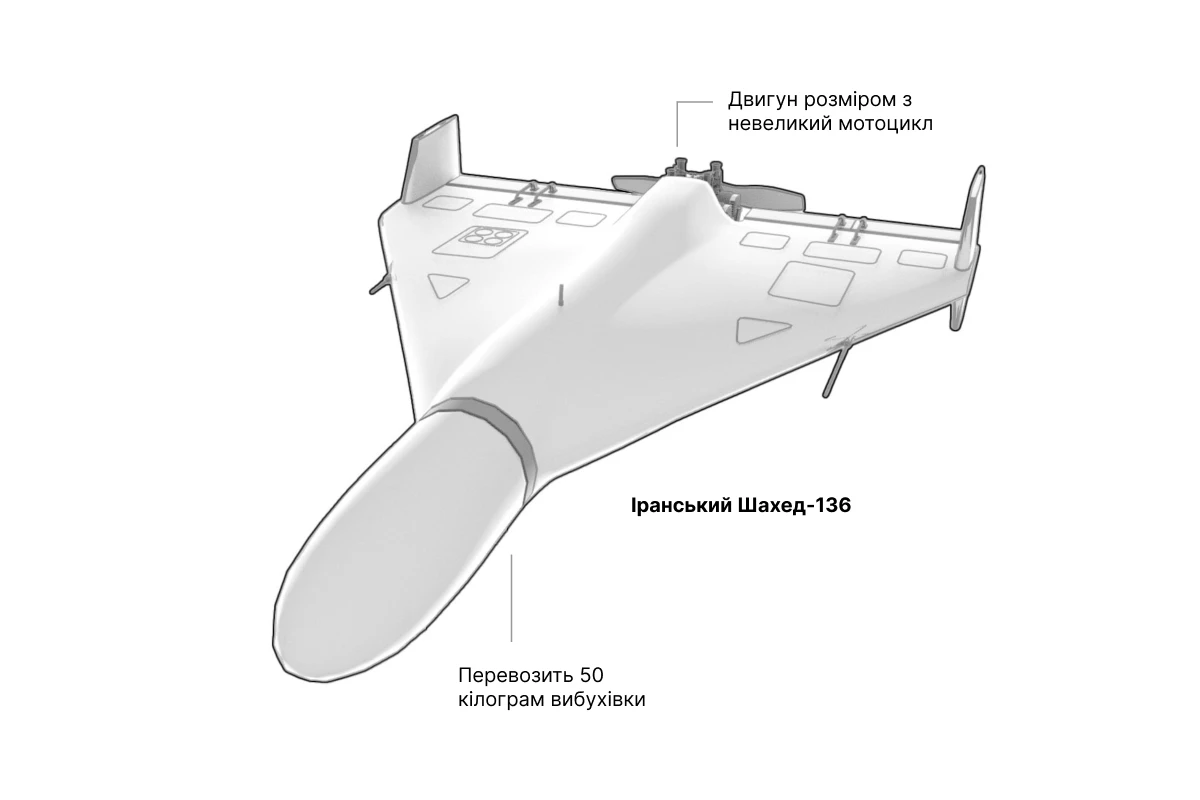
That makes the economics of interception central. Modern war is increasingly shaped not only by the quality of weapons, but by the ratio between the cost of attack and the cost of defense. If an adversary launches a cheap Shahed drone and the defender spends a vastly more expensive missile to stop it, the long-term advantage begins to shift toward the attacker. Ukraine has learned how to disrupt that logic with cheaper, more flexible and more scalable methods of defense.
This opens a new role for Kyiv in the international security market. Ukraine is no longer only asking for air-defense systems, missiles and financial aid. It is approaching partners with a product, experience and the ability to solve a problem that the West and the Middle East are only beginning to grasp at full scale. That is a serious diplomatic shift.
The agreements also carry wider political meaning. Kyiv is seeking to trade defense expertise for diplomatic backing, energy deals and access to advanced air-defense systems. This is a pragmatic strategy from a country that understands that in a long war, it is not enough merely to receive help. It must also create mutual dependence with partners.
The timing is especially important. Ukraine is advancing this cooperation just as the war in the Middle East is pulling Washington’s attention away from the Ukrainian-Russian track. Kyiv wants the Trump administration to re-engage in peace efforts over Ukraine. At the same time, it is showing that Ukraine can be useful to America’s Gulf allies right now, in a crisis that directly affects the Persian Gulf.
That sends a strong signal to Washington. Ukrainian expertise is no longer confined to the European battlefield. It is becoming part of a broader architecture for countering drone threats used by Russia, Iran and their partners. If Ukrainian solutions can work against Shahed drones at home, they may also protect energy infrastructure, ports and cities across the Gulf.

For Ukraine itself, the strategy could strengthen its defense industry. Joint production lines with wealthy regional partners may bring not only funding, but scale, access to new markets, engineering partnerships and political presence in a region where Kyiv previously had limited influence. Over time, this could become part of Ukraine’s postwar economic model.
The success of this strategy will depend on balance. Ukraine must export expertise without weakening its own defenses. It must build relationships with Gulf states without losing the trust of key Western partners. And it must turn battlefield improvisation into a stable industry capable of operating not only under front-line pressure, but within the logic of long-term contracts.
The agreements with Saudi Arabia, Qatar and the United Arab Emirates therefore mark an important shift: Ukraine is beginning to capitalize on its wartime knowledge. Not cynically, but as a country that has paid an extraordinary price for that expertise and can now turn it into a security tool for others. In a world where cheap drones are changing the balance of power, Ukraine’s knowledge of how to stop them is no longer a secondary asset. It is becoming part of a new defense diplomacy.