






















Volodymyr Zelensky’s Middle East tour was more than a string of wartime meetings staged against the backdrop of a new regional conflict. It marked a change in Ukraine’s own strategic posture. Kyiv is no longer presenting itself only as a country in need of military aid. It is increasingly presenting itself as a supplier of security expertise, combat-tested technology and practical answers to the kind of aerial threat that now hangs over the Gulf.
The agreements announced during the trip show that this was not symbolic diplomacy. Zelensky said Ukraine had already signed 10-year security agreements with Saudi Arabia and Qatar and expected a similar arrangement with the United Arab Emirates soon. In Doha, Ukrainian and Qatari officials also moved beyond political language into defense-sector cooperation, defense investment and industrial partnership.
What Ukraine is offering is not abstract solidarity. It is a very specific wartime product: experience in defeating Iranian-designed drones, building low-cost interceptors, integrating mobile air-defense layers and adapting faster than conventional militaries to a threat environment dominated by cheap, repeated aerial attacks. Zelensky has framed that offer as a practical exchange rather than a plea for goodwill. Ukraine can strengthen partners that face the same threat, and in return it expects support that makes its own defense stronger.
In Daycom’s assessment, this is one of the most important turns in Ukrainian wartime diplomacy so far. For much of the full-scale war, Kyiv’s international argument rested on moral urgency, alliance loyalty and the strategic need to stop Russia. That logic still matters. But Ukraine is now adding something more marketable and more durable: a military competence that other states can use immediately.
The timing matters. Gulf states are looking for answers at exactly the moment Ukraine can claim to have them. Since the war involving Iran widened, Gulf capitals have had to confront the possibility that missile and drone defense can no longer be treated as an imported Western service that will always arrive on time and in sufficient quantity. Qatar’s own defense ministry said its forces intercepted Iranian missiles and drones over its airspace in March, underscoring how direct the threat has become.
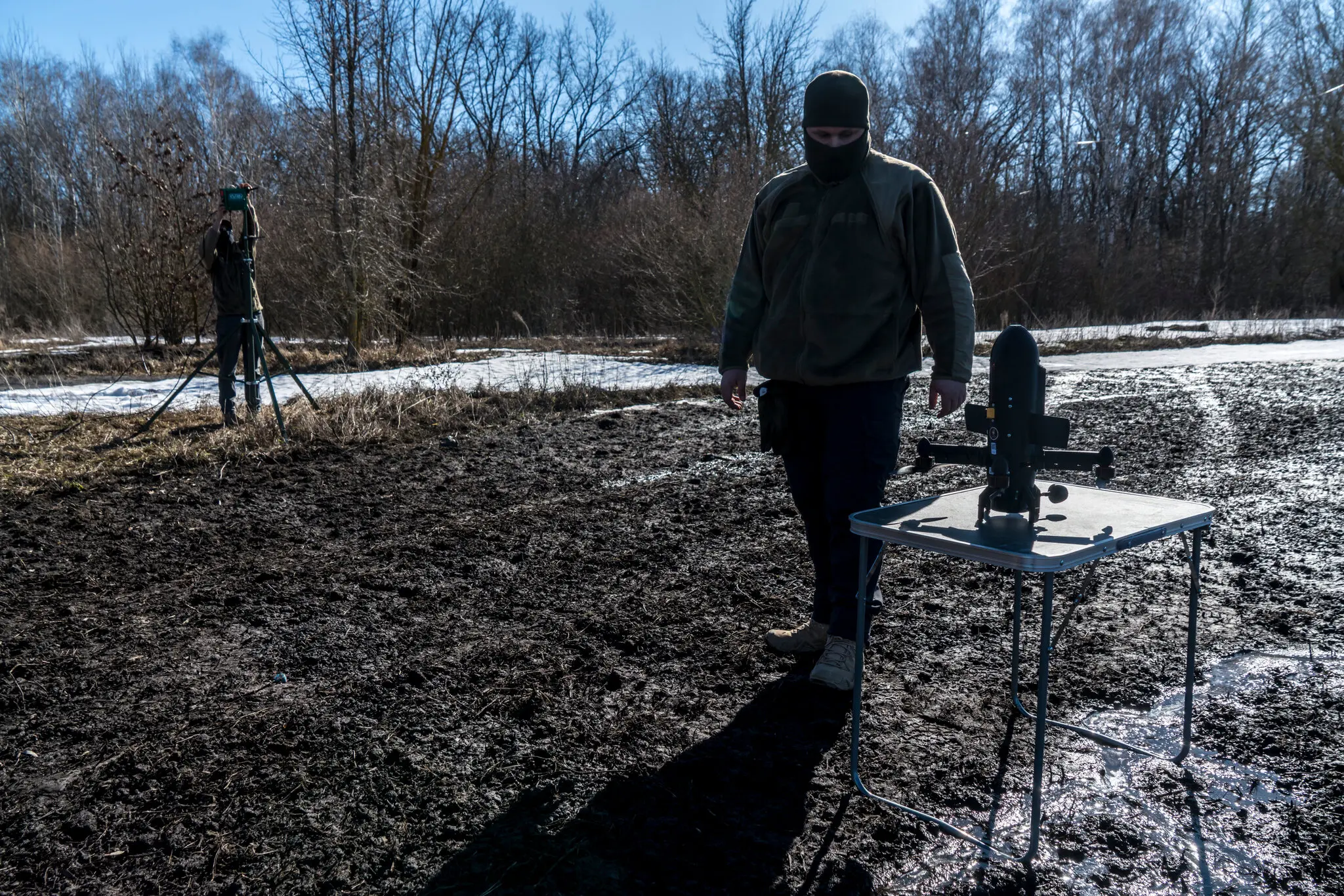 У березні в Україні під час демонстрації був продемонстрований безпілотник-перехоплювач — Брендан Гоффман

That gives Ukraine a rare advantage. It has spent four years living under precisely this type of pressure. It did not study Shaheds in theory or in peacetime exercises. It learned to deal with them under real attack, with finite missile stocks, infrastructure under strain and constant pressure to find cheaper ways to stop comparatively cheap weapons. That is why Ukraine’s anti-drone know-how carries more credibility today than many polished procurement presentations from larger states.
The cooperation is already moving beyond the level of talking points. Ukrainian experts have been working on the ground in Saudi Arabia for more than a week, according to the Ukrainian presidency, assessing operational needs and identifying what would actually improve protection against Iranian drones and missiles. In Qatar, Zelensky was briefed by Ukrainian specialists who had evaluated local capabilities and developed concrete proposals for strengthening airspace protection.
That is the real story. Ukraine is not simply exporting drones or sending advisers for photo opportunities. It is exporting a model of contemporary warfighting: cheap sensors, distributed response, layered air defense, fast training cycles, software-enabled adaptation and constant tactical revision under pressure. In strategic terms, that is much more valuable than a one-off sale. It is the export of a doctrine built under fire.
The Qatari track shows how far this could go. AP reported that the agreement with Qatar covers joint defense-industry projects, the creation of coproduction facilities and technological partnerships between companies. That points to a long-term industrial relationship rather than a temporary transfer of know-how. If that model holds, Ukraine is not just selling services to the Gulf. It is trying to embed parts of its defense industry inside a new regional security architecture.
Saudi Arabia fits the same logic, though with a more openly transactional edge. Zelensky’s office said his talks with Crown Prince Mohammed bin Salman focused on a mutually beneficial partnership and on opportunities to strengthen both countries. Read plainly, that means Ukraine is trying to trade its battlefield expertise for what it still lacks most: access to higher-end air-defense capabilities, financing, industrial cooperation and longer strategic commitments from wealthy states that now face a version of the threat Ukraine has already learned to survive.
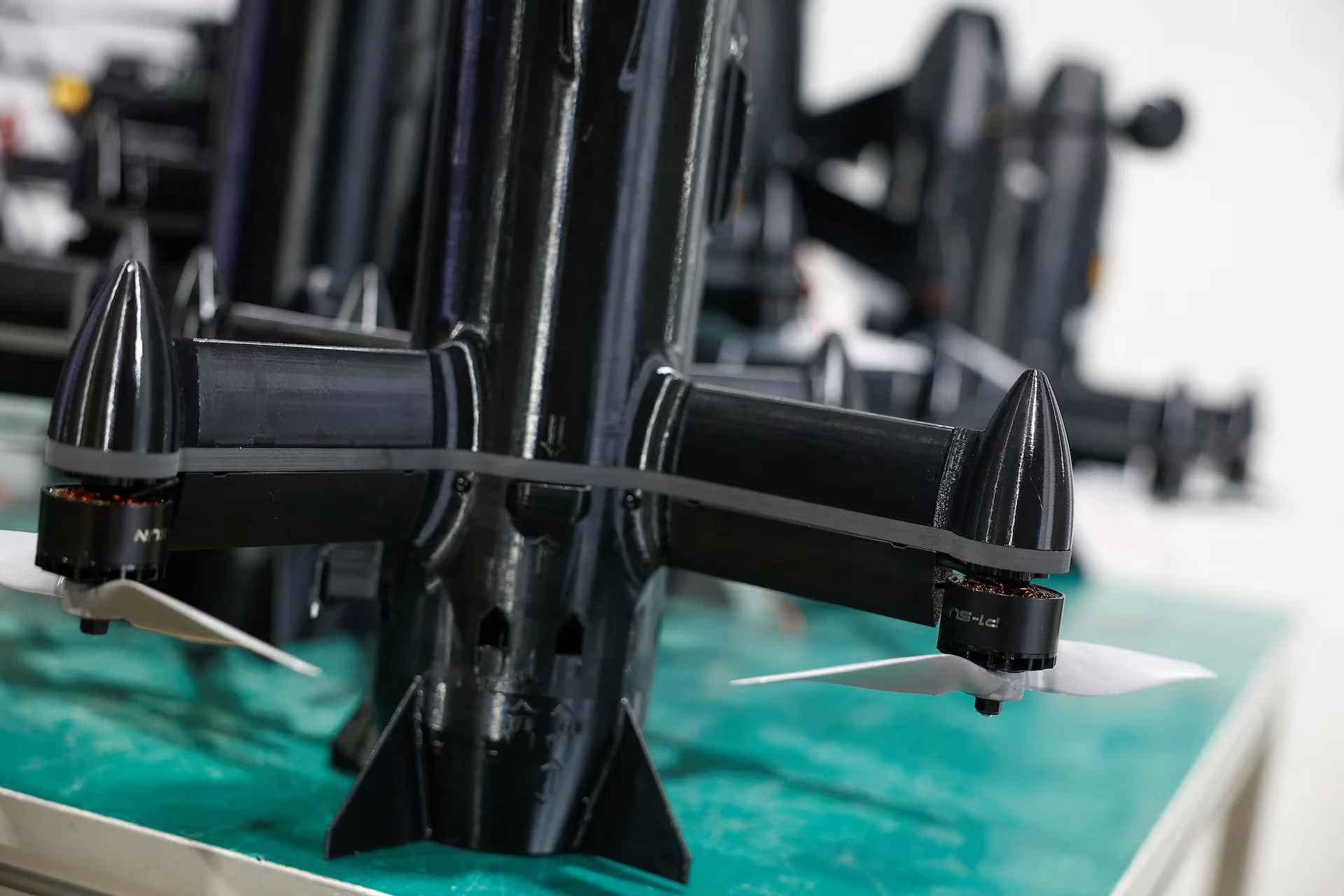 Зібрані безпілотні літаки-перехоплювачі P1-Sun FPV на виробничому об'єкті компанії SkyFall, на тлі російського вторгнення в Україну, в невідомому місці, Україна, 6 березня 2026 року — Валентин Огіренко
The UAE piece is broader still. Ukrainian and Emirati officials had already been discussing regional security and the protection of lives earlier in March, before Zelensky arrived. By the time of the visit, the conversation had widened into a larger package linking air defense, regional stability, energy security and investment. That matters because it shows Kyiv is not treating the Gulf only as an emergency customer for anti-drone help. It sees the region as a long-term source of capital, industrial partners and geopolitical leverage.
All of this is happening under pressure from a second reality: the Middle East war is also dangerous for Ukraine. AP reported that Brent crude rose above $105 a barrel as the conflict disrupted Gulf energy infrastructure and traffic through the Strait of Hormuz, a route that normally carries about one-fifth of the world’s oil. For Kyiv, that is not a distant macroeconomic story. Higher oil prices directly strengthen Russia’s war economy and make Moscow’s energy exports more valuable at the very moment Ukraine is competing for allied attention, weapons and air-defense stocks.
That is why Zelensky’s Gulf diplomacy should not be read as exotic side-stage maneuvering while the main war remains in Europe. In practical terms, the two theaters are already linked. Iran pressures the Gulf, oil rises, Russia benefits, Western arsenals come under new strain and Ukraine risks being forced into a tougher competition for the same defensive resources it needs to survive. Kyiv’s answer is to break that chain where it can: by making itself useful to Gulf states, by converting battlefield experience into strategic value and by turning wartime improvisation into exportable security capacity.
That is what makes this trip more important than a routine donor summit. It suggests Ukraine is learning to monetize military competence rather than merely appeal for sympathy. If Kyiv can lock in these relationships, then one of the harshest lessons of the war may become one of its strongest economic and geopolitical assets: the ability to transform survival under attack into a product other states are willing to buy.