



















Ukraine has taken another step toward the Western institutional orbit — not military this time, but economic and administrative. After President Volodymyr Zelensky met OECD Secretary-General Mathias Cormann in Kyiv, Ukraine submitted an updated request to join the Organisation for Economic Co-operation and Development.
Prime Minister Yulia Svyrydenko delivered the government’s renewed application. Kyiv now hopes to receive candidate-country status as early as this autumn, with the next stage expected to be a roadmap toward full membership.
For a country fighting a full-scale war, such a procedure may seem technical. Yet that is precisely where its political weight lies: Ukraine is trying to prove that it can not only defend itself, but also modernize the state according to the standards of the world’s most developed economies.
According to Daycom’s assessment, Ukraine’s OECD bid matters not as a diplomatic gesture, but as an effort to lock domestic reforms into a system of external discipline. European integration gives Ukraine the political horizon; the OECD offers a practical matrix for governance, competition, taxation, anti-corruption policy and the investment climate.
The OECD is not a defense alliance and does not provide security guarantees. But its standards often work as an economic passport of trust. For investors, donors and partner governments, membership — or movement toward it — signals that a state is accepting demanding rules of the game.
Ukraine is not starting from zero. Since the beginning of Russia’s full-scale invasion, Kyiv has worked with the OECD on reforms, governance standards and recovery programs. The updated application moves that process to a higher political level.
This is not a separate foreign-policy track, but a reconfiguration of the state machine. The focus is economic recovery, infrastructure resilience, energy, tax administration, integrity, competition, public governance, human capital and social development.
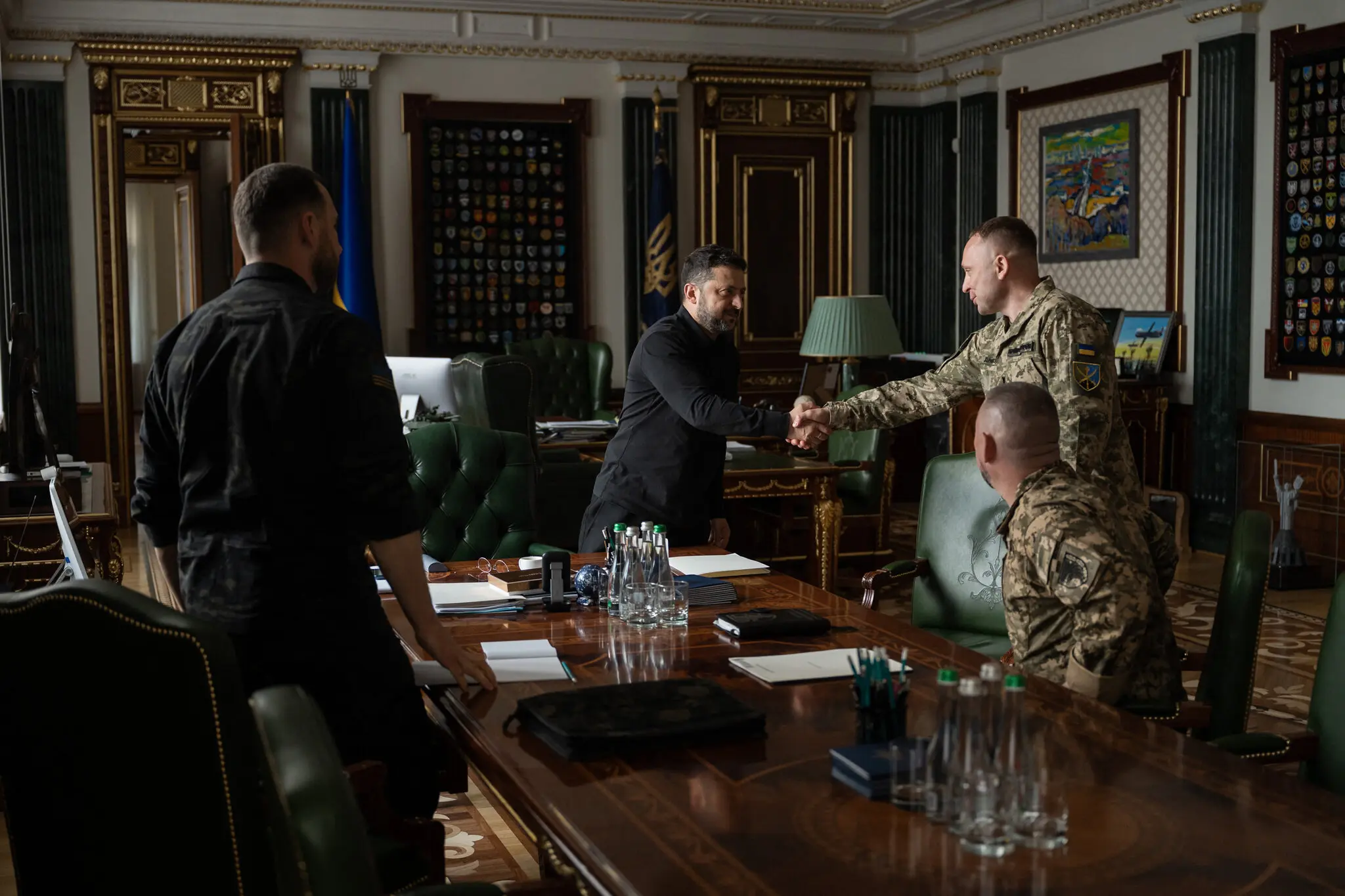
For Zelensky, the OECD track is tied to Ukraine’s broader route into Europe. Kyiv is also pushing to accelerate negotiations with the European Union and hopes to open the remaining negotiation clusters in the coming weeks, ideally by Ukraine’s Statehood Day on July 15.
The pairing matters. The EU gives Ukraine the political and legal framework of membership, while the OECD works deeper inside the technical fabric of the state. If European integration answers where the country is going, the OECD tests what kind of country arrives there.
Since 2022, Ukraine has often proved its resilience to partners through the front line, energy defense, budget discipline and diplomacy. Now another proof is becoming increasingly important: the ability to carry out difficult, unpopular and long-term reforms at a time when war could easily become an excuse to postpone everything except defense.
That is why the OECD is a hard test. Its standards are not about elegant strategies alone, but about the everyday quality of governance: how courts work, how the state conducts procurement, how it controls monopolies, how it builds infrastructure, how it collects taxes and how it protects competition.
For Ukraine’s economy, this track has another dimension: reconstruction. The scale of future investment will depend not only on the political solidarity of partners, but also on trust in the rules. Reconstruction money cannot work effectively where justice is weak, decisions are opaque and regulation is unstable.
The path toward OECD membership can become an additional mechanism for monitoring how Ukraine uses resources, changes institutions and prepares for a postwar economy. That is especially important when the country both needs external support and must prove that it can manage that support responsibly.
But the road to candidate status will not be automatic. Ukraine must convince partners that reforms are not declarations for an external audience. The most sensitive areas remain the judiciary, anti-corruption policy, corporate governance, competition, regulatory quality and the state’s ability to enforce its own rules.
The war complicates this process, but also makes it more necessary. Ukraine is asking not only for weapons and financial aid, but for a place in the system of developed democracies. Such a place cannot be earned by sacrifice alone. It must be confirmed by institutional maturity.
Against this backdrop, Moscow’s position looks like an attempt to keep Ukraine trapped in the field of war rather than the field of the future. While Russia again rejects direct political dialogue and frames its refusal through its own accusations, Kyiv is trying to show partners a different trajectory: not permanent victimhood, but entry into Western rules.
The updated OECD application does not guarantee rapid membership. But it raises the bar for Ukrainian state policy. If Kyiv receives candidate-country status this autumn, it will not be the end of the road, but the beginning of a more demanding stage — a roadmap in which every chapter tests a concrete capacity of the state.
That is the central meaning of the moment. Ukraine is fighting for territory, but it is also fighting for the quality of its own statehood. OECD membership will not stop missiles and will not replace security guarantees. But it can help ensure that after the war, Ukraine is not only rebuilt, but stronger than it was before.