



















The Strait of Hormuz is no longer merely a point of tension. It has again become the arena of direct military exchange between the United States and Iran. After Iranian forces attacked a container ship in the critical maritime corridor, U.S. Central Command launched a new wave of strikes on Iranian targets.
Iran responded by claiming attacks on American assets across the Middle East. The United Arab Emirates reported intercepting missiles and drones, while Qatar said it was intercepting missile attacks. In Qatar, debris from interceptions injured three people, including a child.
This exchange of strikes has effectively buried what remained of a fragile cease-fire that had already rested more on diplomatic inertia than real restraint. The dispute over routes through Hormuz has become so acute that any vessel can now become the trigger for a new phase of war.
According to Daycom’s assessment, the attack on the container ship was not an isolated incident, but a display of Iran’s new tactic: Tehran is not formally closing the strait, but is trying to impose a permission regime over it. Ships may pass only in the way Iran allows. Every other route becomes a risk.
That is precisely what Washington is trying to break by force. The United States demands that Iran recognize all channels of the Strait of Hormuz as open and stop firing on ships. Tehran insists on the opposite: its waters, its rules, its right to define safe passage.
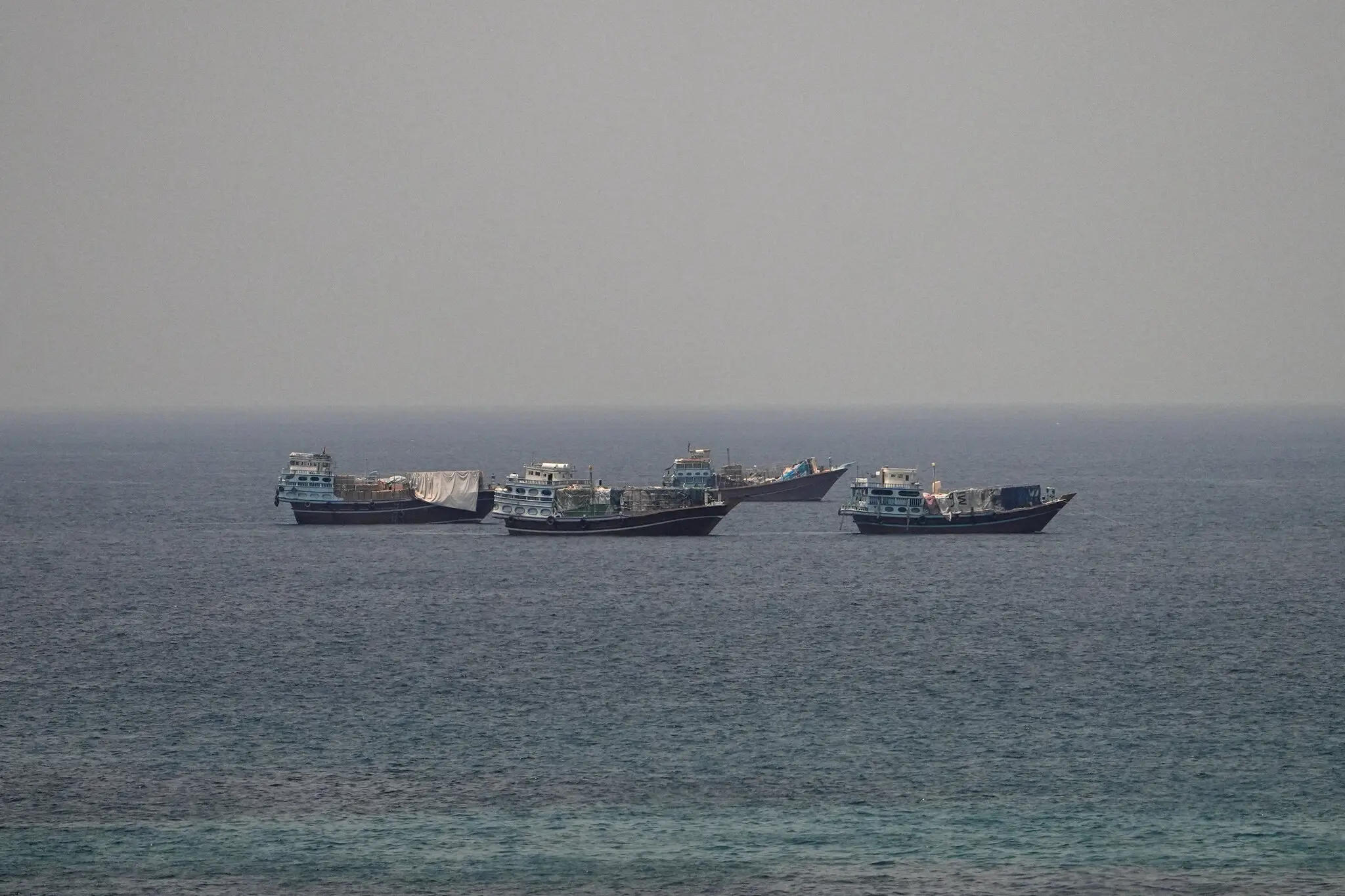
After Washington’s ultimatum, the Iranian attack on the container ship became a direct challenge. The vessel was damaged, a fire broke out on board, and the crew abandoned ship into a lifeboat. For the merchant fleet, this was a signal that Hormuz is no longer merely dangerous. It is unpredictable.
The American response was large in scale. In the third round of strikes in a week, U.S. forces hit roughly 140 Iranian military targets, including missile and drone positions, ammunition depots and communications networks. Over several days, the total number of struck targets exceeded 300.
Iranian state media reported explosions in cities along the country’s southern coast. The areas hit include energy centers, military facilities and infrastructure important to controlling the Persian Gulf. Among the locations mentioned were Bushehr and Deyr.
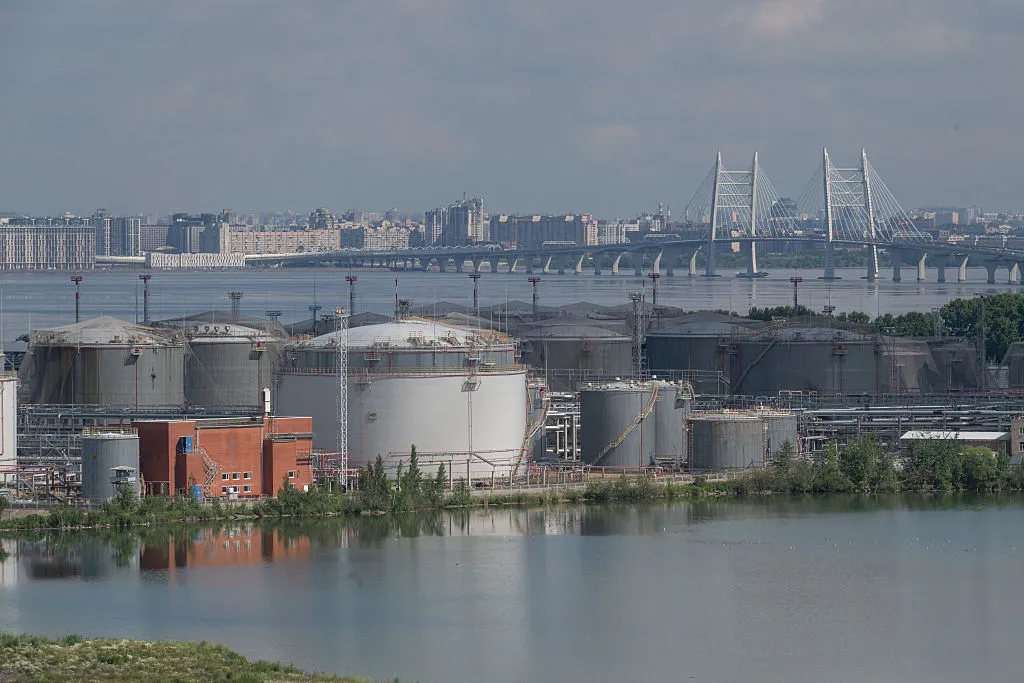
This means the war is moving deeper into a space where military targets and the energy economy sit physically side by side. For Iran, the southern coast is not merely a rear area. It is a node of oil, ports, bases and logistics. For the United States, those assets shape Tehran’s ability to pressure Hormuz.
Iran’s response had a wider regional outline. The Islamic Revolutionary Guard Corps claimed strikes on U.S. assets in Qatar, Oman, Kuwait, Bahrain and Jordan. Some of those claims could not be quickly verified, but the geography of the threats revealed the intent: to make the cost of American strikes shared by the entire region.
Qatar reported missile interceptions. The U.A.E. reported repelling missile and drone attacks from Iran. Kuwait also said it was intercepting hostile aerial targets. Jordan said three Iranian missiles had fallen on its territory, causing minor material damage and no casualties.
In this way, the Hormuz crisis has moved beyond the strait itself. It has become a conflict over the American military presence in the Persian Gulf and the wider Middle East. Iran cannot easily compete with the United States symmetrically, so it stretches the battlefield across bases, ports, radars, depots and allied territory.
For the Gulf states, this is the worst scenario. They depend on the American defense umbrella, but every new wave of U.S.-Iranian strikes turns their own territory into a potential target. Even successful interceptions cannot remove the central fear: the next missile may get through.
Qatar is especially vulnerable because it hosts one of the key American air bases in the region. Iranian claims of strikes on such facilities carry not only military meaning, but psychological force. Tehran is showing that any country giving the United States infrastructure for pressure on Iran can be pulled into the retaliation.
Oman is in an even more delicate position. Just hours before the new escalation, Iran’s foreign minister, Abbas Araghchi, was there discussing safe passage through Hormuz. But the talks produced no public guarantee that the strait would be reopened. Diplomacy did not even have time to produce a formula before it was overtaken by strikes.
This reveals the deeper problem of the current crisis. A negotiating channel formally exists, but military logic is moving faster. While diplomats search for language around “safe passage,” sailors fire on ships, American aircraft strike military targets, and regional allies intercept missiles over their own cities.
Donald Trump and Iran’s new supreme leader, Mojtaba Khamenei, spent the week exchanging threats, turning Hormuz into a symbol of a broader confrontation. After the funeral of his father and predecessor, Ali Khamenei, the new leader vowed revenge for his death. For Tehran, this is not only personal rhetoric, but part of the regime’s mobilization.
Iran’s leadership cannot afford to look weak after the death of the supreme leader, American strikes and internal tension. That is why even a limited compromise over Hormuz may be viewed inside the system as surrender under pressure. A government that lives by the language of resistance is forced to answer with force even when force worsens its position.
The United States, for its part, is also trapped by its own rhetoric. After issuing an ultimatum, failing to answer Iran’s attack would have looked like weakness. The strikes therefore became almost inevitable. But every such strike not only punishes Iran. It also gives Tehran a new reason to expand the war toward Washington’s allies.
That is how the fragile cease-fire lost its practical meaning. It was supposed to create space for broader negotiations over Iran’s nuclear program. Instead, it became a short pause between rounds of combat. The August horizon for a possible deal now looks increasingly distant.
Oil and financial markets are already reacting to the new instability. Daily shipping traffic through the strait has fallen to its lowest levels in weeks. Brent crude ended the week near $76 a barrel, roughly 5 percent above prewar levels. But the price does not yet reflect the full risk if attacks on vessels become regular.
The market fears not only a physical shortage of oil, but the loss of predictability. Hormuz is not just a geographic point on the map. It is a nerve center of global energy, carrying a large share of seaborne oil and gas supplies. When that nerve is struck, insurance rates, freight costs, currencies, energy stocks and importers’ budgets all react.
For Iran, that vulnerability is the main lever. Tehran does not need to fully block the strait to influence prices and political decisions. It only needs to create fear that any “unapproved” route may end with a fire on board and a crew in a lifeboat.
For the United States, the central problem is that military superiority does not produce a simple political result. Washington can destroy missile positions, depots and communications systems. But it cannot create trust in shipping through airstrikes if Iran retains the ability to attack individual vessels and threaten allies.
That is why the coming days will be critical. If Iran continues to insist on its own control over routes, the United States is almost certain to expand pressure. If Washington expands pressure, Tehran will seek answers not only in Hormuz, but across the network of American assets in the region.
The Gulf states will try to balance loyalty to the United States with fear of Iranian retaliation. Oman will try to preserve its role as mediator. Qatar, the U.A.E., Kuwait and Bahrain will strengthen air defenses. But none of these steps resolves the central question: who actually controls the Strait of Hormuz.
If the answer is Iran, the principle of freedom of navigation will be revised. If the answer is the United States, the result will be a long military operation with an uncertain political end. If the answer remains contested, the region will live under permanent military risk.
Hormuz has once again shown its defining feature: it is a narrow place where a local act instantly becomes a global problem. One container ship, one “unapproved” route, one order to open fire — and the entire Middle East returns to the logic of missiles, ultimatums and interceptions.
The new wave of strikes means the United States and Iran are no longer restoring the cease-fire. They are competing over the terms of the next pause. But a pause won through attacks on ships, bases and cities will be even more fragile than the last one. In this war, Hormuz is no longer the subject of negotiation. It has become an instrument of coercion — and that is why every ship in the strait now carries the weight of the entire crisis.