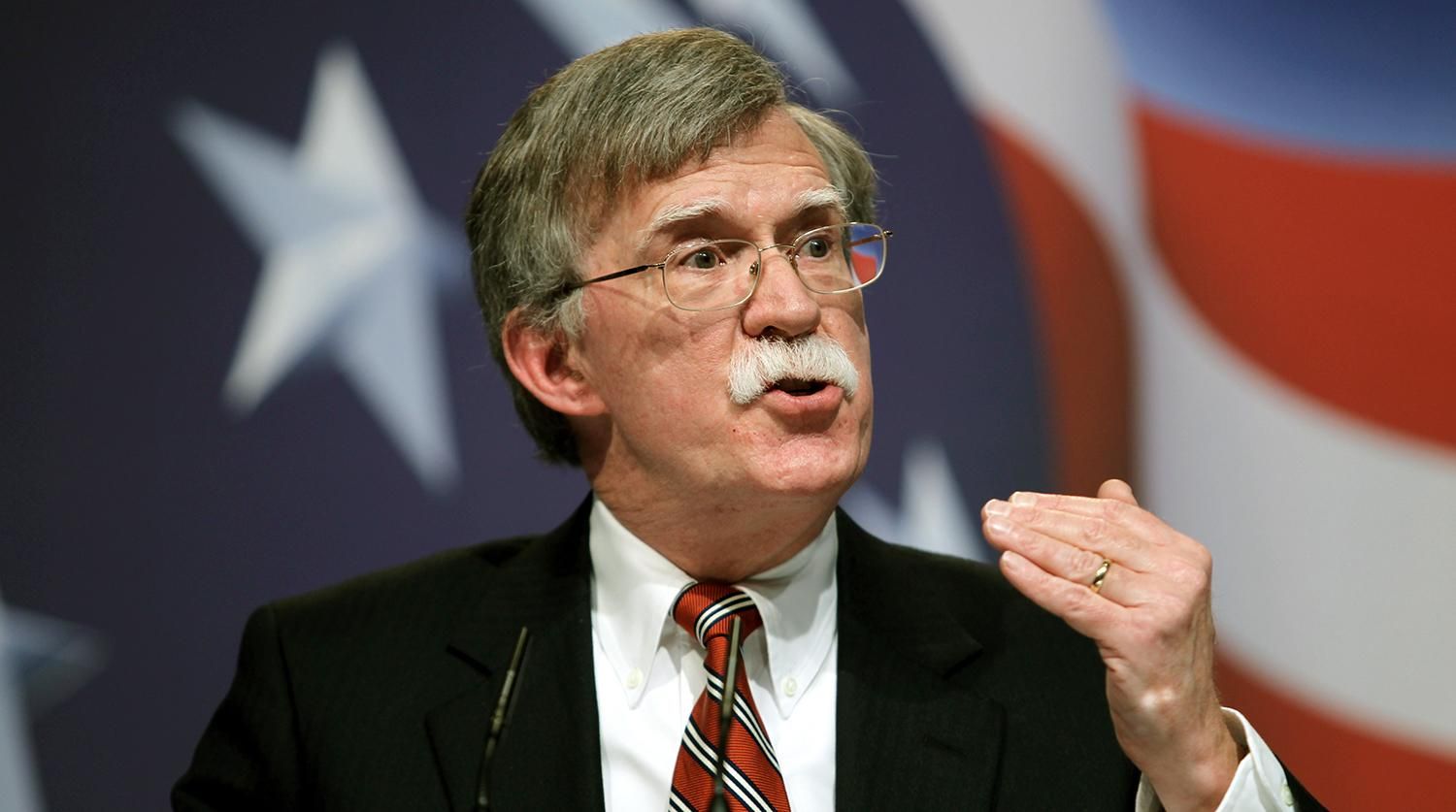





















For JD Vance, the trip to Pakistan marks the moment when a secondary role in great-power diplomacy abruptly ends. Only weeks ago, he still looked primarily like a political instrument of Donald Trump’s domestic agenda — a reliable public ally deployed for electoral messaging, cost-of-living anxiety and ideological attacks on Democrats. Now he finds himself at the center of the largest foreign-policy crisis of Trump’s second term.
On paper, his mission in Islamabad appears straightforward: keep Iran from walking away, stabilize a fragile cease-fire and pull negotiations back into a manageable frame. In reality, the task is much harder. Vance must work across several layers of the same crisis at once — the U.S.-Iran confrontation, the Israel-Lebanon front, the energy shock running through the Strait of Hormuz and the electoral pressures building at home. Any one of those tracks can break a compromise before it is even formalized.
That is why this trip is more than a diplomatic assignment for the vice president. It is also a test of the governing model Trump has built around himself. In that model, major international missions increasingly flow not through institutional channels, but through figures of personal trust — special envoys, family insiders and political loyalists. The advantage is speed. The cost is that failure becomes immediate, personal and impossible to hide.
As Daycom noted in its earlier analysis, talks with Iran have long ceased to be a narrow discussion about uranium enrichment or even the mechanics of a cease-fire. They now sit at the intersection of oil prices, the Strait of Hormuz, Israel’s military calculations, the Lebanon front and the electoral risks facing the White House. In such a landscape, diplomacy can no longer remain technical. It becomes political bargaining under conditions of coercion.
The importance of Vance’s role is heightened by the fact that he has not previously been the administration’s leading public figure in crises of this scale. His political identity was built mainly inside the American domestic arena: as a representative of a newer conservative bloc, a voice for voters sensitive to affordability, cultural polarization and distrust of older elites. The war in the Middle East has pulled him out of that terrain and placed him on a stage where performance and consequence are measured differently.
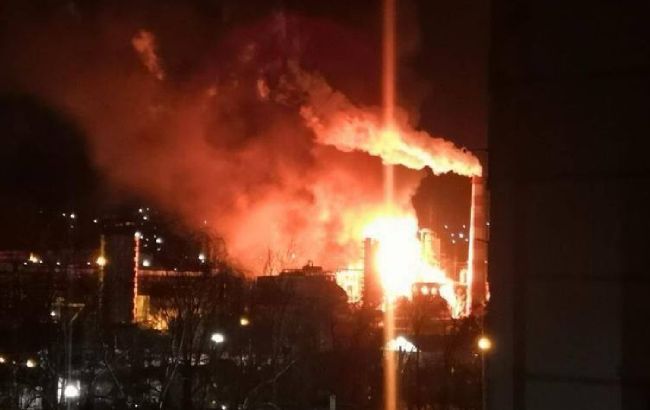
That matters for Trump as well. The White House is entering a politically delicate period in which any foreign-policy crisis can quickly become a domestic liability, especially through energy prices. Iranian pressure on shipping through Hormuz has already rattled oil markets. If prices continue to climb, the administration will face more than another overseas challenge. It will face a direct squeeze on the American voter’s wallet. Tehran understands that perfectly well.
In that sense, Vance is traveling to Pakistan not only as a negotiator, but as a form of political insurance for the president. His job is to try to neutralize the most effective lever Iran has gained in this crisis. He does not necessarily need to produce a grand bargain. In moments like this, it may be enough to prevent another oil spike, preserve the appearance of control and buy time for Washington. That may fall short of strategic resolution. It may still count as political success.
The nature of the U.S. delegation says a great deal about the style of American diplomacy under Trump. Alongside Vance are Steve Witkoff and Jared Kushner, figures whose proximity to the president often matters more than their institutional place. That configuration gives the talks political weight, but it also makes them less predictable. It can work when the priority is fast access to the person at the top. In a crisis of this magnitude, however, personalization is not the same thing as architecture.
That creates another difficulty for Vance. He must not only engage Iran, but also balance the internal dynamics of the American team. He is stepping into a process that failed to prevent the war in its earlier phase and is now being asked to give it more formality, greater credibility and a sense of political completion. Yet any arrangement that includes the vice president, a special envoy and the president’s family circle immediately raises a hard question: who is shaping the position, who is selling it and who will own the outcome if it collapses?
For Vance personally, this is also a risk to his political future. As long as he remained near the edge of major foreign-policy decisions, he retained room for distance, nuance and even quiet disagreement. That room narrows once he becomes the face of negotiations with Iran. If he is the lead political envoy, he becomes a co-owner of both the result and the failure. In the short term, that may elevate his status. Over time, it may bind his fortunes to a conflict no side fully controls.
It is telling, too, that Vance steps forward at a moment when the Republican camp is not internally united on the war. Part of the American right is deeply skeptical of another Middle East escalation. Another part favors uncompromising pressure and sees restraint as weakness. The vice president is therefore negotiating on two fronts at once: with Iran abroad and with competing instincts inside his own political coalition at home. Those constituencies do not define strength, deterrence or restraint in the same way.
There is another complication. The actual substance of the talks is far narrower than the public rhetoric surrounding them. Officially, the issue is a cease-fire. In practice, that phrase hides only a minimal framework. The core questions remain unresolved: the status of Hormuz, the terms of maritime passage, the Lebanon front, the shape of any future nuclear talks, the limits of Israeli action and the guarantees that a temporary pause will not collapse within days. Vance is not entering a mature peace process. He is entering an unfinished, contradictory and potentially explosive structure.
That is why the most realistic outcome in Islamabad is not a major diplomatic triumph, but a partial prevention of breakdown. If the American side can keep a channel open with Tehran, achieve even limited progress on shipping through Hormuz and avoid an Iranian boycott over Lebanon, that alone could be presented as success. Even then, it would not amount to a resolution. It would amount to managed delay.
The real test for Vance, then, is not whether he can look credible on the world stage. It is whether he can function as a political instrument at a moment when diplomacy has no margin for error and war is still setting the tempo. Islamabad may strengthen his position inside the administration. It may also reveal something harsher: that in Trump’s White House, even the vice president is handed the most consequential foreign-policy mission only after the crisis has already advanced too far.
In that sense, the trip to Pakistan is not just another chapter in Middle East diplomacy. It is a stress test for the entire structure of power around Trump — its flexibility, its reliance on personal channels, its capacity to move quickly from threat to deal and its ability to turn military pressure into political outcome. Vance has become the face of that attempt. He may also become the clearest measure of how fragile the American strategy remains in a region where even a cease-fire still looks more like a pause than an order.