




















On Wednesday, April 1, the war in the Middle East entered a different phase not because one decisive battlefield event changed everything, but because the meaning of the American case for war began to change. Hours before addressing the nation, Donald Trump effectively pushed aside the issue of Iran’s enriched uranium, saying it was buried too deep underground to matter. For a campaign sold from the outset as a necessary effort to prevent Tehran from acquiring a nuclear weapon, that was not a minor remark. It was a fracture in the war’s central logic.
The problem is larger than rhetoric. Throughout the campaign, the White House had repeated the same cluster of aims: degrading Iran’s missile capability, weakening its naval reach, disrupting its proxy network and preventing a nuclear breakout. But if the most sensitive nuclear material can remain under Iranian control simply because retrieving it is too dangerous or too difficult, then the war ceases to be an instrument for removing the threat. It becomes an attempt to forcefully postpone it.
At nearly the same moment, Tehran tried to impose a political narrative of its own. Masoud Pezeshkian appealed directly to the American public in a letter that mixed defiance, condescension and a carefully placed signal that the path of confrontation was becoming ever more costly and futile. It was not a gesture of weakness. It was an effort to separate American society from the White House and move the argument from the battlefield to the question of legitimacy.
By Deykom’s preliminary assessment, that is where the real turning point of the day occurred: the object of the war began to shift. Only a day earlier, the campaign was still being framed primarily as an operation to eliminate a nuclear danger. By Wednesday, a different condition was moving to the center of the conversation — the reopening of the Strait of Hormuz. Trump signaled that he would not consider a deal without restored passage. Tehran answered not with a flat rejection, but with a counter-formula: the strait may reopen, but not on American terms. This was no longer the language of nonproliferation. It was the language of coercion and bargaining.
That shift matters because Hormuz cannot be treated as somebody else’s problem. It is one of the world’s most important energy corridors, and there is no rapid, full-scale substitute for the flows that pass through it. The moment the strait becomes a condition of peace, the war stops being a contained military episode and becomes a global economic variable, with direct consequences for inflation, shipping costs, insurance rates, fuel markets and the political stability of America’s allies.
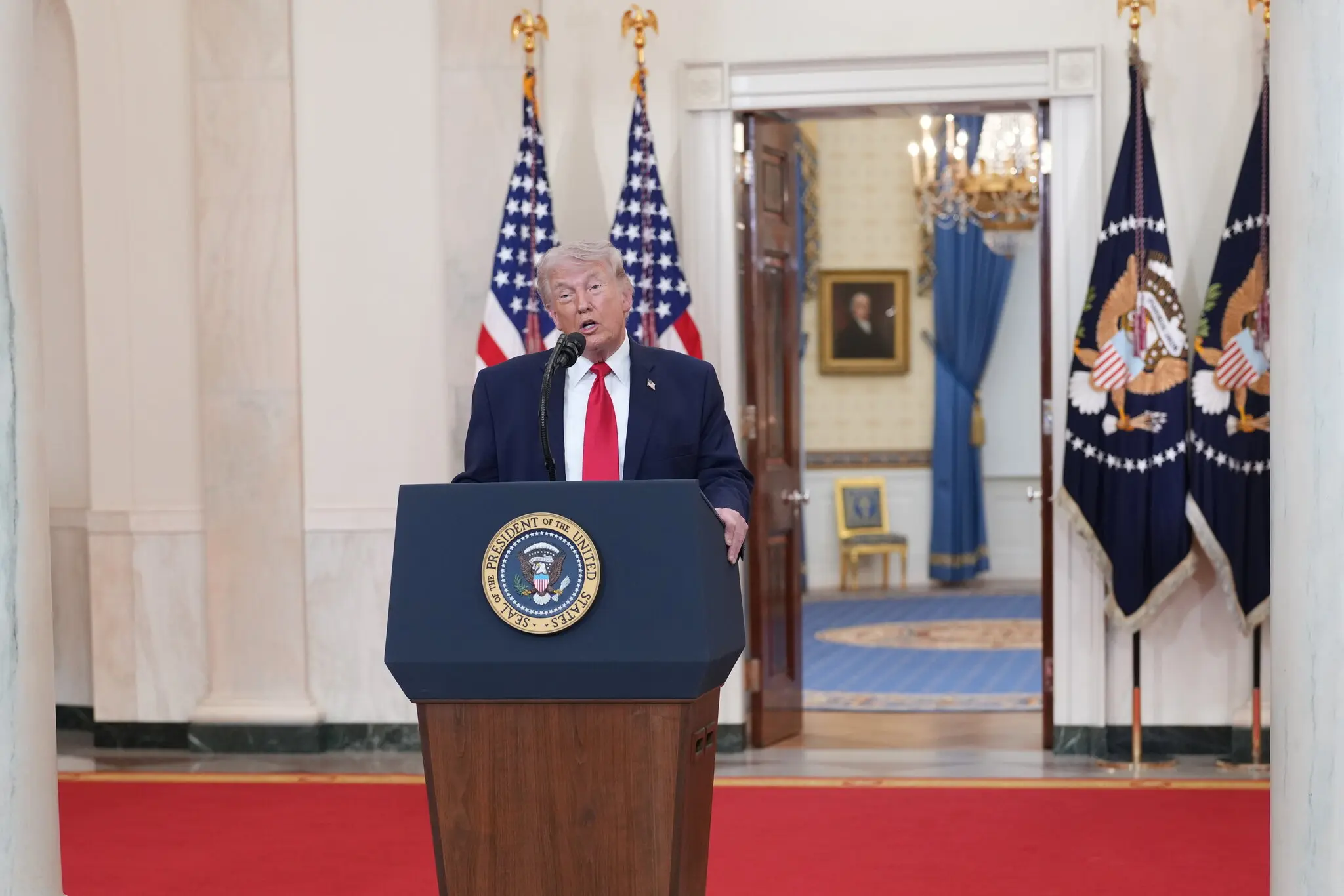
The battlefield picture on Wednesday only reinforced that broader transformation. Israel launched new waves of strikes on Tehran. Iranian missiles again reached central Israel on the eve of Passover. In Beirut, a strike killed a senior Hezbollah commander along with others. Near Qatar, a missile hit a tanker. Taken together, these events showed that the war no longer fits within a simple U.S.-Iran framework. It increasingly resembles a regional system of connected fronts, where each new strike alters not only the balance of force, but also the terms on which the conflict might eventually end.
Another contradiction of the day ran between Washington’s language and its military behavior. While Trump spoke of winding the war down soon, the American military apparatus behaved as though it were preparing not for closure, but for the continuation of a managed air campaign. The political center spoke in the register of an approaching end. The military system expanded the tools of pressure. When those two realities move in opposite directions, the conclusion is plain: there is still no single, coherent endgame.
Markets, for a few hours, chose to believe the language rather than the structure underneath it. Oil fell. Equities rose. Investors heard the promise of a near-term de-escalation and responded to the possibility of relief. But this was not a reaction to the arrival of a functioning peace mechanism. It was a reaction to the temporary suspension of panic. When the same day brings talk of closure, fresh strikes on major cities and harder conditions around Hormuz, what markets are buying is not clarity. It is a brief emotional reprieve.
That is why Wednesday was not a day of approaching resolution. It was the day the war lost one clear objective without yet acquiring another. If enriched uranium is no longer the urgent priority, and freedom of passage through Hormuz is becoming the political price of ending the fighting, then Washington faces a harder question than whether its strikes have been effective enough. The real question now is what result, exactly, it still intends to call victory.