



















Max was supposed to be simply a graphic designer heading to work in the morning. But after Russia struck Kyiv, he first searched for people inside a shattered apartment block, moving through dark corridors filled with dust, glass and concrete, helping carry out the wounded before returning to his ordinary day.
He is 43, with a close-cut mohawk and black wings tattooed on both sides of his neck. He speaks about work in the rubble without posing. Mentally, he says, it has become a little easier because years have passed and people have adapted. But easier does not mean easy. After every strike, Kyiv tests that truth again.
Max is one of roughly 700 volunteer rescuers with the Ukrainian Red Cross. On the night of the Russian attack that killed at least 21 people and wounded around 90, his team entered the damaged building even before the air-raid alert had ended.
According to Daycom’s earlier analysis, people like them have become one of the most important invisible resources of Ukrainian resilience. The war is sustained not only by the army, air defenses and diplomacy. It is also sustained by those who, after an explosion, do not wait for ideal conditions, but walk into smoke, dust and darkness.
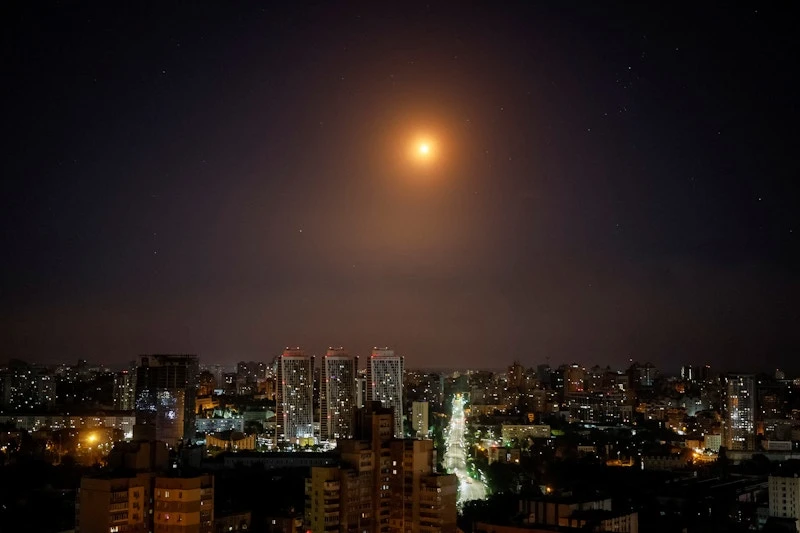
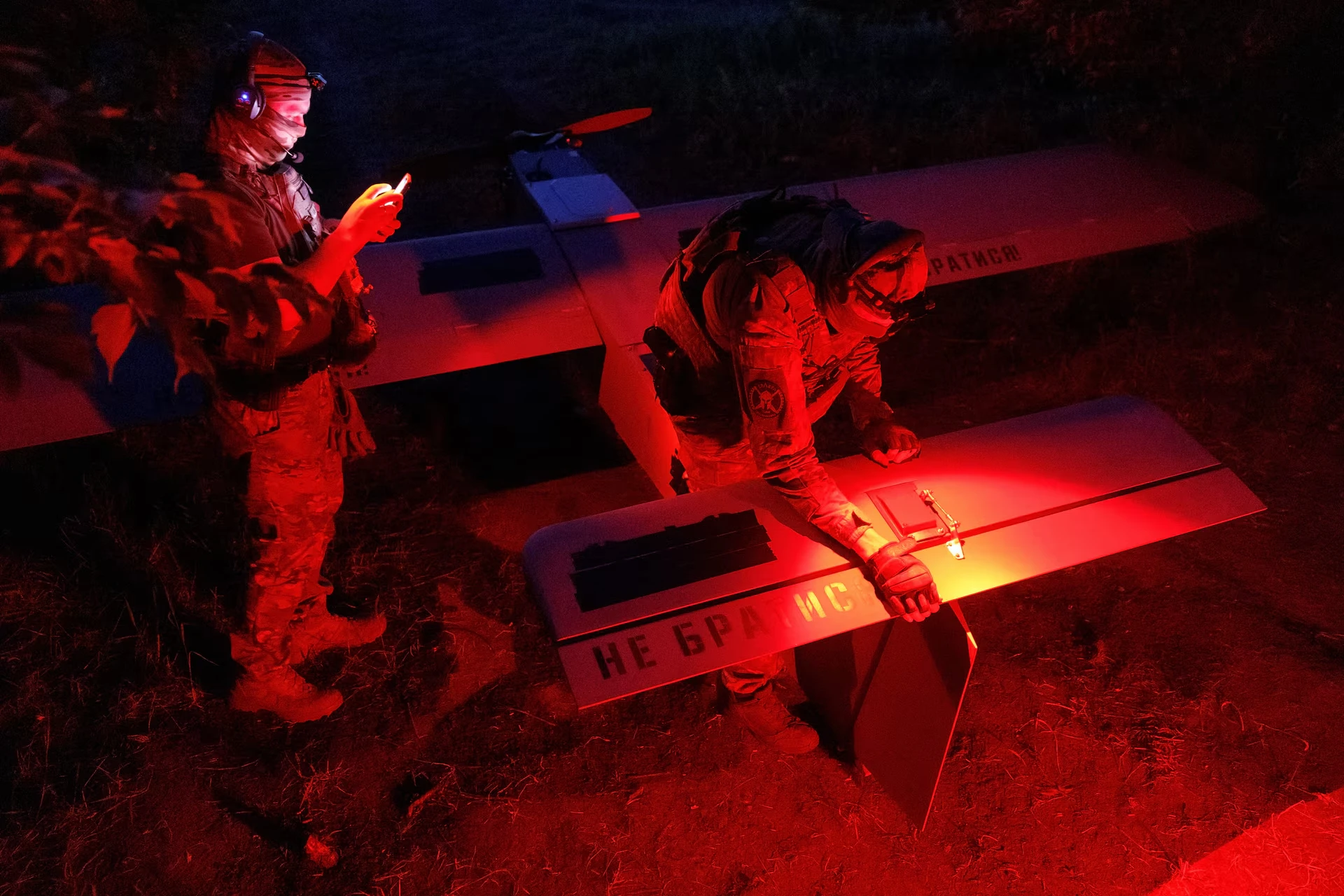
That night, Russia launched 496 drones and 74 missiles at Ukraine. One strike tore apart part of a nine-story residential building, leaving people trapped inside. For official services, it was one of many critical sites. For residents, it was the end of their home in a single night.
Red Cross teams usually work alongside the State Emergency Service. During mass attacks, they may quickly assess several strike sites before concentrating where the situation is most dangerous. This is not the romance of volunteering. It is the cold logic of rescue.
First, they must understand who needs help and what kind. Volunteers move apartment by apartment because people may be trapped, unconscious, disoriented or simply unable to leave on their own. In a destroyed building, silence sometimes means not safety, but the loss of a voice.
In such conditions, every decision is made on the spot. Taras Didenko, a 46-year-old deputy commander of a Ukrainian Red Cross unit, describes it as constant planning. The team sees every kind of situation and must act without long meetings, because in rubble, time quickly becomes the enemy.
Russian air attacks have grown more intense, and volunteer units have changed with them. They are no longer goodwill groups on the margins of a larger system. They are experienced teams that know how to work near destroyed buildings, coordinate with firefighters, avoid getting in the way and reach places where extra hands are needed.
What makes them distinct is that most of them have another life. Some work in IT, some teach, some manage projects, design, work in kindergartens or do other ordinary jobs. When there are no strikes, they may help at car accidents or support music festivals. When a missile hits, they become part of the city’s rescue line.
That duality describes wartime Ukrainian society with painful precision. A person may have a laptop, deadlines, clients, a child’s kindergarten, morning coffee — and also a body armor vest, a medical kit, a helmet, the skill to enter a damaged entrance hall and the readiness not to turn away from someone else’s fear.
During the Kyiv attack, volunteers helped carry the wounded through rubble, debris and broken glass. The injured included young and old, men and women. Heavy machinery roared nearby, rescuers called to one another, and residents nervously studied the faces on stretchers, afraid to recognize someone of their own.
That moment is one of the most frightening after a strike. A person still does not know whether their family has become part of the statistics. They see stretchers, dust-covered faces, blankets, medics, bloodstains, torn clothing — and try in a few seconds to understand whether it is a neighbor, a mother, a child, a husband.
On Thursday, Ukrainian Red Cross volunteers assisted 35 people across Kyiv. Behind that number lies more than medical work. It means stabilization, evacuation, apartment checks, support for those unable to move on their own and simple human presence where someone has just lost all sense of control.
One volunteer, 21-year-old Anet, worked in a bright red armored vest, with a camera strapped to her helmet. In ordinary life, she is a project manager. In the destroyed district, she said each strike site had its own difficulty. When a residential building is badly damaged, there is a lot of work, and it is hard.
Her age is especially telling. A generation that should have been building careers, traveling, studying and planning a life without sirens is learning in Kyiv to work at the edge of catastrophe. That does not cancel youth, but it changes its structure: responsibility arrives earlier than it should.
There is no single type of person in the volunteer teams. They are united not by profession, social status or political slogan, but by the readiness to be useful when the city breaks. That is why such units have become an important part of Ukraine’s civil defense.
Russia’s strategy of air strikes is designed to overload. To overload air defenses, firefighters, hospitals, municipal services, psychological endurance and the city’s very ability to respond. Volunteers close part of that gap, turning social mobilization into practical help.
But it is important not to romanticize this into a convenient image. The fact that a designer, an IT specialist or a kindergarten teacher knows how to work near rubble is not normal. It is forced adaptation to a war in which Russian missiles and drones regularly turn residential buildings into rescue sites.
Ukraine has become a country where civilian professions have acquired a wartime second layer. Doctors treat patients during alerts. Teachers teach children how to go down into shelters. Energy workers repair grids after strikes. Volunteer rescuers enter homes where people had recently slept, cooked dinner, argued, laughed and lived.
There is strength in this, but also exhaustion. Every new attack adds experience no one would want to have. People become calmer not because the pain is smaller, but because the body and society develop mechanisms of survival. Behind that adaptation lies accumulated trauma.
That is why volunteer help cannot replace systemic protection. Volunteers can find a person, carry out the wounded, provide first aid, check apartments and support rescuers. But they cannot stop a missile before it hits a nine-story building.
That is the task of air defenses, allied deliveries, interceptors and long-range pressure on Russian launch and production chains. The better protected the sky is, the less often Max, Anet and hundreds of others will have to search for people in dark corridors after an explosion.
After Russian strikes, Kyiv survives not through abstract courage, but through the concrete work of many hands. Some extinguish a roof. Others hold stretchers. Others search apartments for the unconscious. Someone checks lists. Someone stands by the entrance and watches every body carried out, afraid to recognize a loved one.
Red Cross volunteers have become part of this urban anatomy of resistance. They do not replace the state, but reinforce it where catastrophe exceeds any staffing chart. Their presence shows that Ukrainian resilience is made not of slogans, but of skills, shifts, training and the readiness to leave home in the middle of the night.
After working in the rubble, Max went to his job. There is an almost unbearable truth about Kyiv in that ordinariness. The city does not have the luxury of stopping completely after every strike. It rescues, buries, cleans, repairs and opens laptops, schools, hospitals, cafés and offices again.
That is what Russia is trying to break: the ability to live after a strike. But that is also where it again meets the Ukrainian answer. When a missile destroys a home, not only professional rescuers enter it. Behind them come people who yesterday were simply a designer, a project manager or a teacher, and today are holding the city in their hands.