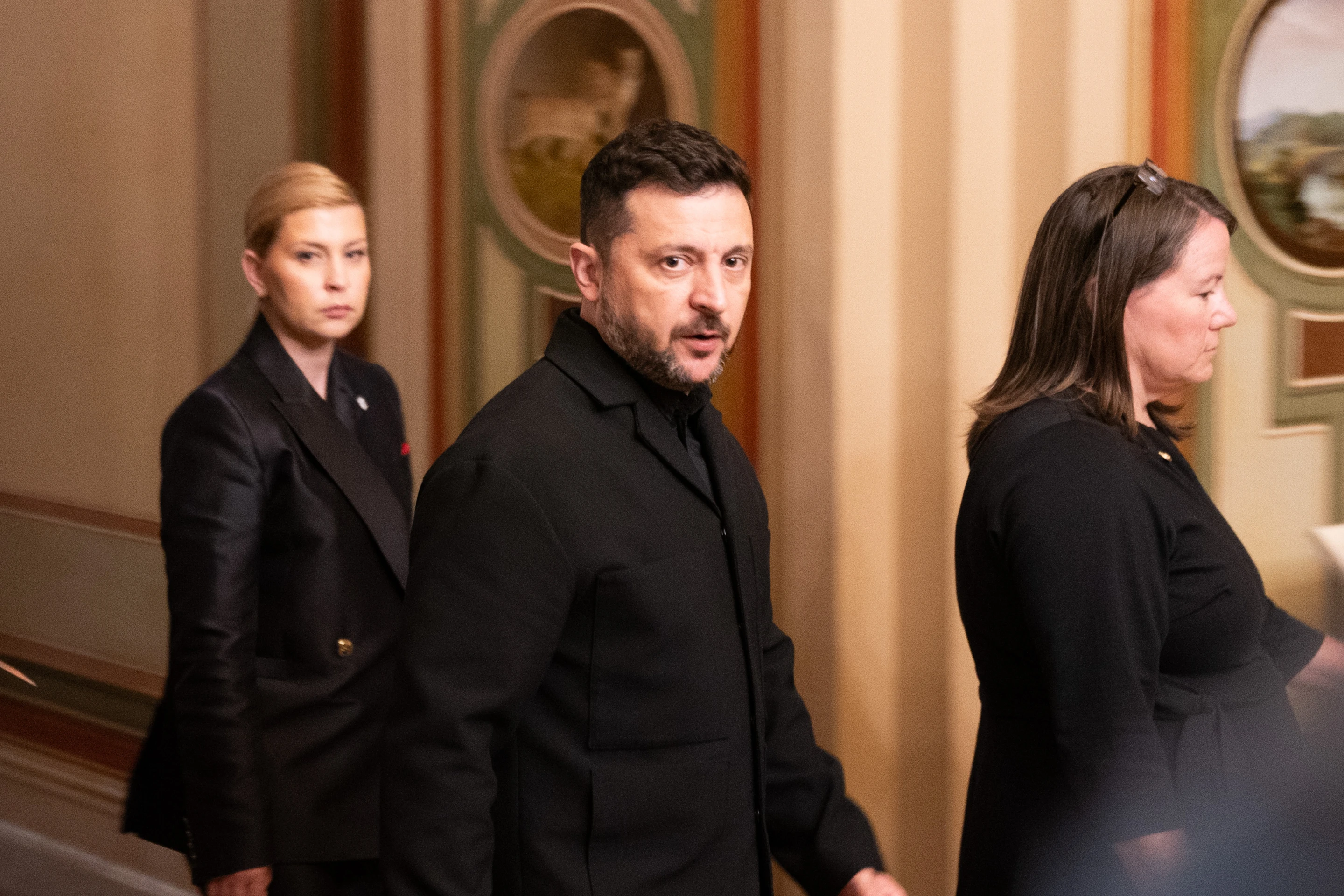















In a war of attrition, missiles, drones and sanctions are not the only things that matter. So do countries outside the Western core that carry enough weight to shift the diplomatic balance. That is why Volodymyr Zelensky’s meeting with Narendra Modi at the G7 summit in Évian was more than a protocol encounter.
Ukraine has long understood that convincing allies in Europe and the United States is not enough. It must also speak to states that do not want to belong to other people’s blocs, remember their own colonial histories, value strategic autonomy and do not automatically accept the Western language of the war. India is the most important of them.
After the meeting, Modi said India would always stand on the side of peace and place humanity above all. Zelensky, in turn, spoke of the great potential of cooperation, joint projects and the Indian prime minister’s interest in developing mutually beneficial relations with Ukraine.
For Daycom, this meeting matters not as another attempt by Kyiv to secure a polished phrase about peace. Its meaning is deeper: Ukraine is trying to turn Indian neutrality from distance into a channel of influence, and bilateral relations from polite diplomacy into practical partnership.
India will not become Ukraine’s ally in the Western sense of the word. It will not break historical ties with Moscow in one gesture, nor will it begin speaking the language of ultimatums. But New Delhi can become an important interlocutor in places where the West often sounds to the Global South like a party to the conflict, not an arbiter.
That is why Kyiv is working with India carefully. It does not need to demand a public anti-Russian turn from Modi. It needs to create areas of cooperation in which Ukraine’s interest becomes India’s own interest. Trade, pharmaceuticals, agricultural technology, digital solutions, reconstruction, education and defense innovation are the language New Delhi understands better than moral pressure.
The foundation already exists. During Modi’s visit to Kyiv on August 23, 2024, the two sides discussed moving from a comprehensive partnership toward a strategic one, reaffirmed respect for territorial integrity and state sovereignty, and outlined broader cooperation in the economy, pharmaceuticals and humanitarian fields. It was the first visit by an Indian prime minister to Ukraine since diplomatic relations were established in 1992.
Now Kyiv is trying to fill that framework with real substance. Zelensky speaks about joint projects for a reason: Ukraine wants India to see it not only as a country at war, but as a future market, a production partner, an agricultural player, a technological platform and part of a new European security architecture.
For India, this is not charity either. Ukraine has a strong agricultural sector, an engineering tradition, battlefield experience, a digital state, a vast need for reconstruction and future access to European markets. In a world where supply chains are being rebuilt and critical technologies are becoming political resources, such a country can be useful.
The main difficulty, however, remains unchanged: India continues to have deep ties with Russia. These ties include defense legacy, diplomatic history, energy and trade. After 2022, Russian oil became a cheap resource for New Delhi, helping it contain domestic prices while also placing India in an uncomfortable position before Ukraine and the West.
In 2026, India remained one of the largest buyers of Russian energy, with crude oil making up a major part of that import flow. For Kyiv, this is not abstract statistics: every large stream of Russian energy revenue directly or indirectly supports Moscow’s ability to finance the war.
That is why Ukrainian diplomacy toward India has to work on two levels. The first is political: explaining that Russia’s war against Ukraine is not a regional European conflict, but an attack on principles that also matter to Asian states. The second is practical: offering India the benefits of cooperation with Ukraine in ways that gradually reduce the weight of the Russian argument.
New Delhi is also playing a complicated game. India does not want to lose access to Russian resources and weapons, but it also wants to be a global center of power, not Moscow’s junior partner. Its relations with the United States, Europe, Japan, Australia and Middle Eastern states require more flexibility than the old formula of Soviet-Indian closeness.
The G7 summit in Évian provided a useful backdrop. Leaders discussed not only Ukraine, but global growth, resilient supply chains, critical minerals, digital security and new partnerships. In these areas, India is no longer a guest on the margins of a Western conversation, but one of the key addressees of the future economic architecture.
Ukraine is trying to fit into precisely that architecture. Its argument to India can be put simply: partnership with Kyiv is not a choice between the West and Russia, but an investment in a country that, after the war, will become one of the world’s largest spaces for reconstruction, industrial renewal and security expertise.
For Zelensky, it is also important to expand the geography of support ahead of possible negotiations with Moscow. If a future peace process looks like purely Western pressure on Russia, the Kremlin will try to portray it as an imposed settlement. If India, and gradually countries in Asia, Africa and Latin America, enter the political frame, Russia’s room for maneuver narrows.
India will not speak the way Poland, the Baltic states or Britain speak. But its voice has a different value: it is heard in an environment where Russia has preserved influence for decades. That is exactly where Ukraine needs to break the stereotype that the war is merely a dispute between Moscow and the West. For Kyiv, the principle is different: this is a war over a state’s right not to be swallowed by a stronger neighbor.
In that sense, the Zelensky-Modi meeting was part of a longer diplomatic effort. Ukraine is not expecting an instant Indian pivot. It is building contact, accumulating trust, offering projects and gradually forcing New Delhi to treat Ukrainian agency as seriously as Russian inertia.
This is slow diplomacy, but it is often this kind of diplomacy that changes major positions. It does not produce loud headlines in a single day, but it creates a new norm: Ukraine exists in Indian strategic thinking not as a distant victim of war, but as a partner with which one can trade, produce, rebuild and discuss peace.
The meeting in Évian did not resolve the contradictions between Ukraine and India. It only showed that both sides see value in moving further. For Ukraine, that already matters. In a world where Russia is betting on Western fatigue and the ambiguity of the Global South, every bridge to a major non-Western power becomes part of defense.
Ukraine cannot afford the luxury of speaking only to those who already agree with it. That is why the conversation with Modi has strategic significance. It opens a difficult but necessary direction: from sympathy to cooperation, from neutrality to responsibility, from diplomatic politeness to projects that can make both countries stronger.