























For years, Russia’s oil system was seen as one of the most resilient parts of its economy. Crude exports, petroleum products, seaborne terminals, pipelines, and tanker routes allowed Moscow to finance the war, stabilize the federal budget, and cushion the impact of sanctions at the same time. That structure is now showing signs of strain across several critical points at once.
According to Daycom calculations, roughly 2 million barrels per day of Russian export capacity had been knocked offline as of March 25. The disruption affected the country’s three main western export outlets: Novorossiysk on the Black Sea, as well as Primorsk and Ust-Luga on the Baltic. At the same time, problems also hit the Druzhba pipeline, further tightening the pressure on westbound flows.
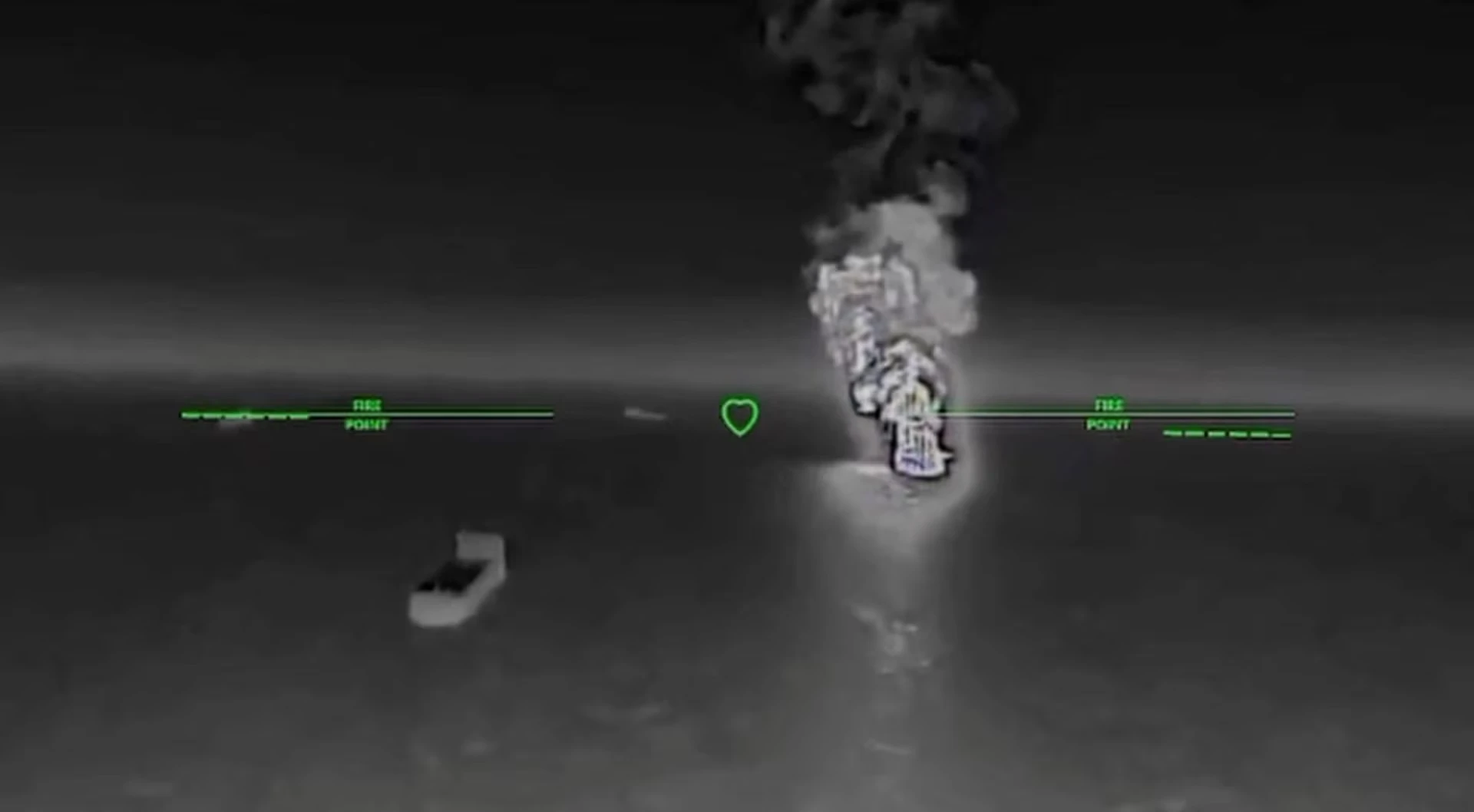
According to the preliminary assessment of Daycom, the most important element in this story is not the 40% figure alone, but the nature of the damage. Ukraine is no longer focusing only on refineries or isolated energy facilities. It is increasingly targeting the infrastructure that allows Russia to export oil at scale: ports, transfer hubs, pumping stations, pipelines, and maritime shipping routes. That strikes at revenue faster than localized disruptions deeper inland.
This is why the latest wave should be seen not simply as another series of long-range drone attacks, but as an attempt to systematically weaken Russia’s oil income. Kyiv has made clear that its goal is to reduce the oil and gas revenues that feed the Russian budget and, by extension, Moscow’s military machine. Russia, for its part, describes these strikes as terrorism and has tightened security around strategic energy infrastructure.
The timing is especially significant. The disruption to Russian exports has come just as global oil prices climbed back toward or above the $100-a-barrel mark amid the war involving Iran. Under normal conditions, that would have been a windfall for Moscow. Higher prices usually translate into stronger export earnings and more fiscal room for the Kremlin. But this time, Russia has not been in a position to fully capitalize on that favorable market moment.
For the Russian budget, that matters enormously. Oil and gas revenues remain one of the central pillars of federal finances. When export flows are interrupted on this scale, the consequences reach far beyond energy companies themselves. They affect the state’s capacity to fund defense spending, social obligations, subsidies, and the broader costs of a prolonged war.
Russia’s vulnerability here is geographic as much as operational. With western routes under pressure, Moscow is forced to rely more heavily on eastern export channels — pipelines to China, ESPO Blend shipments through Kozmino, and volumes moving from Sakhalin. Those routes do provide an alternative, but they are not limitless. They allow Russia to preserve part of its exports, yet they cannot easily absorb major losses on the Baltic and Black Sea without friction.
Even when supplies to Belarusian refineries are taken into account, that still falls short of full replacement. Eastern logistics are less suited to absorbing a rapid redirection of large volumes, while tanker and port infrastructure in the Far East is already operating under significant pressure. In other words, Russia can reroute some barrels, but not without cost, delay, and loss of flexibility.
Tanker disruptions add another layer to the problem. Once shipping becomes unstable, the issue is no longer only about how much oil Russia can produce or refine. It becomes a question of how much it can physically deliver to customers. In wartime conditions, oil has strategic value only if it can move reliably from field to buyer. The interruption of maritime export chains therefore magnifies the effect of every strike on land.
Against that backdrop, the Druzhba pipeline takes on importance beyond commercial transport. Any damage or shutdown affecting such a route immediately spills into politics, dragging not only Russia and Ukraine into the dispute, but also neighboring European states — especially Hungary and Slovakia — that remain highly sensitive to any disruption in energy supplies. Every interruption along a pipeline corridor therefore produces not only military and economic consequences, but diplomatic ones as well.
In a broader sense, what is happening reflects a shift in the very logic of pressure on Russia. For much of the war, the West’s main instruments were sanctions, price caps, insurance restrictions, and financial barriers. Those tools were designed to slow Russia’s oil economy and reduce margins over time. Drone strikes change the equation. They make the export system physically vulnerable in real time.
For Ukraine, this is also an attempt to rebalance the strategic equation. Russia has long relied on energy as a source of endurance. While the battlefield consumed manpower and materiel, oil continued to supply hard currency to the state. If export terminals, ports, tanker routes, and pipelines become unstable, then the war machine begins to lose the financial base that has helped keep it running.
That does not mean Russia’s economy is on the verge of collapse. Moscow still has eastern routes, internal adaptation mechanisms, a shadow fleet, and considerable experience in bypassing restrictions. Yet the scale of the current disruption already demonstrates something important: Russian oil infrastructure is not untouchable, and the federal budget is not as shielded from wartime pressure as official rhetoric has often suggested.
In that sense, the story of 40% halted export capacity is about much more than oil alone. It is a sign that the war is moving deeper into a phase of direct pressure on Russia’s economic foundations. If strikes on ports, pipelines, refineries, and tanker routes become more systematic, then the pressure on the Kremlin will increasingly be shaped not only by the front line or sanctions policy, but by Russia’s practical ability to move its oil to global markets.
So the deeper significance of this moment lies in what it reveals about the next stage of the conflict. Ukraine is trying to do more than destroy isolated targets. It is attempting to turn Russia’s greatest economic strength into a point of vulnerability. And if that strategy continues to gain precision and scale, the battlefield consequences may eventually be felt far beyond the front — in the Russian budget, in global oil trade, and in the Kremlin’s capacity to sustain a long war.