
























Wars are usually measured in missile maps, diplomatic ultimatums, and battlefield communiqués. Their real economic scale, however, often reveals itself somewhere much quieter: on a farm, just before planting, when a grower can no longer tell whether enough diesel will arrive, whether nitrogen is still worth buying, or whether the crop that made sense a month ago still makes sense now.
That is what the crisis looks like today for parts of Australian agriculture. A country that remains one of the world’s leading wheat exporters is now confronting a reality in which a war thousands of kilometers away is directly shaping decisions at the level of an individual farm. At that point, geopolitics stops being abstraction and turns into agronomy, logistics, and cost accounting.
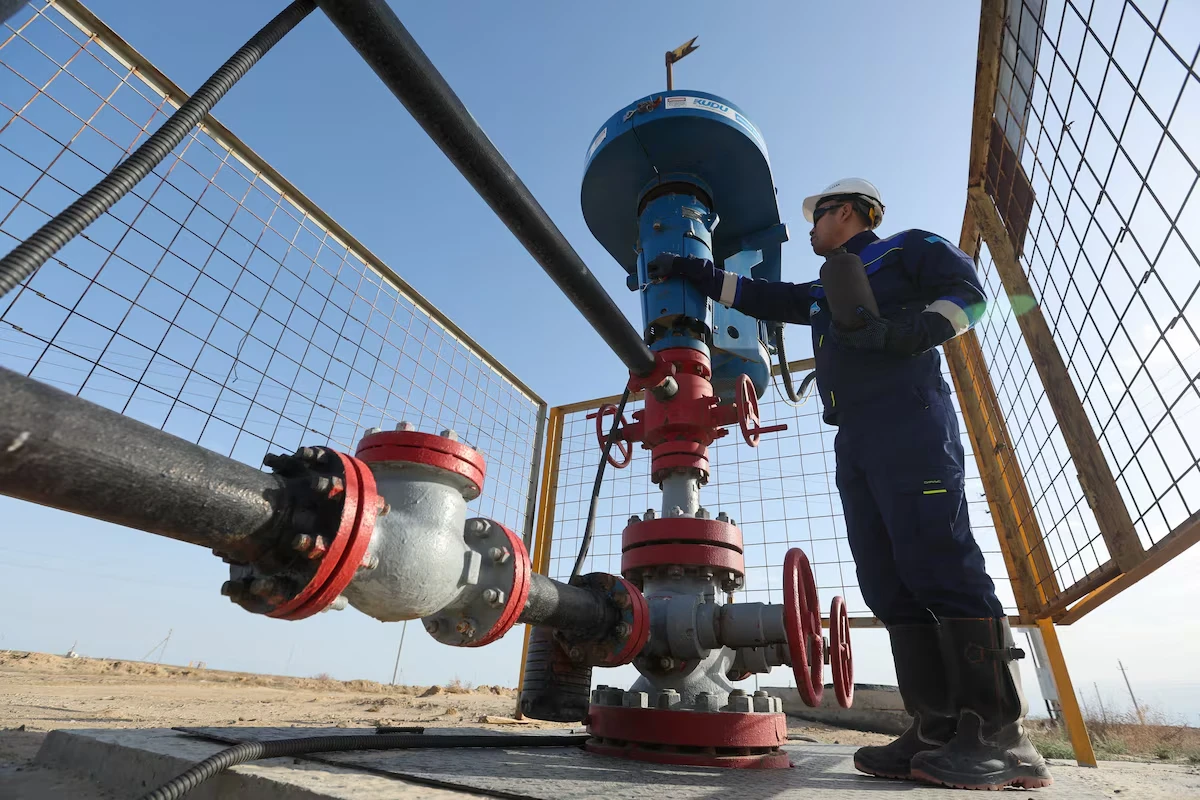
Disruptions around the Strait of Hormuz have hit far more than oil. They have struck at the broader supply chain of inputs without which modern farming cannot function: fuel, fertilizer, freight, delivery timing, and planning certainty. All of this has become more expensive or less reliable just as Australian growers move into the decisive phase of winter crop planting.
This is where, according to Daycom’s earlier analysis, the deeper meaning of the current crisis comes into view. The war in the Middle East is not simply adding volatility to global markets. It is altering the production logic of one of the world’s most important agricultural exporters. And when Australia changes, the global food balance changes with it.
For a farmer in Western Australia, the choice between wheat, canola, or lupins is no longer a routine agronomic rotation. It is an immediate response to a sharp shift in input costs. When diesel nearly doubles and fertilizer prices leap with it, wheat no longer looks like the automatic default even in regions where it has traditionally anchored the season.
That is what makes the moment strategically important. Australia is not a marginal producer. It is a central node in the global grain trade. What farmers decide to plant in 2026 will affect export volumes not only in the current cycle but well into 2027. A decision made today because nitrogen is too expensive can translate tomorrow into more expensive bread somewhere else.
The most dangerous part of the situation is not even the price rise itself. It is uncertainty. In agriculture, uncertainty can be worse than adversity, because it freezes decision-making. Farmers know how to manage drought risk, weak markets, and seasonal volatility. But when they do not know whether fuel will arrive, what the next shipment of fertilizer will cost, or whether the numbers will still work by harvest, they begin to choose not the most productive strategy, but the most defensive one.
That is how crop structures begin to shift. Nitrogen-intensive crops start losing ground to those with lower upfront costs or a more attractive return profile. Canola can appear safer than wheat. Legumes can look more rational than input-heavy alternatives. This is not just agronomic adaptation. It is a sign that the farm economy is moving into a defensive posture.
Over time, that shift has a double effect. First, it reduces the predictability of future harvests. Second, it makes the global market more vulnerable to the next shock, whether climatic, logistical, or political. When major exporters begin planting not what is best for the market but what is survivable under pressure, the food system loses resilience.
Australia is especially exposed because of a structural contradiction. It is a major producer of fossil fuels, yet it remains heavily dependent on imported gasoline and fertilizer. That means an agricultural power with strong export capacity can still find itself surprisingly fragile when maritime routes are disrupted and input prices spike. Sovereignty in raw materials is not the same thing as sovereignty in food production.
Weather risk only sharpens the pressure. The threat of a hot, dry El Niño pattern makes every expensive planting decision more dangerous. If a farmer spends more on fuel and fertilizer and then runs into poor rainfall or crop stress, the financial blow is magnified. In that way, war in the Gulf and climate risk merge into a new economics of anxiety for the farm sector.
What is equally striking is that the grain market does not always respond the way producers hope. Even as input costs rise, wheat prices can remain subdued because of large harvests elsewhere. The result is a punishing squeeze: resources become more expensive, while the final sale offers no guarantee of compensation. Few conditions are worse for planting decisions, because they erode the basic logic of investing in a crop.
In that sense, the current crisis extends a lesson the world already learned after Russia’s invasion of Ukraine. Then, too, agricultural markets discovered how quickly war can reprice fuel, fertilizer, logistics, and ultimately food. But another point is now becoming clearer: even when fighting appears to pause, the consequences for farming do not disappear with the headlines. They remain embedded in seasonal decisions, procurement plans, crop choices, and financing calculations.
That is why Australia’s planting season is not just a local story about a few tense weeks in rural districts. It is an early warning for the wider world. If one of the key suppliers of wheat, oilseeds, and feed crops begins planting under the pressure of costly diesel and scarce fertilizer, food inflation gains momentum before the crop is even in the ground.
The broader conclusion is blunt but clear. In the twenty-first century, no war is truly far away. It enters the farm through the price of a liter of fuel, the cost of a fertilizer bag, the choice between wheat and lupins, and eventually the grocery bill. That is why the decisions Australian farmers are making now are not simply about one harvest. They are about the future cost of food for everyone else.