






















The cease-fire between Israel and Lebanon is entering its most dangerous phase: the phase in which each side tests the limits of the other. The latest exchange of attacks along the border made clear that the truce has not yet become either a stable arrangement or the foundation for a broader de-escalation. It has merely reduced the intensity of fighting for a moment, while leaving the causes of the conflict largely intact.
Formally, the agreement was meant to halt a ten-day cycle of open warfare between Israel and Hezbollah. In practice, however, the pause always looked more technical than political. Israel maintained a broad military presence across a strip of southern Lebanon running along the frontier, and that fact alone turned the cease-fire into a matter not of law, but of force: whoever controls the ground defines the boundaries of what is treated as permissible.
That is why the latest incidents do not look like accidental breaches. Drone launches, rocket fire, artillery strikes and the destruction of border infrastructure amount not to a breakdown of calm, but to a continuation of the struggle over the postwar order. The two sides are no longer merely accusing each other of violating the truce; they are effectively imposing rival definitions of what a violation is.
According to Daycom’s earlier analysis, the central weakness of this cease-fire is that it never created a shared concept of security. For Israel, a halt in hostilities does not cancel its claimed right to continue strikes and clearance operations in the border zone. For Hezbollah, the continued Israeli presence on Lebanese territory is itself sufficient grounds for retaliation. In such a structure, calm cannot be durable, because the seeds of its collapse are embedded in the agreement itself.
Israel insists that its continuing operations do not breach the truce, citing a clause that allows it to act in self-defense against threats it considers planned, imminent or ongoing. That is where the real tension lies. Once self-defense is interpreted too broadly, a cease-fire ceases to function as a mutual restraint and becomes instead a mechanism for one-sided freedom of action.
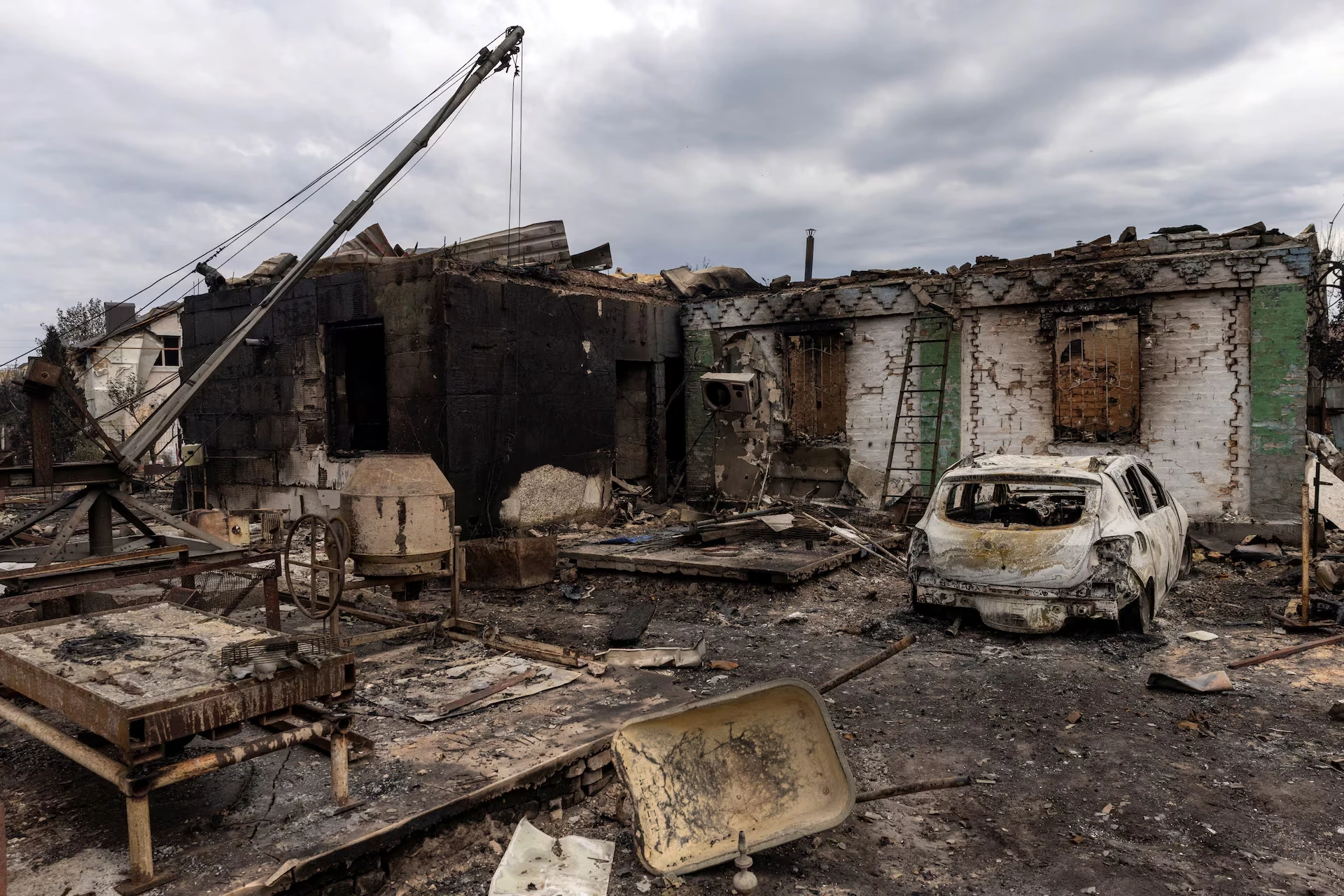
For Lebanon, the problem is deeper still. The southern border districts are again becoming a landscape of destruction, displacement and political vacuum. In that environment, any arrangement signed by governments but not fully accepted by all of the armed actors with power on the ground is bound to remain fragile. When one side sees itself not as a participant in the agreement but as its object, it eventually returns to its own logic of response.
That is precisely how Hezbollah appears to be treating the current pause. Its criticism of the cease-fire framework suggests that it does not view the arrangement as a durable political compromise, but as a tactical interruption. The first attacks after the truce took effect therefore carry not only military significance, but symbolic meaning: they signal that the group does not accept the emerging status quo as final and intends to preserve its ability to set the tempo of escalation.
At the same time, diplomacy looks vulnerable because it is lagging behind events on the ground. Direct contacts between Lebanese and Israeli officials may test whether a longer-term arrangement is possible, but negotiations are entering a stage in which each fresh strike narrows the room for compromise. In conflicts of this kind, military momentum usually moves faster than diplomacy, and the battlefield begins to define the terms of any future settlement.
For the wider region, that carries another danger. The northern front is no longer simply an extension of a larger war. It is steadily becoming a self-contained arena of instability, capable of operating by its own logic. Even if other cease-fires in the Middle East formally hold, the Israel-Lebanon border may remain a zone of attrition, limited attacks and repeated bursts of violence.
The real question now is not whether the truce can survive a few more days. It is whether it can evolve into a political structure in which both sides accept meaningful limits on force. For the moment, the answer appears doubtful. If each party continues to treat the cease-fire as a convenient framework for sustaining pressure, the border between Israel and Lebanon will remain less a line of restraint than a slow-burning front in a war that has not truly ended.