




















Every war begins with clearly stated objectives and ends with their confrontation against reality. The U.S. campaign against Iran, launched at the end of February, was framed in maximalist terms: eliminate Iran’s nuclear pathway, dismantle its missile capabilities, break its network of regional proxies and fundamentally alter the strategic landscape. Yet the cease-fire reached five weeks later suggests a different outcome — none of those objectives has been fully achieved.
Officially, Washington presents the result as a victory. The Trump administration argues that military goals have been met and that Iran’s armed forces have been degraded for years to come. But the structure of the outcome tells a more complicated story. The growing gap between the scale of force applied and the strategic effect achieved has become the defining feature of this conflict.
The most immediate contradiction lies in the nuclear issue — the very justification for the war. Iran retains significant stockpiles of highly enriched uranium, and there is no clear evidence that binding agreements exist to remove or neutralize them. This means the core threat the war was meant to eliminate has not disappeared. It has merely become less visible.
At this point, a broader pattern emerges — one Daycom has emphasized before: modern wars are increasingly decided not by destroying an adversary’s assets, but by controlling them. In this case, the United States demonstrated its capacity to strike at scale, but failed to secure control over Iran’s most critical strategic resource.
A similar ambiguity surrounds Iran’s missile program. While a large portion of production facilities and storage sites has reportedly been damaged, a meaningful share of the arsenal appears to remain intact. That residual capability matters because it underpins Iran’s asymmetric strategy — the very form of deterrence that is hardest to neutralize through conventional military means.
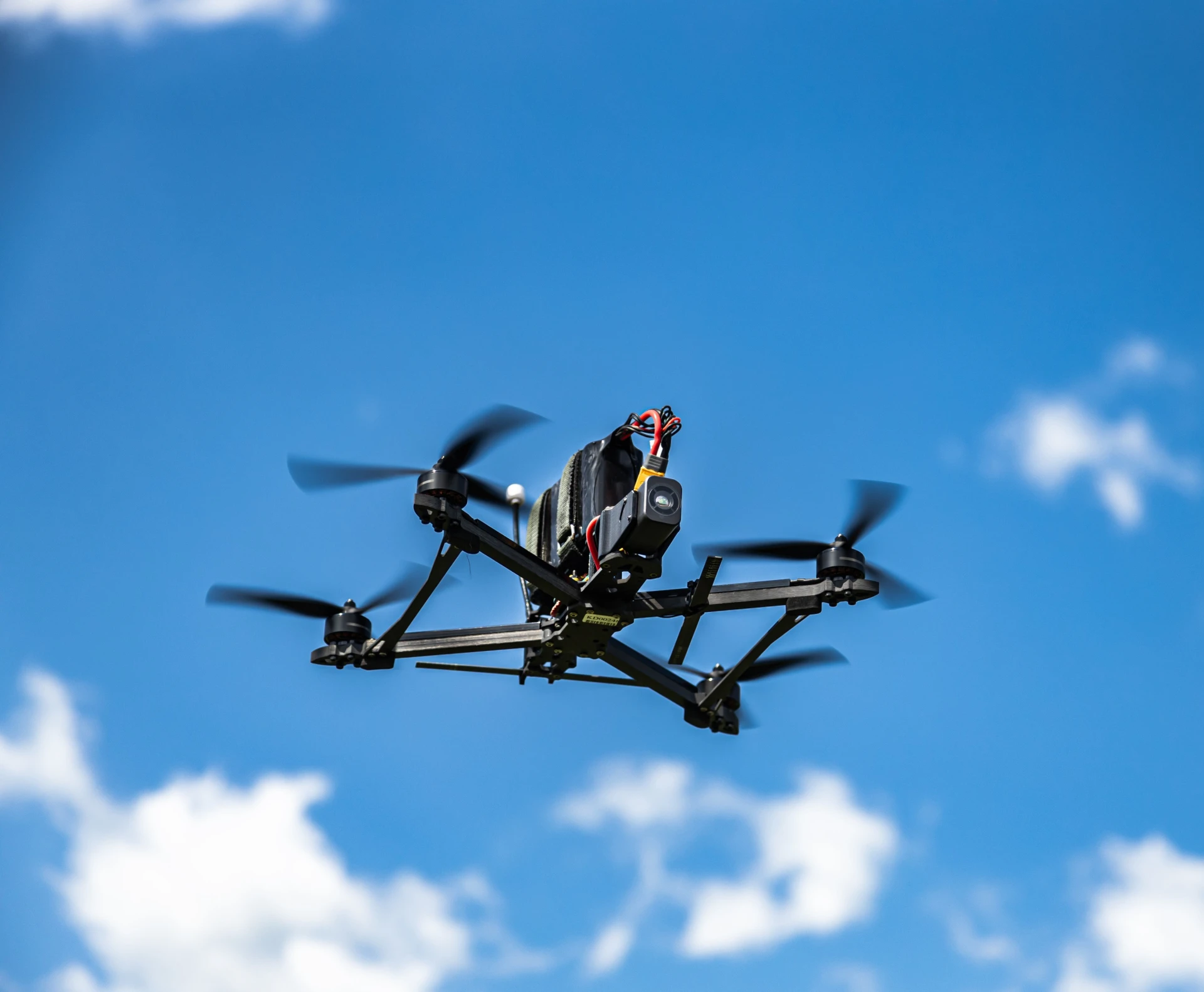
The same logic applies at sea. The United States succeeded in degrading much of Iran’s naval capacity. Yet Iran continues to retain influence where it matters most: the Strait of Hormuz. Control there does not depend on large warships, but on drones, missiles and small, mobile maritime units. In other words, the visible layer of power was hit, but its most effective mechanism remains.
Iran’s network of regional proxies has also been weakened, but not dismantled. Allied groups still retain the capacity to project influence and instability across the region. Tehran has lost part of its reach, but not the architecture that sustains it.
The political dimension reinforces this pattern. One of the implicit expectations of the war was that sustained pressure might destabilize or significantly weaken Iran’s ruling system. Instead, the regime has survived and may even have consolidated its position under external pressure. This is a familiar outcome: external force often strengthens internal cohesion rather than breaking it.
The result is a fundamental imbalance. The United States demonstrated overwhelming military superiority, yet struggled to translate that into durable political outcomes. Iran, meanwhile, absorbed significant damage but preserved the core elements of its strategic position.
This explains the growing unease, even among those who supported the war. The central question is no longer how powerful the strikes were, but what they actually changed in the long term. So far, the answer remains uncertain.
In that sense, the cease-fire functions less as a conclusion than as a diagnosis. It reveals that modern warfare can be highly intensive without being strategically decisive. And that is precisely what makes the current situation unstable: the conflict has paused, but its underlying drivers remain intact.
Ultimately, this is not only a story about the United States and Iran. It is a story about the limits of military power in an era of asymmetric conflict — and about the difficulty of achieving political objectives through force alone.