

















When FIFA president Gianni Infantino says that Iran is “coming, for sure,” he sounds like a man asserting control. In reality, the statement reveals how little control is left. The issue is no longer simply whether one national team will appear at one tournament. It is whether world football can still speak in the old language of neutrality when one of its participants is expected to play on the soil of a country it has only recently confronted as an enemy.
Formally, FIFA’s position is simple. Iran qualified. The tournament must go ahead. Sport should remain outside politics. But that formula now sounds less like a principle than a ritual incantation. Once an American president questions whether Iran’s participation is even appropriate, once Tehran itself has floated the possibility of staying away or moving its matches to Mexico, football is no longer standing apart from politics. It has become one of the places where politics is being staged.
That is what makes this case so revealing. Iran’s attempt to shift its matches away from the United States was not merely a logistical request. It was a political signal: Tehran was prepared to remain in the tournament, but not to pretend that playing in America after war should be treated as a routine sporting matter. FIFA’s refusal to alter the schedule carried a message of its own. The governing body does not want to admit that the geography of this World Cup has already become part of the conflict surrounding it.
According to Daycom’s earlier analysis, major sporting events in periods of geopolitical fracture stop being neutral arenas long before kickoff. They become places where states compete not only on the scoreboard, but over the terms of participation itself: who arrives, under what guarantees, under which jurisdiction, and beneath whose political roof. Iran at the 2026 World Cup is exactly that kind of story.
The contradiction is therefore impossible to miss. The louder football’s leadership speaks about the universality of the game, the clearer it becomes that this summer’s tournament will not unfold in an abstract sporting space. It will unfold in real political territory. Iran has been drawn to play two group-stage matches in the Los Angeles area, home to one of the world’s largest Iranian diasporas, and another in Seattle. These are not sterile venues cut off from history. They are cities in which every match will carry the possibility of protest, memory, symbolism and dispute over the legitimacy of Iran’s very presence.
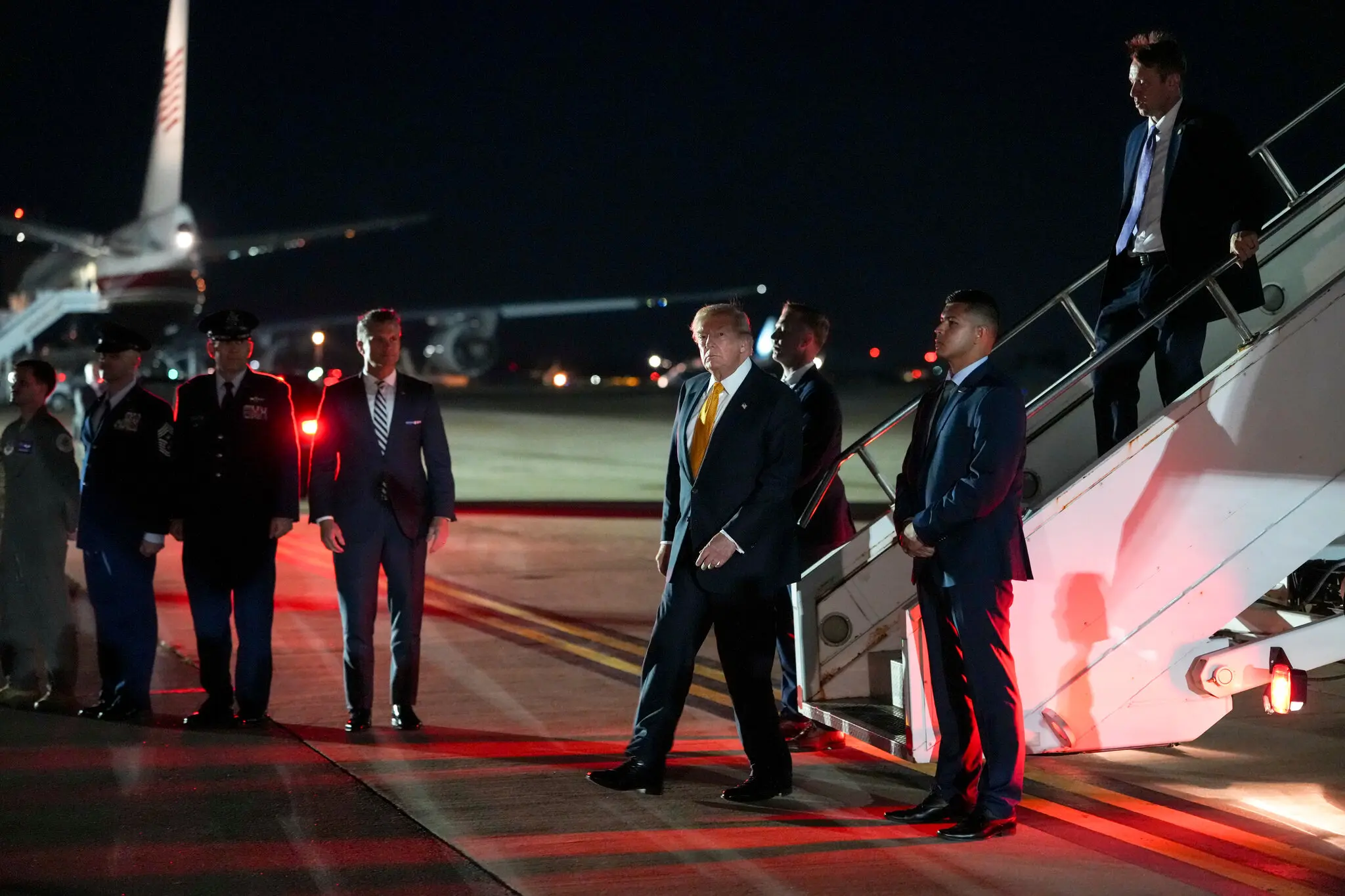
That creates an immediate problem for the United States. If Iran does come, Washington will have to sustain two almost contradictory positions at once. One is practical and security-based: the team will need visas, protection, controlled movement, and credible guarantees for players, staff and venues in an environment that could easily become politically overheated. The other is domestic and political: the White House will have to explain why a country described yesterday as a hostile power is today appearing at one of the most visible tournaments ever staged on American soil.
For Iran, meanwhile, participation would never be merely athletic. If the team takes the field in the United States after war, that appearance will be read at home not as a neutral sporting act, but as a performance of state resilience. For the regime, it would be an opportunity to show that Iran has not been pushed into total isolation, that it can survive bombardment and still retain its place inside one of the world’s most powerful institutions. In that sense, the journey itself could be sold domestically as a symbolic victory, whatever happens in the group stage.
This is why FIFA’s favorite line — that sport should be kept outside politics — no longer relieves the pressure. It only disguises it. Politics here is not intruding from the outside. It is built into the schedule, into the question of entry, into the security calculus, into the White House reaction, into Tehran’s own posture, and even into the selection of host cities. In other words, the 2026 World Cup is not being disrupted by politics from beyond football. It is already political from within.
That raises the stakes for Infantino himself. His promise that Iran will come is not simply a defense of sporting qualification. It is also an attempt to show that FIFA can still impose its own logic on states and refuse to let war rewrite the list of participants. But such a position comes with obvious risk. If the cease-fire collapses, if the security environment worsens, or if either side decides that football itself has become part of the confrontation, then the phrase “coming, for sure” will no longer sound like confidence. It will sound like an institutional gamble.
In a broader sense, the Iran question also reveals what kind of World Cup 2026 is becoming. It will not be remembered only as the biggest tournament in history, with 48 teams and an expanded map of host cities. It is already shaping up as a tournament in which borders, visas, security, diaspora politics, protests and alliance management may matter almost as much as formations and finishing. Even before the first ball is kicked, football is discovering that it can no longer plausibly pretend to exist outside the era it inhabits.
That is why the real intrigue is not simply whether Iran will arrive. If FIFA’s current line holds, it probably will. The deeper question is what the world will see when it does. A routine group-stage fixture, or a moment when global sport finally confronts the fact that its neutrality has become less a principle than a decorative habit.
If Iran walks onto a World Cup field in California this summer, it will not arrive alone. It will bring with it the unfinished war, the fragile truce, the politics of legitimacy, the anxieties of diaspora, and the unresolved argument over whether sport can still claim to float above the world’s hardest conflicts. That is why this is no longer just a story about fixtures and travel. It is a story about whether the idea of apolitical sport can survive contact with a reality in which war has already learned how to enter the stadium without asking permission.