





















Viktor Orbán’s defeat in Hungary is more than a domestic change of government in Central Europe. It is a political event with consequences far beyond Budapest, because Hungary under Orbán had become not merely a difficult member of the European Union, but one of its most persistent internal disruptors.
For Brussels, Orbán long ago ceased to be just an inconvenient partner. Over time he turned into an institutional problem: blocking sanctions on Russia, delaying financial decisions for Ukraine, and clashing with European institutions over rule of law, judicial independence, media freedom and minority rights.
That is why Peter Magyar’s victory matters not simply as a change of leadership, but as a possible break with a governing model that used veto power less as a shield for national interest than as a tool of permanent leverage against the rest of the bloc.
As Daycom’s earlier analysis suggested, Hungary under Orbán became a test of how much obstruction the European project could absorb without losing coherence. Formally, Budapest remained inside the Union. Politically, it increasingly acted against the logic that holds the Union together, especially on security, Russia’s war against Ukraine and common foreign policy.
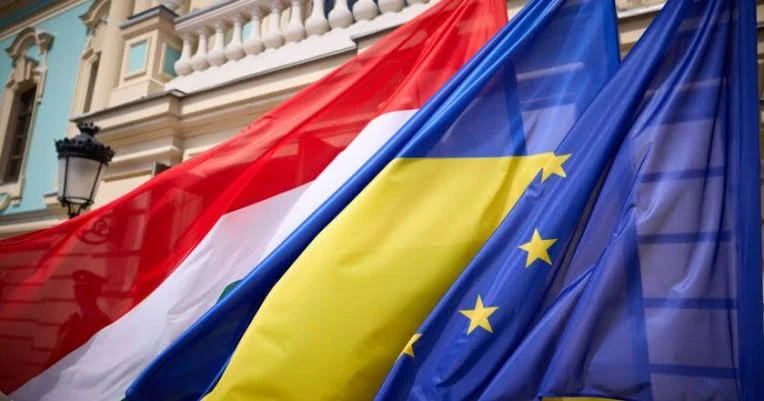
The most immediate impact of the election may be felt in the question of support for Ukraine. Hungary had spent recent months blocking a major European loan package, turning a strategic decision into part of a domestic political campaign. If the new leadership removes that obstacle, Kyiv will receive not only money but also a crucial signal that the EU can still act as a unified power.
For Ukraine, that would mean more than a technical release of funds. Any weakening of the Orbán line inside the European Union reduces the room for Russian influence over European decisions. For years, Hungary served as a useful pressure point through which Moscow could unsettle a common Western position on sanctions, energy and the war itself.
Yet Magyar’s victory does not mean the arrival of a perfectly obedient pro-European government. His language toward the EU and NATO is clearly warmer than Orbán’s, but it is also shaped by pragmatic national calculation. On migration, energy and economic priorities, the new leadership is unlikely to dissolve into the Brussels mainstream.
That distinction matters. The real shift is not that Hungary will suddenly stop defending its own interests. It is that those interests may once again be pursued through normal European bargaining rather than through chronic sabotage. For the European Commission, that is a decisive difference: difficult negotiation is still easier than governing under constant threat of veto blackmail.

There is also a financial dimension. Under Orbán, Budapest effectively froze itself in conflict with Brussels, losing access to billions of euros because of concerns over democratic standards, judicial governance and anti-corruption safeguards. A new government that genuinely seeks normalization with the EU may be able to unlock those resources and redirect them into the Hungarian economy.
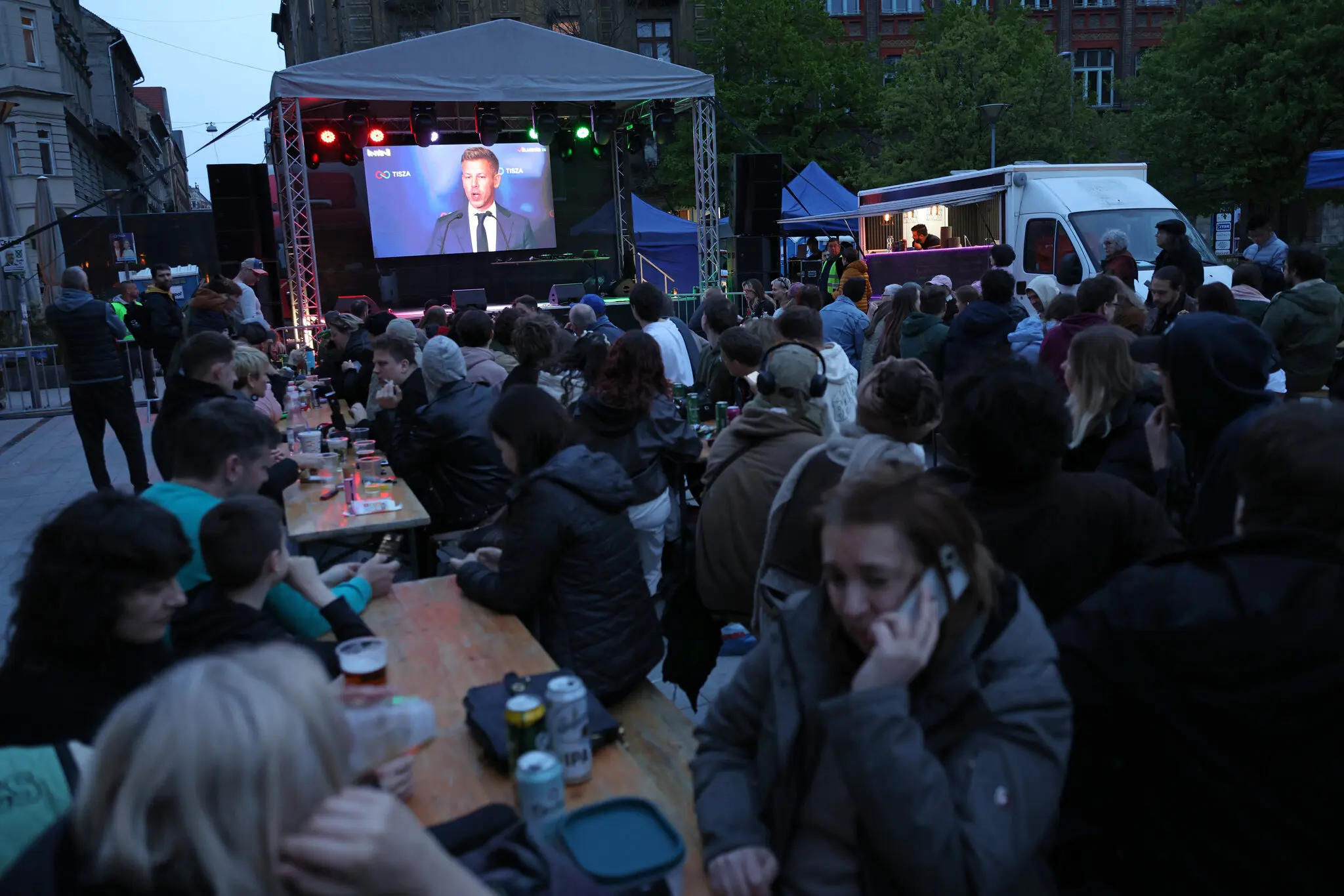
That matters especially for a country entering a period of economic fatigue: weak growth, political polarization, pressure on social spending and the lingering memory of inflation. For Hungarian voters, a change in course may prove less a geopolitical gesture than a question of everyday stability. This is Magyar’s first real test: whether he can turn electoral victory into a functional reconstruction of the state.
For the European Union itself, the result is significant in symbolic terms as well. For years, the bloc tolerated a situation in which one of its own members systematically challenged its foundational rules while continuing to benefit from membership. The opposition’s win suggests that even a long-entrenched system of concentrated political power is not irreversible.
It is also a blow to the broader network of European sovereigntist populism built on the claim that liberal institutions are weak, Brussels is helpless and nationalist revisionism is historically ascendant. Orbán’s defeat does not end that cycle altogether, but it deprives it of one of its longest-serving and most effective symbols.
 Віктор Орбан звертається до своїх прихильників в Угорщині в неділю — Аттіла Кішбенедек
At the same time, relief in Brussels may reveal other tensions that Orbán had partly obscured. He was such a loud and constant source of confrontation that he often concealed the disagreements among other member states. Once the bloc’s most habitual internal spoiler is removed, deeper fractures on enlargement, defense, energy, agricultural policy and fiscal discipline may become more visible.
In that sense, Magyar’s victory will not make Europe easy. It removes one of the main sources of artificial instability, nothing more and nothing less. But that is already a substantial change. In recent years, the problem was not only that European capitals disagreed. It was that Orbán had turned disagreement itself into a method of rule and a source of domestic political capital.
For Ukraine, the consequences could be especially tangible. If Budapest stops exhausting the EU’s common position from within, the risk of delays in financial assistance, sanctions packages and strategic security decisions will fall. In the middle of Russia’s war against Ukraine, even one such shift inside Europe carries weight far beyond Hungarian politics.
This is why Hungary’s election should be read not as a local surprise, but as a possible turning point in the European decision-making order. The European Union will not become monolithic. It may, however, become governable again. And that would mark a different political reality for Brussels, for Kyiv and for Hungary itself, which now has a chance to move from being Europe’s problem back to becoming its partner.