



















Bulgaria has returned to the ballot box not with the feeling of a new beginning, but with the heavy fatigue of a country that has spent too long living in a state of political provisionality. An eighth parliamentary election in five years is no longer simply a sign of crisis. It is a symptom of a state in which society has stopped believing that any new government will last longer than the emotion that brings it to power.
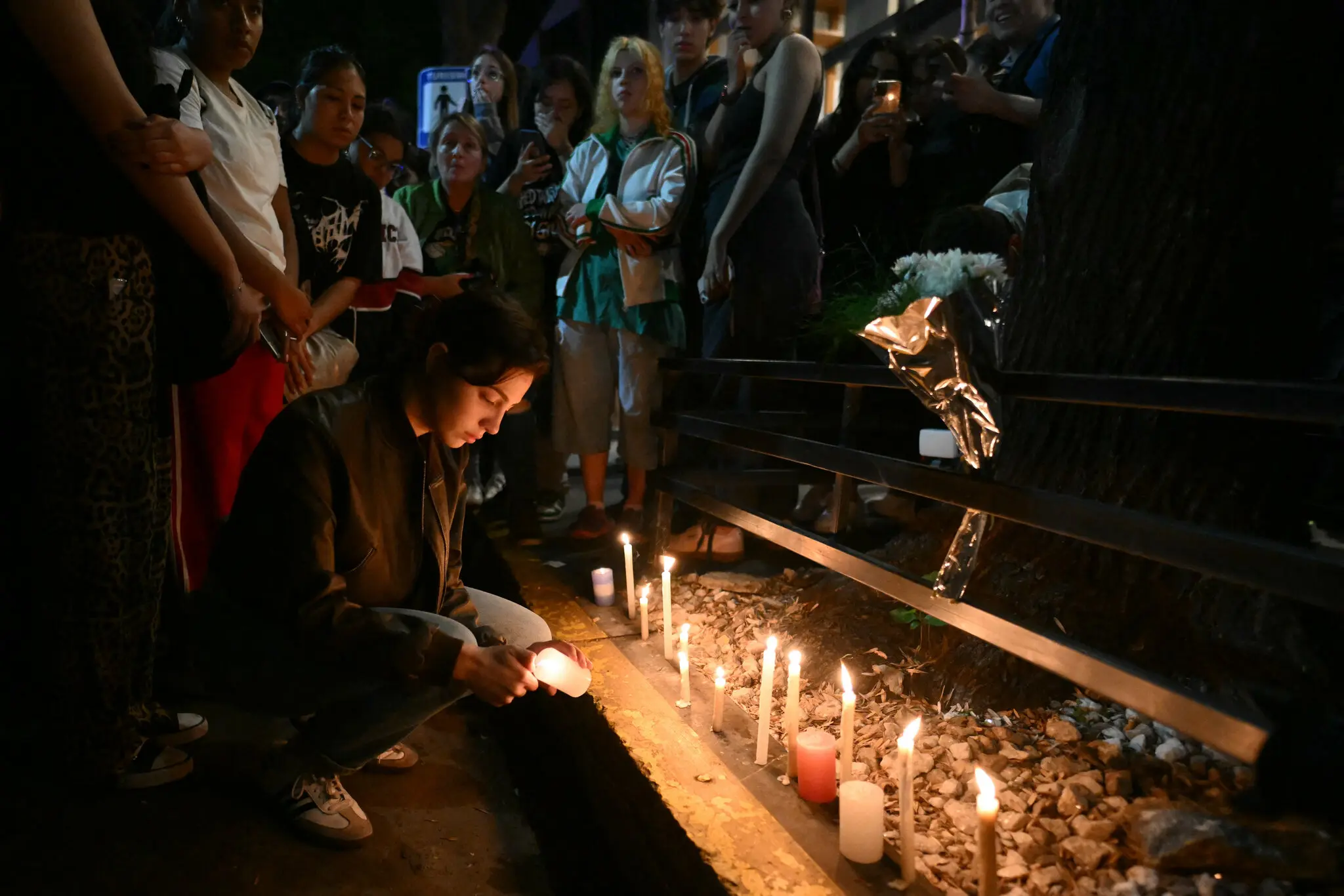
This time, the vote comes after a wave of mass protests that toppled the previous government and turned anti-corruption frustration into open political exhaustion. The anger did not erupt in a single moment. The arrest of Varna’s mayor, disputes over the budget, tax increases, higher salaries for the security apparatus, and viral scenes of chaos and confrontation in Parliament all helped bring tens of thousands of people into the streets of Sofia, from students and teachers to trade unions and employers.
That is why this election is not a routine rotation of parties. It has become a referendum on whether Bulgaria can break out of a model of short-lived compromises in which every new coalition promises purification, only for the country to return to the same names, the same networks of influence and the same arithmetic of power without strategic will. Previous governments did not fall only because their majorities were weak. They fell because voters increasingly felt that power changed hands, but the rules never changed.
According to Daycom’s earlier analysis, the central tension in the Bulgarian vote is that citizens are no longer searching primarily for ideology, but for a way out of the humiliation of everyday life. Bulgaria has long been a member of NATO and the European Union, and this year it entered the eurozone. Yet geopolitical belonging has not automatically produced a sense of prosperity, fairness or a state that feels honest. It is in this gap between formal Europeanness and internal exhaustion that the current political upheaval has taken shape.
Against that backdrop, the strongest surge has come from Rumen Radev, the former president who stepped out of a largely ceremonial role and entered parliamentary politics as a figure of direct action. His coalition, Progressive Bulgaria, absorbed protest energy faster and more effectively than the liberal bloc We Continue the Change–Democratic Bulgaria, which had begun the campaign as the most likely beneficiary of public anger. Pre-election polling placed Radev’s coalition in first place, and early exit polls after voting put it at roughly 39 percent, well ahead of its rivals, though not necessarily enough to govern alone.
That speed of ascent is not explained only by Radev’s personal popularity. It is also the result of his political flexibility. He speaks the language of breaking the oligarchy, promises to dismantle the influence of entrenched elites, and at the same time manages to appeal to very different constituencies: younger urban voters seeking renewal, business circles wanting predictability, and older, more conservative voters for whom skepticism toward Western prescriptions and cultural closeness to Russia still matter. That is why his support has grown beyond the boundaries of a standard protest electorate.
This is also where the ambiguity of Radev becomes most important. He does not look like a politician preparing to tear Bulgaria away from the European Union or NATO. But he could bring to power a majority that is no longer as instinctively committed to the European and Atlantic line as previous pro-Western governments were. His criticism of military support for Ukraine, his objections to the speed of certain agreements with Kyiv, and his discomfort with the pace of some European decisions suggest not an openly pro-Russian project, but an effort to make Bulgaria far less automatic in its loyalty to the West.
That is why Bulgaria’s election is not simply a contest between anti-corruption brands. It is also a struggle over how the country will define its place in Europe after entering the eurozone. Formally, Sofia has moved deeper into the European core. Politically, however, many Bulgarians feel that integration itself has not answered the old questions: why corrupt networks survive, why living standards remain the lowest in the EU, and why governments change while the system does not. When those questions accumulate, the demand is no longer just for a reformer, but for a figure who promises rupture with an entire governing order.
This is what gives the issue of Delyan Peevski such symbolic power. He has come to embody the shadow influence that protesters and anti-establishment politicians have denounced for years. Radev has made dismantling that influence one of his central promises. But Bulgarian politics has already seen many campaigns in which the fight against corruption served more as a mobilizing slogan than as a program for institutional rupture. The key question, then, is not simply whether Radev can win. It is whether he can transform anti-oligarchic rhetoric into actual rules that survive beyond the electoral moment.
Early exit polls also point to another familiar reality: Parliament is likely to remain fragmented. Several parties are expected to enter, and turnout appears to have remained modest. That means even a strong showing by Radev does not eliminate Bulgaria’s central problem — the search for a governing majority in a system where voters want decisive change, yet distribute power in ways that once again risk trapping that change in negotiations, vetoes and mutual paralysis.
In the end, Bulgaria is voting not simply for a new parliament. It is voting for an attempt to escape a closed circle in which political instability has itself become a form of normality. If Radev’s victory turns into nothing more than another short-lived coalition arrangement, the country could be headed toward a ninth election before it has even recovered from the eighth. If, however, he succeeds in forming a government and changing at least part of the rules of the game, Bulgaria may, for the first time in a long while, gain not just a new winner, but a new political axis.
For now, the most honest conclusion is this: Bulgarians did not come to this election expecting a miracle. They came demanding that the state finally begin to resemble the country that, on paper, has long been part of Europe.