





















The story of a bus carrying Belarusian schoolchildren through Russia’s Bryansk region quickly moved beyond the frame of a tragic road incident. Moscow claimed it was a Ukrainian drone strike on civilian transport. Kyiv categorically denied it. Minsk, Russia’s ally, demanded explanations from Ukraine.
Russia says the bus was carrying a children’s football team from Gomel in Belarus to Gelendzhik in southern Russia for a holiday. According to Russian investigators, 44 people were on board, including 28 children. A woman accompanying the children was reported killed, and several people, including minors, were injured.
Ukraine’s General Staff said that during the stated period, Ukrainian Defense Forces did not use drones against targets in the Bryansk region. That wording matters: Kyiv is not merely rejecting political responsibility, but denying that such an operation took place in the area at the specified time.
According to Daycom’s assessment, the central danger of this incident lies not only in the casualties or in the legal question of who carried out the strike. The wider problem is that drone warfare increasingly creates situations in which fact, claim, debris, propaganda and diplomatic pressure merge before verification is complete.
The Bryansk region is one of Russia’s most sensitive border areas. It borders Ukraine and regularly appears in reports about drone attacks, sabotage, air-defense activity and shelling. In such an environment, any explosion immediately receives a military explanation, even when the technical picture remains incomplete.
That is why Moscow’s accusation requires careful reading. Russia has repeatedly used civilian incidents to reinforce its image of Ukraine as a “terrorist” side. Ukraine, by contrast, stresses that its long-range strikes target military, logistical and energy infrastructure that supports Russia’s war machine.
The presence of children makes this case especially toxic. Such incidents are almost impossible to receive neutrally: they generate emotion faster than verified facts can emerge. For the Kremlin, this is a convenient terrain — moral outrage can move faster than forensic analysis of debris, trajectories and surveillance data.
Minsk also moved quickly. Belarus’s Foreign Ministry demanded full explanations from Ukraine, while Alexander Lukashenko ordered injured Belarusian nationals to be evacuated back to Belarus. Two of the injured, an adult and a child, were reported to be in serious condition.
For Belarus, the incident is politically useful and risky at the same time. On one hand, Minsk can use it to increase pressure on Kyiv and demonstrate solidarity with Moscow. On the other, drawing Belarusian children into the war narrative raises domestic sensitivity to Belarus’s own role in the conflict.
Belarus is not formally fighting Ukraine with regular troops, but its territory has remained part of Russia’s military infrastructure since 2022. Part of the full-scale invasion began from the Belarusian direction, and the country remains Russia’s closest regional ally and an element of wider pressure on Ukraine.
This context is essential to understanding Minsk’s reaction. Belarus is trying to speak as the victim of an incident, but its political environment has long ceased to be neutral. It operates inside a security system shaped by Moscow and by Russia’s war against Ukraine.
At the same time, the presence of Belarusian children on the bus cannot be reduced to geopolitics. If people were killed or injured, it is a tragedy regardless of which version is eventually confirmed. That is precisely why the case requires exact technical verification, not instant propaganda mobilization.
The key questions remain open. What exactly hit the bus? Was it a drone, debris, an air-defense munition or another explosive factor? What was the trajectory? Are there independent observation records? Why was a bus carrying children moving through a Russian border region during a period of heightened drone activity?
Russian investigators opened a terrorism case. That is an expected step in Russia’s legal language of war. But the classification itself does not prove a Ukrainian attack. It shows, rather, the political and judicial frame into which Moscow wants to place the incident.
For Ukraine, the risk is obvious. Even a denied accusation can function powerfully in the information space, especially when children are involved. The Kremlin will use the story for foreign audiences, for domestic mobilization and for pressure on Belarus, which Moscow is trying to pull deeper into its war.
Kyiv’s response must remain cold and precise. Emotional polemics would only strengthen the Russian script. More important are documents, timing data, drone routes, radar information, debris analysis and a clear demonstration that Ukraine does not deliberately target civilian transport.
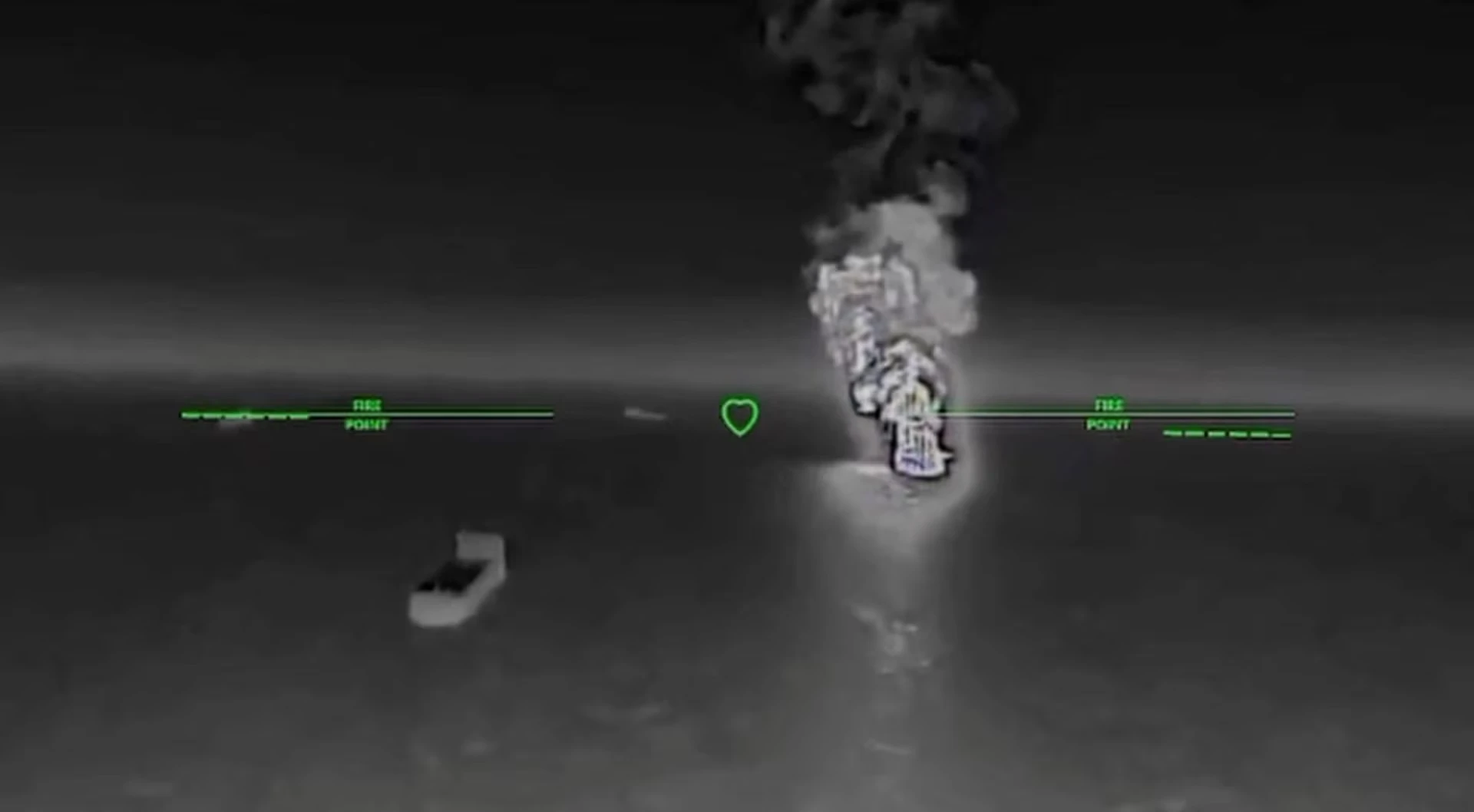
The incident also reveals a broader problem of drone warfare. The more unmanned aircraft operate in border regions, the more often situations with incomplete evidence will arise. A drone can lose its route because of electronic warfare. Air defenses can intercept an aircraft over a civilian area. Debris can fall far from the original target. Propaganda can fill the gap before investigators do.
Moscow, which has spent years striking Ukrainian cities with missiles and drones, understands the power of such an information vacuum. Russian attacks on Kyiv, Kharkiv, Odesa, Sumy and other cities have killed thousands of Ukrainian civilians. But when danger returns to Russia’s border regions, the Kremlin tries to present itself solely as the side under attack.
That is the cynicism of the moment. The state that brought the war to Ukraine now uses every incident on its own territory as proof of alleged Ukrainian aggression. But the chain of causality does not disappear simply because Moscow speaks louder than others about victims.
This does not mean every Russian accusation should be dismissed automatically. On the contrary, such cases require the strictest establishment of facts. But verification must separate human tragedy from the political operation of a state that has an interest in one conclusion before the investigation even begins.
The bus carrying Belarusian schoolchildren has become a new painful point in the war — human, legal and informational. If the Russian version is not confirmed, it will become another example of a civilian tragedy used as an instrument of pressure. If evidence of another kind emerges, Ukraine and its international partners will have to assess it without double standards.
For now, the responsible position is different: do not accept Moscow’s version as fact, and do not ignore the human dimension of the incident. In a war where drones cross borders, air defenses operate over populated areas and propaganda outruns investigators, truth becomes a weapon no less important than the technology itself.