






















About 200 Russian military personnel trained at Chinese military facilities late last year. Some of them later returned to combat operations against Ukraine. The training focused mainly on drones, electronic warfare, army aviation, engineering and unit coordination.
For Beijing, this is a particularly sensitive story. China has spent years insisting that it takes an “objective and impartial” position on the war, promotes peace talks and is not a direct participant in Russia’s aggression. But training Russian troops who then return to the Ukrainian front weakens that distance.
According to Daycom’s assessment, the significance of the case lies not in the number of troops trained. Two hundred people do not change the war by themselves. What matters is that China appears to have given Russia not only an economic rear, but access to military knowledge in the field that now defines the modern battlefield.
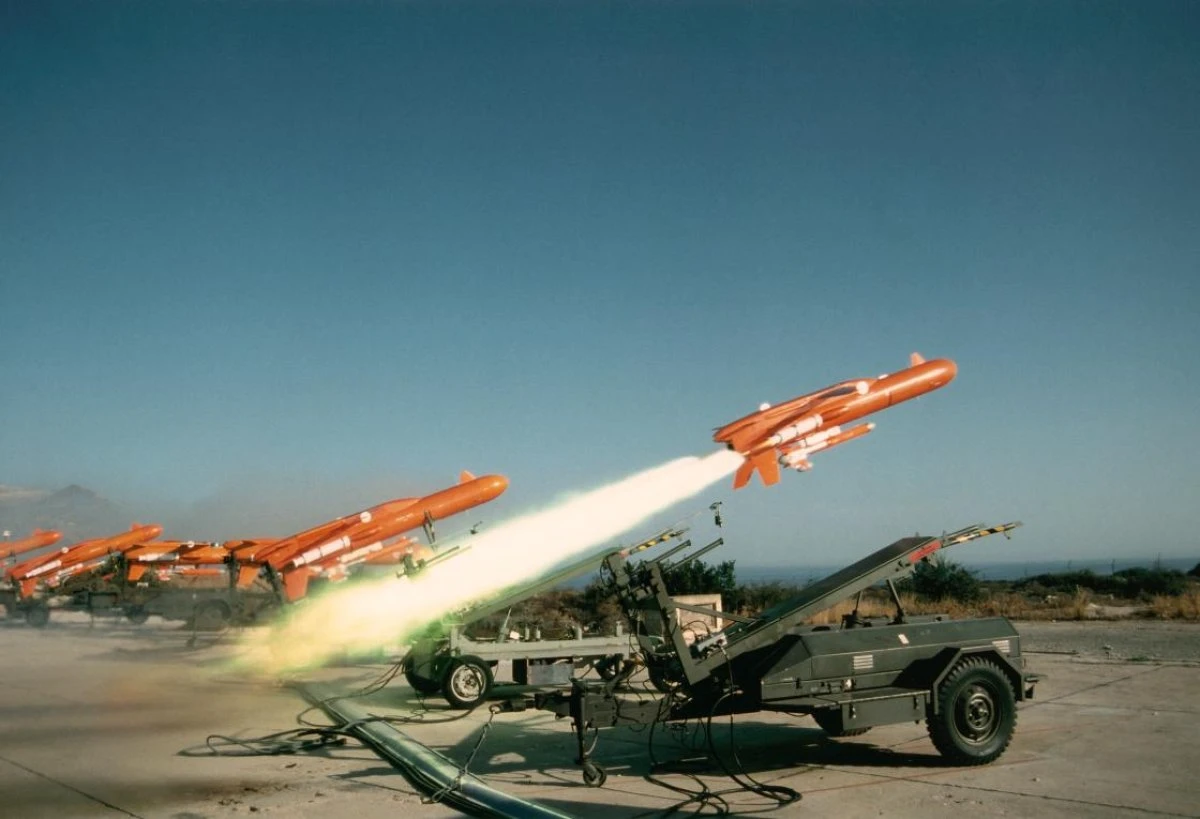
The drone war in Ukraine has long ceased to be a supporting element. Drones correct artillery fire, hunt armored vehicles, attack infantry, strike depots, fuel facilities and cities hundreds of kilometers from the front. The air above the line of contact has become a dense layer of cheap, mass-produced and deadly precise technology.
That is why Russian training in China carries practical weight. Russia has gained enormous combat experience in Ukraine, but China has what Moscow often lacks: industrial depth, technological discipline, a vast drone ecosystem, simulators and a systematic approach to operator training.
The training agreement, signed by Russian and Chinese officers in Beijing in July 2025, provided for Russian personnel to be trained at several sites, including Beijing and Nanjing. It also included training for Chinese troops in Russia. One condition was especially revealing: no media coverage, no publicity and no notification of third parties.
That secrecy was not accidental. Open Russian-Chinese exercises can be presented by Beijing as standard military cooperation. Closed courses for Russian instructors who later pass knowledge down to units at war belong to a different category. This is not a display of flags; it is the transfer of applied military competence.
It is especially important that the Russian trainees included not only ordinary operators, but military instructors of different ranks. Such personnel act as multipliers. One trained instructor can teach dozens of others, adapt Chinese methods to Russian conditions and embed new practices into combat routines.
Some of the Russians trained in China were later linked to drone operations in occupied Ukrainian territories, including Crimea and the Zaporizhzhia region. These areas are especially significant: Crimea remains a key Russian military platform, while the Zaporizhzhia front is one of the most saturated with drones and electronic warfare.
The Chinese training went beyond drone piloting. One course covered combined-arms operations using drones to guide mortar fire. This is a classic formula of the war in Ukraine: a cheap device finds the target, and a mortar, artillery unit or FPV drone quickly delivers the strike.
Another course focused on counter-drone warfare. Russians were trained to use electronic warfare tools, anti-drone rifles, net-throwing devices and drones designed to intercept incoming systems. All of this reflects the new battlefield reality, where defense against drones has become as essential as armor or trenches.
FPV drones received particular attention. In Ukraine, these systems have become one of the harshest tools of war: an operator sees the battlefield from the drone’s perspective, guides it into a target and often destroys equipment or positions at a fraction of the cost of a conventional missile. The mass use of FPV drones has changed the tactics of both armies.
Chinese training included multimedia instruction, flight simulators and work with several types of unmanned systems. That suggests not improvisation, but an institutional school. For Russia, which often learns directly at the front at great human cost, such training can shorten the distance between technology and combat use.
Another course in Nanjing focused on explosives, mine construction, demining, improvised explosive devices and unexploded ordnance. In a war where the front is saturated with mines, traps, kamikaze drones and debris, engineering training directly affects unit survival.
For Europe, the story is troubling not only because China is helping Russia. It shows that the war in Ukraine is increasingly becoming a point of convergence between major military systems. Russia brings the experience of real war. China brings technological and industrial depth. Together, they create a dangerous laboratory for future conflicts.
Beijing is not openly fighting in Ukraine. Chinese troops are not on the front line, Chinese flags do not fly above Russian positions, and Chinese diplomacy still speaks the language of peace. But modern war does not require formal entry for one state to become important to another’s combat capability.
This is where a new boundary of responsibility lies. Drone components, technical development, operator training, tactical methods and instructor exchanges may not look like classic military aid. But on the front line, the distinction between “non-lethal” technology and lethal effect has already collapsed.
China has its own interest in this cooperation. The People’s Liberation Army has not fought a major war in decades, but it has modernized rapidly and is studying Ukraine as a model of future conflict: drones, electronic warfare, air defense, logistics, satellites, communications and industrial mobilization. Russian battlefield experience is valuable material for Beijing.
Russia, in turn, receives from China not only a market for energy and a flow of industrial goods, but the opportunity to learn from a state with one of the world’s deepest civilian and military drone production bases. This is no longer merely a “no limits” partnership. It is a practical convergence of two military ecosystems.
For Ukraine, the consequences are clear. The more Russia gains access to Chinese methods and technological culture, the faster it can adapt its drone war, complicate Ukrainian defense and raise the cost of every meter of the front. This does not mean automatic advantage for Moscow, but it does mean a new level of difficulty.
For the West, this should be a signal. Sanctions against individual Chinese companies that worked with Russian drone manufacturers are only the first layer of response. If military training has become part of the Russian-Chinese exchange, the question must be broader: where does Chinese neutrality end, and where does complicity in sustaining the war begin?
This is not an easy question. China remains a major trading partner for Europe, a vast market and a central part of the global economy. That is precisely why Beijing expects Western caution. It can move in small steps, avoiding one obvious red line while gradually changing the reality in Russia’s favor.
Vladimir Putin’s visit to Xi Jinping after Donald Trump’s summit with the Chinese leader only sharpens the context. Moscow and Beijing are displaying their “all-weather” partnership at a moment when the West is trying to persuade China to pressure the Kremlin. Secret training of Russian troops suggests that behind diplomatic language, a very different practice may be taking shape.
Chinese neutrality increasingly looks less like equidistance and more like controlled support for Russia without formal acknowledgment of participation. That is convenient for Beijing: it benefits from the weakening of the West, studies the future of warfare, preserves trade with Europe and avoids paying the full political price.
But that model has a limit. If Russian troops trained in China return to fight against Ukraine, it becomes harder for Beijing to convince the world that it is only an observer and mediator. In drone warfare, knowledge is a weapon. And those who teach others how to use that weapon are no longer standing aside.