















Moscow woke again to the rhythm of air alerts, airport restrictions and reports of drone debris. Russian authorities said 419 drones had been shot down across the country, including on approaches to the capital and in occupied Crimea. The war the Kremlin has spent years trying to keep “somewhere over there” is increasingly returning to Russia’s rear.
For Vladimir Putin, this creates a new kind of pressure. Not front-line pressure, where he is used to speaking in the language of “advances” and “liberation,” but domestic pressure: Moscow, its suburbs, oil refineries, airports and the fuel market are becoming part of wartime reality. This does not break the regime overnight, but it changes the sense of security on which Russian indifference to the war has rested.
Moscow’s mayor reported several waves of drones approaching the capital, while Russian air defenses said they had shot down more than 60 aircraft on their way in. In the Moscow region, officials said a six-month-old child was killed after a drone fell on a private house in Yegoryevsk. Ukraine did not immediately comment publicly on the episode.
According to Daycom’s earlier analysis, the main change lies not only in the geography of strikes, but in their regularity. Russia can no longer fully isolate its major cities from the war it is waging against Ukraine. When capital airports suspend operations, houses burn from debris and fuel becomes scarce, the war stops being a television event.
Ukraine’s long-range strike strategy is increasingly described as “long-range sanctions” — not legal sanctions, but technological ones. Its purpose is to pressure the systems that feed Russian aggression: oil refining, fuel logistics, military sites, the Crimean direction, airfields, depots and communications that Moscow has grown used to treating as protected rear areas.
This matters because Russia itself has spent years using the logic of mass aerial terror against Ukraine. Missiles, Shaheds, ballistic weapons, strikes on power plants, apartment blocks, hospitals, ports and transport infrastructure have become part of its war of exhaustion. Kyiv is now trying to create a price for the Kremlin in places where the war had long seemed cheap.
Drone attacks on Russia are not equal to Russian strikes on Ukrainian cities in scale of destruction. Their political effect is different: they pierce the psychological wall between the front and the imperial capital. Russians may not see Donetsk region, Kharkiv or Kherson, but they see closed airports, lines at gas stations and reports of explosions near Moscow.
That is why the Kremlin responds not only militarily, but informationally. Any strike on Russian territory is presented as proof of “Kyiv’s terrorism,” while Russia’s own overnight attacks on Ukraine are described as “retaliation” or “strikes on targets.” This asymmetry of language is meant to hide a simple chain of cause and effect: the war came to Russia because Russia brought it to Ukraine.
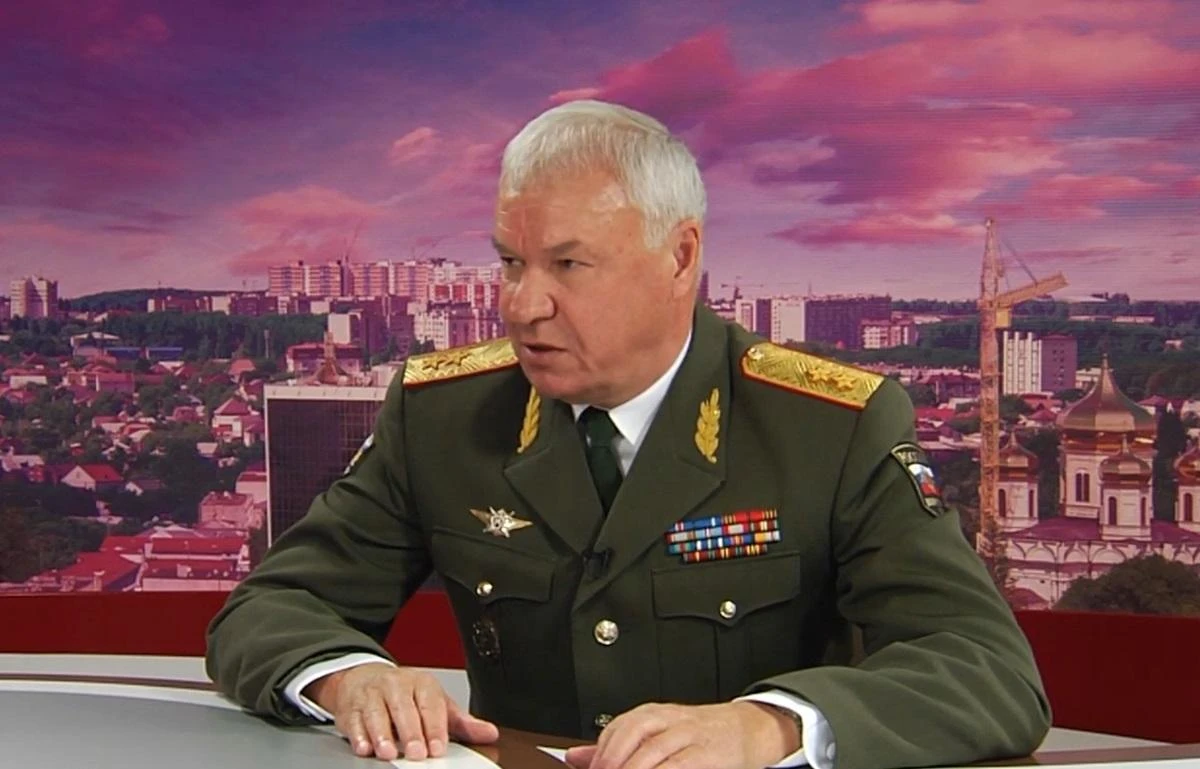
Putin is trying to preserve the image of control. He admits that strikes on infrastructure are creating “problems” and some fuel shortages, but insists they are not critical. At the same time, he speaks of continuing the campaign in eastern Ukraine and repeats the imperial vocabulary of Donbas and “Novorossiya.”
That combination is revealing. The Kremlin is not ready to lower its war aims, even as the war’s consequences increasingly hit Russia’s rear. Putin is trying to persuade society that inconvenience can be endured, losses can be explained and fuel shortages can be localized. His bet remains the same: the Russian system must withstand more pain than the Ukrainian one.
But fuel is an especially sensitive issue. Oil refining is one of the key nodes of Russia’s economy and war machine. If plants stop, repairs drag on, logistics become more complicated and lines appear at gas stations, the war moves from front-line briefings into citizens’ everyday experience.
Russia is a major oil producer, but that does not make it invulnerable to strikes on refining. Crude oil does not replace gasoline in a tank, diesel for army vehicles or aviation fuel. The weak point is not the existence of the resource, but the ability to quickly turn it into the needed product and deliver it where it is needed.
That is why strikes on refineries and fuel facilities have an effect larger than a fire at a single plant. They force Russia to move air defenses, strengthen security, change routes, repair complex equipment, limit export flows and explain to domestic consumers why gasoline has become a problem in a country built on energy rents.
Crimea is a separate line of pressure. For Moscow, the peninsula is a symbol of the 2014 annexation and a vital military-logistical hub. For Ukraine, it is occupied territory that must be cut off from Russia’s war system. When drones and strikes include the Crimean direction, this is not a peripheral part of the conflict, but a campaign to reduce Russia’s ability to hold the south.
On the front, Russia continues to press, especially in Donetsk region. After a difficult period, its forces have again begun inching forward in some areas and are increasingly using glide bombs against Ukrainian stronghold cities. But there has been no rapid breakthrough. Drones have saturated the front, made maneuver more expensive and narrowed the space for major advances.
In this situation, long-range strikes give Ukraine a way to change the equation. If Russia tries to exhaust Ukrainian defenses in the east and through aerial attacks on cities, Ukraine answers by pressuring the rear, fuel, logistics and symbolic centers of security. This does not replace the front, but it expands the war to points where the Kremlin feels less comfortable.
For Russian society, this shift may be slow but significant. Propaganda spent years building an image of the war as something outside normal life. Moscow was offered cafés, parades, concerts and a sense of stability while Ukrainian cities lived under missiles. Drones are damaging that stage set, even if they do not immediately change political attitudes.
The Kremlin will try to use the death of the child in the Moscow region as emotional proof of its own case. That is an expected move. But it does not erase the broader context: Russia’s war kills Ukrainian children every month, destroys homes, breaks schools, hospitals and energy infrastructure. The moral arithmetic did not begin with a drone falling near Moscow.
That is why it is important for Ukraine to preserve clarity in this campaign. Strikes on Russia’s war economy must be precise, justified and directed at the aggressor’s ability to wage war. The more precise this strategy is, the harder it becomes for Moscow to turn its own aggression into a story of “defense” against Ukraine.
For Putin, the problem is that every new attack on Moscow, every airport suspension and every fuel queue challenges his central promise to Russians: the state is in control. An authoritarian system can conceal losses, punish critics and rewrite the language of war. It is far worse at hiding shortages, explosions and everyday fear.
At the same time, the immediate effect should not be exaggerated. The Russian system still has a deep reserve of repression, propaganda and resources. Drone strikes alone will not force the Kremlin to end the war. But they change its cost, stretch defenses, hit the economy and return to Russian society part of the reality it agreed not to notice.
This is the strategic meaning of the current stage. Ukraine cannot allow Russia to wage the war as if it exists only on Ukrainian soil. If Moscow launches missiles at Kyiv, Kharkiv, Odesa, Zaporizhzhia and Dnipro, then Russian military infrastructure, the fuel system and symbolic centers of power cannot remain untouchable.
Drones over Moscow do not mean the war is close to ending. They mean its political geography has changed. The Kremlin can no longer fully separate the front from the capital, the fuel market from the missile campaign, Crimea from Russia’s rear, or its own society from the consequences of aggression.
That is what makes this new wave of attacks most dangerous for Putin. Not the fact of intercepted drones itself, but the reality that even shot-down aircraft force Russia to live in a different mode: with restricted flights, reinforced air defense, fuel shortages, anxiety in the suburbs and an increasingly unconvincing promise that the war will not come home.