












Europe is trying not to walk into the diplomatic trap Moscow is setting under the guise of readiness for negotiations. After months of prolonging the war, the Kremlin is again speaking about possible dialogue while also trying to define who should speak on Europe’s behalf.
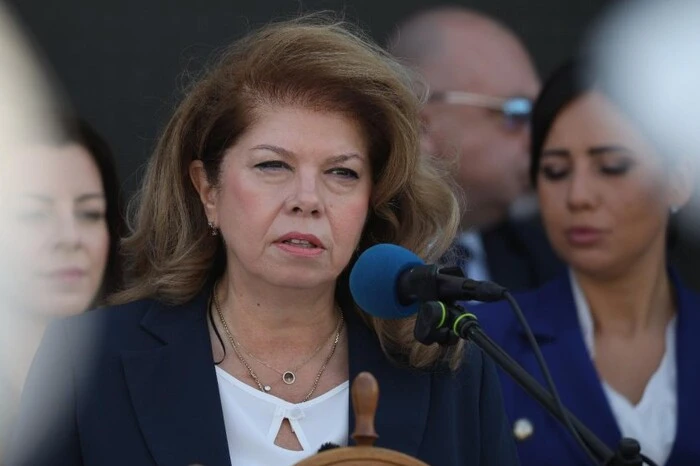
At an informal meeting of EU foreign ministers in Cyprus, one common position was clear: Russia will not choose Europe’s representative in any potential talks over Ukraine. That decision belongs to Europe itself, not to the state waging the war and trying to weaken Kyiv’s allies.
Vladimir Putin’s suggestion that former German chancellor Gerhard Schröder could play such a role was especially revealing. Schröder has long maintained personal ties with the Russian leader, and for European governments the proposal looked less like diplomacy than an attempt to appoint Moscow a convenient counterpart.
According to Daycom’s earlier analysis, the question of who negotiates is not technical but strategic. If the EU allows Russia to shape the framework of talks before they even begin, the Kremlin gains its first concession without a ceasefire, without withdrawal and without showing any real readiness for peace.
Kaja Kallas stated the European line sharply: Russia still shows no genuine interest in peace, and an unconditional ceasefire must be the precondition for negotiations. That boundary matters because Moscow has long tried to turn the mere fact of talks into a political victory while changing nothing on the front.
Europe can no longer pretend to be a neutral mediator. It is politically on Ukraine’s side and is also defending its own security interests. Russia’s war against Ukraine has long exceeded the limits of a bilateral conflict: it touches EU borders, energy security, cyberdefense, sabotage, migration pressure and the architecture of deterrence.
That is why the statement that Europe will not act as a “neutral mediator” is so important. It does not reject the need for negotiations. It rejects the Russian illusion that the EU can sit at the table as an indifferent referee between aggressor and victim.
For Ukraine, a stronger European role is becoming increasingly important. The United States is now heavily focused on the conflict with Iran, creating the risk of a diplomatic vacuum. Kyiv wants European capitals not only to finance its defense, but also to hold a strong position in any future negotiating architecture.
Yet that position still needs form. The EU has not decided who could represent the bloc in possible talks with Moscow. The difficulty is not only the name. Europe must define the mandate, accountability, decision-making process and limits of compromise.
These are not bureaucratic details. Europe’s representative cannot be a symbolic figure without authority or a private mediator with a personal history of contacts with the Kremlin. Such a person must speak for an agreed policy, not for personal diplomacy or nostalgia for old channels to Moscow.
Europe’s red lines are also becoming clearer. They include a demand that Russia stop sabotage operations on European territory, pay for the destruction it has caused in Ukraine, and accept a symmetrical approach to any military limitations. If limits are imposed on Ukraine’s military, Russia cannot remain outside equivalent restrictions.
That last point is crucial. The Kremlin often tries to frame a future peace as the demilitarization of Ukraine, not as a limitation on Russia’s own aggressive capacity. For Europe to accept such a formula would be to lock in an imbalance: the victim becomes weaker while the aggressor keeps the ability to repeat the war.
There is also no sense in speaking of a stable ceasefire if Russian sabotage, cyberattacks, GPS interference, arson, espionage and intimidation campaigns in Europe remain outside the negotiating framework. Peace in Ukraine cannot be separated from European security, because Russia itself has long linked the two spaces.
At the same time, ministers are cautious. Some believe it is premature to discuss a specific negotiator before the conditions and mandate are clear. This is procedural restraint, not weakness. Europe has already paid too often for trusting Russian signals too early, only to discover they were tactical pauses.
Moscow is trying to use the debate over format to shift attention. Instead of ceasefire, responsibility and compensation, it wants Europeans arguing among themselves over personalities. That is the Kremlin’s preferred scenario: while Europe searches for the face of negotiations, Russia preserves room for maneuver.
The EU’s answer must therefore be twofold: do not reject negotiations in principle, but do not allow Moscow to control their rules. Diplomacy has value only when it does not become a continuation of war on Russian terms. That requires unity, a mandate and the ability to name things directly.
Europe is entering a difficult stage. It must support Ukraine, coordinate with the United States, prepare for possible talks and avoid creating the impression that it is ready for a rushed peace at the expense of Ukrainian territory or security. That will require not only statements, but political discipline.
For now, the main message from Cyprus is clear: Russia will not be allowed to choose its Europe for negotiations. It will not replace allied unity with a figure from the past who suits the Kremlin. If dialogue ever begins, it must take place not under the shadow of Russian conditions, but within the framework of European strength, Ukrainian sovereignty and a real end to aggression.