
























The European electric-car buyer has turned out to be more pragmatic than seemed likely a year ago. He may be irritated by Elon Musk, reject his political statements, put an ironic sticker on the bumper — and still sign a new lease for a Tesla.
After a sharp fall in European sales, the company has unexpectedly regained momentum. In the first five months of the year, Tesla’s sales on the continent rose 77 percent from a year earlier. In May alone, the brand sold 22,000 cars in Europe — more than Ford, Nissan or Honda, even counting their gasoline and diesel models.
That reversal did not happen because Europeans suddenly warmed to Musk. He remains a toxic figure for many environmentally minded, liberal and urban buyers who once formed the natural audience for electric vehicles. But price, technology and charging infrastructure have proved stronger than moral discomfort.
According to Daycom’s assessment, Tesla’s recovery in Europe shows the limit of a brand’s political reputation: it can push buyers away, but it does not always defeat the economics of ownership, daily convenience and a tangible technological advantage.
Tesla cut prices sharply on its entry-level models and made the Model Y competitive not only with other electric vehicles, but also with some gasoline and diesel cars. In several countries, the crossover can be leased for less than €300 a month. For a family or a high-mileage driver, that is no longer a status purchase. It is a rational transport decision.
At that level, ethics begins to lose to the household budget. A buyer may disapprove of Musk’s right-wing rhetoric, his role in U.S. spending cuts or his inflammatory statements on social media. But if the car is cheaper, charges faster, has a better Supercharger network and offers predictable costs, the decision becomes less ideological.
The European electric-vehicle market itself is helping Tesla. Battery-powered cars now account for more than a fifth of new-car sales on the continent, while their share in the United States remains much lower. For Tesla, that means Europe has again become one of its key growth spaces, especially as demand weakens in America.
In the United States, the picture is more difficult. After tax incentives were eliminated, electric vehicles effectively became more expensive for buyers, and Tesla’s sales continued to decline. Europe, by contrast, has combined rising demand for electric transport, government incentives, high fuel prices and a greater willingness to switch to battery cars.
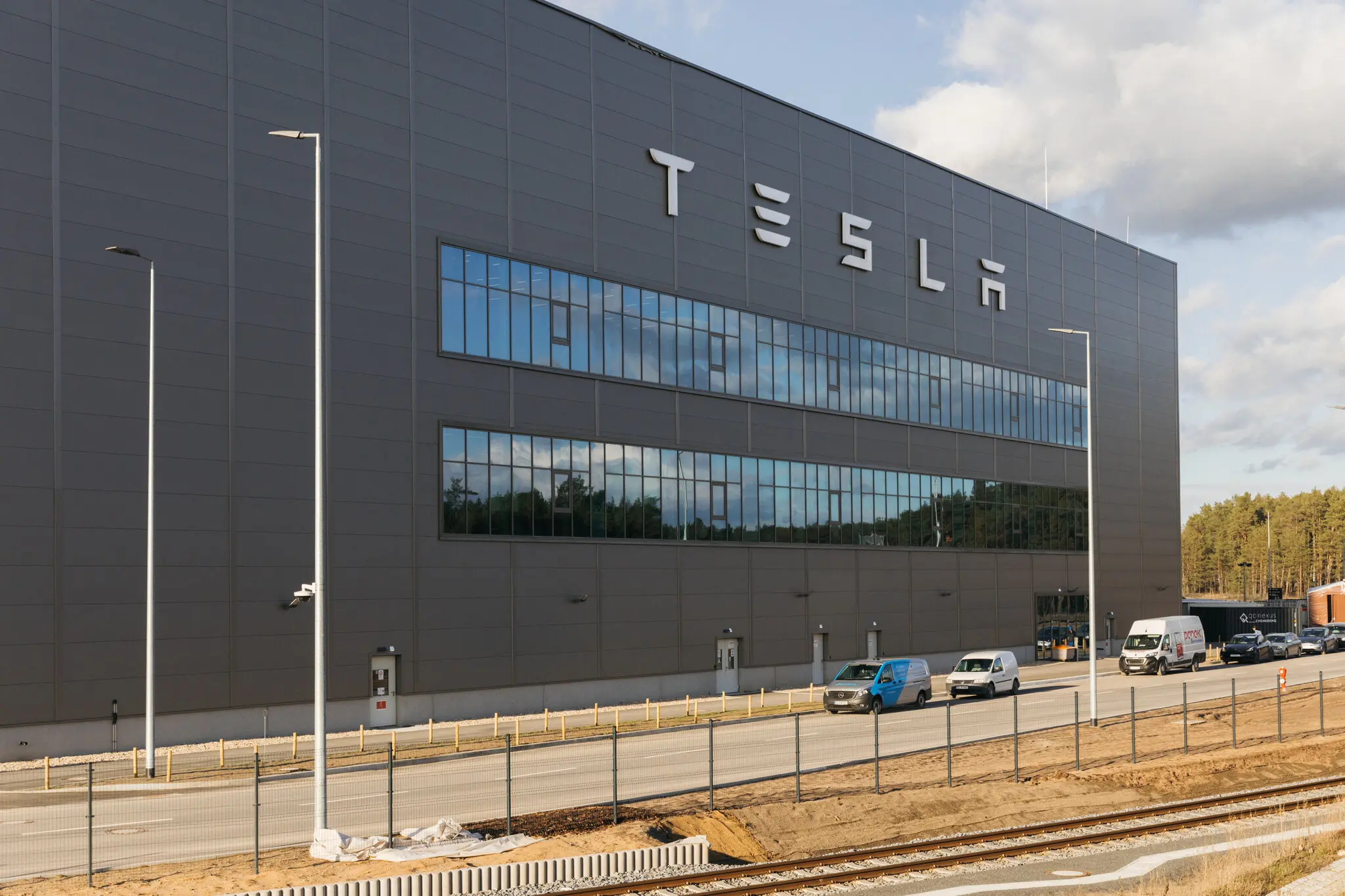
Tesla also has another advantage: its factory near Berlin. The plant builds the Model Y for the European market and helps the company avoid some of the problems facing manufacturers that import cars from China. Against the backdrop of European tariffs on Chinese electric vehicles, local production has become not only a logistical advantage, but a political one.
This matters especially in France, where state incentives make Model Y leases even more accessible. Offers around €289 a month with an upfront payment can turn Tesla into a mass-market option for the middle class, rather than a toy for technology enthusiasts. That is one reason the Model Y has become one of the country’s most popular electric vehicles despite competition from Renault and other European brands.
Tesla’s success in Europe does not mean the company is invincible again. Volkswagen, together with Audi, Porsche, Skoda and SEAT, sells more electric vehicles on the continent than Tesla. European manufacturers are catching up in quality, design and software. Chinese brands continue to press on price, even with tariffs.
Yet Tesla keeps a distinctive position: second place in Europe’s electric-vehicle market with essentially two main models, the Model 3 and the Model Y. What was long treated as a weakness now works as a manufacturing advantage. A limited lineup simplifies production, lowers costs and allows quicker price responses.
The buyer may not always see this, but feels it in the bill. While other automakers spread resources across dozens of models, trims and platforms, Tesla sells a mass product with a relatively standardized architecture. That gives it room for discounts, cheaper financing and aggressive leasing.
The behavior of Tesla owners in Europe reveals a striking moral compromise. Some openly say they feel embarrassed to drive a car made by Musk’s company. Others say they find his views repellent. Some bought before the latest political scandal. Others justify the choice through environmental concerns. Some simply could not find a better electric vehicle after test-driving competitors.
That compromise is not unique to Tesla. Automotive history is full of dark chapters. Ford is tied to the antisemitic views of its founder. Volkswagen was born in Nazi Germany. Chinese electric vehicles are produced inside a political system many European buyers do not want to support. Against that background, Musk becomes for some customers not an exception, but another uncomfortable element in the complicated ethics of consumption.
At the same time, Tesla has something many rivals still lack: a strong user community. In Norway, where almost all new cars are electric, Tesla remains the largest car seller and holds more than a fifth of the market. Buyers there understand electric vehicles well, compare experience rather than slogans, and often choose what works most conveniently.
Norway matters because it points to the future of other European markets. Once electric vehicles stop being a novelty, buyers become more demanding. They care not only about range and price, but also about charging networks, software updates, service, residual value and the experience of people they know. In that ecosystem, Tesla still has a strong reputation.
Musk himself, however, remains the central reputational risk for his own company. His posts on X, political sympathies, conspiracy claims and role in harsh U.S. budget cuts create tension between Tesla as a technological product and Tesla as a public extension of his personality.
For a start-up, that personalization was once a strength. Musk sold the future, and Tesla seemed not merely like an automaker but like a movement against the oil age. Now the same personalization has become a burden: the more the chief executive speaks, the more often buyers are forced to separate the car from the man leading the company.
European sales show that this separation is possible. For many buyers, Tesla is no longer a Musk cult. It is an infrastructure product: a battery, a charger, a lease, a route to Barcelona, a daily commute, less diesel in the lungs and a lower fuel bill.
That is why the sales rebound should not be read as Musk’s political rehabilitation. It is more a victory of consumer pragmatism over moral fatigue. Europeans may not forgive his right-wing sympathies, but they are willing to buy the car if it is cheap enough, technological enough and convenient enough.
For competitors, this is an uncomfortable signal. It is not enough to wait for Musk to damage Tesla with his own statements. They have to build a product that is better, or at least equally convincing on price, leasing, charging infrastructure and software experience. Until that happens at scale, the company’s reputational crisis has limits.
For Europe, the story is broader than one brand. It shows that the transition to electric vehicles is entering a phase of ordinary economics. Buyers no longer choose an electric car only as a symbol of climate awareness. They choose it as a financial, technological and practical tool.
That is good news for electrification, but more complicated for the morality of the market. The green transition may be accelerated not only by idealists, but by people who simply found a good deal. They do not necessarily like the manufacturer, respect its chief executive or want to be part of a brand culture.
In Europe today, Tesla is not selling affection for Musk. It is selling convenience, price and a feeling of technological advantage. That is a less romantic, but sturdier, basis for business. It explains why a company many expected to be punished for its chief executive’s political experiments is again drawing buyers into queues.
Europeans, it seems, have not forgotten what Elon Musk has become in public politics. They have simply learned to put it in a separate compartment. In one place sit irritation, embarrassment and criticism. In the other sit a €300 lease, highway charging, a strong battery and a car that still feels years ahead of some competitors.
That separation is the main lesson of Tesla’s new surge in Europe. A brand can lose its moral shine and still keep its market power. And when the product becomes accessible enough, even a politically exhausted buyer may do the thing that looks least like protest: sign the contract and take the keys.