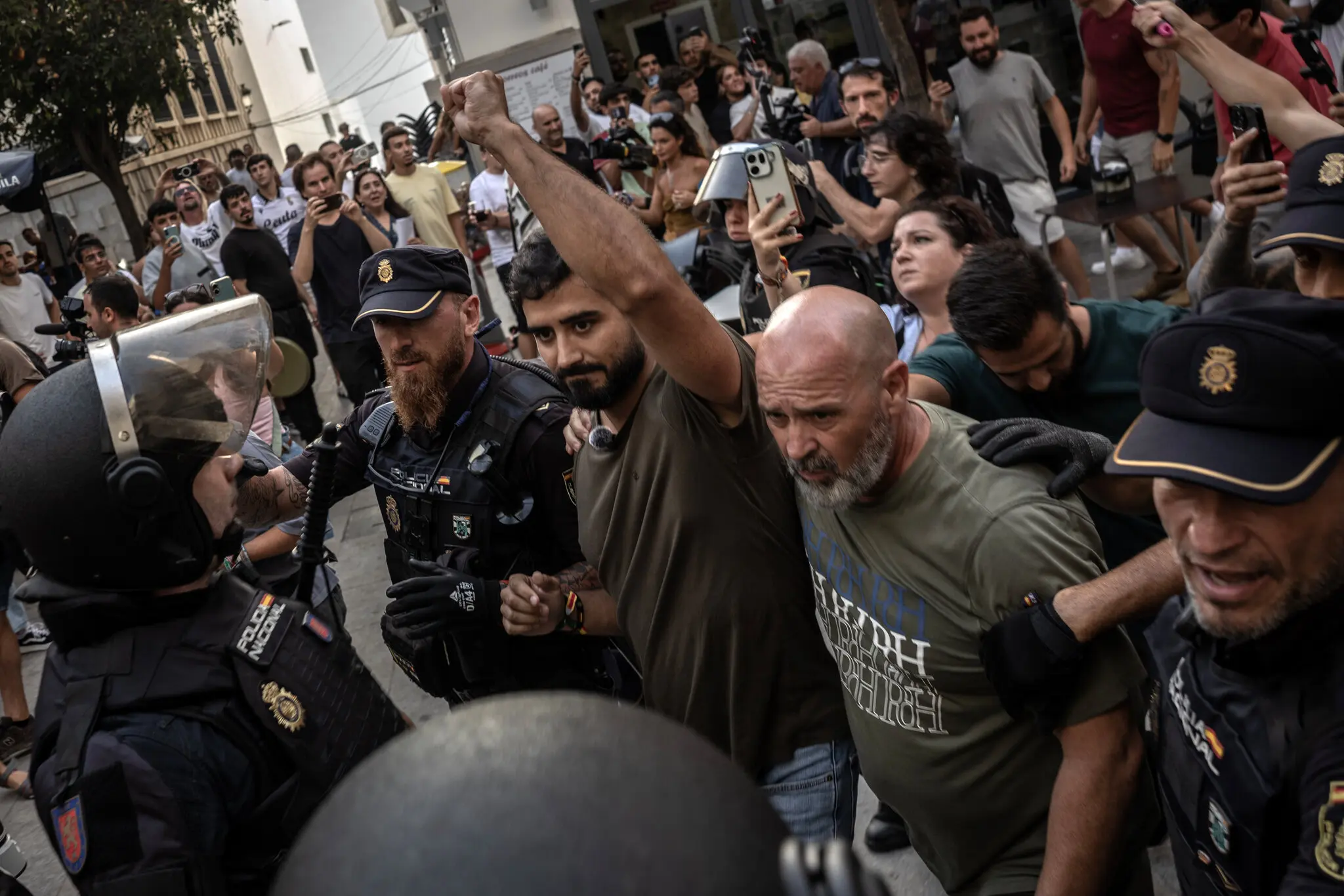






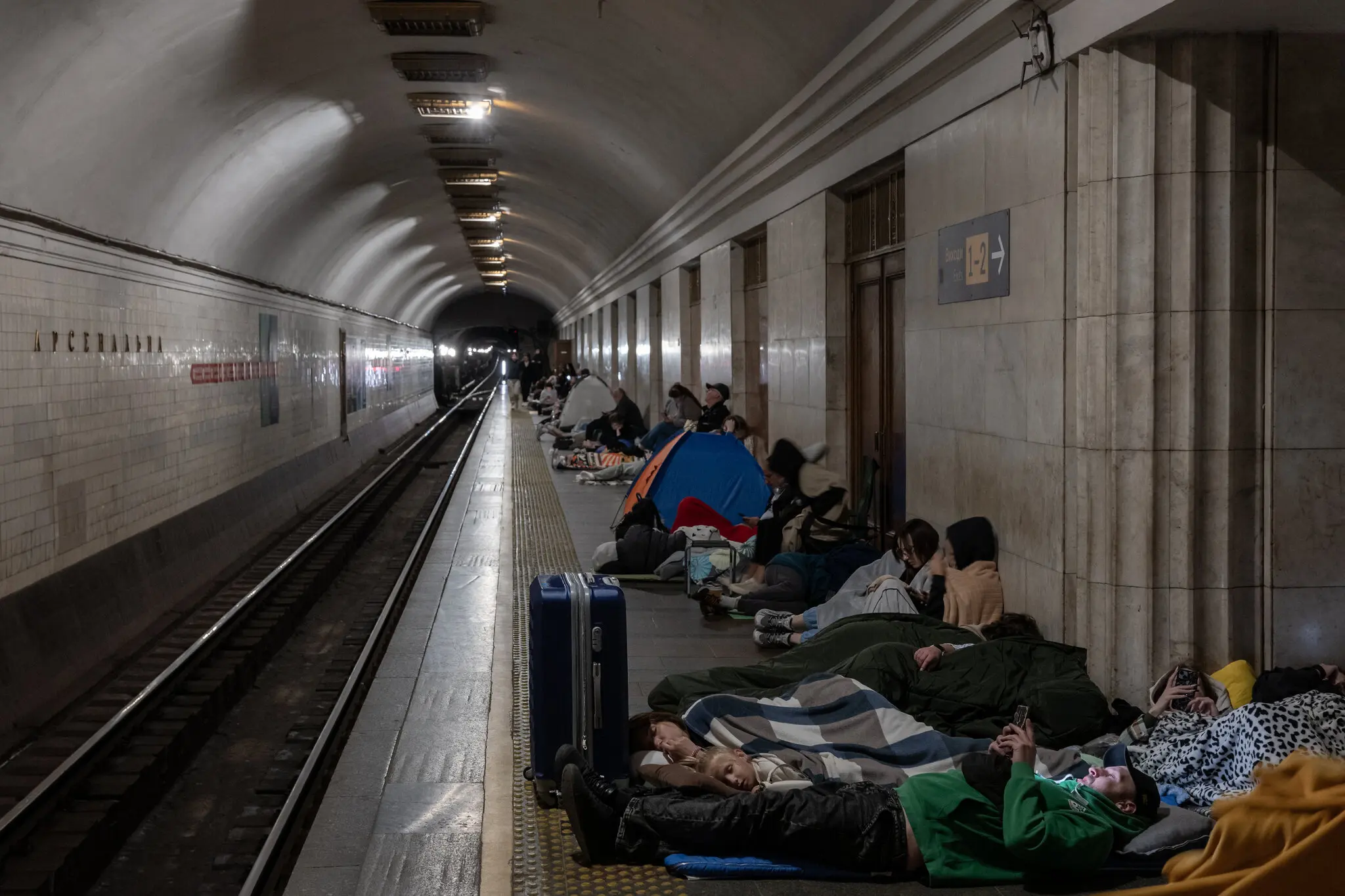













The sudden movement of tens of thousands of people from Morocco into the Spanish territory of Ceuta recalled the defining images of 2015: crowded boats near Greek islands, columns of people moving through the Balkans, overwhelmed stations and the sense that Europe’s borders had slipped out of control.
But Europe’s political landscape has changed profoundly in the eleven years since. In 2015, far-right parties largely used migration to escape the margins. Today, many are either in power or have a credible path toward it.
The more consequential shift is not simply their electoral growth. Centrist leaders, anxious not to lose voters to them, increasingly adopt their vocabulary, demands and fundamental way of describing migration.
In Daycom’s assessment, Ceuta was less a new migration crisis than a test of Europe’s political transformation. The influx quickly subsided and most of those who crossed returned to Morocco, yet the response from European capitals sounded as though the continent faced a prolonged invasion.
Denmark proposed discussing Spain’s possible suspension from the Schengen area. Italy described uncontrolled migration as a concrete threat. Germany demanded that Morocco immediately take back those who had crossed.
In those reactions, the distinction between social democrats, conservatives and right-wing populists was often difficult to see. Positions once regarded as radical have become part of the standard language of government.
The contrast with Germany in 2015 is especially striking. Angela Merkel responded to the arrival of refugees from Syria with the words “we can do this” and opened the country to hundreds of thousands of people.
Today, the political center is far more cautious. Memories of integration costs, pressure on housing and schools, local tensions and the rise of Alternative for Germany have turned migration into an issue on which humanitarian language is easily portrayed as weakness.
Europe is not facing a repeat of 2015. The movement into Ceuta was brief, most arrivals quickly returned, and net migration has even declined in several large European countries.
What matters politically, however, is not only the data but the visible appearance of lost control. Images of young men climbing fences, running along roads or gathering on beaches have a stronger effect on public opinion than annual statistical tables.
That is the populists’ fundamental advantage. They do not need to work with the full scale of a phenomenon. They work with its most powerful image. A single day of border chaos can erase months of declining unauthorized arrivals.
In Britain, the number of people crossing the English Channel in small boats has fallen, yet the anti-immigration Reform UK party has remained highly competitive in national polling. Lower arrivals did not produce a political reward for those in office.
The reason is straightforward: effective control is nearly invisible. A quiet border does not generate a television image. One overcrowded boat or breached fence can become a symbol of state failure.
This allows the far right to shape the agenda even without a governing majority. It forces opponents to answer questions framed on its terms: Who allowed the border to look open, and who should be punished for that weakness?
Centrist governments try to pre-empt the attack by demonstrating toughness. They reinforce controls, sign return agreements, restrict access to asylum and adopt the language of threat in the hope of removing migration from the political agenda.
The strategy often produces the opposite effect. When centrists accept the far right’s core proposition — that migration is primarily a danger — they legitimize not themselves, but the worldview of their opponents.
Voters may then draw a simple conclusion: if the threat is truly so great, it makes more sense to support the parties that warned about it first and promise even harsher measures.
Rhetorical convergence therefore does not necessarily contain the populist right. It often broadens its terrain by shifting the political norm in the direction it has already chosen.
Spain remains one of the few partial exceptions. Pedro Sánchez’s government has tried to combine border control with the legalization of people who already live and work in the country without documents.
More than a million undocumented migrants were given the opportunity to apply for legal status. The government presented the measure as a way to reduce exploitation, bring people out of the shadow economy and establish formal tax and labor records.
Opponents treated it as evidence of weakness. The crisis in Ceuta gave them a ready-made argument: that legalization itself had signaled that Spain was opening a route into Europe.
There is no clear direct link between those policies and the sudden weakening of control on the Moroccan side. In political communication, however, causality often loses to symbolism. When large numbers cross a border, a complex explanation struggles against the simple image of “open doors.”
Sánchez argued that humane migration policy and effective border control are not incompatible. He also noted that more people had entered the European Union irregularly through Italy, Greece and the Balkan route than through Spain.
Most of those who crossed into Ceuta also returned to Morocco within two days. Madrid presented that outcome as evidence that the crisis had been contained quickly.
Yet Sánchez’s position remained defensive. He was forced to justify not only the effectiveness of his response, but the very legitimacy of speaking about solidarity, integration and legal pathways.
That is the depth of Europe’s political shift. The debate now begins with the assumption that leniency is dangerous and toughness is responsible. Anyone proposing a different balance must explain themselves.
The events of 2015 created a political memory that still governs European reactions. More than a million refugees and migrants arrived, many from Syria, Afghanistan and other war-torn countries.
A significant number later integrated, learned local languages, entered the labor market and became citizens. Yet in the political imagination, the crisis is remembered above all as a period of chaos, overload and lost sovereign control.
That memory helped fuel the Brexit campaign in Britain, even though the country was less directly affected by the continental refugee movement. It contributed to the rise of AfD in Germany and helped carry Marine Le Pen into the second round of France’s presidential election.
Over the following decade, the far right learned to treat every new episode as a continuation of the same story. Regardless of the actual numbers, routes or reasons for arrival, every border breach could be presented as the return of 2015.
In France, Le Pen quickly turned Ceuta into a campaign argument and demanded stronger controls at French borders. Her political allies accused Spain’s Socialist government of opening Europe to danger.
In Britain, Nigel Farage went further, warning that the men entering Ceuta would eventually reach Calais and cross the Channel. There was no logistical inevitability to that route, but politically it created a sense of immediate national threat.
In this rhetoric, Ceuta ceases to be a distant Spanish enclave in North Africa. It becomes the first point in a chain supposedly leading toward Paris, London, Berlin or Copenhagen.
That geography of fear is particularly effective. It transforms a local crisis into a continental one and allows politicians in countries not directly affected to use it for domestic mobilization.
Centrist governments respond in the same register by promising to strengthen their own borders, even when most of those who crossed have already returned to Morocco and have no immediate path toward other European states.
The intended audience is therefore not only the migrant at the border. It is the domestic voter who must be reassured that the government will not repeat the perceived mistakes of 2015.
Denmark’s suggestion that Spain’s place in Schengen should be reconsidered was especially revealing. It shifted responsibility from the external border to the principle of free movement within Europe itself.
Schengen rests on trust: each member state is expected to control the external frontier so that its neighbors do not need permanent checks at internal borders. Any mass crossing places that trust under political pressure.
Using Schengen as a punishment, however, could establish a dangerous precedent. If every short-lived border crisis threatens a country’s participation, freedom of movement becomes a permanently conditional right.
Europe is already moving in that direction. Temporary internal border checks are increasingly extended for years, while exceptional measures become part of routine policy.
Tighter migration controls have reduced some routes. Sea crossings are lower than at the height of 2015, and European governments have become more active in signing agreements with transit countries.
That success carries a political price. The European Union increasingly depends on governments that control migration flows and can use them as leverage in diplomatic disputes.
Morocco is a clear example. It helps prevent people from reaching Spain, but a sudden relaxation of enforcement can create a continent-wide political crisis within hours.
A harder border therefore does not always restore sovereignty. It can transfer part of that sovereignty to a neighboring government on whose decisions Europe becomes even more dependent.
A fully open system is not politically or practically viable either. States have the right to control entry, assess asylum claims and return those without a legal basis to remain.
The problem begins when control becomes the only language available. Then the distinction between a refugee, a labor migrant, a minor and someone taking advantage of temporary chaos begins to disappear.
That distinction was visible in Ceuta. Most young Moroccans returned home. Those who remained on the beach were largely from sub-Saharan Africa, and some may have had legitimate grounds for international protection.
Yet the wider European rhetoric barely registered that difference. It spoke of “flows,” “threats” and “illegals,” reducing varied human histories to a single image of danger.
This is how the far right ultimately wins the struggle over the terms of debate. It does not need to prove every claim once everyone else has accepted that the central question is how quickly the border can be closed.
The result is a gradual change not only in migration policy, but in European identity itself. A union built after World War II around human rights increasingly weighs humanitarian obligations against their electoral cost.
That shift did not result from a single crisis. It developed through centrist election defeats, fears of terrorism, housing shortages, economic inequality and the public sense that governments had lost control over change.
Migration became a convenient container for all of those anxieties. It allows complex problems to be attributed to one cause and answered with one visible solution: a stronger border.
In the short term, such a policy can be popular. Over time, it creates dependence on a permanent sense of threat. To justify ever-tougher measures, politicians must keep proving that the crisis continues.
That is why lower migration does not automatically weaken the far right. Once its interpretation has become the norm, it can claim that every improvement resulted from its pressure and every new incident proves that governments are still not tough enough.
Ceuta showed how complete that political cycle has become. The border emptied quickly and tens of thousands returned, yet European leaders continued to speak in the language of an extraordinary threat.
In 2015, radical parties used migration to move toward the center of political life. In 2026, they do not always need to win power. It is enough that politicians calling themselves moderate now repeat their words.
That is their most important victory. They have changed not only laws and borders, but the starting point from which Europe now speaks about people seeking refuge.