





















A military formation is taking shape in western Russia that would have seemed improbable only a few years ago. Around 90 North Korean service members could be deployed to the Voronezh region and integrated into Russia’s 112th Missile Brigade.
The expected package includes as many as 120 KN-23 and KN-24 ballistic missiles and six mobile launchers. Part of the personnel and a new batch of 40 missiles may already have arrived, although the final scale of the deployment will depend on decisions taken in Moscow and Pyongyang.
The precise role of the North Korean contingent remains unclear. Its members could maintain the systems, train Russian crews, prepare missiles for launch or participate directly in operations. Any of those functions would represent a new level of military integration.
Daycom’s assessment is that the decisive change lies not in the number of missiles alone. Russia has already used North Korean ballistic weapons against Ukrainian cities. It may now receive an entire foreign military component embedded in its strike-planning system.
The partnership has developed in stages. North Korea first supplied artillery ammunition, then ballistic missiles, launchers and troops for operations in Russia’s Kursk region. A dedicated missile unit would move the alliance from material support toward shared military infrastructure.
The characteristics of the KN-23 and KN-24 make that development particularly dangerous. Both are solid-fuel, short-range ballistic missiles fired from mobile platforms. The KN-23 can follow a quasi-ballistic flight path, complicating trajectory prediction and interception.
Mobility allows crews to change positions quickly, reduce preparation time and conceal launchers from reconnaissance. Six launch vehicles do not constitute a strategic arsenal, but they are enough to support repeated strikes, disperse equipment and maintain steady pressure on Ukraine’s air defenses.
A stockpile of 120 missiles is no longer a reserve for occasional trials. Used gradually, it could sustain attacks for months. Used in several large barrages, it could become a tool for overwhelming or penetrating Ukraine’s defensive network.
Russia conducts air attacks as layered operations. Cheap drones saturate radars and mobile firing teams, cruise missiles force air-defense systems to spread out, and ballistic weapons leave defenders only minutes to detect, track and intercept incoming threats.
Ukraine relies primarily on Patriot systems and a limited stock of expensive interceptors to destroy such missiles. Every KN-23 launch imposes a difficult calculation: expend a scarce interceptor now without knowing whether a larger attack will follow hours later.
That shortage gives the North Korean deployment disproportionate significance. Russia does not need to destroy Ukraine’s entire air-defense system. It needs only to force commanders to choose constantly between protecting Kyiv, energy facilities, major cities, military bases and frontline logistics.
The danger becomes more acute as winter approaches. Previous cold-season campaigns showed that Moscow regards power plants, substations and gas infrastructure as instruments of pressure against both the state and the civilian population. Additional ballistic missiles would strengthen its ability to repeat that strategy.
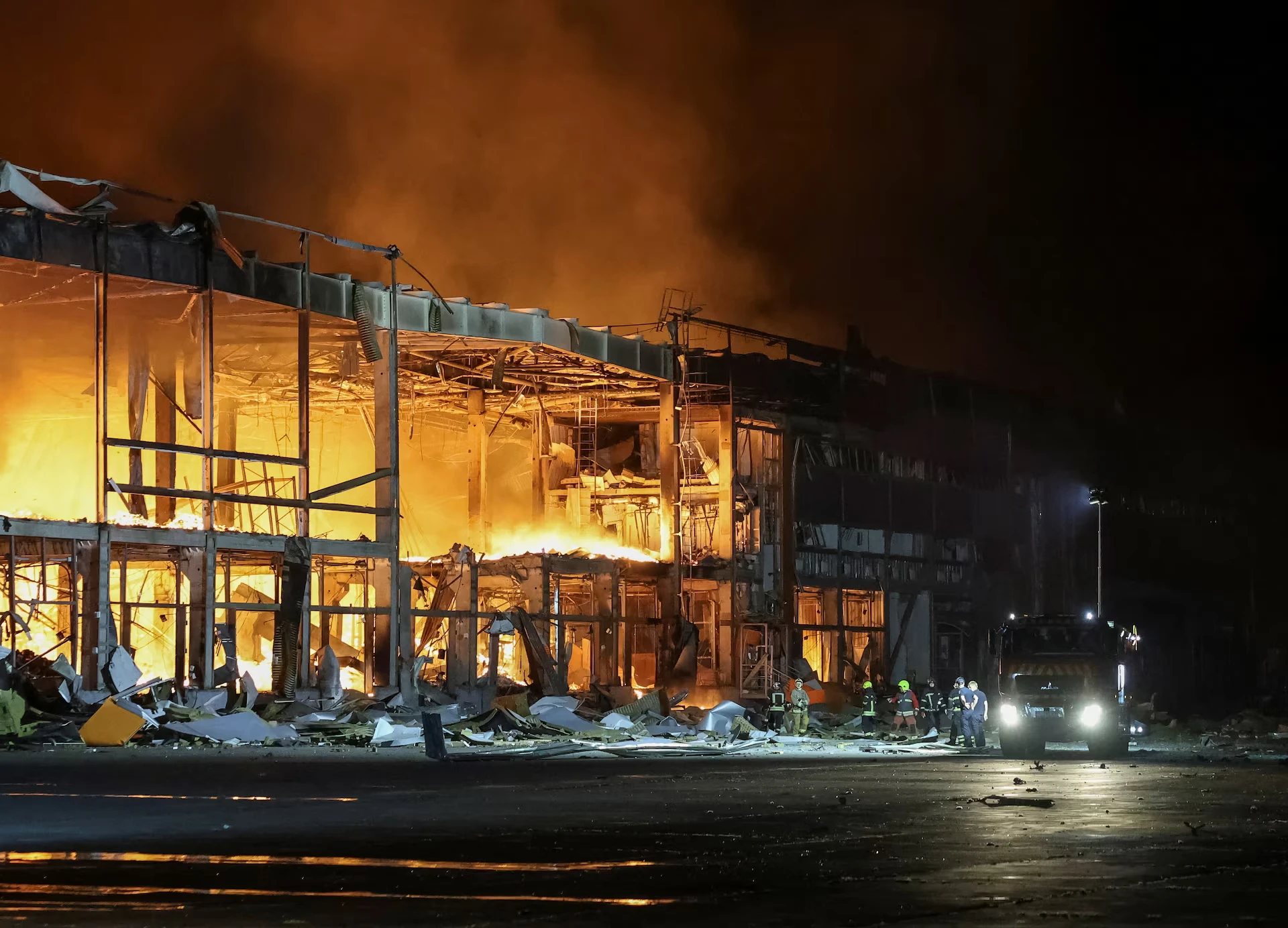
The strike on the village of Radushne near Kryvyi Rih in late July demonstrated the consequences. A North Korean missile hit a residential building and killed members of one family, marking the renewed appearance of Pyongyang’s ballistic weapons in Russia’s campaign.
The KN-23 and KN-24 are generally less accurate than modern Russian systems. That does not make them less dangerous to cities. A large warhead combined with poor precision increases the risk to apartment blocks, hospitals and other civilian infrastructure.
For Moscow, this is acceptable weaponry for a war of attrition. Russian forces do not always require a precise hit on a particular component of a power station. A mass attack can still cause fires, grid failures and widespread damage while forcing Ukraine to spend scarce resources on every incoming target.
For Pyongyang, the European battlefield has become an unprecedented testing ground. North Korean engineers can gather evidence on real range, accuracy, engine failures, behavior under electronic interference and performance against modern Western air defenses.
The value of such information is difficult to overstate. States normally spend years and vast sums testing missile systems in complex environments. North Korea is receiving that experience in a high-intensity war without exposing its own territory to combat.
The presence of North Korean personnel could accelerate the learning cycle. Crews may observe launch preparation, review performance and relay findings to manufacturers. Future versions of the missiles could be developed with direct lessons from Ukraine and from encounters with Patriot systems.
The arrangement benefits both regimes. Russia receives missiles, ammunition and personnel that its own production cannot quickly replace. North Korea gains money, fuel, food, technology and access to the military expertise of a nuclear power with an advanced missile industry.
This is no longer a temporary transaction. Since signing a mutual-defense treaty in 2024, Moscow and Pyongyang have steadily converted political alignment into operational compatibility. North Korea is becoming Russia’s rear arsenal, while Russia is becoming a source of modernization for the North Korean military.
The Voronezh region has practical value for this cooperation. It is sufficiently distant from many Ukrainian strike systems, yet close to the border and to Russian airfields, depots and command centers. From there, missile operations could cover a large part of Ukraine.
The same region may also be prepared to receive additional North Korean forces. Ukrainian officials have warned of a possible reinforcement of up to 30,000 troops and the transfer of more launchers, suggesting a broader plan than the creation of a single missile unit.
Moscow is testing a model of international military coalition in which partners compensate for its weaknesses. Iranian technology helped Russia expand the mass production of attack drones. North Korea is supplying artillery shells, ballistic missiles and manpower.
Such an alliance does not require common values or deep trust. It is held together by the needs of sanctioned regimes with a shared interest in weakening the Western-led order. Ukraine has become the place where they test how far cooperation can go without provoking a direct military response.
For Europe, this means the war can no longer be treated as a conflict confined to Russia and Ukraine. North Korean troops, missiles and launchers are appearing in the European part of Russia. Weapons designed for a potential war on the Korean Peninsula are being used against cities in Europe.
The Western response remains slower than the pace of this convergence. Deliveries of interceptors, additional Patriot batteries and long-range weapons pass through political negotiations, budget procedures and production queues. Moscow and Pyongyang operate on a much shorter authoritarian decision cycle.
Ukraine therefore needs not only more air-defense systems but also the means to destroy launchers, depots and command centers before missiles are fired. Interception in the air is the final and most expensive layer of defense. Effective missile protection begins far from the city waiting to be struck.
It is still unknown whether North Korean personnel will participate directly in launches. Yet even a role limited to technical support or training changes the legal and political picture. A foreign contingent would be helping operate weapons intended for attacks on another European state.
Should the deployment be completed, Pyongyang will move from supporting Russia’s war to taking a practical role in its missile campaign. For Ukraine, that means more ballistic threats, harder choices for air-defense commanders and a more dangerous winter.
A hundred and twenty missiles will not decide the war on their own. They do, however, reveal how Moscow is trying to alter the balance: not only by expanding domestic production, but by connecting the arsenals and military structures of other authoritarian states to its campaign.
North Korea is no longer merely shipping ammunition to Russia. It is moving toward Ukraine people who know how to prepare its missiles for combat. Each launch from the Voronezh region may therefore become not only a Russian strike, but a joint operation by two regimes that have turned Ukraine into the testing ground of their military alliance.