





















Ukraine’s agreement with Germany on the joint production of drones, missiles, software, and advanced defense systems is far more significant than another support package. In Berlin, a different formula of war was laid out in plain view: Ukraine is no longer only asking for weapons. It is offering Europe a chance to build, together, a new type of military industry — fast, adaptive, and tested by the battlefield.
For Kyiv, this is no longer only a matter of diplomacy. It is a matter of scale. Ukraine has learned how to build strike drones, naval drones, long-range weapons, and robotic platforms, but it has run into the central constraint: money. Its production capacity now exceeds the funding available to sustain it. That is why the agreement with Germany matters not only as a political gesture, but as an attempt to fuse Ukrainian combat experience with German industrial and financial weight.
At this point, the architecture of European support itself begins to change. Until now, aid to Ukraine often looked reactive: a package after an attack, missiles after a bombardment, a decision after delay. What is emerging now is defense production as a standing system. As Daycom has previously argued, the shift from a donor model to a model of joint wartime manufacturing may become one of Europe’s true turning points in the war against Russia.
Germany carries particular importance here. It is not only one of the European Union’s central economies, but also the state whose political caution long helped set the tempo of Western military support. If Berlin is now willing to enter a production partnership with Ukraine on battlefield systems, it means the war is being seen less as a temporary crisis and more as a strategic challenge that requires Europe to prepare its industrial base accordingly.
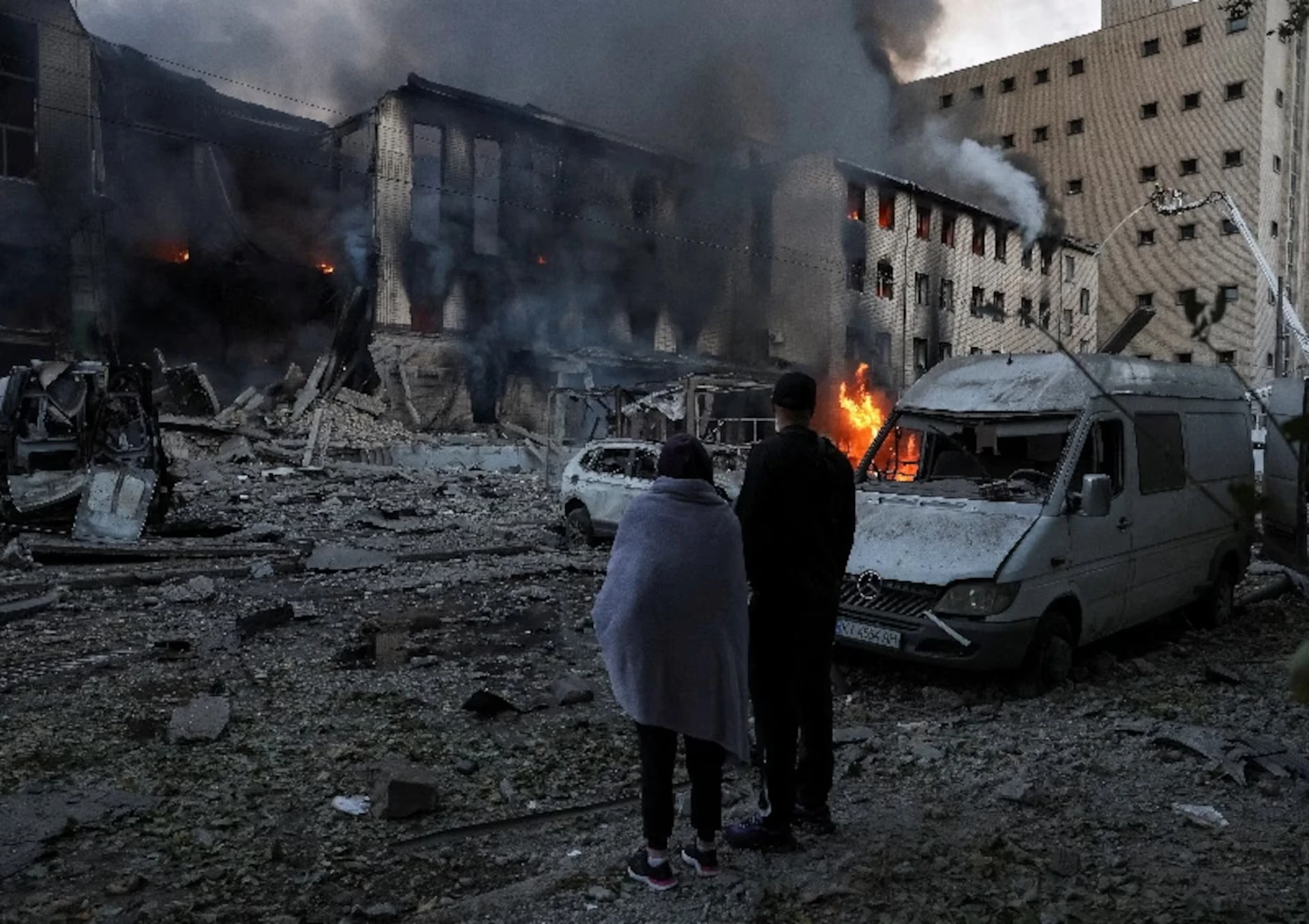
The announcement of a €4 billion defense package, along with the prospect of purchasing several hundred Patriot missiles, reinforces exactly that conclusion. Ukraine does not need symbolic solidarity. It needs instruments capable of withstanding Russia’s strategy of sustained pressure on rear areas, energy infrastructure, and cities. Air defense is no longer a supporting issue. It is one of the conditions of state survival. Without it, the economy falters, mobilization weakens, and the logic of a long war begins to fray.
It also matters that Kyiv is pushing not for one narrow agreement, but for an entire framework of defense cooperation: multiple categories of drones, missiles, digital systems, and modern protective technologies. That reflects the growing maturity of the Ukrainian approach. This war has already shown that victory is not secured by any single weapons platform. What matters is the ecosystem: intelligence, software, production, repair, logistics, rapid model upgrades, and the ability to scale what proves effective at the front.
That is why drones in this agreement do not sound like a fashionable add-on, but like the center of a new war economy. Over the course of this war, Ukraine has turned unmanned systems into a daily instrument of attrition against the Russian army, from tactical missions to deep strikes inside Russian territory. If that experience now gains a German industrial backbone, Europe is in effect investing not only in Ukraine’s defense, but in its own rearmament through Ukrainian wartime lessons.
Still, there is a clear limit to the story. Kyiv’s main problem is not a lack of ideas or engineering culture. It is a lack of funding. That is why the issue of large-scale European financing remains so important after years of political blockage. For the Ukrainian state, this is not an accounting problem. When a country is simultaneously fighting a war, maintaining social payments, sustaining the energy system, and expanding weapons production, delayed funding becomes a direct threat to national resilience.
The German-Ukrainian agreement is therefore valuable as a political signal inside Europe as well. It suggests that Kyiv’s largest partners no longer want to live in a permanent state of waiting — whether for decisions in Washington or yet another compromise in Brussels. At a moment when American attention is increasingly stretched by multiple crises, Berlin is more clearly trying to position itself as one of the principal organizers of Europe’s side of the Ukrainian war effort.
For Russia, this is bad news in the most strategic sense. The Kremlin has long bet that the West would tire faster than Ukraine would break. Joint production is not the language of fatigue. It is the language of endurance. It means Ukraine is beginning to be treated not as a temporary recipient of aid, but as part of a new European security structure in which battlefield experience becomes an industrial advantage.
Still, the agreement should not be overstated. It does not solve Ukraine’s manpower shortage, end its dependence on U.S. intelligence, stop Russian strikes on cities, or replace the need for a broader decision on the scale and speed of Western support. What it does do is highly important: it moves part of Ukraine’s defense from the logic of request into the logic of joint construction.
That is the real meaning of the Berlin agreement. The war is entering a phase in which victory will belong not to the side that promises more loudly, but to the side that produces faster, adapts technology more precisely, and sustains resources longer. Ukraine brings to this partnership the front line, engineering ingenuity, and tempo. Germany brings money, scale, and industrial reliability. If that formula truly begins to work, Berlin will be remembered not simply as another capital of support, but as the place where Europe began turning Ukrainian resilience into part of its own defense system.