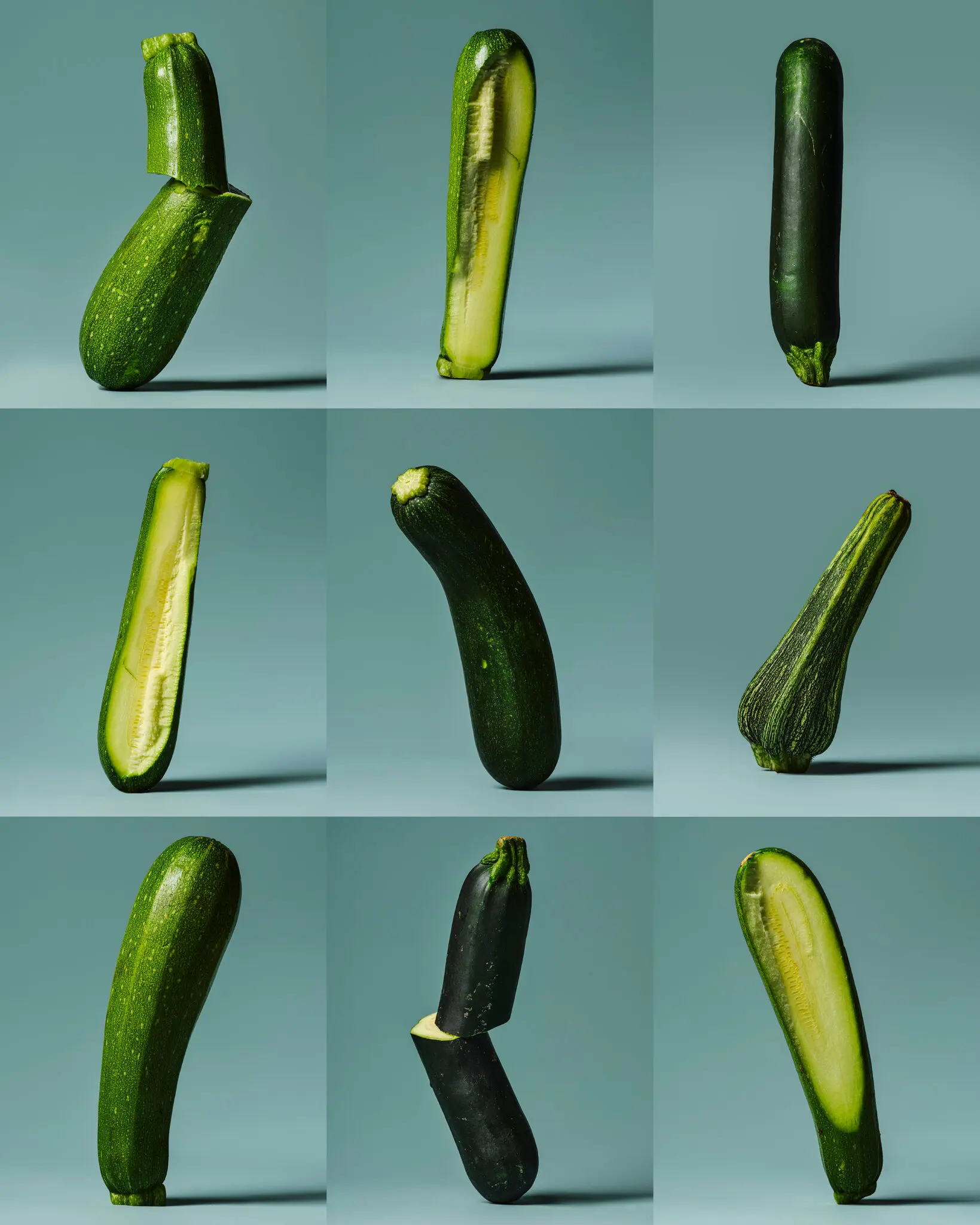

























Grilled zucchini with miso glaze is the kind of recipe that reminds you how badly zucchini is often underestimated. Too often it is treated as filler — a vegetable that shows up in sautés, fritters or grill baskets without ever becoming the point. But give it real heat, a precise glaze and a few deliberate minutes, and it stops behaving like background produce and starts carrying an entire plate.
What makes this dish work is that it does not fight zucchini’s nature. It uses it. Zucchini already has a quiet sweetness, a high water content and a flesh that can turn either luscious or limp depending on how it is handled. Here, that softness meets miso, mirin, soy sauce and a hot pan, and the result is a vegetable that suddenly feels fuller, darker and much more self-assured.
The technique is just as important as the seasoning. The zucchini cooks fast over high heat, so it never has time to collapse into something watery and tired. It keeps its shape, its heft and its clean vegetal structure, while the flesh becomes only just tender. That narrow line — between juicy and slack, between charred and overdone — is exactly where the dish finds its strength.
In Deikom’s assessment, the decisive move is not only the glaze itself, but the way it enters the zucchini. Scoring the cut side in a crisscross pattern is not decorative. It is the whole architecture of the recipe. Those shallow cuts open the flesh to heat, create channels for the miso mixture to seep into and give the surface more opportunities to caramelize.
The ingredient list is short, and that is part of the elegance. Zucchini, white miso, mirin, sugar, soy sauce and a little neutral oil do almost all the work. White miso brings depth and savory salt; mirin softens the edges with a mild sweetness; soy sauce adds a darker contour; sugar helps the glaze take on shine and color. Rice, scallions and toasted sesame, if used, do not distract from the main event. They complete it.
The first essential step is the scoring. Each zucchini is halved lengthwise, then lightly crosshatched with a sharp knife, taking care not to cut through the skin. That matters more than it seems. The glaze does not simply sit on top of the vegetable; it settles into those small openings, while the heat penetrates more evenly. Without that step, the flavor would stay more superficial and the texture less precise.
The glaze itself comes together quickly, but it needs the right texture. Miso, mirin, sugar and soy sauce are whisked with a spoonful of water until smooth — loose enough to brush, thick enough to cling. That balance is crucial. Too stiff, and it sits in patches. Too thin, and it slides off before the pan can do its work.
Then the real transformation begins. The zucchini is brushed generously on the cut side, lightly oiled and placed glaze-side down on a hot grill pan or skillet. At that moment, movement is the enemy. Leave it alone. That stillness is what allows the glaze to darken, the sugars to catch, and the flesh to develop those smoky, charred notes that make the whole dish feel far more serious than its ingredient list suggests.
If you press the zucchini lightly into the pan, the contact improves and the color deepens. This is where the recipe stops being a quick vegetable treatment and becomes something memorable. The miso begins to caramelize, the surface takes on dark lines and glossy patches, and the zucchini picks up the faint bitterness of char that it needs in order to balance its natural softness.
Once the cut side has browned, the zucchini is turned onto its skin side, the heat is lowered, and the pan is covered. That second phase is just as smart as the first. If the first stage builds character, the second preserves moisture. Under the lid, the zucchini finishes gently, becoming tender without drying out or collapsing. It stays juicy, but it stays intact.
A final brushing of glaze after cooking is what gives the dish its polished finish. It restores brightness, reinforces the sweet-salty line and keeps the flavor from feeling cooked flat. The scallions add sharp freshness, the sesame brings dry nuttiness, and rice makes the whole thing feel like a complete meal rather than a plated vegetable.
That is what makes grilled zucchini with miso glaze so convincing. It is fast, but it does not taste rushed. It is simple, but not thin. It proves that a weeknight recipe does not need complication to feel layered; it only needs a sharp understanding of what heat, salt, sweetness and moisture can do together. Treated this way, zucchini is no longer an afterthought. It becomes the reason for dinner.