























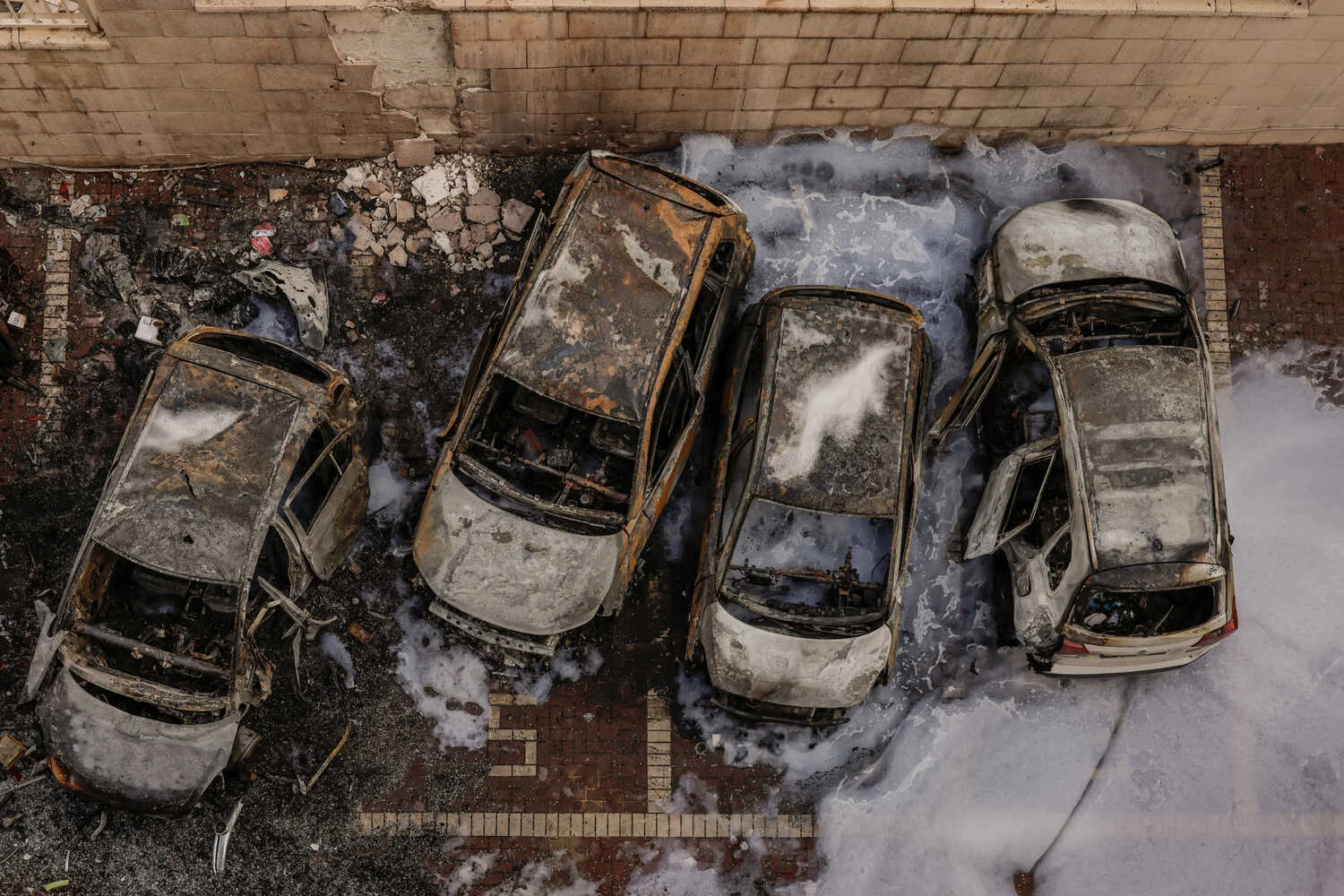
Haifa has long lived with war as a matter of geography. Its port, refineries, logistics corridors, industrial base and proximity to Lebanon have made it a strategic target for years. But the strike on a residential building in the Vardiya neighborhood on the slopes of Mount Carmel changes the frame. This time, the war did not hit only an emblem of state power. It struck the city’s domestic core.
The rescue operation lasted eighteen hours. Emergency crews searched through collapsed concrete through the night, pulling victims from cavities between slabs and debris, until the last body was recovered the following day. Even the descriptions from the scene sounded less like the language of battle than that of natural disaster: one part of the building remained standing, another had caved in on itself, as if after an earthquake. That is one of the defining realities of this stage of war. A missile turns civilian space into a landscape of sudden catastrophe.
One detail makes the event even more chilling. According to rescuers, the missile’s warhead did not fully detonate. In other words, even this level of destruction may have been a lesser version of what could have happened. In such moments, chance does not spare a city from war. It merely decides the scale of the dead. The line between a deadly strike and a far greater massacre can rest on seconds, mechanics and malfunction.
In Daycom’s assessment, the significance of the Haifa strike lies not only in the death toll. It lies in the way strategic war is now being realized through civilian geography. Iran may claim to have aimed at oil infrastructure, but the political and human result is measured differently: a shattered apartment building, a wounded child, four dead residents and a night spent digging through rubble in an ordinary urban neighborhood.
Haifa makes that shift especially visible because it is both a strategic node and a densely inhabited city. Ports, industrial facilities and residential districts sit in dangerous proximity to one another. In that setting, even a missile formally aimed at energy or logistics targets is almost certain to enter civilian space. In contemporary missile warfare, that proximity turns major cities into something worse than targets. It turns them into traps.
The tragedy in Vardiya also exposed an older and deeply uncomfortable truth about life under missile threat: defense systems save many people, but never everyone. The four victims, according to available accounts, had not gone to the nearest shelter, unlike most of their neighbors. That fact is painful because it tempts easy judgment, as though tragedy could be reduced to a personal mistake. But what it really reveals is fatigue, age, hesitation, habituation to sirens, and the psychology of civilians who have been living under repeated alert for weeks.
In a prolonged war, civilian discipline begins to wear down. People grow tired of running, descending stairwells, checking warnings and distinguishing between imminent danger and another night of alarm. That is why a strike on a residential building always carries a double effect. It does not only kill. It shocks a city back into the knowledge that familiarity with danger does not make danger any less real.
For Israel, the strike matters in a broader political sense as well. Officials can speak of interceptions, deterrence and the protection of key assets, but the public sees something else: a family home torn open, rescuers working with bare hands, an elderly man pulled from under broken concrete, and a city forced to wake again after a night of destruction. In such moments, war is measured less by operational maps than by public trust in the state’s ability to protect an ordinary home.
Haifa is under fire precisely because it combines strategic, economic and symbolic weight. Its port, petrochemical infrastructure, industrial facilities and northern location make it a natural target for anyone seeking to hit the nervous system of the Israeli state. But the longer that logic persists, the more the distinction erodes between striking a system and striking a city as a human environment.
That erosion is one of the most dangerous features of the current phase of the war. Formally, the targets may be described as military, infrastructural or energy-related. In reality, the main stage becomes the residential block. And the more precisely states describe their intentions in strategic language, the more privately civilians experience the consequences: the death of relatives, a collapsed apartment, a dark corridor without exit, a morning that begins in dust and ruin.
Haifa matters here not only as the site of another attack, but as an image of what modern war does to urban life. It destroys not only structures, but the idea of the city as a protected and ordered place. Once a missile enters a residential building on the slopes of Carmel, war is no longer simply nearby. It becomes part of the architecture of everyday existence. And that is when the deepest horror of such conflicts comes into view: not only the number of the dead, but how quickly ruin begins to look like a condition to which people are expected to adapt.