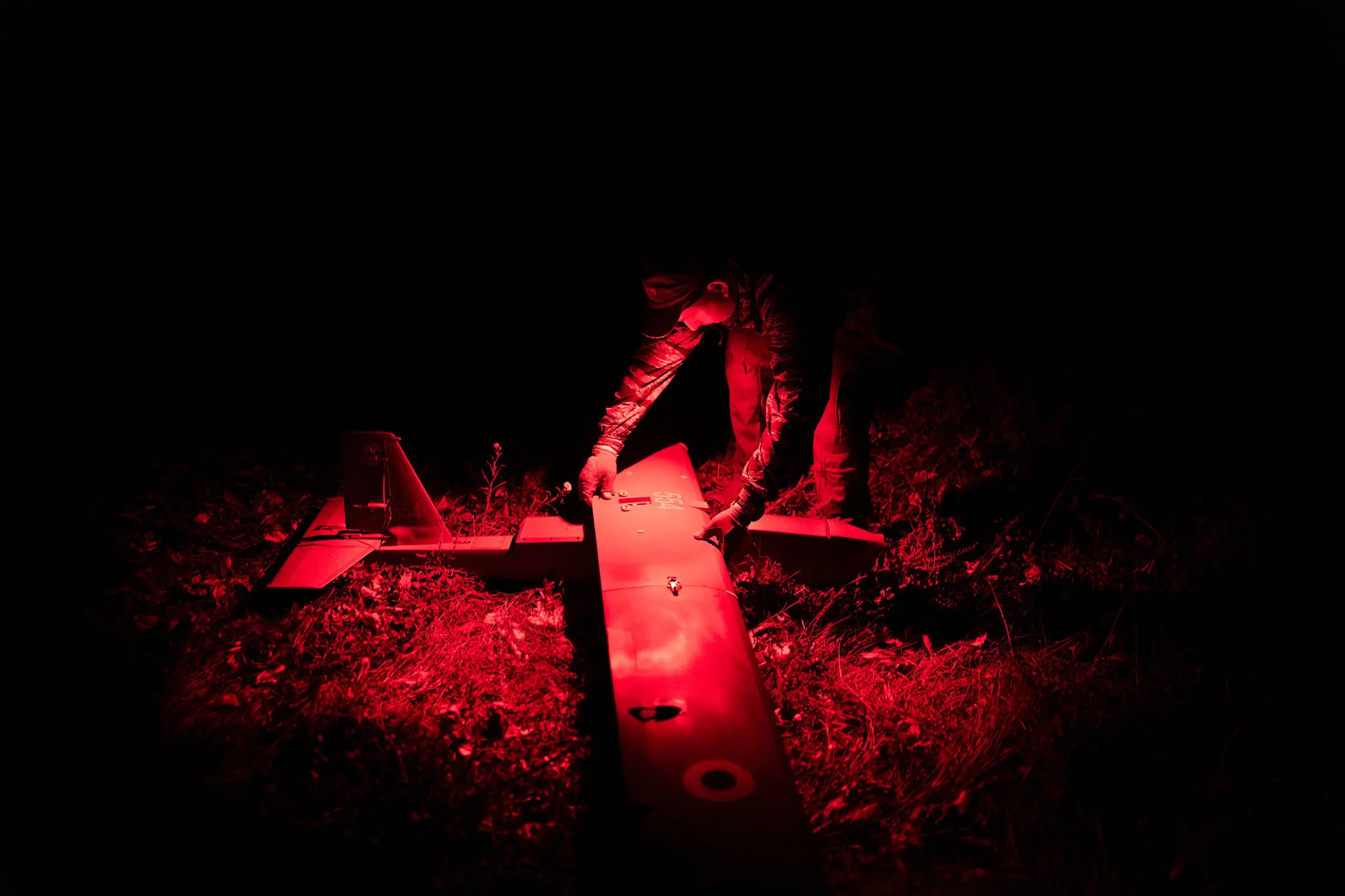


















At a secret site in southern Germany, a weapon is being assembled that explains the future of war better than any strategic doctrine. Not a giant fighter jet, tank or submarine, but a light black drone made of hard foam, cheap enough for mass production and smart enough to hunt a target under fire.
The drone is made by Helsing SE, Europe’s most valuable artificial-intelligence defense start-up. Its factory operates without a sign, under tight security and with near-military mobility: if a threat emerges, production can be quickly dismantled and moved elsewhere.
At first glance, the HX-2 does not look like a symbol of revolution. It weighs about 26 pounds, costs far less than traditional weapons systems and requires minimal personnel. Yet that simplicity is precisely the rupture: war is moving faster from expensive individual platforms toward mass autonomous systems.
According to Daycom’s assessment, Helsing has become one of the clearest examples of a new defense economy, where advantage comes not only from metal, armor and decade-long contracts, but from software update speed, battlefield data, cheap scaling and the ability to turn venture capital into weapons in months rather than years.
The old model of Western military production was built around large contractors, slow procurement and extremely expensive platforms. Fighter jets, ships, air-defense systems and armored vehicles required years of development, political decisions and budgets only states could afford. The war in Ukraine has sharply exposed the limits of that model.
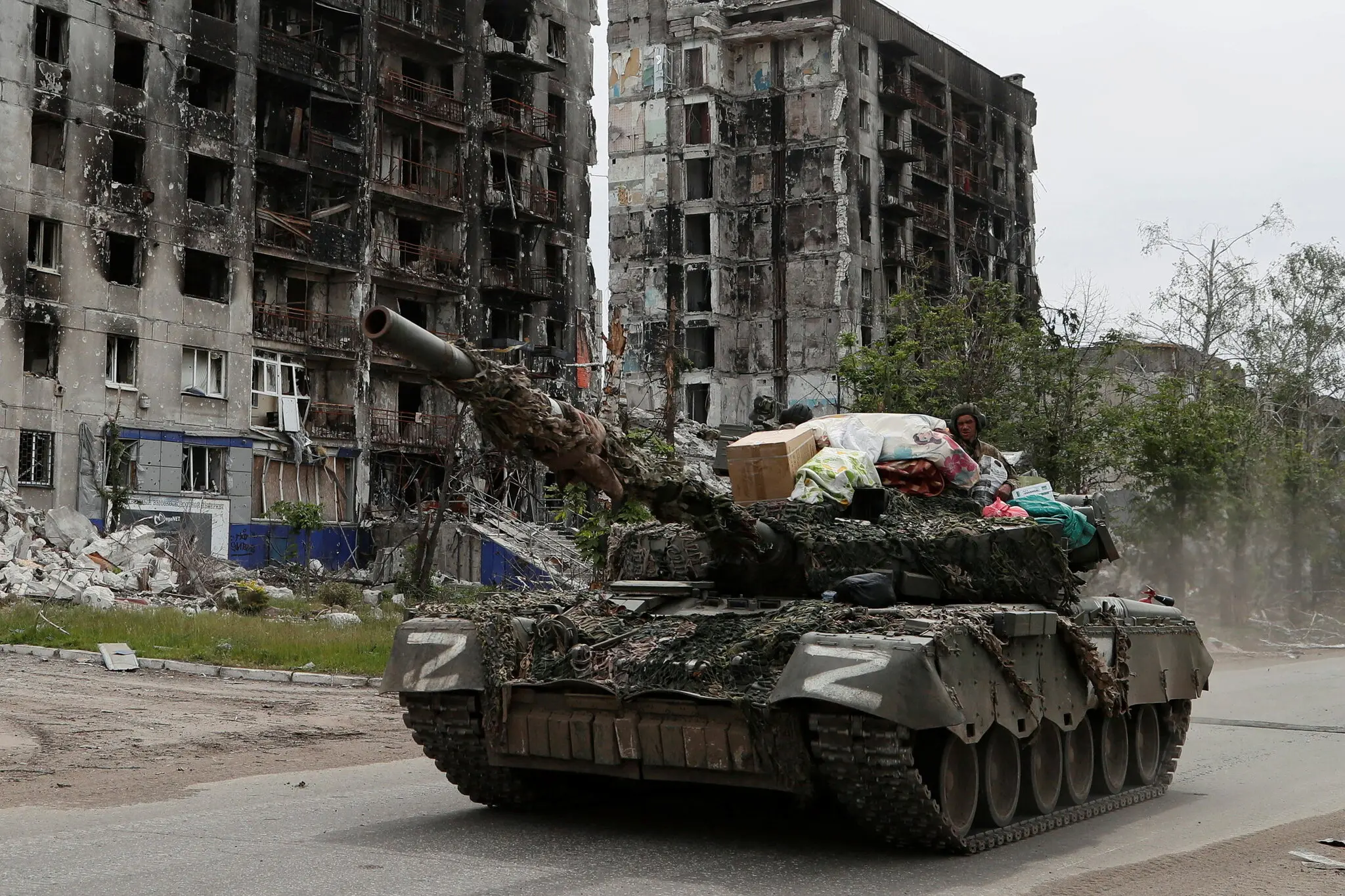
The Russian-Ukrainian front has become a laboratory where technology ages faster than it can be certified. A drone that worked well a month ago may be defeated today by electronic warfare. Cameras, targeting algorithms, communications channels and autonomous modes must all be updated almost at the rhythm of combat.
Helsing grew out of exactly that logic. Founded in 2021, the company began with the idea of strengthening European defense against the Russian threat. At the time, investors were not rushing into defense start-ups. After Russia’s invasion of Ukraine, the market changed: what had seemed like a marginal niche became one of the hottest areas of venture capital.
The company drew talent from technology giants and defense-analytics firms, building a culture closer to Silicon Valley than to old military bureaucracy. Its bet is not on one expensive product, but on mass-producing machines that can be quickly trained, modified and sent to the front.
The HX-2 belongs to the class of loitering munitions, or kamikaze drones. It can hover over a combat zone, search for battery systems, armored vehicles and camouflaged targets, and then attack after an operator gives approval. In Ukraine, such drones have become part of daily warfare, where every battery, radar or supply vehicle can be detected and destroyed from the air.
The key advantage is autonomy. Russia has strong electronic-warfare systems that jam GPS and communications. But drones with artificial-intelligence capabilities can continue their mission even when traditional control becomes difficult. This is where software becomes as important as the body, engine or warhead.
The Ukrainian front gives Helsing something no laboratory can create: real battlefield data. Videos of attacks, failed missions, successful strikes, Russian system responses, targeting errors and drone behavior under fire all become material for the next update. War becomes a cycle of rapid learning for both machine and manufacturer.
That is the hard advantage of a new type of start-up. These companies do not merely sell equipment to armies. They receive data from the front, reshape the product and return it to battle in an improved version. Such speed is almost inaccessible to traditional defense corporations accustomed to long procurement cycles.
But this model also changes the moral and political weight of the defense business. A private company financed by venture capital is effectively helping shape the way war is fought. Its engineering choices influence tactics, losses, operational tempo and even the risks a state is willing to accept.
The biggest rupture is cost. A modern fighter jet can cost more than $100 million. Helsing is trying to produce combat systems whose price is measured in tens of thousands of euros. If such machines can be made by the hundreds or thousands, the battlefield changes: quality no longer exists separately from quantity.
That does not mean expensive platforms disappear. Tanks, aircraft, ships and air-defense systems remain important. But they can no longer be the only center of military power. Mass drones, autonomous systems, cheap sensors and software create another layer of war — distributed, fast and less dependent on a single extremely expensive machine.
That is why defense budgets in the United States and Europe are beginning to shift toward unmanned and autonomous systems. Washington is allocating tens of billions of dollars for a new AI-driven arsenal. The European Union is launching programs to support defense companies working with artificial intelligence. What recently looked experimental is becoming state policy.
Europe arrived at this realization late. For years, it grew comfortable with the idea that a major war on the continent was impossible, or at least unlikely. Russia’s invasion shattered that self-soothing picture. U.S. threats to reduce security guarantees only accelerated the conclusion: European security can no longer rely entirely on someone else’s industrial and military base.
Helsing caught that moment. Its market valuation has risen to a level that would have seemed impossible for a European defense start-up only a few years ago. Investors see not only Ukrainian demand, but a long wave of European rearmament. If the continent is preparing for a decade of danger, autonomous systems are no longer an accessory to defense. They are becoming one of its new cores.
Inside Helsing’s factory, that shift is physical. Former workers from Germany’s automotive industry assemble wings, test electronics and pack drones into specialized transport cases. The symbolic transition is almost literal: the industry that helped build Europe’s peacetime prosperity is now providing labor for the production of war machines.
It also shows the wider transformation of Germany. A country that spent decades treating military power with caution is moving ever faster into the logic of rearmament. Contracts worth hundreds of millions of euros for artificial-intelligence systems, drone deliveries to a German brigade in Lithuania and the development of unmanned aircraft are no longer exceptions. They are the new normal.
Lithuania matters especially. A German brigade near the Belarusian border is receiving equipment not for display, but for combat readiness. This means the experience of Ukraine is being transferred to NATO’s eastern flank. Europe is preparing not for abstract defense, but for a scenario in which the Russian threat may move beyond Ukraine.
Helsing’s next project is the CA-1 Europa, an unmanned fighter jet. It is expected to be built from lightweight carbon fiber and prepared for deployment toward the end of the decade. The idea is simple and radical: instead of one extraordinarily expensive crewed aircraft, many cheaper unmanned machines capable of taking on dangerous missions without risking a pilot’s life.
This approach changes the logic of air warfare itself. If there is no human being inside the aircraft, commanders can accept bolder routes, deeper strikes, electronic-warfare missions and operations where the loss of the machine is tolerable. Human life no longer limits tactics in the same way, but that fact creates new ethical questions.
Autonomous weapons do not remove human responsibility. They make it more complicated. Who is accountable for an algorithmic error, a misclassified target, a communications failure or a decision to strike under incomplete information? The faster machines act on the battlefield, the more important the limits of their autonomy become.
Ukraine has therefore become a testing ground not only for technology, but for future rules. The war has shown that drones can save soldiers’ lives, lower the cost of striking targets and give a smaller force a chance against a larger army. But it has also shown how quickly remote killing becomes normalized when a screen, an algorithm and an operator stand between a person and a target.
For investors, all of this looks like a market of enormous growth. For governments, it offers a way to compensate quickly for shortages of traditional weapons. For armies, it promises cheap mass where scarcity once dominated. But for the world, it is also a signal that major powers are preparing not for a generation of peace, but for a long period of armed competition.
That is why Helsing’s story is not merely the story of a successful start-up. It is the story of how the war in Ukraine is reshaping European capitalism, German industry, defense budgets, technological culture and assumptions about future conflict. A drone on a factory table is not a product in the ordinary sense. It is an answer to fear that has become an investment strategy.
In this new world, advantage will belong not only to those with more tanks, but to those who update code faster, scale production more cheaply, collect battlefield data better and connect engineering with the reality of the front. Helsing shows that Europe has begun learning this language.
But every such success carries a darker reflection. If autonomous drone factories are growing, it means governments and investors expect demand. And demand for such systems does not arise from peace, but from the expectation of future wars. Europe is finally building a defense technology base. The question is whether it can use it as deterrence before that base becomes the instrument of the next great war.