





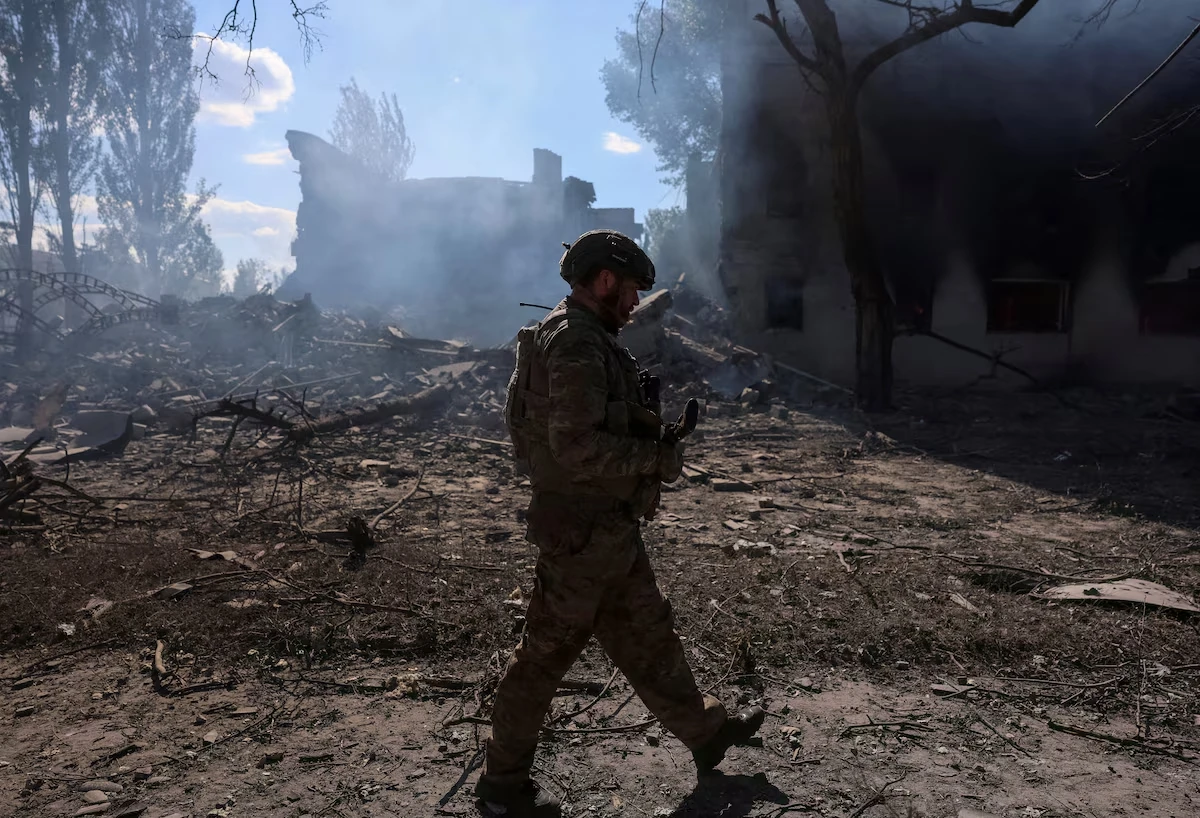















In the days before an Iranian strike killed two American service members in Jordan, U.S. bases in the country were attacked three other times. Dozens of troops were injured and several helicopters were damaged, yet none of those incidents appeared in the public account of the war.
The Pentagon disclosed neither the attacks nor their consequences. Only after the fatal strike did it become clear that American forces in Jordan had been under sustained pressure and that the casualties from the previous days had been left out of official reporting.
The July 17 attack killed two service members and left another missing. Four wounded troops were taken to Jordanian hospitals, while others returned to duty after treatment. Another American service member was killed in northern Iraq the following day.
According to Daycom’s analysis, the dispute over undisclosed casualties is not merely a communications failure. It raises a larger question about whether a democracy can wage a prolonged war without turning operational secrecy into a shield against public accountability.
The military’s argument has a practical logic. Details about the location, timing and effects of a strike can help an adversary measure missile accuracy, drone effectiveness and the defenses protecting a particular base. Even the number of wounded may reveal how close an attack came to a critical facility.
When service members return to duty quickly, commanders may decide that their injuries do not require a separate announcement. From an operational perspective, withholding such information denies Iran feedback that could help it refine future attacks.
The problem begins when a justified delay becomes a permanent absence of information. What remained hidden was not only medical detail, but the existence of three attacks, the damage to military equipment and the scale of the pressure on American forces.
That is no longer simply about protecting coordinates. It creates an incomplete picture of the war — one in which U.S. strikes are described as precise and effective, while successful attacks by the enemy disappear behind the language of operational necessity.
Since the conflict began on February 28, tens of thousands of American troops have been stationed across the Middle East. They operate from a wide network of bases vulnerable to Iranian missiles, drones and attacks by allied armed groups.
More than 400 U.S. service members have been injured during the war, and at least 17 have been killed. Yet the overall injury count has stopped being updated regularly, while details of individual incidents increasingly emerge only after leaks or fatalities.
The result is a widening gap between the actual intensity of the fighting and its political presentation. To the public, the war can appear to be a sequence of American strikes on Iranian targets rather than a sustained exchange in which U.S. bases are repeatedly under attack.
That gap matters especially in a conflict with no clearly defined endpoint. The administration says its central objective is to prevent Iran from acquiring a nuclear weapon, but has offered little explanation of the conditions under which the military campaign would be considered complete.
After a fragile truce collapsed, the fighting resumed, but regular Pentagon briefings largely disappeared. Americans continue to hear about destroyed radar systems, missile sites and storage facilities without receiving a coherent explanation of the broader strategy or its cost.
Central Command has also stopped reporting how many targets it strikes each day. Officials argue that such figures would help Iran assess damage. But when tactical detail disappears, so does the public’s ability to understand the pace, direction and effectiveness of the campaign.
Secrecy has a cumulative effect. One undisclosed attack may be justified by operational necessity. A series of hidden strikes, unknown casualties, incomplete figures on weapons use and the absence of regular briefings gradually produce a system in which the public sees only the part of the war most favorable to the government.
For President Donald Trump, the political danger is clear. The image of a fast, technologically dominant campaign may collapse if the public instead sees a prolonged war of attrition marked by recurring American casualties and an uncertain outcome.
That is why information about the wounded matters. Deaths cannot be concealed for long: there are families, funerals and formal notification procedures. Concussions, burns, hearing damage and other injuries are much easier to absorb into the phrase “returned to duty.”
But returning to duty does not make an injury irrelevant. It still means that the enemy reached an American position, penetrated part of its defense and caused harm. For any honest assessment of the war, that matters as much as the immediate medical condition of the service member.
Previous conflicts have shown that some injuries reveal their full consequences only later. Traumatic brain injuries, hearing loss and psychological damage may emerge after a service member has already rejoined the unit and disappeared from the current casualty count.
A narrow definition of casualties reduces the political significance of an attack. If only the dead and hospitalized are counted, the war appears less dangerous than it is. But force planning, military medicine and long-term veterans’ care require a fuller record.
Congress also has a direct stake in the issue. Lawmakers are supposed to oversee military policy, spending and the use of force. Without regular data on attacks, casualties, weapons expenditure and equipment damage, that oversight becomes increasingly symbolic.
The condition of American arsenals is particularly sensitive. Defending against Iranian missiles and drones consumes expensive interceptors whose production timelines are measured in months or years. Concealing those costs obscures not only the price of the current war, but its effect on readiness for other crises.
Iran, despite repeated American strikes, has retained and rebuilt significant missile capabilities. The war is therefore not unfolding as a one-sided destruction of infrastructure. Both sides are adapting, changing attack routes and searching for weaknesses in each other’s defenses.
The three undisclosed attacks in Jordan are evidence of that learning process. They preceded a more successful strike that killed American troops. If the earlier attacks helped Iran adjust its tactics, the Pentagon’s silence did not prevent the adversary from learning.
That weakens the argument for blanket secrecy. Iran does not rely solely on American statements. It can use satellite imagery, reconnaissance, debris, video, radar emissions and human intelligence. Pentagon silence may do more to restrict the American public than Iranian planners.
A more credible information policy would not require the immediate release of a base location, the type of equipment damaged or the exact time of a strike. Those details can remain classified while they are operationally sensitive. But once that sensitivity has passed, the public should receive an aggregated account.
Such a system could protect troops without destroying trust. Reports could be delayed, issued weekly or stripped of tactical specifics. The current approach too often does not postpone information; it simply withholds it indefinitely.
For military commanders, this may seem secondary amid daily attacks. For the state, it is strategic. The armed forces depend on public support, congressional funding and a willingness to accept losses. That support cannot be sustained indefinitely through selective visibility.
The silence also harms the service members themselves. When injuries vanish from the official record, the risks they endured are diminished. Families see a growing distance between official confidence and the reality of bases where sirens, explosions and evacuations have become routine.
The Pentagon has a legitimate right to protect operational information. But the right not to disclose every incident is not the same as a political right to hide the cumulative cost of a campaign. The longer the war continues, the more important the overall account becomes.
The Iran conflict is no longer a short operation. It has become a prolonged confrontation involving tens of thousands of American troops, hundreds of wounded, depleted weapons stocks and recurring attacks on U.S. positions.
Under those conditions, secrecy cannot remain the default answer to every difficult question. It must have a time limit, a specific justification and a point at which withheld information is returned to the public.
The greatest danger for the Pentagon is not that Americans will learn that dozens of troops were wounded. It is that they will conclude the government knew far more than it disclosed and used operational security to soften the political image of the war.
Trust is rarely destroyed by bad news alone. It is destroyed by the suspicion that the news was deliberately hidden. If Washington wants to preserve support for the campaign, it must explain not only its objectives and successes, but also its losses, risks and limits.
War may require silence during an attack. Democracy requires truth after it.