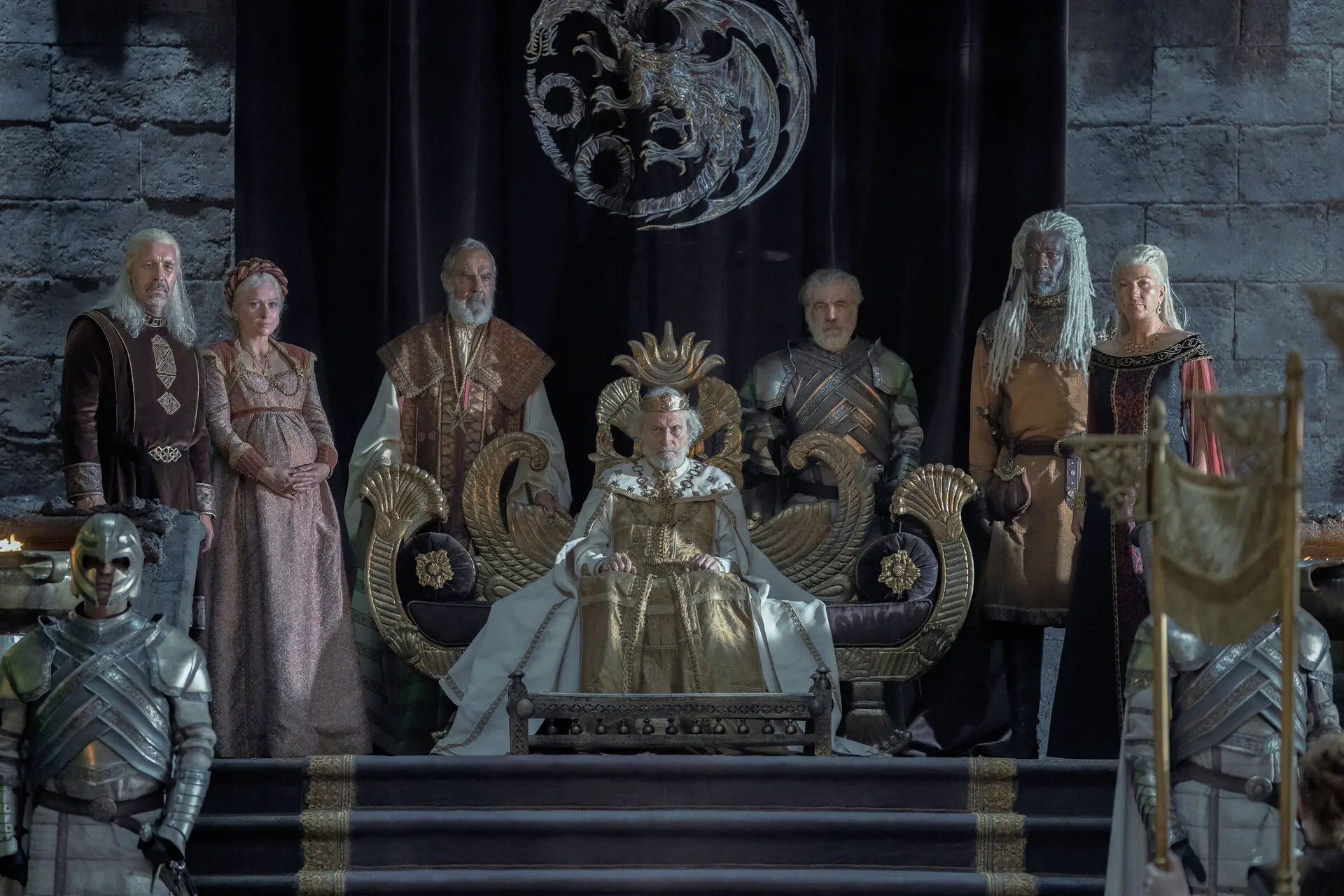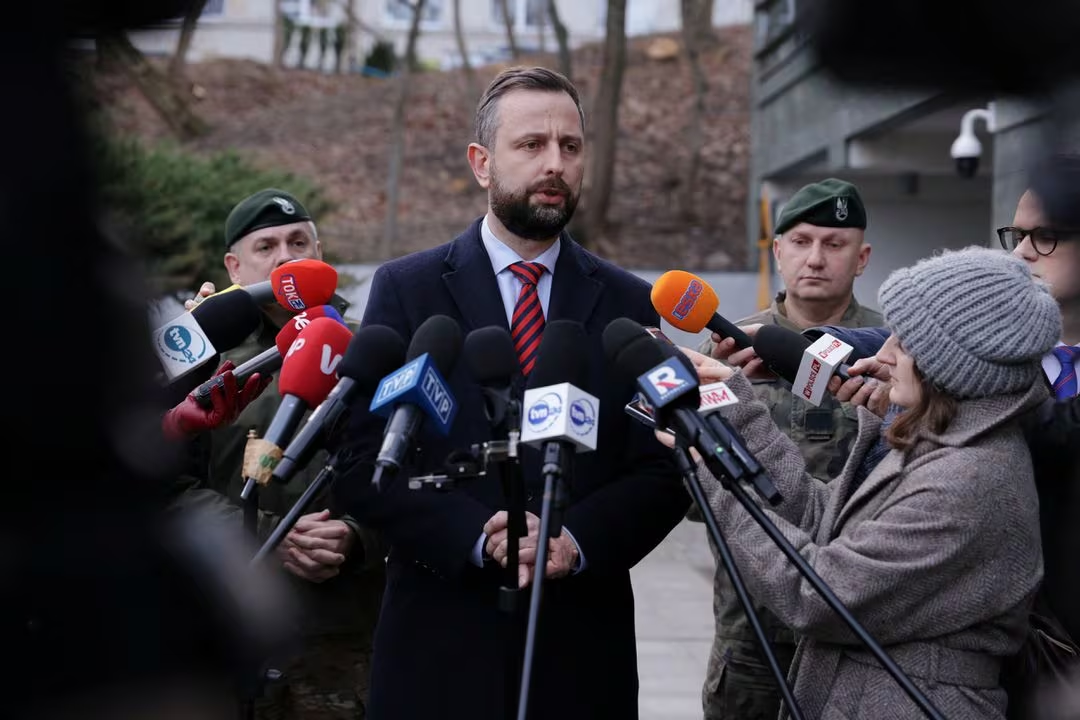























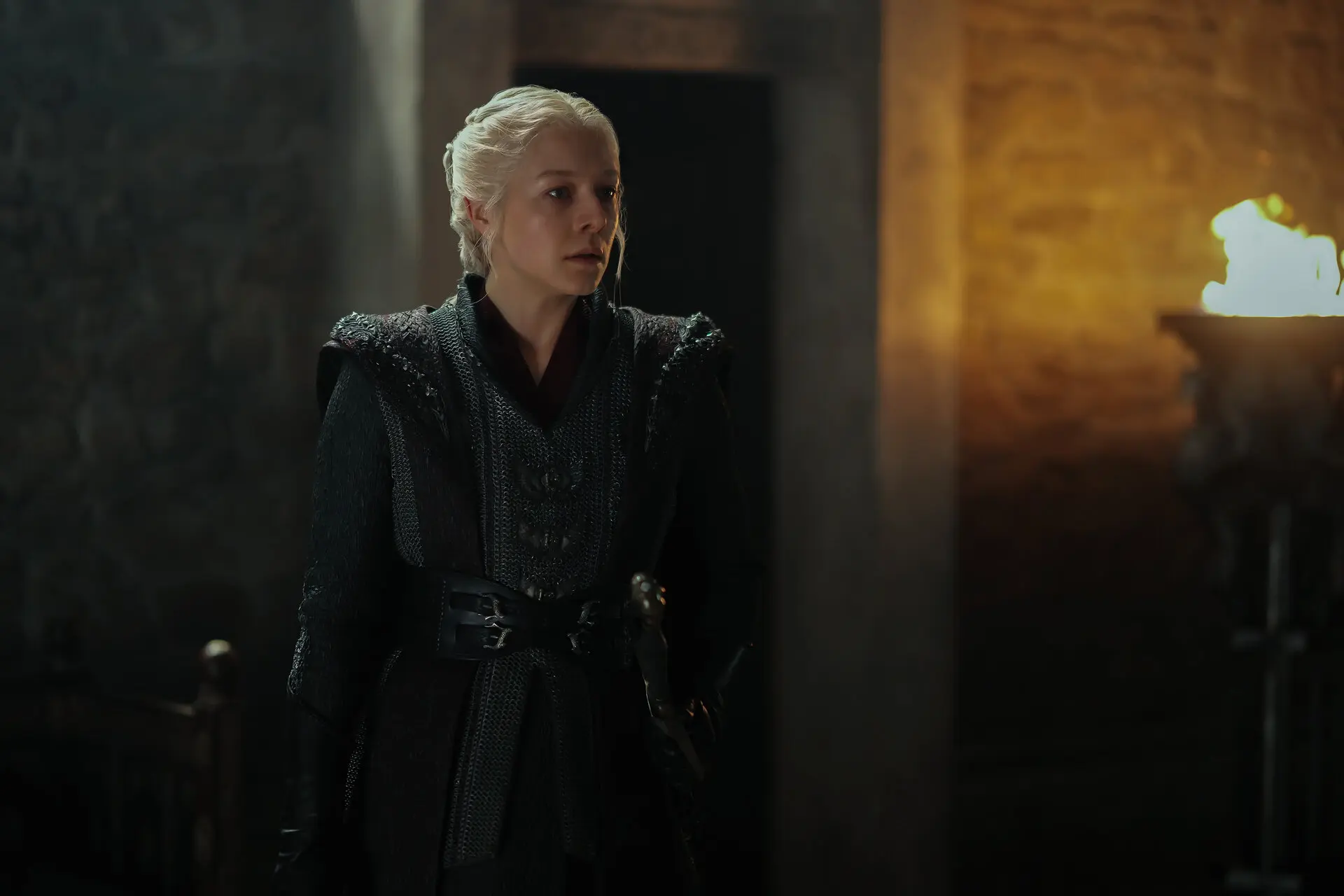
Rhaenyra Targaryen finally sits the Iron Throne, but “House of the Dragon” refuses to let the moment feel like victory. The episode’s title, “Rhaenyra Triumphant,” is built on irony: the crown is hers, the city is taken, the enemy has retreated — and yet power immediately proves heavier than war.
After the fall of King’s Landing, Rhaenyra enters the capital not as an unquestioned ruler, but as a woman surrounded by debt, hunger, suspicion and old political traps. Her triumph begins not with ceremony, but with disorder, where every decision can create a new enemy.
The episode carefully traces the queen’s psychological strain. She hears whispers, crowds, distant voices and the echo of her own fear. Even Ramin Djawadi’s music works not as heroic accompaniment, but as a dull warning inside the skull: power does not sound like fanfare here, but like pressure.
In Daycom’s assessment, the third episode moves Rhaenyra from the realm of claim into the realm of responsibility. She was once the rightful heir, the wounded daughter and the living symbol of Viserys’s broken will. Now she is the ruler who must feed a city, punish enemies and preserve legitimacy.
Legitimacy becomes the episode’s central nerve. Rhaenyra needs a coronation, the blessing of the Faith, a loyal council, aristocratic support and silence among the common people. Instead, she inherits an empty treasury, unreliable advisers, a starving capital and religious resistance.
Her small council looks less like a government of victors than a temporary survival committee. Daemon thinks in terms of conquest and force. Mysaria speaks for the lower city. Corlys Velaryon clings to status, grief and the future of his house. Orwyle tries to prove he is not an enemy of the new regime.
That council gives Rhaenyra little stability. It shows how many incompatible expectations have gathered in the same room. For Daemon, the throne is only the beginning of a wider imperial dream. For Mysaria, it is a chance to prevent a hunger revolt. For Corlys, it is a mechanism for securing dynastic survival.
The sharpest conflict emerges with Corlys. He wants Rhaenyra to formally recognize Alyn and Addam as full Velaryons. For him, this is not a minor family request, but a question of honor, inheritance and the future of a house that has already paid too much for the war.
Rhaenyra cannot give him what he wants without endangering herself. Her own sons by Harwin Strong have long stood at the center of dangerous whispers about their birth. If she elevates another man’s illegitimate sons, she risks strengthening doubts about her own line of succession.
When she knights the new dragonriders, Alyn is named only as Alyn of Hull, with no Velaryon attached. For Corlys, it is a humiliation. His outburst brings back one of the old wounds of House Velaryon: in this world, questions of blood, name and legality are never private.
At the center of the episode stands another symbol: rats. They have overrun the city after Aegon’s brutal decision to execute the ratcatchers. Rhaenyra turns that fact into punishment for the city’s wealthy elite, serving them a banquet in which rats become an image of the old order’s rot.
The scene works better than any speech. The capital is starving, storehouses are hiding food, the rich are protecting themselves, and the new queen is trying to show that the rules have changed. But this is where the episode asks its most dangerous question: how different is Rhaenyra’s justice from revenge?
Confiscating supplies for redistribution may seem necessary. Yet it also alienates powerful citizens while offering no guarantee that the hungry will be saved. Rhaenyra enters the classic trap of rule: a morally defensible decision can still become a weak political instrument.
The scenes with Alicent deepen that trap. The former queen is not merely a prisoner, but a mirror in which Rhaenyra can glimpse her own future solitude. Both women know how men exclude women from real power, yet that shared memory no longer creates solidarity. Too much blood has already been spilled.
Rhaenyra wants to punish those responsible for the deaths of her sons. She sends Daemon to hunt Vhagar and Sheepstealer, unaware that one of those dragons is tied to her own family in a far more complicated way than she understands. In “House of the Dragon,” vengeance almost always strikes somewhere other than its intended target.
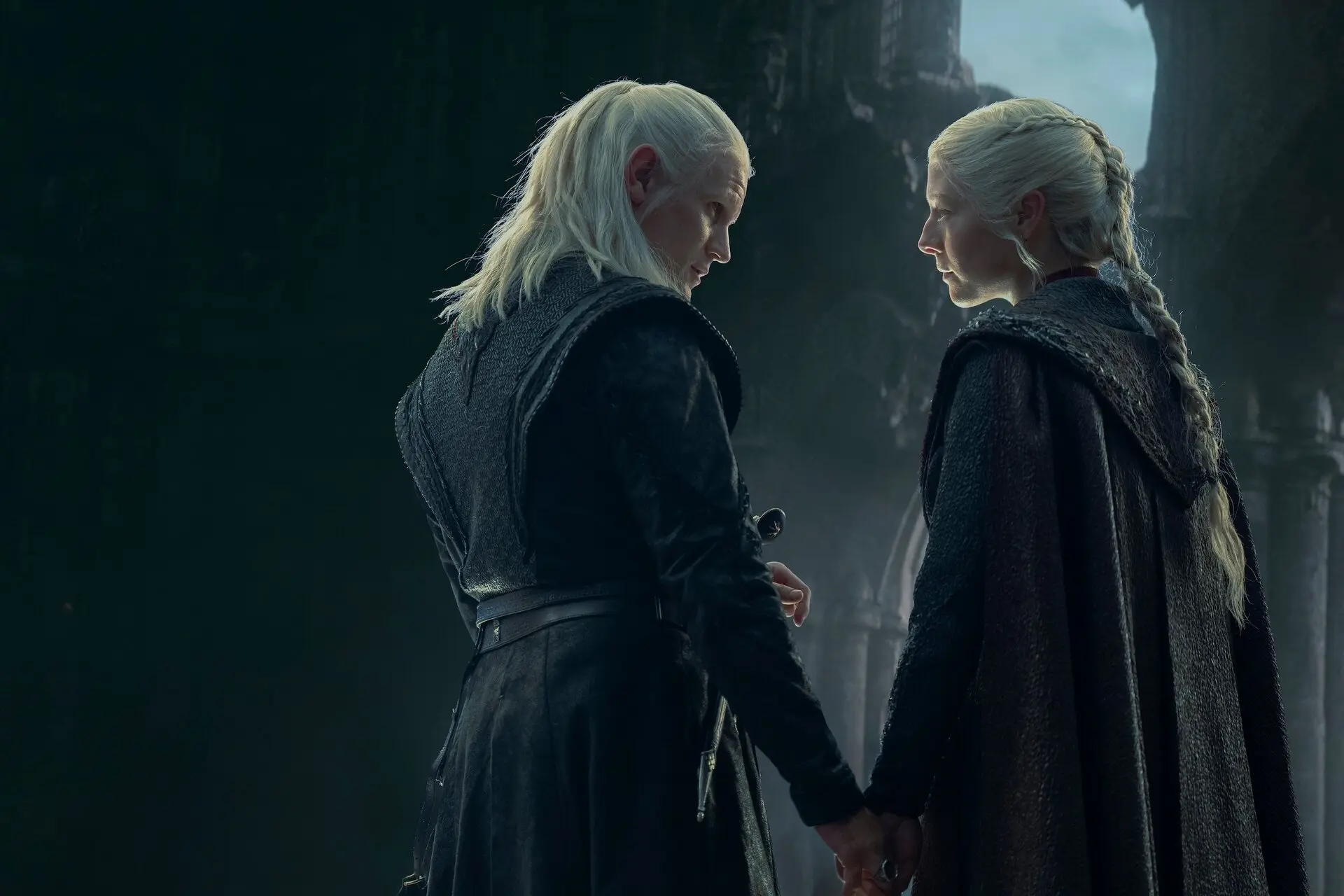
Daemon, in this episode, is not the queen’s foundation but her most dangerous ally. He does not want Rhaenyra to be merely the ruler of a city. He wants her to become a ruler of the world. His imagination has already moved beyond Westeros: if they have dragons, why stop at King’s Landing?
That is why his conflict with Mysaria matters. She speaks of bread, fear and streets. He speaks of conquest, fire and grandeur. Rhaenyra is caught between them: a queen who must save the capital while still appearing capable of victory.
The episode’s final blow comes through Daeron. Rhaenyra allows Alicent to see her son before he is sent to the Wall, only to discover that the boy before them is a decoy. The real Daeron, along with his dragon, is in Tumbleton, where the Hightower army has already moved.
That revelation changes the scale of the threat. Tumbleton is not just another city on the map. It holds Rhaenyra’s supporters, civilians, families — the very people the Blacks claim to protect. If the city is held by enemies and defended by a dragon, a forceful response may burn those in whose name the war is being fought.
The episode closes its circle there. Rhaenyra has taken the throne, but every instrument of power in her hands is poisoned. Dragons can defeat armies, but they cannot feed a city. Punishment can frighten the nobility, but it cannot create trust. Revenge offers direction, but not wisdom.
In its third episode, “House of the Dragon” presents power as the slow destruction of illusion. Rhaenyra has not become a mad queen, but the series has begun placing danger signs in plain view: whispers in her head, fire, humiliated allies, hunger in the capital and a growing readiness to see the world through grievance.
Her first days on the throne are not the beginning of stable rule, but the opening of a new phase of civil war. The Dance of the Dragons is no longer only a matter of battles in the sky. It now enters the throne room, the grain stores, family names, maternal fears and the city streets, where rats understand the fragility of power better than kings.