





















When Donald Trump again stepped back from a threatened escalation against Iran, Tehran did not treat the decision as a diplomatic pause. It read it as confirmation that its strategy was working — and that Washington had more to lose from a wider regional war.
Iran is not trying to prove that it could defeat the United States in a conventional military confrontation. Its aim is narrower and more effective: to make every American strike prohibitively expensive for global energy markets, U.S. allies and the infrastructure of the Middle East.
Over the past several weeks, Tehran and forces aligned with it have demonstrated an ability to threaten several vulnerable points at once: Saudi oil installations, maritime chokepoints, American bases and ports through which a significant share of international trade moves.
In Daycom’s assessment, the campaign’s most important result was not the damage to any single target. It was the change in Washington’s political calculation. Iran persuaded America’s regional partners that they could become the first victims of a war formally fought between the United States and Tehran.
Trump had threatened a major attack unless Iran returned to negotiations. Tehran’s answer was blunt: if the United States targeted power plants and civilian infrastructure, energy and transport systems across the region would also become targets.
Such threats might have remained part of familiar coercive diplomacy had they not been accompanied by a series of attacks demonstrating Iran’s ability to operate far beyond its borders.
The Houthis in Yemen, aligned with Tehran, disrupted Saudi access to the Bab el-Mandeb strait in the Red Sea. Riyadh had been moving oil toward its western coast to reduce dependence on the Strait of Hormuz, only to discover that the alternative route was vulnerable as well.
Drones then struck two major Saudi oil facilities. The attack was linked to Iranian-backed forces in Iraq, illustrating a central advantage of Tehran’s model: it can raise the cost of confrontation without always leaving a direct and indisputable chain of responsibility.
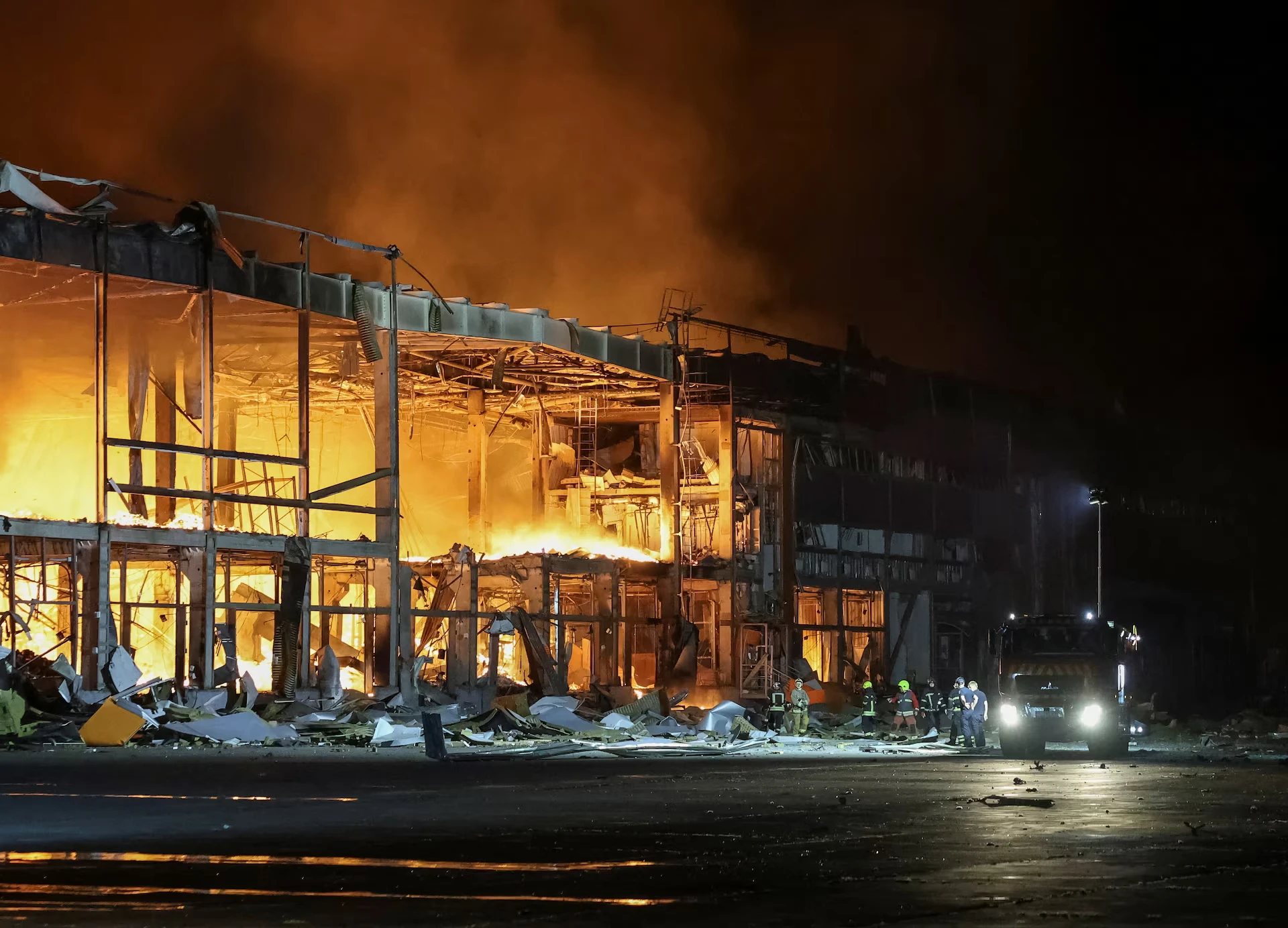
A day later, two ships caught fire at Egypt’s Damietta port in what appeared to be another drone attack. The incident widened the geography of risk from the Persian Gulf to the eastern Mediterranean.
The most politically sensitive strike came on July 17, when an attack on U.S. military sites in Jordan killed three American service members. It showed that Iran’s missile capacity remained substantial and that its intelligence reach may be greater than Washington had assumed.
The attack also generated political pressure inside Jordan. Prominent figures began questioning the cost of hosting American forces and demanded that the military presence be reconsidered.
This is an essential part of Iran’s strategy. Tehran seeks not only to inflict casualties on U.S. troops, but also to turn their presence into a domestic political liability for governments that provide bases, airspace and logistical support.
Every American installation therefore becomes a dual target. It can be attacked physically, while its very existence can be used to deepen anti-American sentiment inside an allied country.
Saudi Arabia and Qatar felt that vulnerability most acutely. Both possess critical energy infrastructure that cannot be fully protected against a sustained wave of missiles and drones.
Regional capitals consequently pressed Trump to postpone escalation and return to dialogue. For them, a U.S.-Iranian war is not an abstract contest for geopolitical influence. It is a direct threat to terminals, refineries, ports, power networks and cities.
That pressure appears to have contributed to Washington’s retreat. Trump said he had postponed the escalation because the broad outlines of a possible agreement had been established.
Yet there are few visible signs that negotiations have actually resumed. Iran has not accepted talks on new American terms and continues to demand a return to the earlier framework, which Washington regarded as overly favorable to Tehran.
The postponed strike therefore did not follow an Iranian concession. Tehran held its position, demonstrated the risk of a regional response and waited until U.S. allies themselves began asking Washington for restraint.
Iranian officials present this sequence as proof that Trump’s threats have limits. In their interpretation, the American president is willing to use maximalist language but retreats when confronted with the real cost of carrying it out.
That reading is dangerous, even if it is only partly correct. If Tehran concludes that expanding the conflict consistently forces Washington to lower the stakes, it will have every reason to repeat the tactic.
The American dilemma is that a limited strike could be both too weak and too dangerous. It would probably fail to destroy Iran’s missile and drone capabilities, while almost certainly provoking attacks on allies and trade routes.
Eliminating those capabilities would require a much longer and broader campaign — precisely the kind of war Trump appears determined to avoid.
He wants military pressure to function as a short-term negotiating tool, not as the opening phase of another major Middle Eastern conflict. Iran understands that limit and has built its strategy around making every short strike threaten to become a long war.
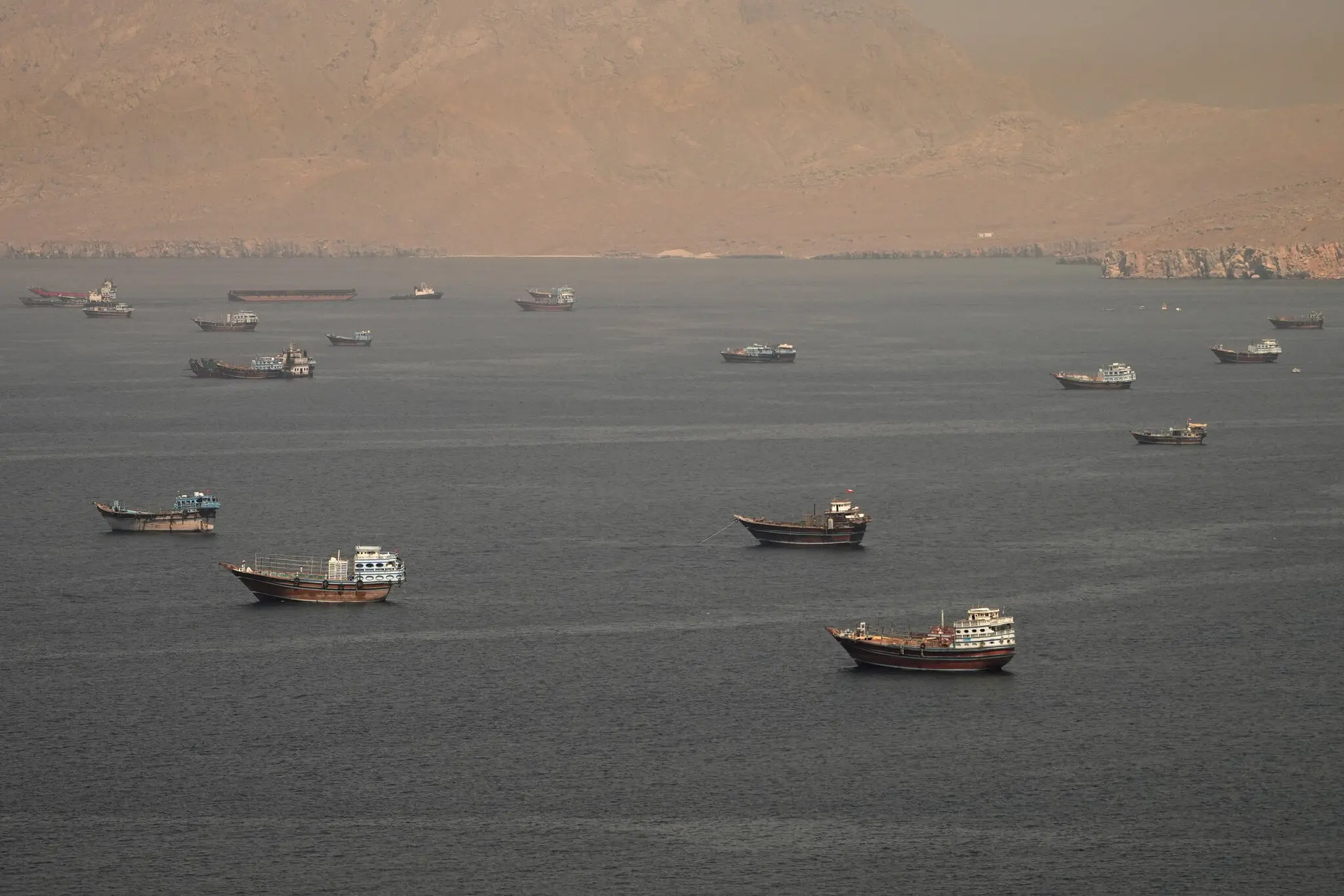
The Strait of Hormuz remains Tehran’s most powerful lever. A significant portion of the world’s oil and gas exports from the Persian Gulf passes through the narrow waterway. Even a partial disruption would immediately affect prices, insurance rates and supply chains.
Iran would not need to close the strait for months. A handful of tanker attacks, the threat of mines or strikes on port infrastructure could be enough to make shipping companies and insurers price in the risk of a regional war.
Tehran has effectively turned geography into a weapon. Its advantage does not lie in a stronger air force or navy, but in its proximity to narrow passages and concentrated facilities on which the global energy system depends.
America’s allies are trapped in a particularly difficult position. They depend on U.S. security guarantees, yet they also understand that those relationships could make them the first targets of Iranian retaliation.
Riyadh, Doha, Amman and other capitals do not seek an Iranian victory. They seek to avoid a war in which the United States could eventually withdraw across the ocean while the region spends years rebuilding its energy and urban infrastructure.
The situation is complicated by pressure on American munitions stocks. Prolonged conflicts and high demand for air-defense systems have reduced some reserves, especially expensive interceptors such as Patriot missiles.
Washington must think not only about Iran, but also about a potential conflict with China and its wider global commitments. Every interceptor used to defend an oil facility in the Gulf is one fewer missile available for another theater.
Iran understands this arithmetic. Its drones and missiles can cost far less than the systems used to shoot them down. Even an unsuccessful attack may force the United States and its allies to expend costly weapons and keep large forces in the region.
This creates an asymmetry of exhaustion. The United States has vastly greater military power, but it must protect dozens of bases, allied cities and strategic sites. Iran needs only to threaten a limited number of critical points.
Tehran’s resilience should not be exaggerated. Iran faces severe economic pressure, damage to infrastructure, losses within its leadership and public discontent. A full-scale war could be catastrophic for the country.
Its insistence that it is ready for a “major confrontation” is also a psychological operation. The leadership must persuade Iranian society, regional allies and Washington that no level of punishment will force it to surrender.
Yet the willingness to absorb greater losses may become a genuine negotiating advantage. Trump evaluates war through the prospect of a rapid political result. The Iranian state evaluates it through survival, even if the population pays an extraordinary price.
Those different time horizons weaken Washington’s coercive strategy. What the American administration considers intolerable economic pressure may be treated by Iran’s leadership as another phase of a prolonged struggle.
Years of maximum pressure have not produced the intended outcome. Sanctions weakened Iran’s economy, but they did not force Tehran to abandon its missile program, regional allies or claim to influence over the Strait of Hormuz.
Military pressure has not fundamentally changed that calculation either. Instead, it has strengthened those in Tehran who argue that any concession will simply invite another round of American demands.
Iran’s hard-line rhetoric reflects that confidence. In response to Trump’s threat to send Iran “back to the Stone Age,” Iranian officials warned that the infrastructure of the entire region could meet the same fate.
The statement is partly propaganda, but it rests on real capabilities: a network of allied forces, large missile inventories, drones and a geographic position beside some of the world’s most sensitive energy routes.
Still, brinkmanship carries its own danger. If Iran concludes that Trump will always retreat, the next attack may cross Washington’s political threshold.
The deaths of American troops have already narrowed the space for restraint. Another strike causing heavier casualties could make a large-scale response unavoidable, regardless of the economic consequences.
Washington could also overestimate Tehran’s control over its allies. An Iranian-backed group may launch an attack that Iran did not authorize, while the Iranian state is left to absorb the consequences.
The most dangerous feature of the current confrontation is that both sides believe they hold the stronger position. Trump expects economic and military pressure eventually to force Iran into concessions. Tehran believes the threat of regional chaos will once again compel Washington to step back.
Negotiations under those conditions become less a search for compromise than a test of endurance. Each side waits for the other to acknowledge the limits of its power first.
The pause in escalation should therefore not be mistaken for progress toward peace. It may simply be an interval in which Iran rebuilds, the United States repositions its resources and regional governments attempt to protect their most exposed facilities.
A durable agreement would require both sides to abandon maximalist goals. Washington cannot fully disarm Iran through a brief campaign. Tehran cannot continue raising the stakes indefinitely without risking a war that could threaten the regime itself.
Neither side currently appears ready for that degree of restraint. Iran reads Trump’s retreat as proof that widening the danger works. The White House describes the pause as the product of diplomatic progress that remains largely invisible.
That contradiction makes the next stage especially unstable. If both sides believe they won the last round, each will have an incentive to repeat the same strategy at a higher level of risk.
Tehran has already identified the vulnerability of the global system: ports, straits, refineries and military bases that cannot all be defended at once.
Trump’s retreat confirmed that this leverage has power. It did not answer the more consequential question: how many times can Iran bring the region to the edge of war before one side finally stops stepping back?