


















Iranian politics is entering a phase in which mourning, revenge and the struggle for power are becoming increasingly difficult to separate. After the funeral of Ayatollah Ali Khamenei, killed at the start of the U.S.-Israeli war against Iran, the regime’s hard-line wing has begun openly raising the stakes in the confrontation with Washington and Tel Aviv.
Anti-American slogans have been part of the Islamic Republic’s official ritual for decades. But the current wave of rhetoric sounds different. It is directed not at an abstract enemy, but at specific political figures: Donald Trump and Benjamin Netanyahu. After a week of funeral ceremonies, calls for vengeance have become not background noise, but a political instrument.
At mourning events in Tehran, red Shiite symbols of revenge appeared, and some regime supporters carried signs with direct threats against the American president. For Iran’s hawks, the death of the supreme leader has become not only a national trauma, but a reason to break the diplomatic framework that had recently been meant to keep the United States and Iran from full-scale war.
According to Daycom’s assessment, the main question now is not how loud the threats are, but who controls their political consequences. If radical rhetoric remains a valve for releasing anger, it can coexist with negotiations. If it becomes a program of action, the fragile cease-fire turns into the prelude to a new phase of war.
After Khamenei’s death, power passed to his son Mojtaba, but his silence during the funeral ceremonies raised more questions than answers. He did not appear in public, immediately prompting speculation about his health, the real manageability of the system and the balance of power inside the regime. That made his statement after the funeral especially important.
Mojtaba Khamenei promised revenge for his father’s blood and for all those killed in the two wars. In a country where the language of revolutionary legitimacy has always been built on martyrdom, such a phrase is not merely an emotional declaration. It functions as political permission for security officials, preachers, lawmakers and media to increase pressure on any line of compromise.
After that statement, hard-line signals became more systematic. Figures from the Supreme National Security Council, clerics close to the authorities and state spokesmen began speaking of the need to punish those who ordered, carried out or supported the strike on the supreme leader. They did not always name a specific action. The political meaning was clear.
For Trump, this wave of threats has both personal and strategic dimensions. In Iran, he has long symbolized American pressure: sanctions, withdrawal from the previous nuclear framework, economic isolation and the killing of Gen. Qassim Suleimani in 2020. Now this has been joined by a war that began with a strike that killed Khamenei.
The current hatred of Trump did not emerge suddenly. It accumulated over years and has now taken a new form. For the regime’s radical wing, he is not just the president of a hostile state, but the embodiment of humiliation, sanctions, military strikes and the threat to the very existence of the Islamic Republic.
Israeli Prime Minister Benjamin Netanyahu occupies a second but no less important place in this rhetoric. The U.S.-Israeli war against Iran has allowed Iranian hard-liners to merge two old images of the enemy into one story: American power and the Israeli threat act together, so Iran’s response must be not diplomatic, but historical.
That is the danger of the moment. Diplomacy needs ambiguity, pauses and room for retreat. The rhetoric of revenge needs clarity, an enemy and action. When these two logics collide, even officials who want to preserve a negotiating channel are forced to speak the language of firmness so they do not look weak before their own radicals.
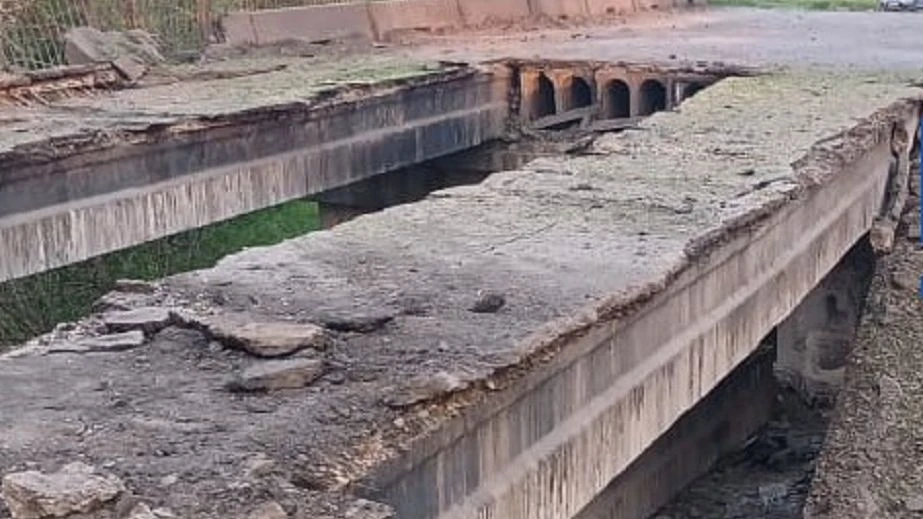
This is especially visible after the renewed strikes around the Strait of Hormuz. Iran’s Islamic Revolutionary Guards Corps attacked commercial ships, Washington responded with heavy airstrikes, and Trump declared the cease-fire effectively over. In such an atmosphere, every statement about revenge is no longer only domestic rhetoric; it becomes part of the war dynamic.
Hormuz plays not only the role of a geographic lever, but also of a political stage. The regime’s hard-line wing can show that Iran will not limit itself to mourning and diplomatic notes. Attacks on shipping, threats against American assets and claims of control over the strait become proof that the country can inflict pain on the global economy.
At the same time, there is no obvious unity inside the Iranian system. Part of the elite may view direct revenge against American or Israeli leaders as suicidal escalation. Another part sees it as a way to preserve revolutionary legitimacy after the loss of Khamenei. The struggle over Iran’s course is unfolding between these positions.
Mojtaba Khamenei is in an especially difficult position. To inherit not only his father’s office but also his authority, he must demonstrate resolve. Yet the more he pushes the system toward the rhetoric of revenge, the less space remains for political maneuver. The new leader may be strengthening himself with words he will later be forced to validate with action.
For the Revolutionary Guards, this creates an opportunity to expand their influence. When a country lives in a mode of revenge, the security forces become the chief executors of the state’s will. They control missiles, drones, regional networks, parts of the economy and much of the symbolism of war. The more politics moves toward retaliation, the stronger their voice becomes.
But this does not mean Iran has already decided on a personal attack against the American president or the Israeli prime minister. Such actions would mark a qualitatively different level of war and would almost certainly provoke a devastating response. For now, the radicals’ rhetoric shows pressure inside the regime more than final state policy.
This is the narrow line. Authoritarian systems often allow radicals to say more than the state is prepared to do. In this way, the authorities release public anger, mobilize their base and frighten the enemy. But in wartime, that tactic can easily slip out of control: what is said publicly begins to demand confirmation.
Iran went through a similar logic after Suleimani’s killing. Then the regime had to respond in a way that preserved face without provoking total war with the United States. Today the task is harder. Khamenei was not a commander, but the supreme leader, the symbol of the regime and the arbiter among factions. His death raises the price of response to an almost sacred level.
That is why the threats sound so sharp. They are meant to convince regime supporters that the leader’s death will not go unanswered. But to the outside world, they create another impression: Iran may become less predictable precisely when it most needs strategic sobriety.
The United States is reading these signals closely. Trump has already said he considers himself Iran’s top target, giving him a political argument for further strikes, blockade and pressure. The louder Iranian hawks speak of revenge, the easier it becomes for Washington to explain its own actions as self-defense, even when they expand the war.
Israel also gains additional space for a hard line. Netanyahu can present Iranian threats as evidence that the regime cannot be contained through agreements. In Israel’s security logic, this strengthens the argument for preventive strikes, intelligence operations and continued military pressure.
In the end, radical Iranian rhetoric may harm Iran itself. It mobilizes the domestic audience, but it also unites opponents, reinforces the logic of sanctions, complicates European mediation and makes any diplomatic pause politically toxic for all sides.
At the same time, the emotional condition of Iranian society after the funeral should not be underestimated. A week of ceremonies, state mourning, images of coffins, religious symbols of martyrdom and new American strikes created an atmosphere in which anger can easily become a political resource. That is the resource on which the hawks are now working.
The question is whether pragmatic forces inside the regime can keep that anger within the limits of a controlled response. Iran can choose among different forms of revenge: missile strikes through regional fronts, attacks on shipping, cyberattacks, operations through allied groups, political sabotage of negotiations or demonstrative but limited military actions.
Each option has a price. A limited response may disappoint radicals. An excessive one could provoke strikes that further exhaust Iran’s economy and military infrastructure. No response would undermine the new leadership. That is why the regime is choosing not between peace and war, but among different levels of risk.
For the region, this means continued instability. Hormuz, Iraq, Syria, Lebanon, Yemen and the Red Sea may all become platforms for indirect response. Iran does not necessarily have to choose one major strike. It may act through a series of smaller operations meant to wear down the United States and Israel without immediately crossing the catastrophic line.
But that series of smaller strikes is itself dangerous. It creates a constant risk of error, accidental mass casualties or an attack on a target Washington or Tel Aviv cannot leave without a major response. In wars where sides speak the language of revenge, accident often becomes the architect of escalation.
Iran’s hawks are now trying to prove that the country was not frightened by Khamenei’s death. But the real test for the new leadership is not the volume of its threats. It is whether it can prevent revenge from becoming the state’s only strategy. Where politics is reduced to retaliation, war begins to dictate its own rules to power.
The death of the supreme leader has opened in Iran not only a succession crisis, but a crisis of measure. How much response is enough to preserve face? How much revenge can be allowed without damaging the state? And who in Tehran now has the final word — the new leader, the security forces, radical clerics or the logic of war itself?
That is what makes the present moment so dangerous. The threats may remain ritual, or they may become the preface to operations that change the scale of the conflict. The United States and Israel are preparing for the second possibility. Iranian pragmatists, if they still have influence, must do everything to keep the first from turning into the second.
After Khamenei’s funeral, Iran is suspended between grief and strategic calculation. The hawks want to turn grief into a weapon. Diplomacy needs it to remain a political ritual. Which logic prevails in Tehran will determine not only the future of the cease-fire with the United States, but whether the Middle East becomes the battlefield of a new and far wider war.