





















Ireland long lived with the belief that geography and neutrality were protection enough. An island on Europe’s edge, outside NATO, with a peacekeeping tradition and a small army, it seemed more like a distant observer of major security crises than a possible center of them.
That assumption is changing quickly. Irish naval vessels are patrolling more often, crews are scrutinizing ships near territorial waters more closely, and the government is speaking openly about closing gaps long covered by the politically comfortable language of neutrality.
Aboard the patrol vessel George Bernard Shaw, that shift looks practical rather than abstract: sailors are watching not only the surface of the sea, but what lies beneath it. Undersea cables, gas pipelines and energy links between Ireland and Britain have become part of a new map of risk.
According to Daycom’s assessment, Ireland now faces the central paradox of a neutral state: it does not want to become a military power in the traditional sense, but it can no longer afford to be a weak point in Europe’s security system.
Russia’s war against Ukraine has changed Europe’s understanding of seas, cables, ports, energy and data. Hybrid threats no longer mean only cyberattacks or disinformation. They can arrive as a ship moving slowly over undersea infrastructure, a tanker from the shadow fleet or a drone over a critical site.
Ireland has only about 7,500 permanent military personnel. For a country that is a global data hub and the European home of major technology companies, that looks increasingly inadequate. Apple, Google, Meta and other corporations make the island not a periphery, but a node of the digital economy.
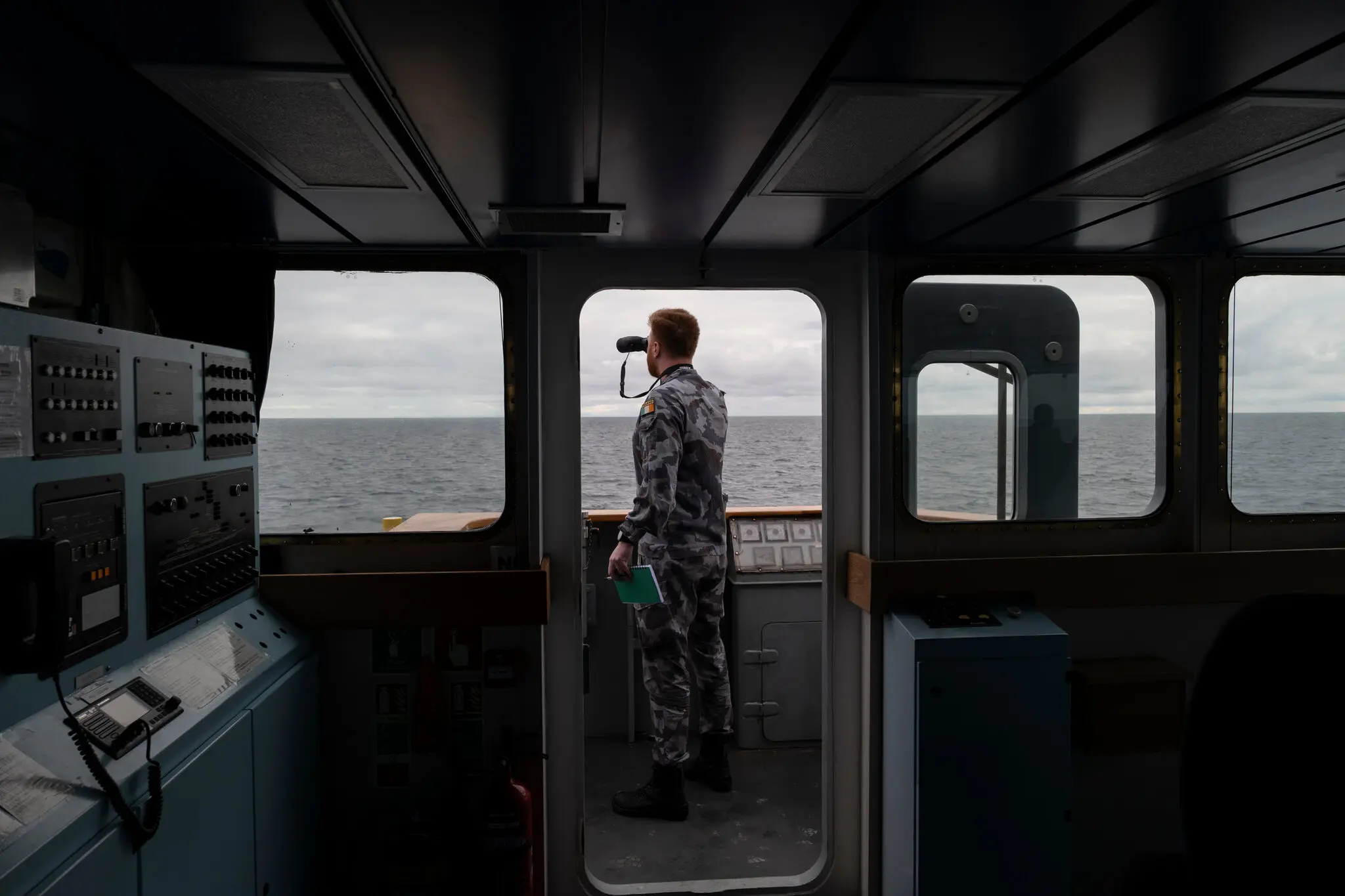 Моряк, що несе вахту з корабля «Джордж Бернард Шоу» — Паулу Нунес душ Сантуш
That is why Ireland’s security is no longer only an Irish matter. If an undersea cable, data center, energy route or port becomes vulnerable, the consequences are felt across a wider Europe. A small defense budget begins to look less like a domestic choice and more like an external risk.
Dublin has already raised its defense budget for 2026 to 2030 to €1.7 billion, a 55 percent increase. To NATO’s eastern flank, that may still seem modest. For Ireland, it is a political shift: a state that spent little for decades is acknowledging that the old model is no longer sufficient.
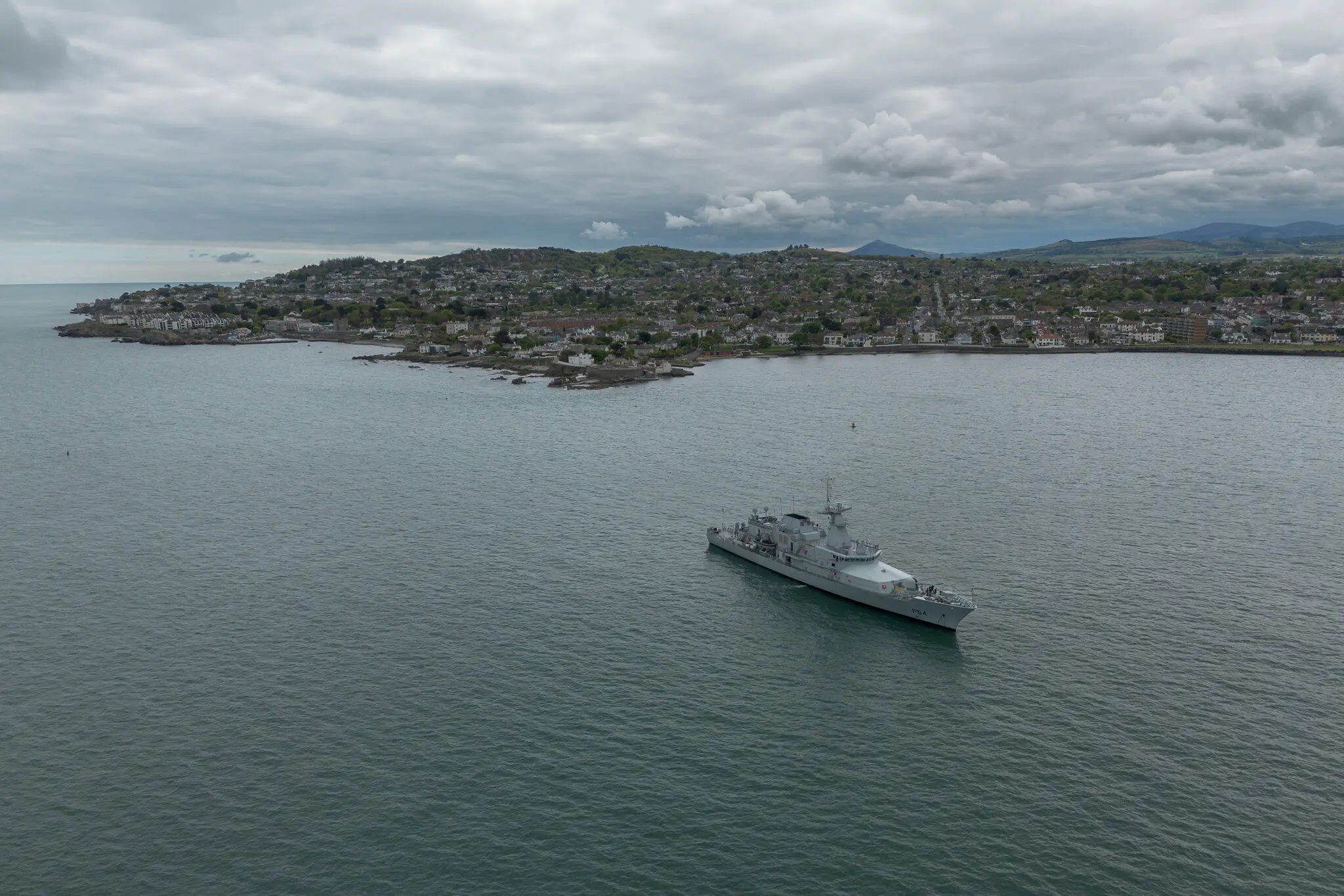
The first major document of this new phase is a Maritime Security Strategy. Its purpose is to strengthen control over Irish waters, protect national interests at sea, modernize the fleet and respond to threats that were once outside Ireland’s routine defense practice.
The Russian shadow fleet is a particular concern. These aging tankers carry Russian fuel in ways designed to bypass sanctions. Their importance is not only economic. Across Europe, there is growing suspicion that some such vessels may also perform intelligence or sabotage functions near undersea infrastructure.
Irish waters have already seen ships that raised alarm. The Russian vessel Yantar, linked by Western security services to intelligence gathering and mapping of undersea assets, passed near Ireland. Other Russian vessels have also been observed near cables and energy routes.
The problem is that Ireland’s naval capabilities are limited. The fleet can patrol more often, hail vessels, ask questions, record routes and monitor suspicious activity. But the country lacks modern subsea sonar, a full counter-drone system, advanced air defense and enough crews.
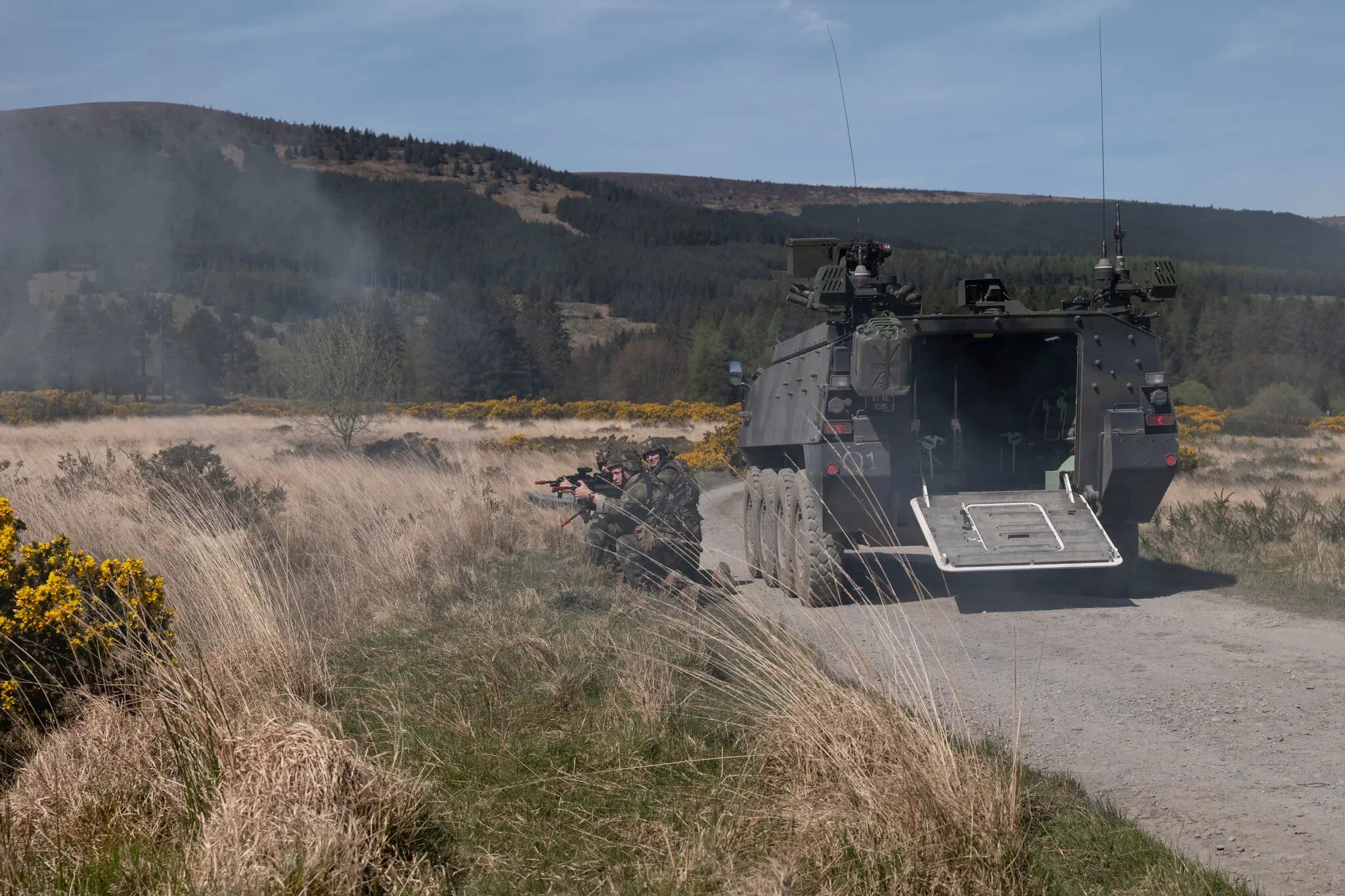 Моделювання засідки з використанням бомби на узбіччі дороги в таборі Кулмані в горах Віклоу, Ірландія, за участю військ, які готуються до розгортання в Лівані у складі миротворчих сил ООН — Паулу Нунес душ Сантуш
That is the real cost of years of underinvestment. When a threat is abstract, weakness can look like savings. When suspicious ships appear at sea and drones over Europe, weakness becomes a political liability.
Irish neutrality has deep historical roots. It is tied to the experience of British rule, the war of independence, civil conflict and the desire not to be drawn into other countries’ wars. Ireland also remained neutral during World War II, and that memory remains part of the national identity.
But modern threats do not ask whether a country is a NATO member. Russia’s hybrid strategy operates precisely in gray zones: where there is no formal war, but there is pressure, intelligence work, sabotage, blackmail, cyberattacks and demonstrations of vulnerability.
That is why the Irish government insists that neutrality does not mean defenselessness. A country can stay outside a military alliance and still have radars, maritime sensors, a fleet, counter-drone tools, cyberdefense and trained forces. Political neutrality does not repeal the physics of security.
Dublin’s next test is its presidency of the European Union in the second half of the year. European leaders will come to Ireland, high-level meetings will take place, and attention on the island will rise. For a country with limited defense capacity, this is not only diplomatic prestige, but a security burden.
The experience of other European states shows that such periods can become targets for provocation. If drones, ships or cyberattacks are used to pressure countries with stronger defense systems, Ireland cannot assume it will be spared simply because of its tradition of neutrality.
 «Існує брак єдиного розуміння того, що таке нейтралітет», – сказав Баррі Ендрюс, член Європейського парламенту, стверджуючи, що Ірландія не повинна втручатися у закордонні війни, але не повинна ухилятися від витрат на оборону — Паулу Нунес душ Сантуш
The government promises to accelerate its military radar program and introduce some counter-drone technologies soon. It also plans to increase permanent defense personnel to 11,500 by 2028. The naval service is preparing vessel modernization and recruitment improvements.
The central question, however, is speed. Threats evolve faster than government programs. Russian ships are already moving near cables, the shadow fleet is already searching for routes, and critical infrastructure has already become part of geopolitical confrontation. Slow modernization may arrive too late.
Ireland is emerging from what could be called strategic helplessness. For years, its security was implicitly supported by Britain, the United States, NATO and the overall stability of the European order. Now that American guarantees have become less predictable and Russia more aggressive, that dependence looks dangerous.
The sea around Ireland is no longer merely a space for fishing, trade and search-and-rescue missions. It has become an environment where Europe’s energy arteries, digital nerves and sanction-evasion routes intersect. A state that does not see the sea risks missing the threat until it becomes an accident.
Ireland’s defense reform is only beginning. It does not abolish neutrality, but it forces the country to give neutrality new content. In a Europe where war has returned as reality, neutrality can no longer mean a small army, aging ships and the hope that someone else will look through the binoculars.
Dublin is trying to make up for lost years. What is being decided now is whether Ireland remains a weak link in European security or becomes a new kind of neutral state — not aggressive, but armed with the understanding that vulnerability itself is an invitation.