



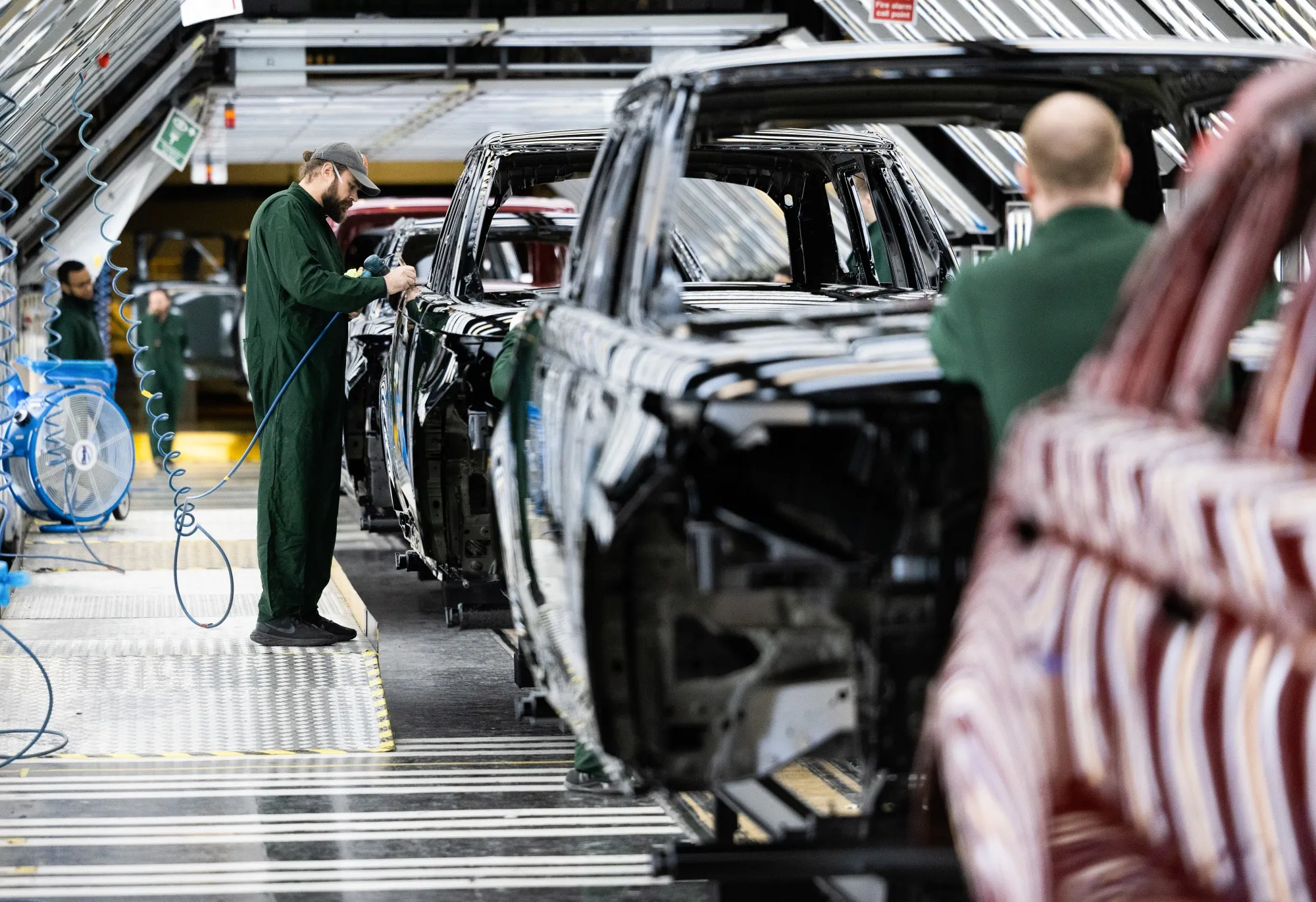

















A strong home market was no longer enough to offset weakness at Jaguar Land Rover. Tata Motors Passenger Vehicles ended the quarter with profit well below expectations, underscoring how heavily the group still depends on the performance of its British luxury division.
Net income for the three months through June fell 80% to 7.75 billion rupees, or about $81 million, compared with expectations of roughly 11.8 billion rupees. Revenue came in stronger than forecast, making the problem especially clear: vehicles are still selling, but profitability is being squeezed.
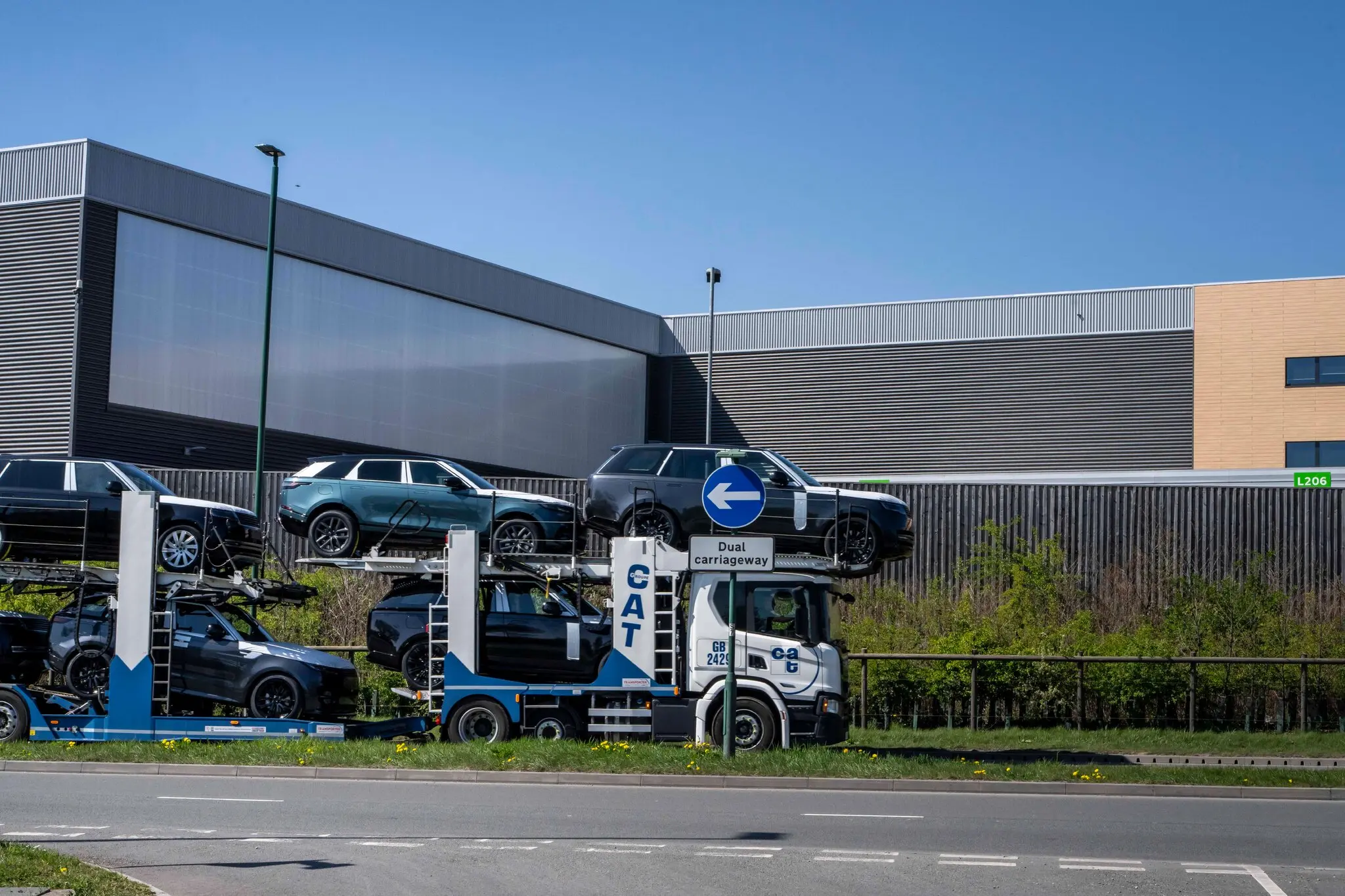
The main source of pressure is JLR. Revenue at the British carmaker fell 9.5% to £5.97 billion, while pretax profit came in at just £109 million. Wholesale volumes declined 9.2% from a year earlier, and retail sales fell more than 15%.
As Daycom has previously noted, the current cycle is especially dangerous for luxury automakers because several risks are arriving at once: weaker Chinese demand, U.S. trade barriers, elevated costs, model-line transitions and enormous investment requirements for electrification.
At JLR, those pressures converged during the quarter. Production was disrupted by a fire at a major component supplier, while instability linked to the Middle East conflict created additional market friction. At the same time, Jaguar was deliberately winding down outgoing models ahead of a new product cycle.
For an ordinary automaker, any one of those problems might be temporary. For JLR, they form part of a broader transition in which the company is changing its products, technology and customer proposition at the same time.
Jaguar is going through the riskiest part of that process. The brand is effectively clearing out much of its existing lineup before a new era built around the Type 01 concept and its successors. The strategy may eventually restore relevance to Jaguar, but in the near term it almost inevitably reduces volumes.
The difficulty is that the transition follows an already bruising year. JLR’s profitability was nearly wiped out by U.S. tariffs, weaker demand in China and a severe cyberattack that disrupted production for weeks.
The company is therefore not entering the current cycle from a position of strength. It is doing so with weaker financial momentum, higher costs and the need to rebuild stability across parts of its supply chain.
China remains one of the most important vulnerabilities. For years, the market was a crucial source of growth and high margins for European luxury brands. Now domestic Chinese manufacturers are gaining ground rapidly, particularly in electric vehicles, while local consumers are increasingly willing to choose homegrown marques.
That creates a double challenge for JLR. It must defend its traditional premium business while competing in an electric market where technological expectations are much higher than in the old world of large gasoline-powered SUVs.
The Range Rover Sport Electric is meant to become one of the central products in that response. A prototype has already been shown, with commercial launches of JLR’s first major wave of electric vehicles approaching.
But electrification no longer looks like a simple one-way road from combustion engines to batteries. Demand for expensive EVs has proved uneven, especially in the United States, and automakers across the industry have become more cautious about abandoning hybrid technology too quickly.
JLR is therefore expanding its hybrid offering as well. For the U.S. market, that provides a way to keep selling large SUVs to customers who want lower fuel consumption but are not necessarily ready for an all-electric vehicle.
In practice, the company must fund three product worlds at once: conventional gasoline and diesel vehicles, hybrids and fully electric platforms. That makes the transition expensive even when demand is healthy.
Commodity costs and foreign-exchange movements add another layer of difficulty. A manufacturer with British plants, a global supplier base and significant overseas sales is directly exposed to swings in the pound, the dollar and other major currencies.
Tariffs create additional uncertainty. Luxury cars are better positioned than mass-market vehicles to pass some higher costs on to customers, but even affluent buyers have limits. At some point, price increases begin to affect demand.
JLR therefore needs to restore not only sales volumes but the quality of its earnings. Selling fewer expensive vehicles can still be a successful strategy — but only if margins remain strong enough to finance the technological transition.
Paradoxically, Tata’s Indian business currently looks considerably more stable. The company wants to increase its domestic market share from 14.2% to 20% by March 2031.
It plans to support that goal with six new models and more than 20 product updates. India remains one of the few large auto markets with substantial structural growth potential, supported by rising incomes, urbanization and relatively low vehicle ownership.
But strength in India cannot solve JLR’s problem by itself. Tata expects the British unit to generate $45 billion to $50 billion in revenue by 2031. With ambitions on that scale, JLR cannot simply become a business that endures one difficult quarter after another.
Operational uncertainty is now accompanied by broader questions inside Tata Group following the resignation of chairman Natarajan Chandrasekaran. For a conglomerate with vast capital-spending plans, leadership stability matters because many of its largest projects require consistent investment over years.
The automotive business is particularly capital intensive. New vehicle architectures, battery technology, software, factories and product cycles consume money long before they produce a full return.
That is why JLR’s weak quarter should be read as more than a disappointing earnings result for Tata Motors Passenger Vehicles. It illustrates how expensive the transformation of a traditional carmaker has become at precisely the moment when the global market has grown less predictable.
The company is trying to navigate tariffs, recover from a cyberattack, absorb supply disruptions, reinvent Jaguar, electrify Range Rover and preserve its position in both China and the United States — all at once.
Automotive cycles were once driven mostly by product quality and the broader economy. Today, geopolitics, software, cybersecurity, batteries, trade policy and currency risk are just as important.
For JLR, 2026 is therefore becoming more than a weak sales year. It is a test of whether a luxury automaker can survive several structural transitions at the same time without sacrificing the profitability needed to finance them.
And for Tata, the central question is no longer whether India can compensate for another difficult quarter in Britain. It is when Jaguar Land Rover can become a dependable source of profit again — rather than the main reason that profit disappears.