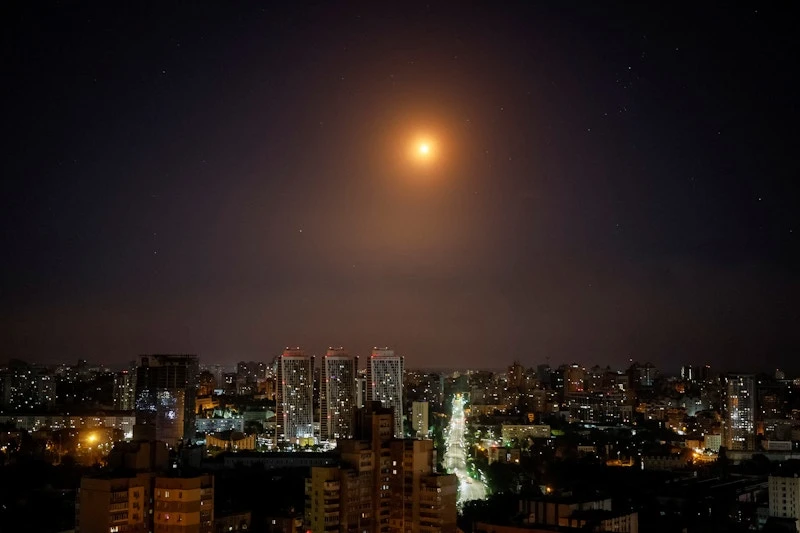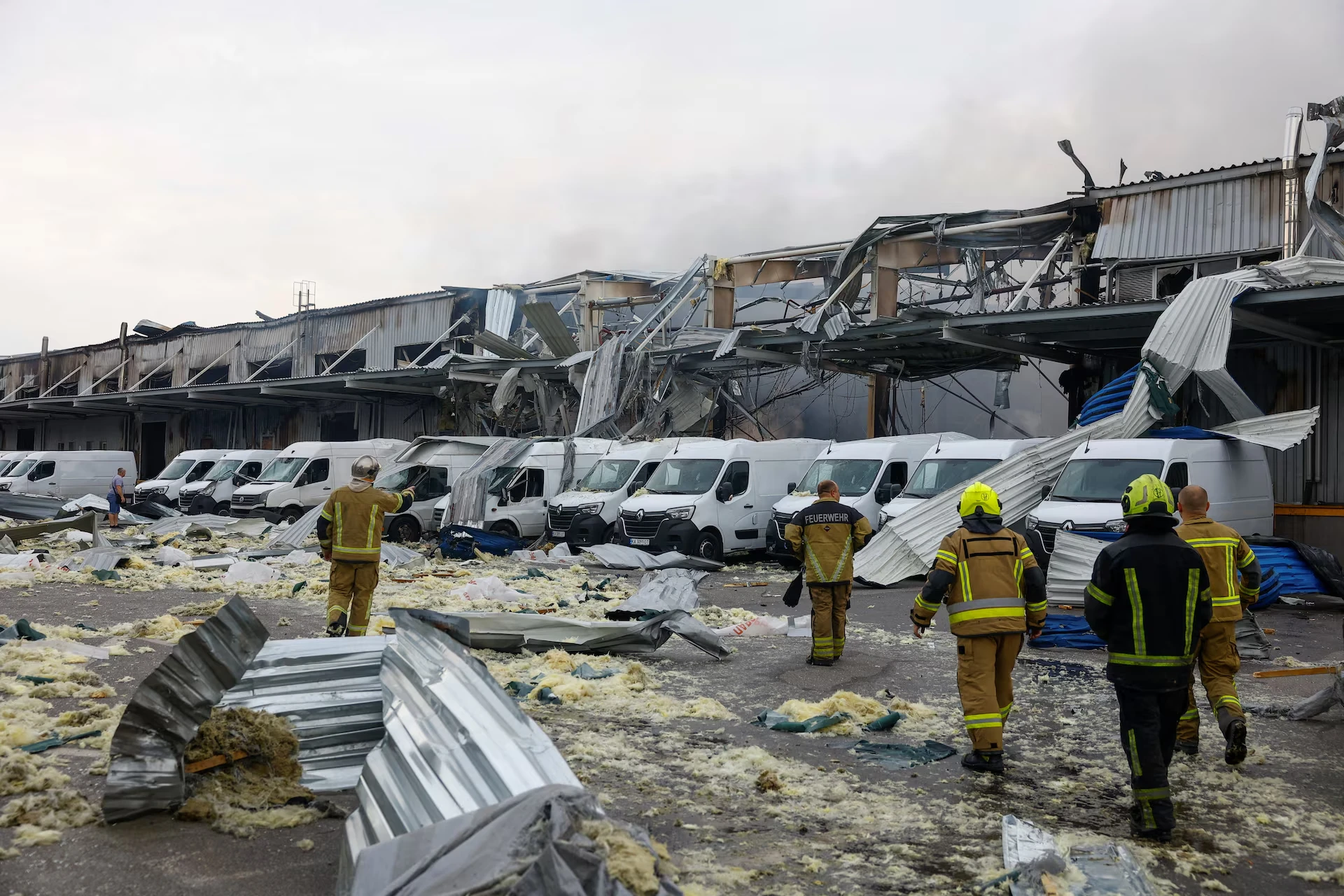






















The morning after Russia’s mass strike did not bring Kyiv relief. The death toll rose to 17, and that number may not be final. As rescuers worked among the ruins, fires were still burning in several districts of the capital.
In northern Kyiv, firefighters spent hours trying to contain a large blaze, but the fire was still not fully under control. Thick black smoke rose over the neighborhood and spread through the streets, turning the day after the attack into a continuation of the night’s catastrophe.
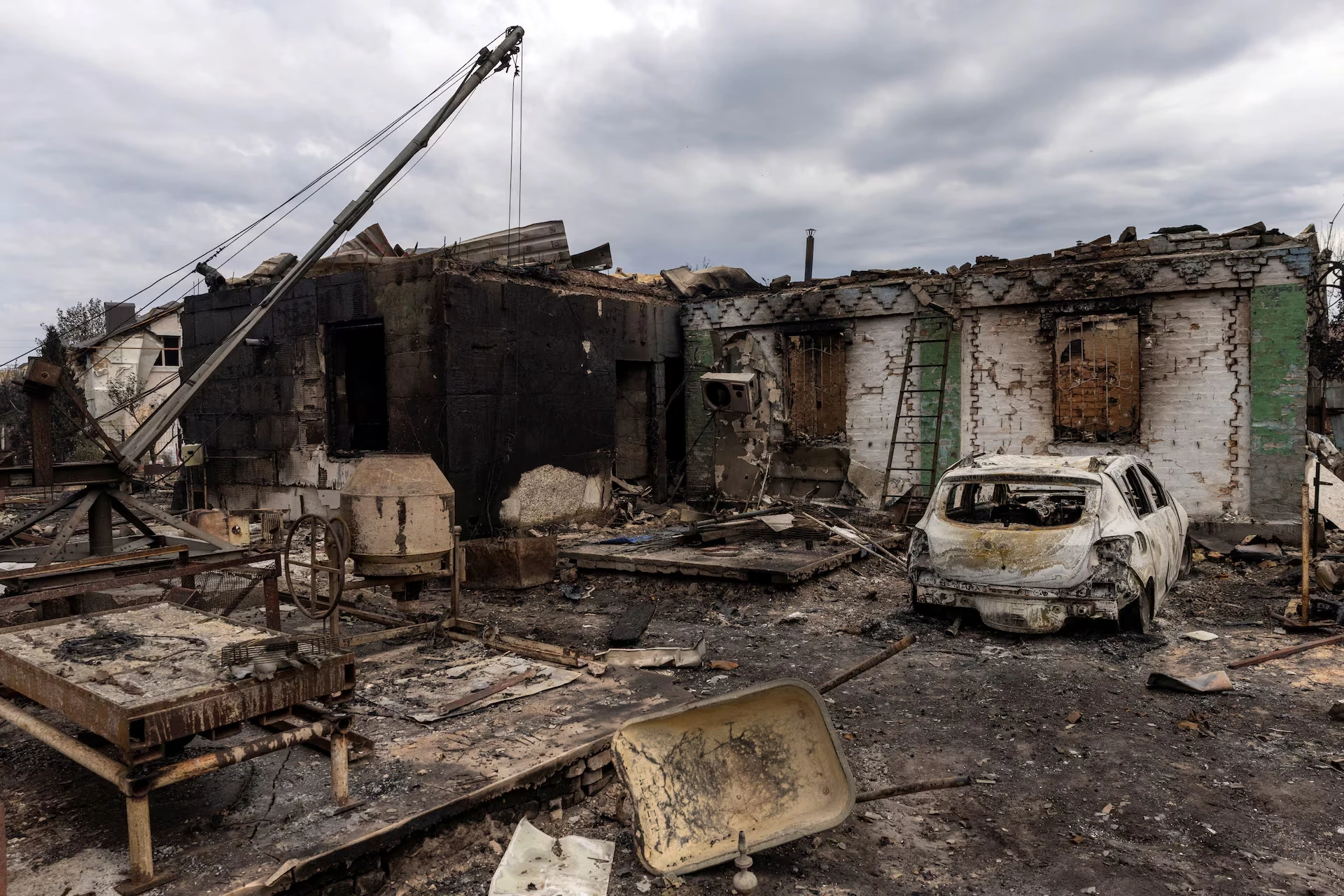
In such strikes, destruction does not end with the final explosion. It becomes the search for people, the extinguishing of fires, the clearing of rubble, the revision of death tolls and the silent wait for new updates from rescuers. For the city, this is always the second wave of the attack.
According to Daycom’s earlier analysis, this post-strike period reveals the real cost of Russian tactics. A missile or drone hits in seconds, but the consequences stretch across hours and days: fires, collapsed floors, destroyed apartments, the wounded, the missing and families waiting outside buildings.
The rise in the death toll to 17 changes the scale of the tragedy. This is no longer just another overnight bombardment in the long statistics of war. It is one of those attacks after which a city must not only repair damage, but pass again through collective shock.
Russian strikes on Kyiv increasingly have a layered character: drones first, then missiles, then new waves of threat, and finally fires that continue their own separate life after the air alert ends. That structure exhausts not only air defenses, but the entire urban organism.
Rescuers in this war have long become part of the front line. They enter damaged buildings when structures may collapse, working in smoke, among glass, metal, broken concrete slabs and the risk of follow-up strikes. Their work begins where most people’s ability to act ends.
The fire in the north of the capital became a symbol of that prolonged danger. When black smoke is still rising over a district in daylight, the attack is no longer only a nighttime event. It enters ordinary city time, people’s routes, hospital work, traffic and the fear of those searching for loved ones.
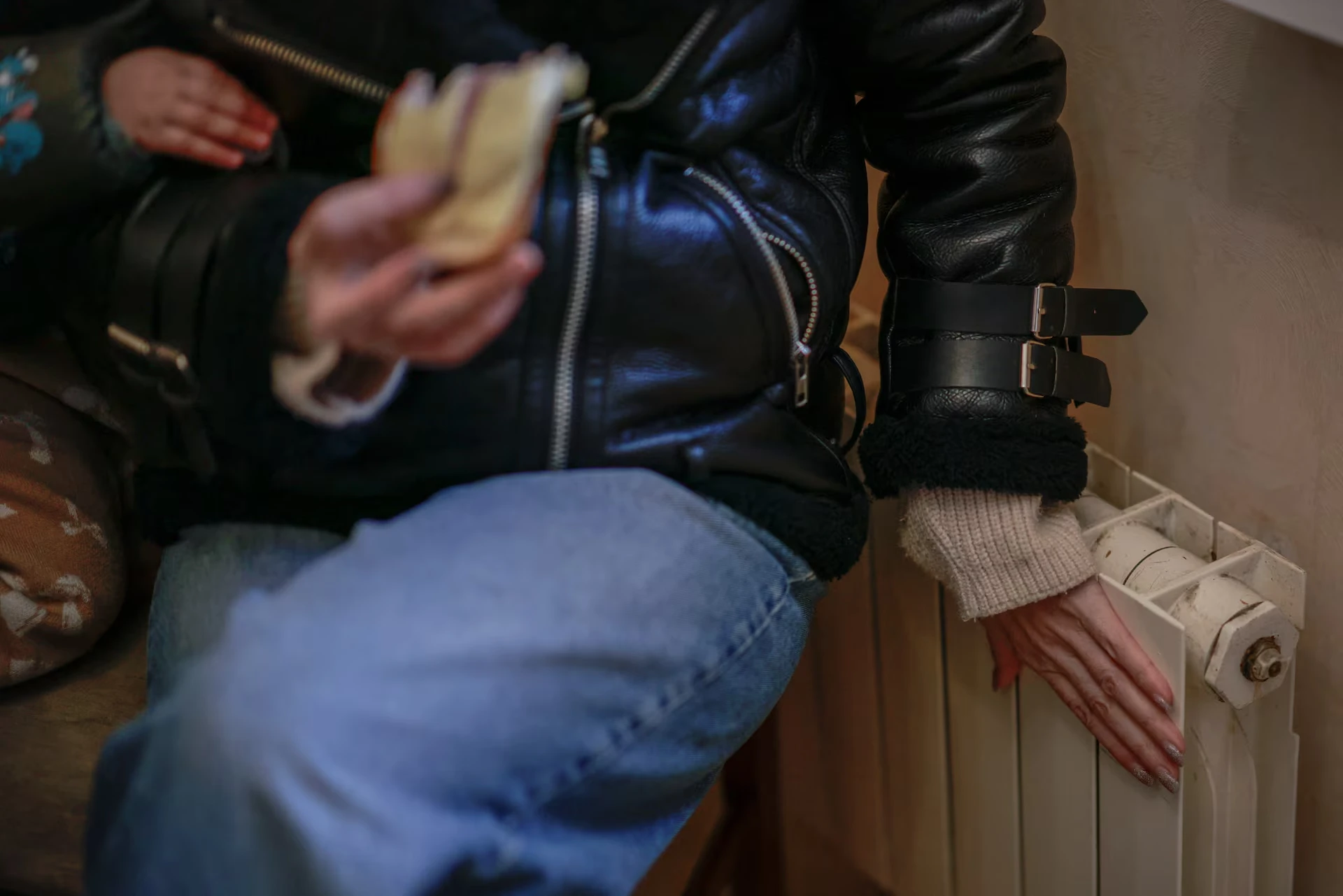
For Kyiv, this is especially painful because the capital has learned to live between air alerts. People go down into the metro with children, pets, medicine and chargers, then return home and try to begin the day. But after strikes like this, the return to normality becomes almost impossible.
A city cannot simply open shops, restart offices and pretend the night is over. Somewhere, a building is still burning. Somewhere, people are still being searched for. Somewhere, relatives are calling phones that do not answer. Somewhere, an apartment that was a home yesterday has become wet concrete and black ash.
Russia’s strategy is designed precisely to stretch pain across time. The goal is not only to damage a target or kill people at the moment of impact. The goal is to force a city to live inside the consequences: smoke, fear, sleeplessness, overloaded services and a constant sense of vulnerability.
Every such attack again raises the question of air defense. Ukraine intercepts a large share of incoming targets, but even a few breakthroughs are enough for the death toll to rise and for fires to burn until noon. In a war against cities, partial penetration is already tragedy.
That is why Kyiv is asking allies not for symbolic support, but for concrete means of protection. Interceptors, Patriot systems, air-defense ammunition and the speed of deliveries are now measured not in diplomatic weight, but in the number of people who may survive the next night.
Russia, meanwhile, is showing its readiness to answer its own problems in the rear with strikes on Ukrainian cities. When Ukrainian drones reach fuel infrastructure, Crimea or logistics hubs, Moscow tries to restore the balance of fear through mass attacks on the capital.
That logic is not a sign of control. It shows instead that the war is moving deeper into the rear areas of both countries. Ukraine strikes what feeds Russian aggression. Russia strikes what sustains Ukrainian civilian life: homes, hospitals, emergency services and urban endurance.
After such attacks, statistics are always colder than reality. The number 17 does not convey names, apartments, families, final calls, nighttime messages or morning searches. But it is from such numbers that the political meaning of the war is formed: Russia is not stopping terror; it is expanding it.
For Ukraine’s allies, this strike should sound like a demand for speed. If decisions on air defense, interceptor missiles and long-range capabilities are delayed, Russia fills the pause with new launches. In this war, delay is not neutral. It has an address, smoke and a list of the dead.
Kyiv survived the night, but it had not yet escaped its consequences. The smoke still rising over northern districts at noon showed that the attack continued even after the air alert ended — in fire, ruins, rescuers’ work and the growing toll of the dead.
The capital has endured another strike, but endurance must not become a substitute for protection. Every next night proves the same thing: Ukrainian cities need not only courage, but enough systems capable of stopping death in the air before it falls onto homes.