





















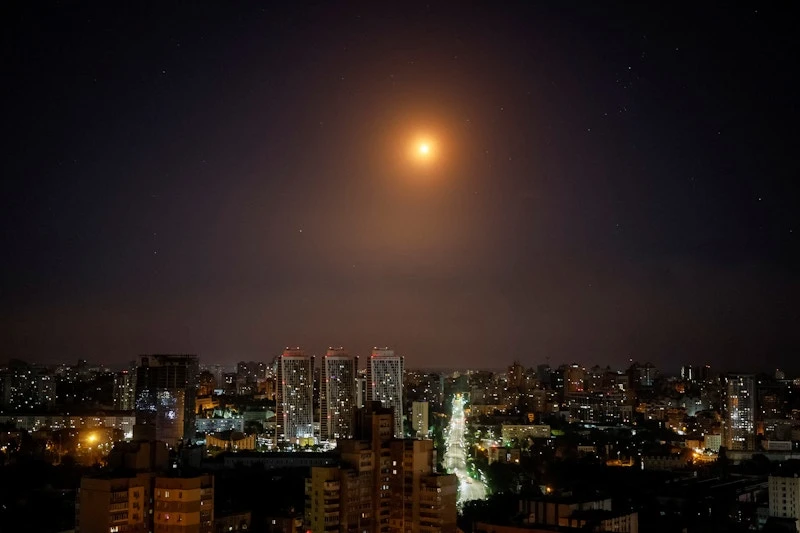
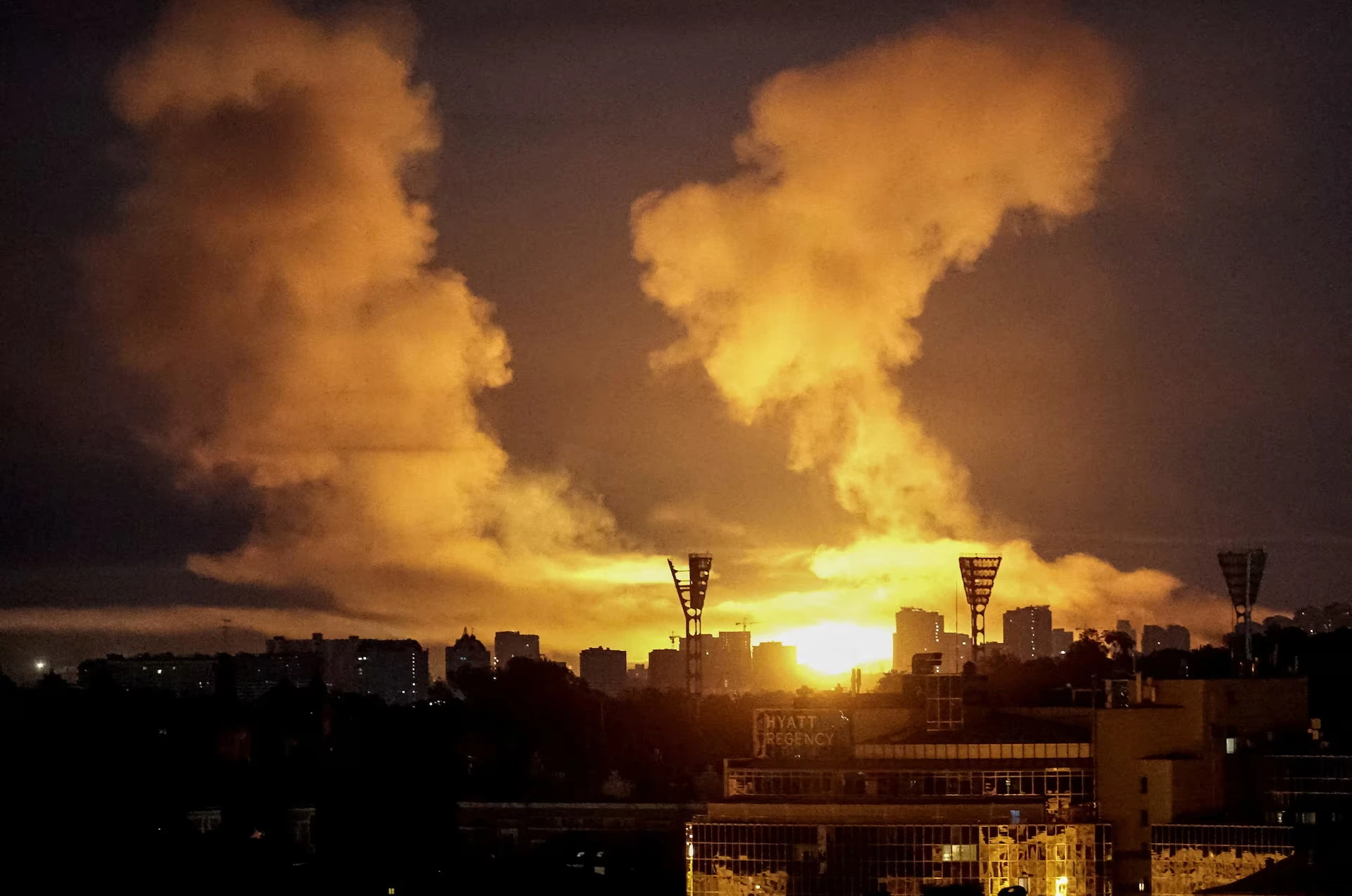
Kyiv has long learned to distinguish the sounds of war, but Thursday night was the kind that erases even that grim habit. Explosions came in waves, smoke rose over districts before dawn, and thousands waited in metro stations, underground parking garages and basements as the city absorbed another Russian strike.
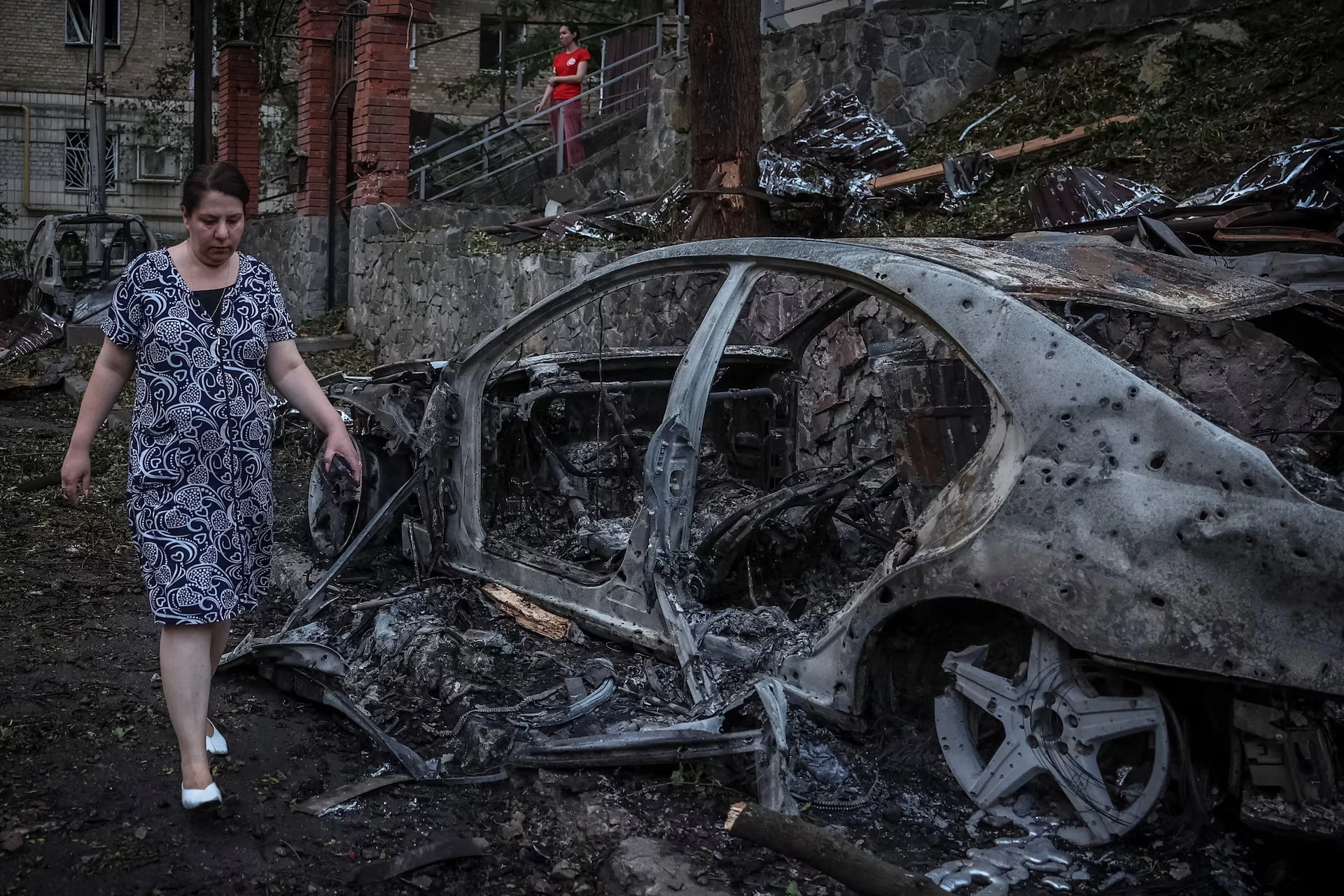
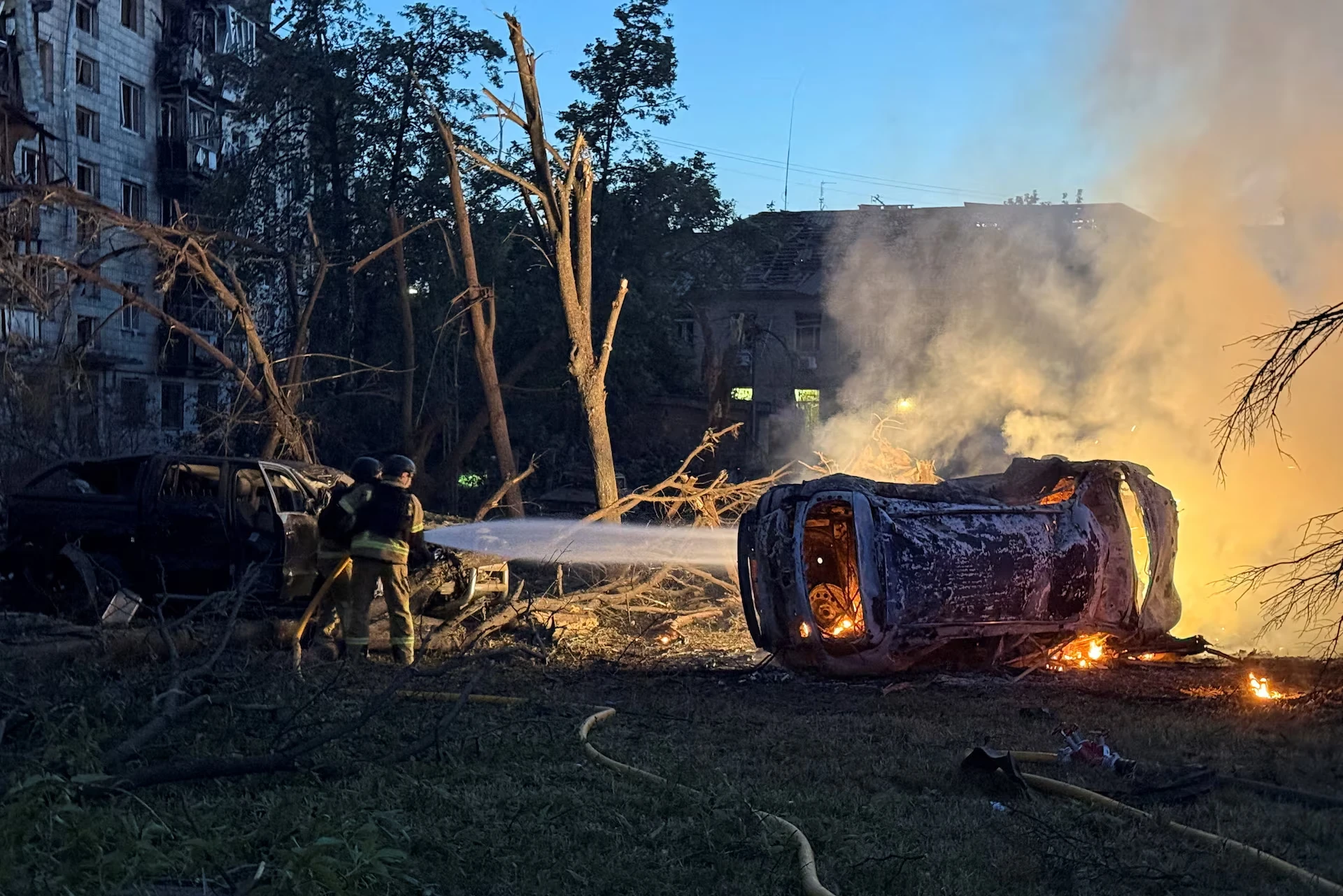
Russia launched 74 missiles and 476 drones at Ukraine, concentrating the main blow on the capital. At least 21 people were killed and 85 were wounded. More than 30 sites in Kyiv were hit or damaged, including residential buildings, an ambulance station, a research institute and urban infrastructure.
This was not simply another night in the air war. It was a concentrated image of a new stage of the conflict, in which Ukraine is striking Russia’s rear with increasing force while the Kremlin responds not with restraint, but with mass terror against Ukrainian cities.
According to Daycom’s earlier analysis, this symmetry of fear has become the defining feature of the current phase. Ukraine is trying to disable Russia’s fuel, logistics and military nodes. Moscow is trying to transfer the price of its own problems onto civilian life in Kyiv, Kharkiv, Odesa and other cities.
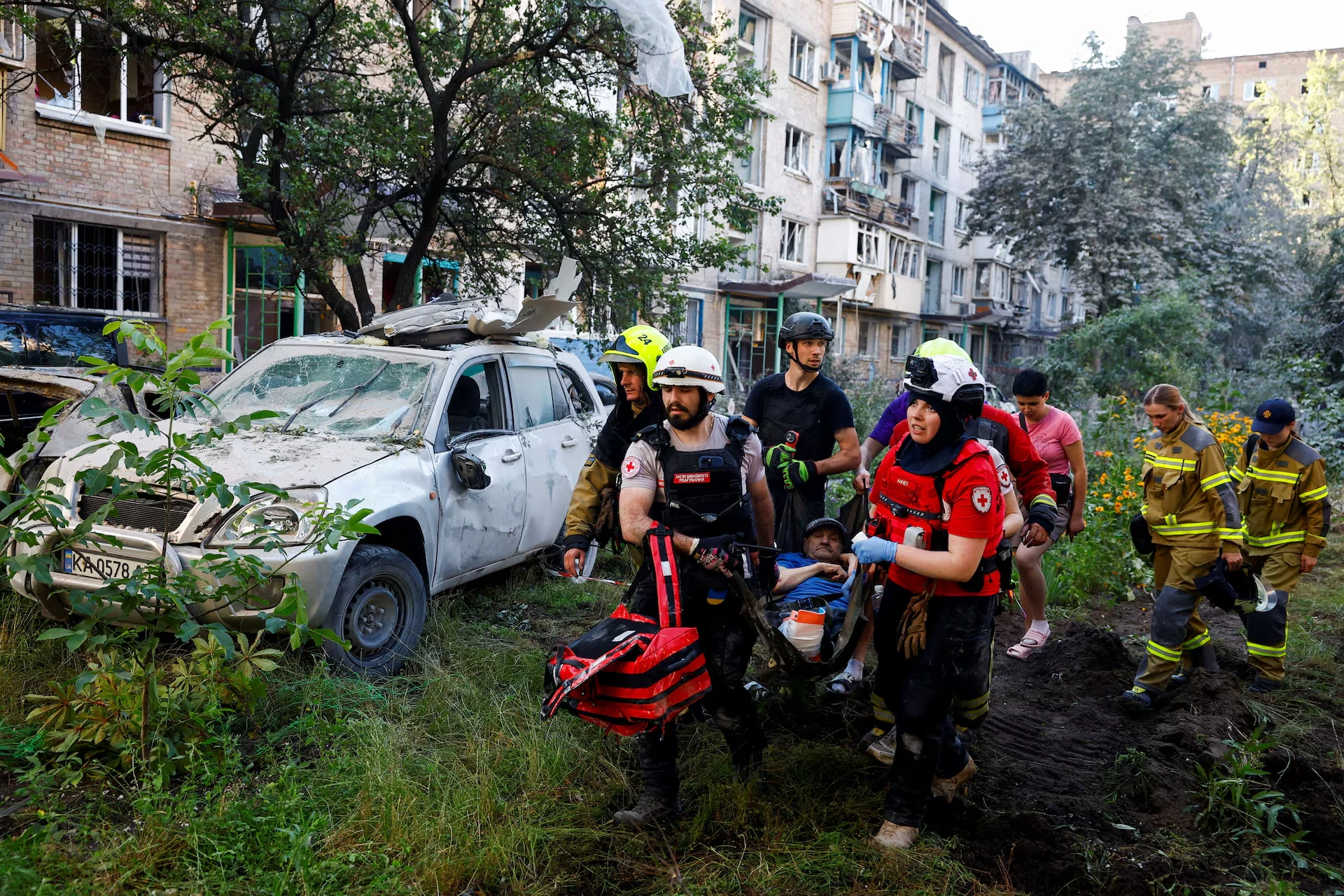
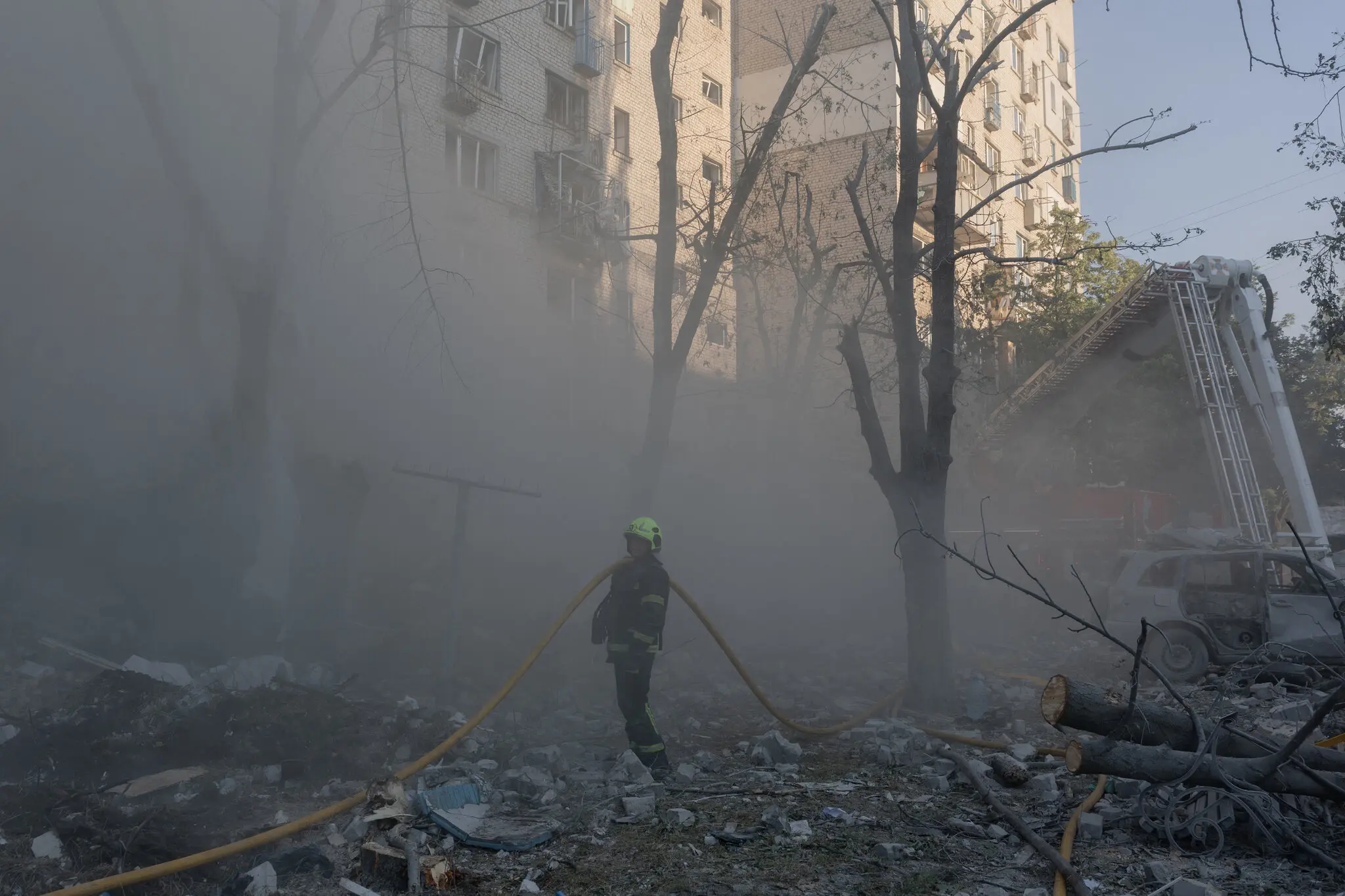
By morning, firefighters were extinguishing blazes across the capital. Several apartment buildings had been partly destroyed, with people still trapped under rubble. Rescuers worked through dust, smoke and debris, not knowing whether a new wave of attack would begin before they reached the living or recovered the dead.
In the Darnytsia district, residents waited out the bombardment in an underground parking garage. Some slept in cars; others lay on the concrete floor. Explosions could be heard close by. Underground, fear no longer looked like panic. It had become discipline: stay quiet, listen, keep the phone charged, do not wake the children.
Olena Rudenkova, a resident of the district, described the change the war has made in people: almost no one cries anymore, not even children; everyone becomes as focused and angry as possible. There is no heroic pathos in that sentence. There is the exhausted truth of a society forced to turn trauma into the ability to act.
The Russian strike followed weeks of intensified Ukrainian pressure inside Russia. Kyiv is increasingly using its own long-range drones and cruise missiles to attack oil refineries, fuel depots, military facilities and logistics deep in Russia’s rear.
That campaign has already created problems Moscow can no longer fully hide. Fuel shortages have spread across regions, lines at gas stations have become an everyday sign of war, and strikes on Moscow and Crimea have broken the old distance between the front and Russia’s major cities.
Vladimir Putin first stayed silent, then acknowledged that attacks on critical infrastructure were creating problems and certain shortages. He tried to present the situation as not critical, but the very need to speak about fuel, air defense and disruptions showed that Ukrainian strikes had touched a nerve in the Russian system.
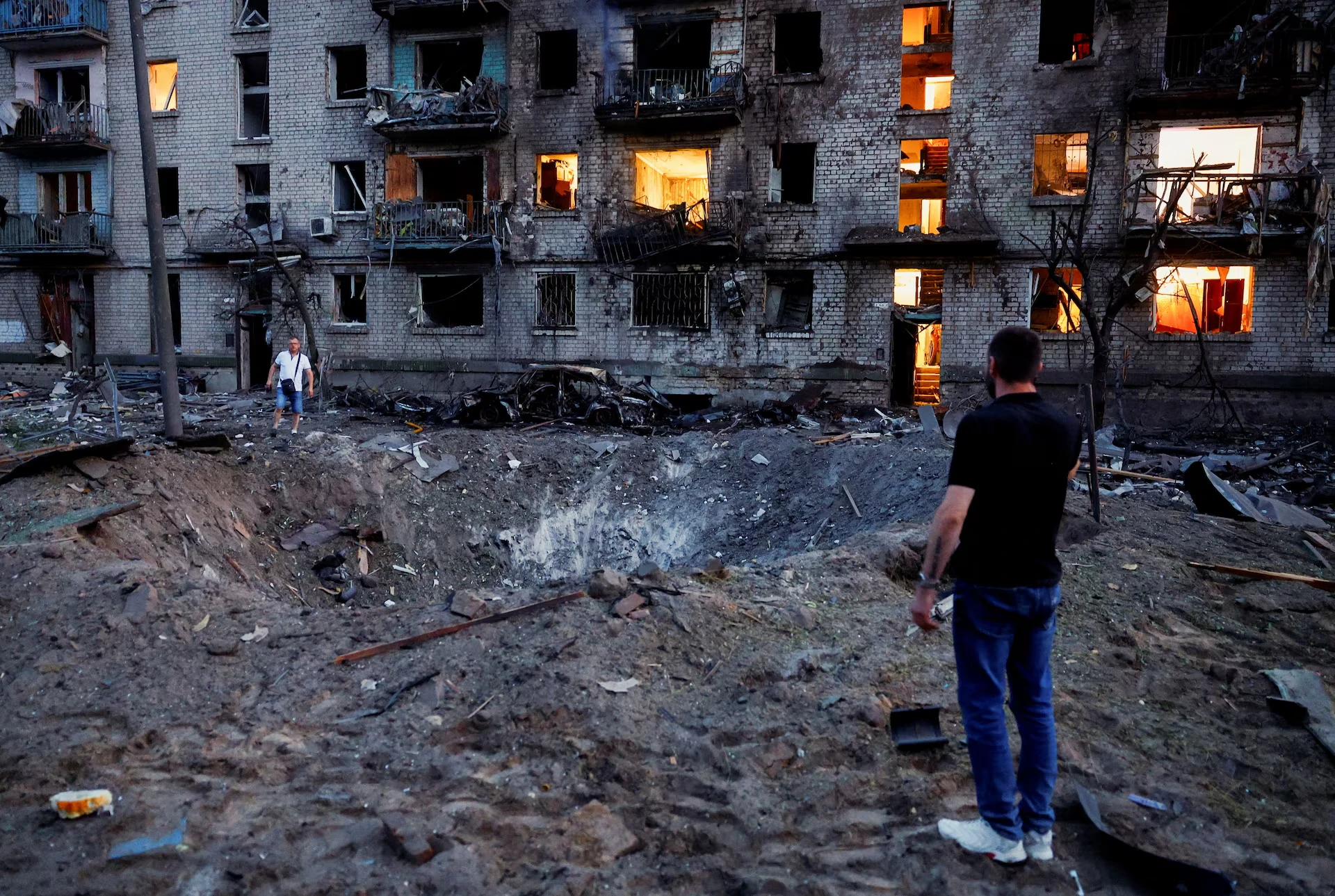
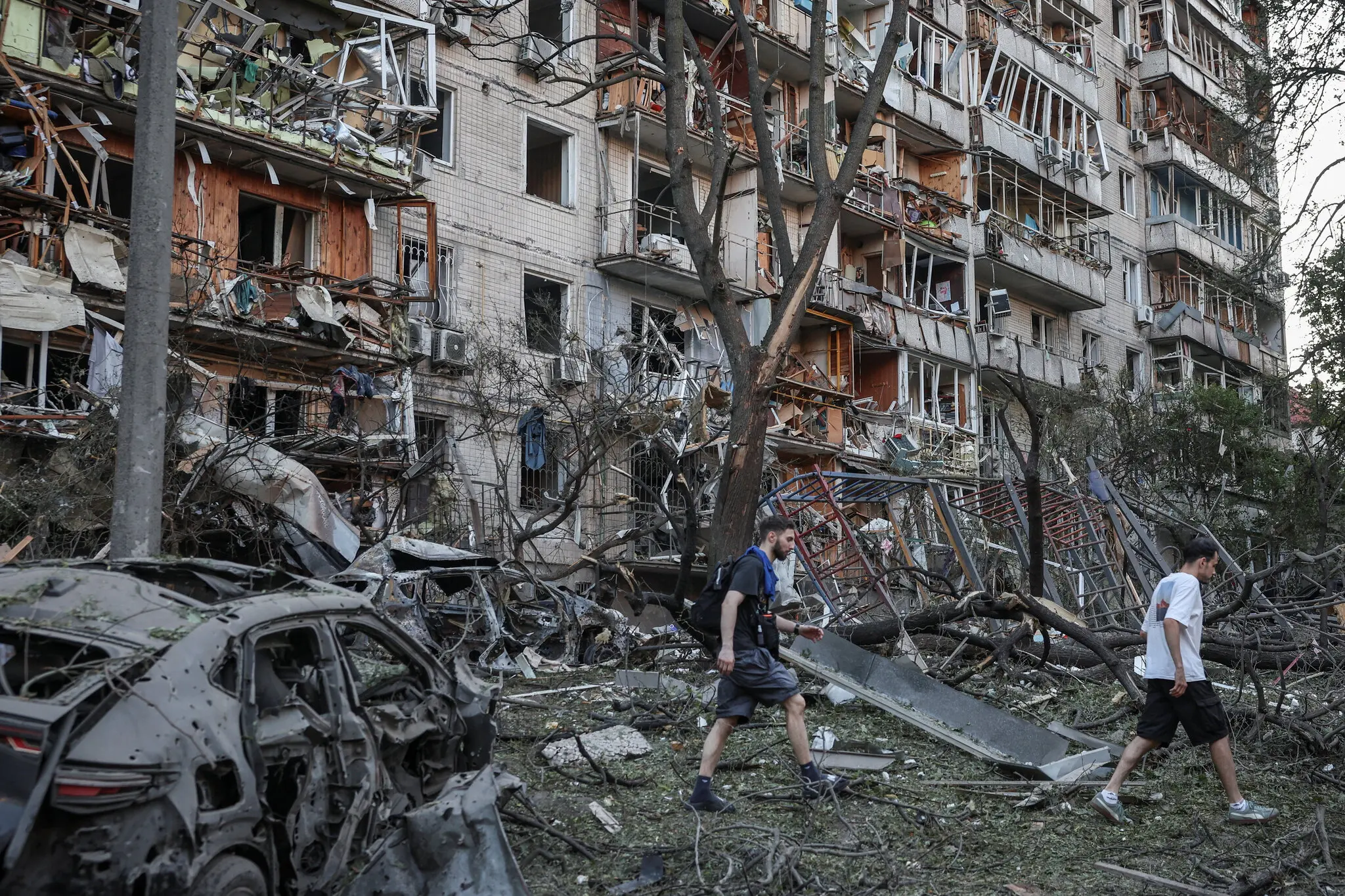 Місце російського обстрілу Києва у четвер — Аліна Смутко
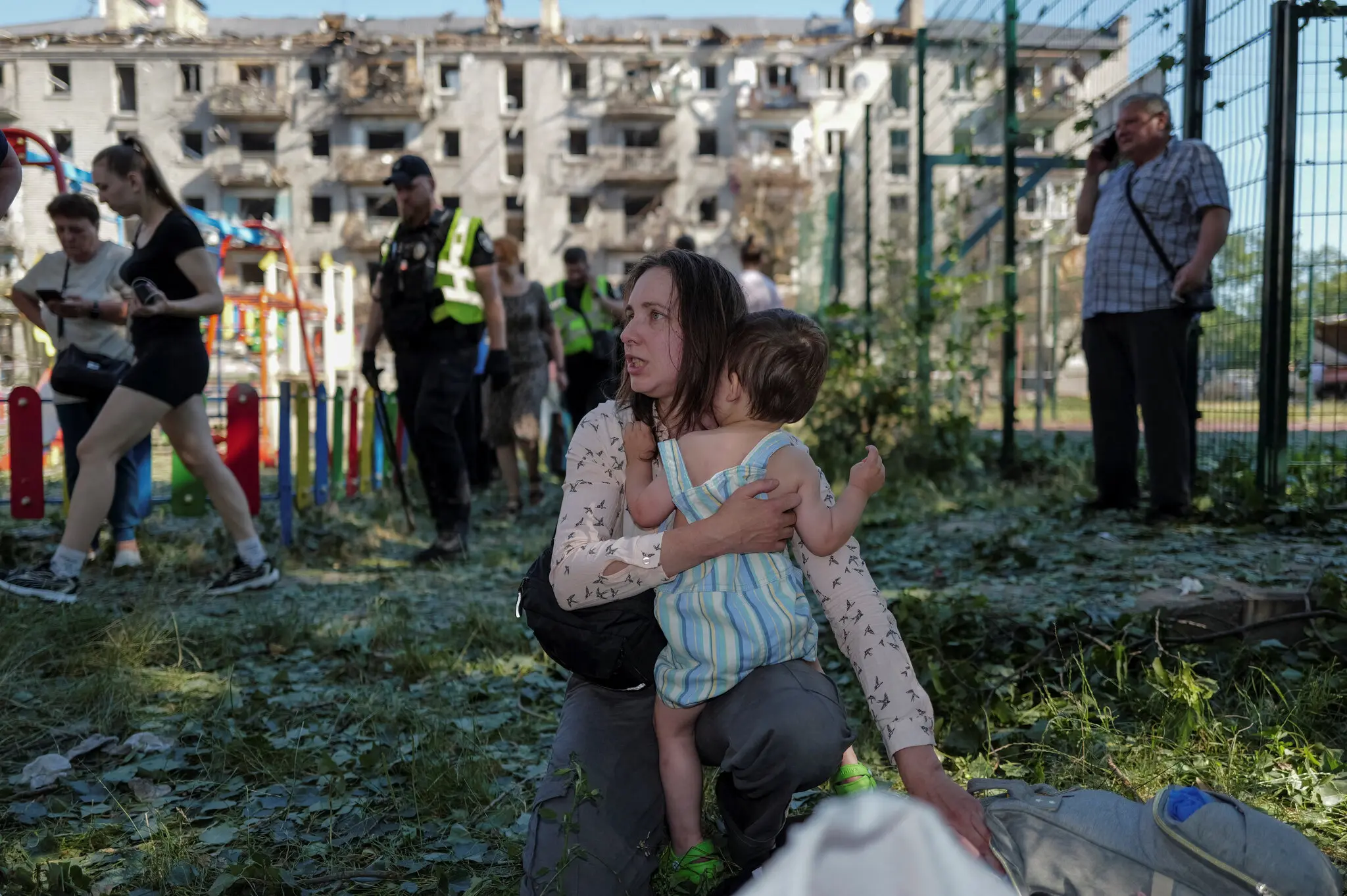
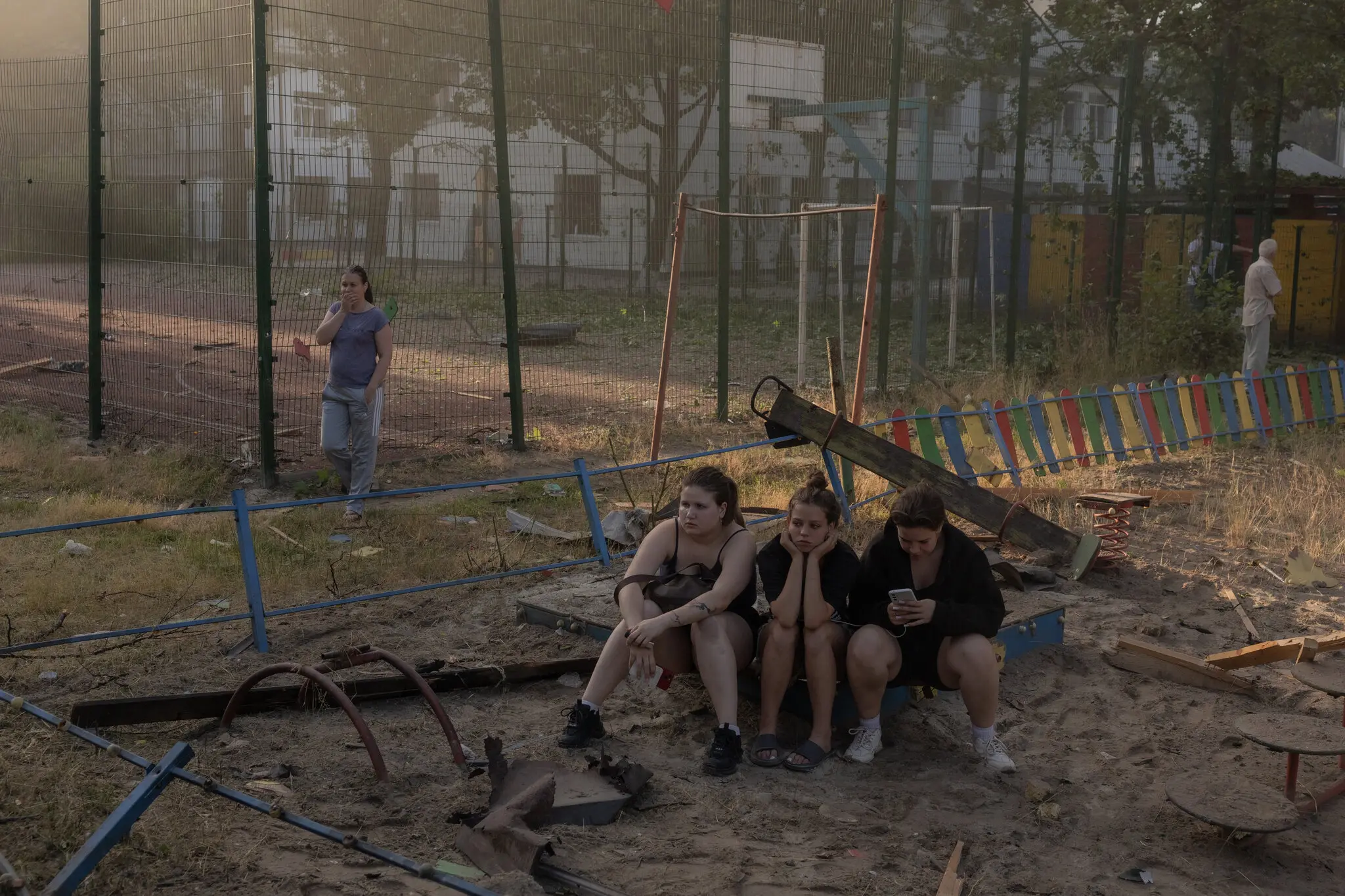 Жінки сидять на дитячому майданчику та розглядають житловий будинок, пошкоджений під час російських ударів — Роман Піліпей
Yet this has not changed his intention to continue the war. The overnight strike on Kyiv was the answer of a regime that feels pressure but is not looking for compromise. The Kremlin is not showing readiness to stop. It is showing its ability to punish Ukrainian civilians whenever the war returns to Russian territory.
Moscow called the attack a response to Ukrainian strikes. That formula is meant to create an equivalence between attacks on Russia’s energy and military infrastructure and the destruction of residential buildings in Kyiv. But that equivalence is a political fiction.
Ukraine is striking systems that sustain Russian aggression: fuel, production, depots, logistics and military nodes. Russia is striking cities in a way meant to break the night, sleep, apartments, transport, hospitals, children’s rooms and the psychological resilience of society.
Andrii Sybiha drew the moral boundary of this war plainly: Russian atrocities against Ukrainians cannot be justified by claiming that Moscow is responding to Ukrainian long-range strikes. There is an aggressor and there is a state defending itself from aggression. That distinction does not disappear because explosions are heard in Russia’s rear.
That same night, Ukrainian forces again attacked Russian energy infrastructure, including an oil refinery in Kstovo in the Nizhny Novgorod region. It is one of Russia’s major facilities of that kind, and the strike fits Kyiv’s broader logic: hit what feeds the war.
For Kyiv, this is a way to compensate for inequality. Russia has larger missile stocks, more manpower, a larger territory and a broader industrial base. Ukraine cannot answer every mass strike on its cities in mirror fashion, but it can undermine the enemy’s ability to sustain the tempo of war.
That is why Ukrainian long-range strikes carry not only military but political meaning. They erode the central promise of Putin’s system: that the war can last for years while most Russians live as if it is far away. When fuel disappears, Moscow smokes and Crimea faces disruptions, that promise weakens.
But the strike on Kyiv also showed the limit of such pressure. Russia’s vulnerability does not yet mean the Kremlin is ready to end the war. On the contrary, Putin may try to convince Ukrainians and their allies that any increase in pressure will only raise the price for Ukrainian cities.
That is Moscow’s cruel calculation. It believes it can endure its own shortages, sanctions, battlefield losses and strikes on the rear longer than Ukraine can endure civilian deaths, energy destruction, social fatigue and a shortage of air-defense systems.
This logic is the logic of a war of attrition. Russia is prepared to pay an enormous price for every kilometer, but wants to force Ukraine to pay even more — in human lives, economic damage, psychological endurance and dependence on allied decisions.
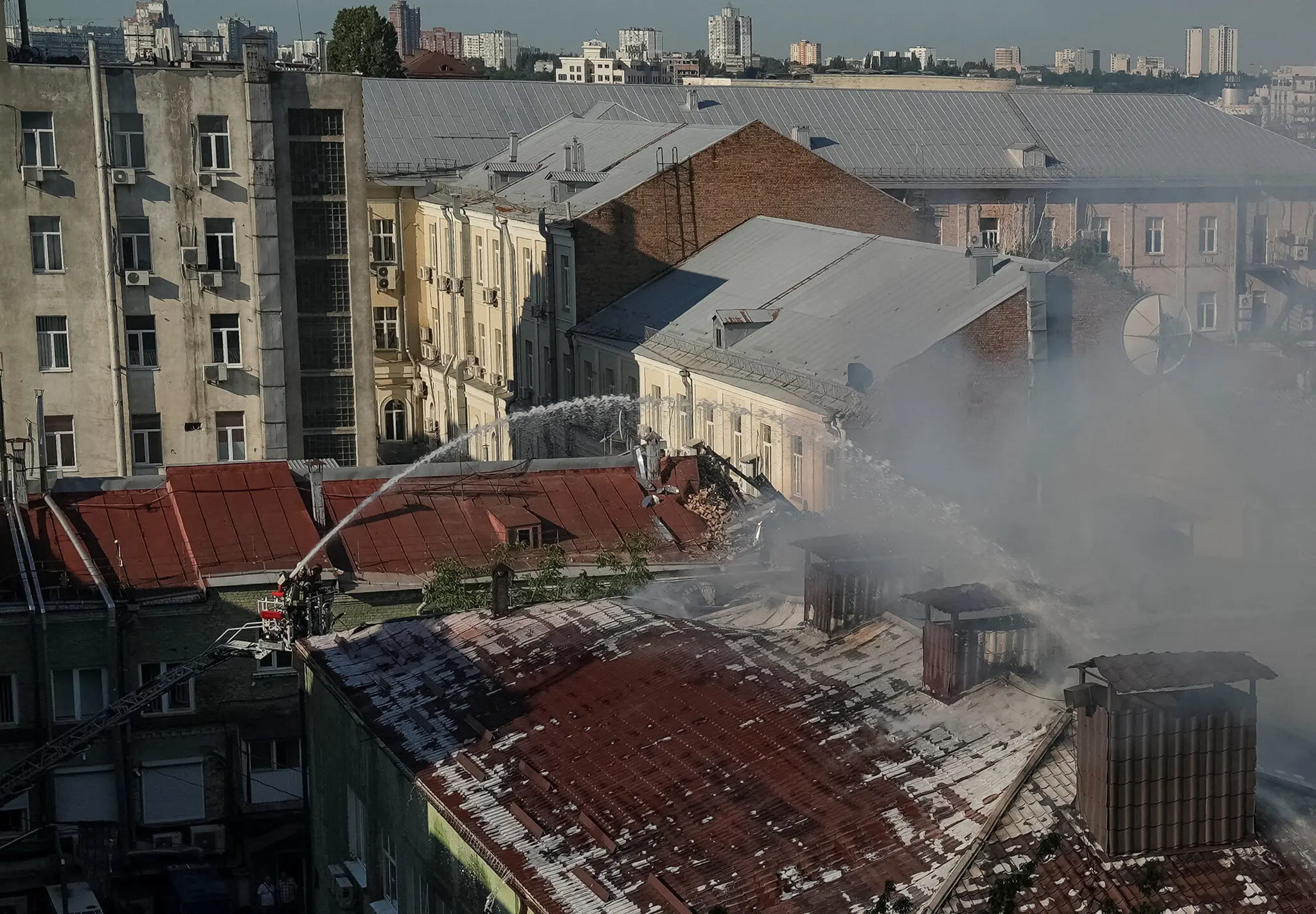 Пожежники працюють на даху Інституту біохімії Палладіна, провідного науково-дослідного центру — Анна Войтенко
That is why this attack was not only a tragedy for Kyiv, but a test for its allies. After every mass strike, the question is the same: will aid arrive faster than Russia can accumulate another batch of missiles and drones; will there be enough interceptors; will air defenses remain able to protect major cities?
Ukraine’s stocks of Patriot interceptors were already strained before this night. NATO countries regularly send Kyiv limited batches of missiles, but that is not enough for the tempo of Russian attacks. Moscow is producing and accumulating missiles faster than allies are making and implementing part of their decisions.
Ballistic missiles remain especially dangerous. Russia used 28 of them in this attack, and only a limited number of systems, above all Patriot, can intercept them. For Ukraine, this is not a technical detail. It is the line between a hit on an apartment block and a saved neighborhood.
If allies want Kyiv to endure, they must count not declarations, but interceptors. Every air-defense missile has a specific address, even if no one knows it yet. It may become the missile that does not fall on an apartment entrance, an ambulance station or a scientific building.
After the strike, the European Union began discussing new sanctions against structures supporting Russia’s defense industry. Kaja Kallas identified the problem precisely: words of condemnation alone will not stop attacks on Kyiv. Ukraine needs sustained military support and stronger pressure on Moscow.
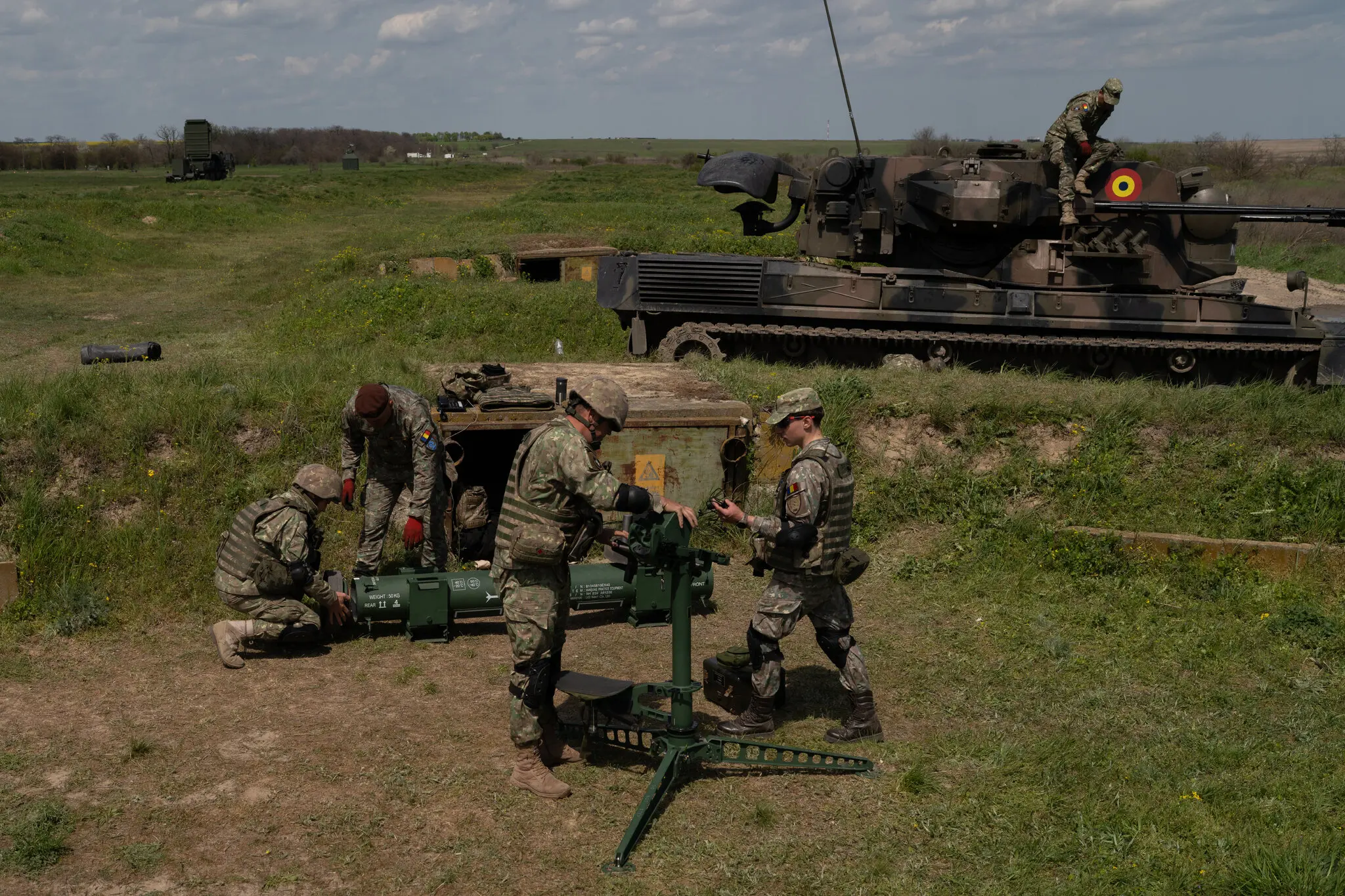
That is the right logic, but it must be scaled to the war itself. Sanctions must not merely symbolize outrage; they must break the supply chains of Russia’s war economy. Air defense must not patch minimal gaps; it must create a reserve of resilience. Ukraine’s long-range capability must not remain an exception, but become a systematic tool of deterrence.
After four years of full-scale war, civilian casualties are again rising sharply. This spring has become the deadliest for civilians since the first months of the invasion. That means Russia has not abandoned strikes on cities. It has refined the technology of them: longer waves, more drones, more ballistic missiles, more simultaneous targets.
Kyiv had expected a major attack because enough time had passed since the previous large strike for Russia to build a new stockpile. Volodymyr Zelensky had warned that Moscow was preparing a mass strike and urged people to be especially careful. But expectation does not make impact less destructive.
More than 50,000 people sought shelter in metro stations. Tens of thousands more hid in basements, garages, parking structures or improvised safe places at home. This is what the capital of a European state looks like in 2026: a city of three million people descending underground at night to survive missiles.
One of the damaged sites was the Palladin Institute of Biochemistry, a leading scientific center. Firefighters worked on its roof, directing water onto the damaged structure. A strike on such a place carries its own symbolism: the war hits not only homes, but the intellectual infrastructure of the country.
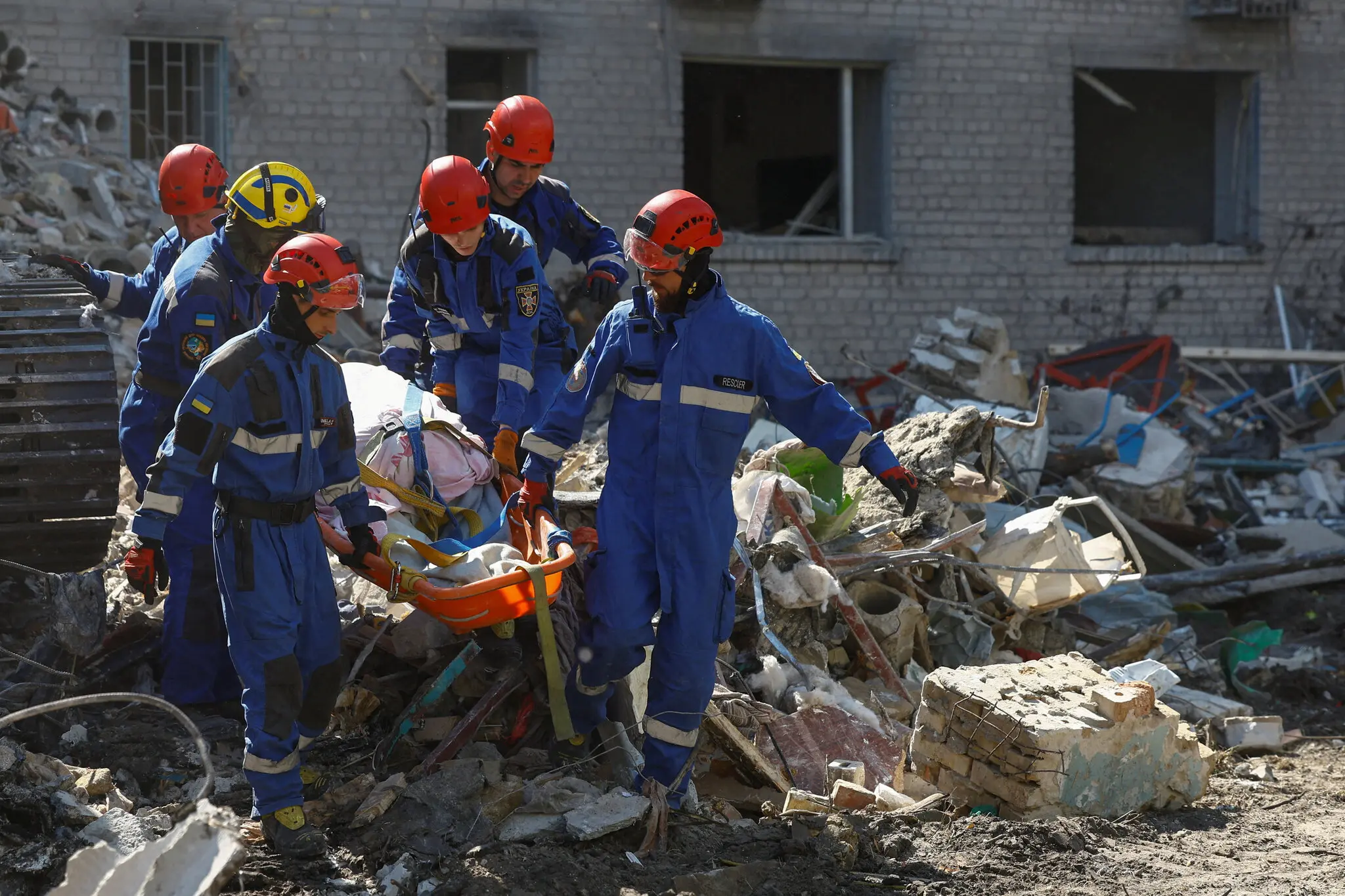 Рятувальники витягують з багатоквартирного будинку тіло загиблого внаслідок російських атак — Валентин Огіренко
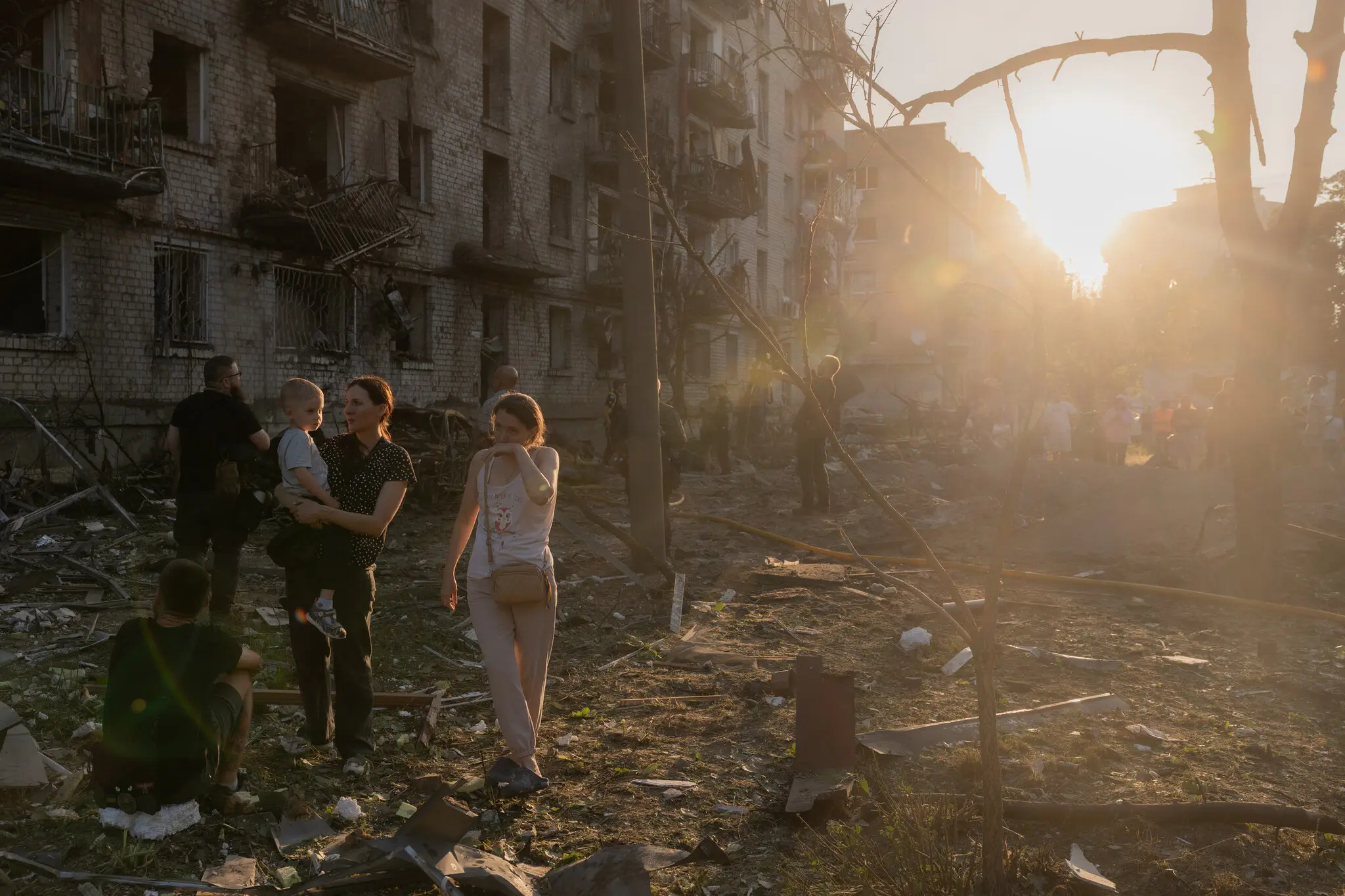 Житловий будинок пошкоджено після авіаудару російської авіації по Києву у четвер — Роман Піліпей
Kyiv’s night showed again that Russia’s campaign does not distinguish between front and rear in the way civilized laws of war require. Its aim is not only physical destruction, but the creation of a permanent sense of defenselessness. A person is meant to fear sleeping, working, receiving treatment, studying and leaving home.
But this is where Russia’s calculation repeatedly meets Ukrainian reality. After the strike, people emerge from shelters, rescuers carry bodies and search for the living, drivers steer around debris, doctors receive the wounded, utility workers clear glass, and the city restores movement to itself.
This resilience is not romantic. It is painful, tired and often angry. It does not cancel out 21 dead, heal 85 wounded, rebuild apartments or remove fear from children. But it denies Russia its main goal: turning pain into surrender.
For Putin, the overnight strike was meant to demonstrate strength after weeks of Ukrainian pressure. In fact, it showed something else: the Kremlin can destroy, but it cannot offer a way out. It answers strategic problems with terror, fuel shortages with missiles, and strikes on its rear with deaths in apartment buildings.
This makes the war longer and harsher, but it does not necessarily bring Russia closer to victory. The more Moscow transfers the war onto civilian life, the more clearly the question becomes not only about Ukraine’s defense, but also about the price of inaction for Europe.
Kyiv was the target that night, but the lesson is addressed more broadly. If Russia sees that it can kill civilians while preserving access to components, money, evasion schemes and time, it will continue. If every attack instead reduces its industrial, financial and military capacity, the calculation will begin to change.
After dawn, smoke, debris, shattered apartments, lists of the dead and another plea for air defenses remained over the capital. But another reality remained as well: Ukraine is no longer only absorbing blows; it is forcing Russia to feel its own vulnerability.
The question now is whether allies can turn that vulnerability into strategic pressure. That requires interceptors, long-range weapons, sanctions, defense production and political speed. Without them, every pause between decisions will again become the time Russia needs to prepare another night for Kyiv.