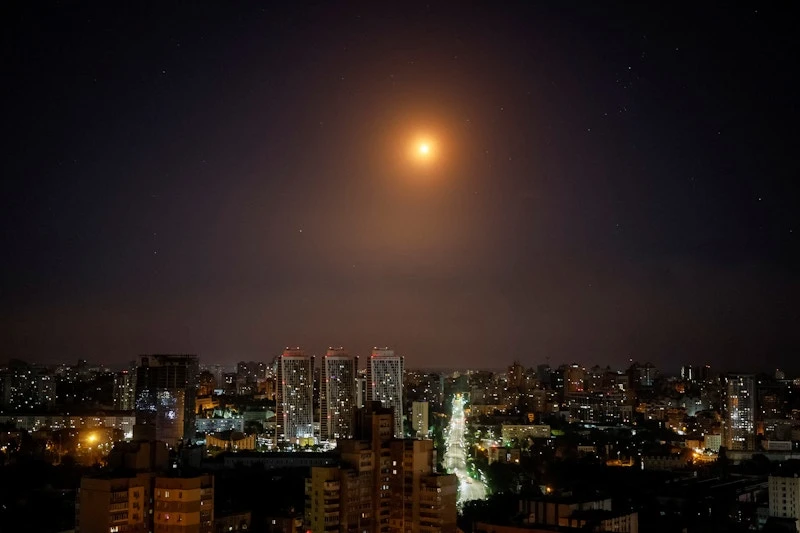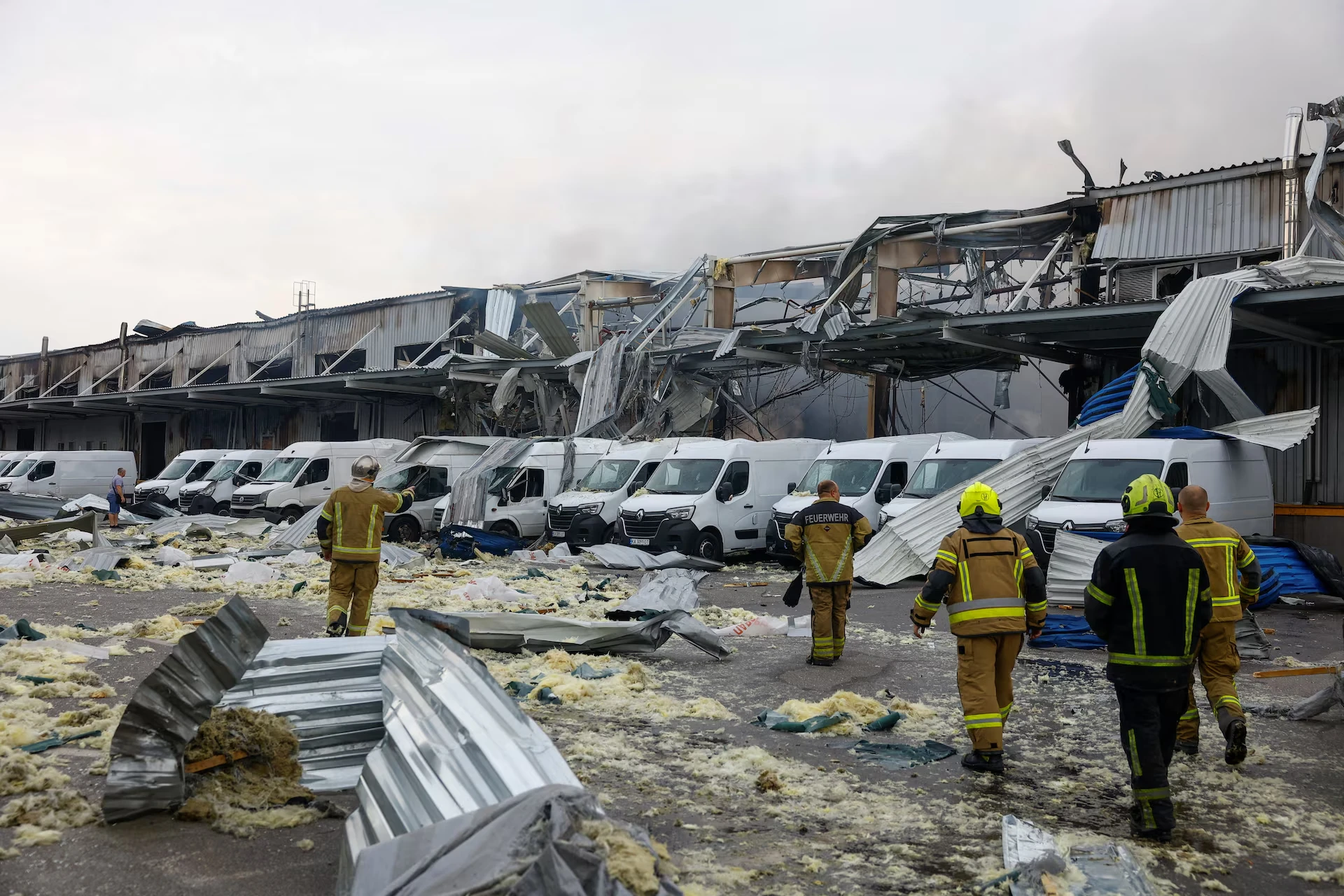























On Thursday morning, Kyiv woke not after the night, but inside its aftermath. Smoke poured from the roof of a six-story hotel in the city center, fire ladders sprayed water into the blaze, and debris fell onto the sidewalk where dozens of rescuers were working.
In the Shevchenkivskyi district, firefighters moved in and out of the damaged building, their faces red from heat and darkened by soot. Some sat along a fence, drinking water in the summer heat and silently watching the burning roof in front of them.
It was only one of many fires across the capital after Russia’s mass strike. At least 18 people were killed, dozens were wounded, and thousands of Kyiv residents spent the night in metro stations and shelters as air defenses worked overhead, sirens wailed and explosions tore through the sky.
According to Daycom’s earlier analysis, this attack was not merely another episode in the air war. It showed how Russia responds to its own vulnerability in the rear by striking Ukrainian civilian life, turning residential neighborhoods into a field of revenge.
For Kyiv residents, the night was measured not in official summaries, but in sounds: a powerful blast, people screaming, rooms shaking, glass underfoot, the smell of smoke and the first calls to loved ones. In such moments, a city contracts to a few simple questions: who is alive, where are the children, did the home survive?
Kateryna, a 77-year-old resident, was standing near the entrance to her building when the explosions rang out. She described the night as horror, with the room shaking and people shouting. Only a few weeks earlier, she had moved to Kyiv from Cherkasy to be closer to her children and grandchildren. After the strike, she felt the move had been a mistake.
Her tears were not weakness. They were a precise human measure of a war that has lasted more than four years and does not allow even older people the right to move peacefully closer to family. A Russian attack hits not only concrete, but decisions, hopes, old age, closeness and home.
By noon, not all the fires had been extinguished. Rescue teams were still searching for the living and the dead beneath rubble, including in the Darnytskyi district, where a strike partly destroyed a nine-story residential building. The day was moving forward, but the night had not ended.
Attached to safety harnesses, rescuers carefully moved through the upper floors of the building. Below, excavators lifted buckets of concrete, rebar and debris. The work did not stop even when sirens sounded again, warning of a new threat from the air.
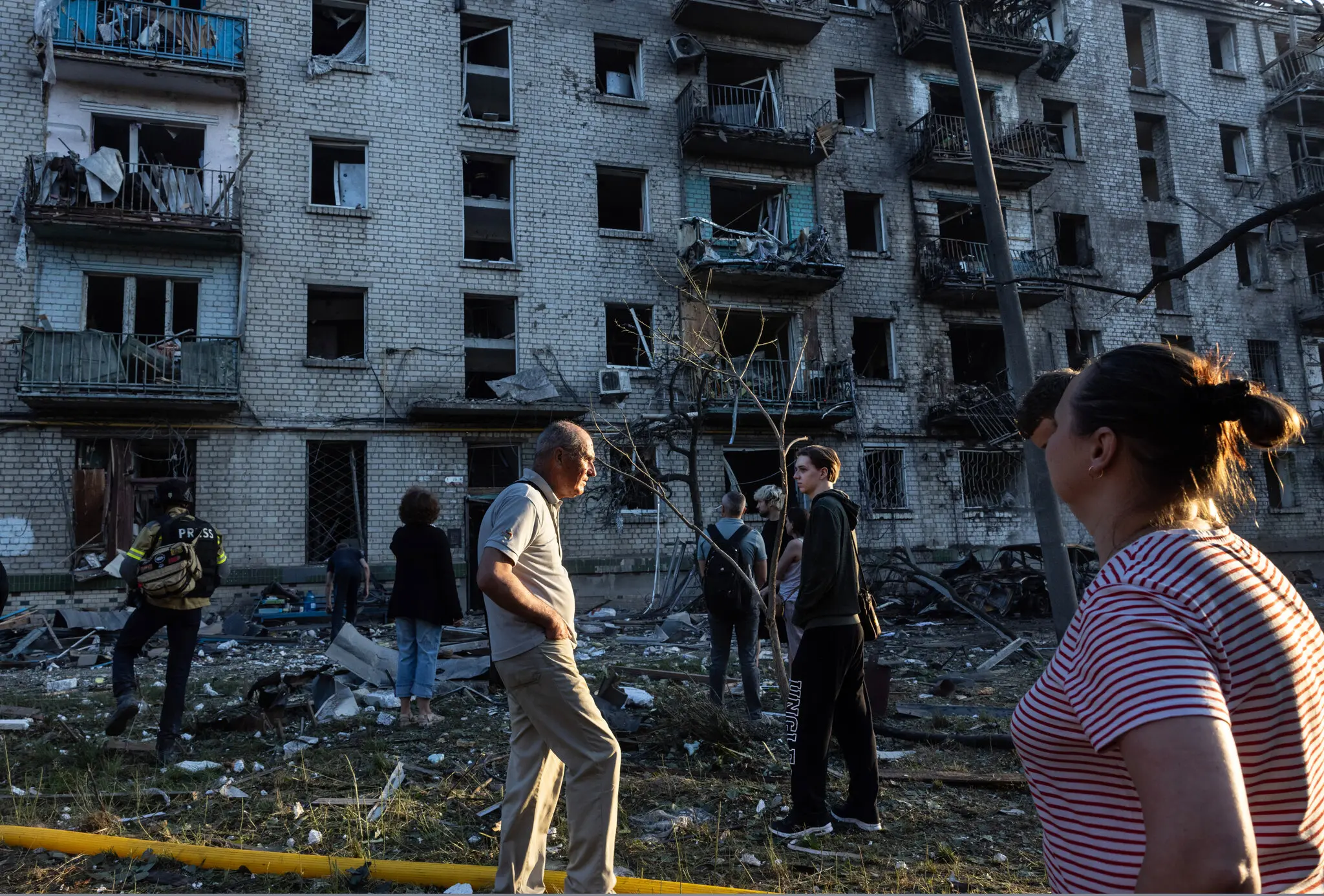 Мешканці оглядають пошкодження біля житлового будинку, постраждалого внаслідок російських атак у Києві, Україна — Паула Бронштейн
That scene became a concentrated image of the Ukrainian capital: the city was still clearing the consequences of one strike while already preparing for the next. In this war, the pause between dangers has become too short for people even to fully grasp a loss.
Near damaged buildings, residents swept up glass, boarded shattered windows, and carried out the belongings that could still be saved. There is no pathos in such movements. It is the labor of survival: giving doors some shape again, rooms their boundaries, and life a minimal order.
In other parts of Kyiv, fires continued deep into the afternoon. Black smoke rose above the northern part of the city, while a helicopter drew water from a lake to help extinguish the flames. The attack had passed, but its physical presence still hung over the city.
Near one strike site came the scraping sound of shovels on pavement. Teachers were helping clean up a damaged kindergarten — a white building painted with cheerful forest animals, its windows and doors blown out by the blast wave.
Such details expose the character of Russian attacks most sharply. A kindergarten decorated with animals cannot be a military target in any moral sense. But in the logic of terror, it becomes part of a broader strike against the feeling of safety, childhood and the future.
One volunteer could not hold back tears as she explained that on a normal Thursday morning the building would have been full of children. Her voice broke not from abstract fear, but from the knowledge of how thin the line remains between an ordinary morning and catastrophe.
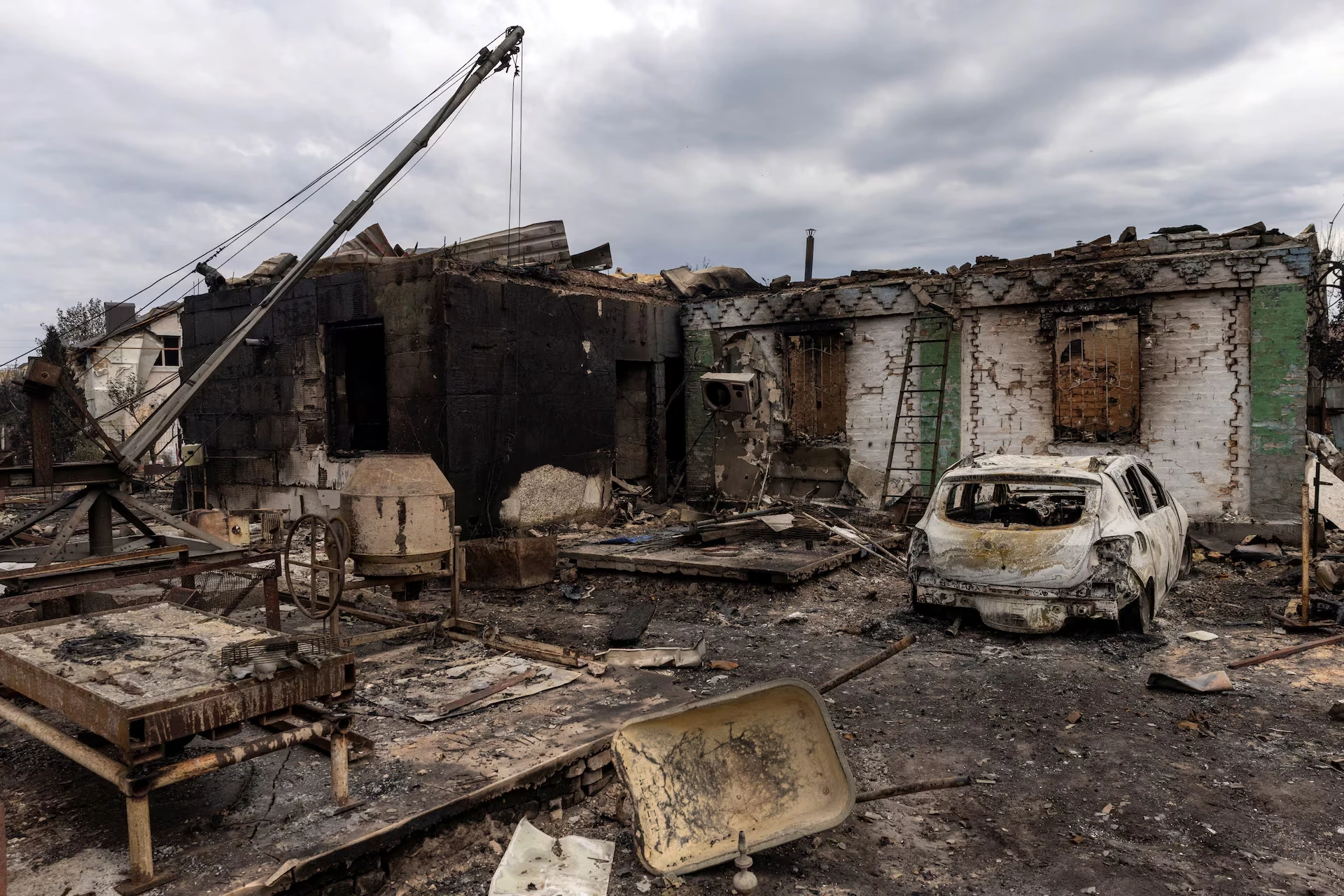
Around the corner, a large crater had opened in front of a five-story apartment building. Through shattered windows, twisted staircases were visible. People stopped, stared and took pictures, while residents tried to carry from their apartments whatever had survived the blast wave, debris and fire.
On a children’s playground, investigators laid collected fragments on a table. They wiped pieces of metal and studied them to determine what kind of weapon had been used. Around them lay glass, pieces of facade, branches and fragments of daily life. War leaves behind not only ruins, but evidence.
The latest deadly night showed how the price paid by civilians keeps rising amid a war of attrition. While the front moves slowly and painfully, Russia continues to strike cities, trying to compensate for military difficulties by pressuring the population, infrastructure and the psychology of society.
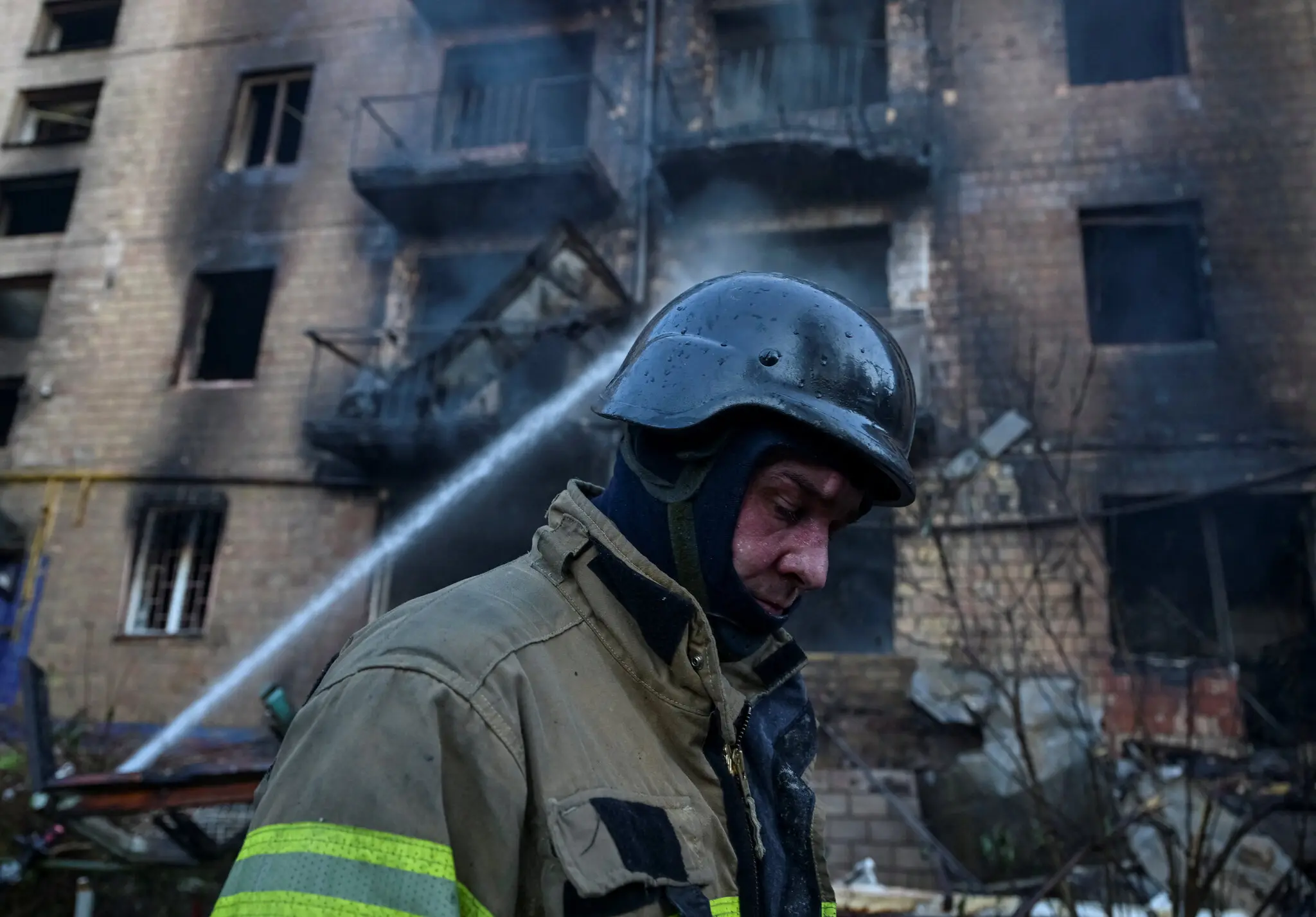 Пожежник проходить біля житлового будинку, пошкодженого внаслідок російських ракетних ударів та ударів безпілотника в Києві, Україна — В'ячеслав Ратинський
In recent weeks, Ukraine has intensified strikes on Russia’s rear, forcing Moscow to feel losses, shortages and disruptions. In response, the Kremlin launches waves of missiles and drones at Kyiv and other cities. This is not symmetry in war, but an attempt to transfer pain from Russia’s military system onto Ukrainian civilians.
May had already become one of the hardest months for civilians since the first weeks of the full-scale invasion. Hundreds killed and thousands wounded in a single month show that Russia’s campaign is not weakening, but changing form — becoming longer, denser and more systematic.
Kyiv residents have learned to live with fear, but that does not mean fear has disappeared. It has become discipline: dress the child faster, know the nearest shelter, keep the phone charged, stay away from windows, do not panic when the building shakes from a blast wave.
Olena Rudenkova said that after years of war, Ukrainians may still cry, but everyone has hardened, even children. Her words do not romanticize resilience. They describe forced adaptation. People become focused and angry because there is no other way to endure the repetition of such experience.
That anger has political meaning. It is not reducible to revenge. It is born from the understanding that Russian strikes are not accidents, mistakes or side effects. They are part of a strategy meant to make Ukrainian life unbearable and force society to grow tired of its own resistance.
But after every such night, Kyiv shows another result. People emerge from shelters, rescuers climb to dangerous floors, teachers clean kindergartens, residents board up windows, volunteers carry water, and the city slowly regains control over its space.
None of this cancels the losses. At least 18 dead is not a number to become used to, but separate lives, families, rooms, plans and final mornings. Every such strike leaves a scar that does not disappear when a facade is repaired or debris is removed.
Kyiv is recovering, but it does not forget. Smoke above rooftops, glass on sidewalks, a crater beside an apartment block, a kindergarten without windows and an elderly woman crying over a move to be near her children form one picture: Russia struck the city again, and the city must again prove that it is alive.
Kyiv’s strength is not that it does not feel pain. Its strength is that pain does not become paralysis. After the overnight attack, the capital is no less vulnerable, but it is even more certain of the essential truth: defending the skies, applying long-range pressure on the aggressor and sustaining allied support are not political options, but conditions of life.