





















Alexander Lukashenko is once again trying to say two things at once. First, that Belarus will not be dragged into the war against Ukraine. Second, that in the event of “aggression,” Minsk and Moscow will act together to defend their shared space. That duality defines Belarus’s current role.
His remarks came against the backdrop of joint Russian-Belarusian nuclear exercises, observed by Lukashenko and Vladimir Putin by video link. The format itself was a political signal: Minsk is not openly fighting, but it remains part of Russia’s military architecture.
Lukashenko dismissed suggestions that Belarus could be pulled into the Ukraine war and repeated his familiar formula: this would happen only if Belarusian territory were attacked. The problem is that the definition of “aggression” in such a system remains politically adjustable.
According to Daycom’s earlier analysis, Minsk has long ceased to be an independent security actor and has become a border lever for Moscow. Belarus may not be sending its own divisions to the front, but it has already given Russia territory for invasion, threats, exercises, logistics and psychological pressure on northern Ukraine.
Ukraine remembers February 2022, when Russian forces used Belarus as a launchpad for the assault. That is why every new activity near the northern border, every nuclear drill and every statement about joint defense is read in Kyiv not as rhetoric, but as potential preparation.
Volodymyr Zelensky has warned in recent weeks about unusual activity along the Belarusian direction. Ukraine is strengthening defenses in the north and speaking of preventive work. That does not mean an offensive is inevitable. But for a state that has already been attacked from that direction, ignoring the risk is impossible.

Lukashenko, for his part, is trying to present himself not as a participant in escalation, but as someone open to dialogue. His readiness to meet Zelensky anywhere — in Ukraine or Belarus — sounds like a diplomatic gesture, but it hardly changes the central reality.
That reality is simple: trust between Kyiv and Minsk has been destroyed. Belarus can speak of peace, but its territory has already been used for war. It can insist it does not want to be dragged in, while taking part in nuclear exercises with the aggressor state.
Lukashenko is also trying to explain Ukraine’s latest warnings not through military logic, but through alleged intrigue in European capitals. In his version, European leaders are unhappy about Minsk’s dialogue with Washington and are therefore nudging Zelensky toward claims of a Belarusian threat.
This is a familiar maneuver. Lukashenko shifts the conversation away from Russian-Belarusian military cooperation and toward the idea of an external plot. In that picture, Ukraine is not acting on the basis of its own experience and security calculations, but under someone else’s influence. It removes responsibility from Minsk for its own role in the war.
In reality, this is a more difficult moment for Lukashenko. On one hand, he remains dependent on Putin politically, economically and militarily. Russia guarantees the survival of his regime after protests, sanctions and international isolation. On the other, direct involvement in the war against Ukraine could become too costly for him.
Belarusian society has shown no appetite for war with Ukraine. Lukashenko’s army lacks the scale and combat experience to easily open a new front. Any direct invasion would turn Belarus from Russia’s rear base into a full party to the war, with all the consequences that would follow.
That is why Lukashenko balances. He gives Moscow territory, political loyalty, participation in drills and anti-Western rhetoric. But he tries to avoid the moment when Belarusian troops would be sent into mass combat. His strategy is to remain indispensable to Russia without becoming Russia’s expendable material.

That is the meaning behind his phrase about jointly defending the “Fatherland” where the two countries stand. It sounds like an allied oath, but it also leaves room for maneuver: Minsk is not declaring offensive intentions; it is tying itself to a defensive frame.
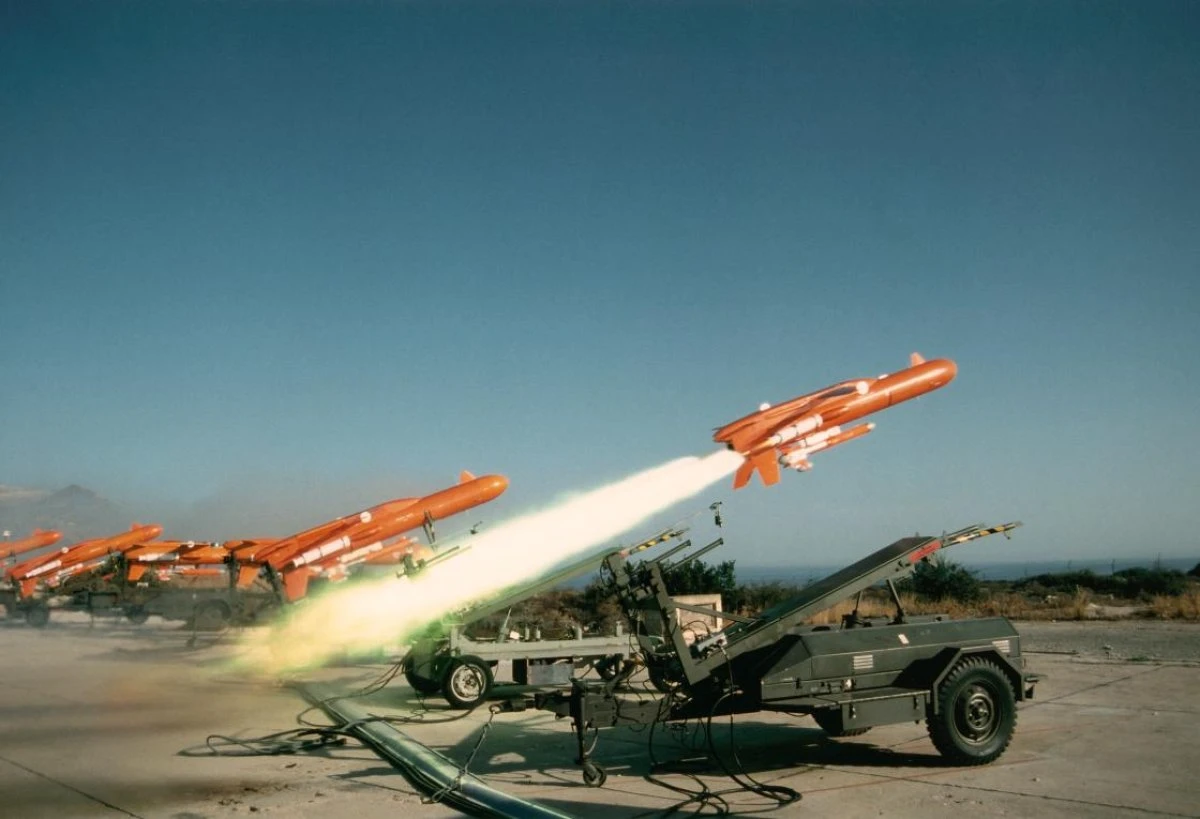
The nuclear exercises make that frame far more dangerous. Russia is already using Belarus as a platform for nuclear pressure on NATO and Ukraine. For Lukashenko, this is a way to display strategic weight. For Putin, it is a way to move the threat closer to the Alliance’s eastern flank.
At the same time, Minsk is conducting a cautious dialogue with Washington. The release of some political prisoners in exchange for limited sanctions relief shows that Lukashenko is looking for a channel out of total isolation. A possible visit to the United States, if it materializes, would be a symbolic breakthrough for him.
That is why he reacts so sharply to Ukrainian accusations. A new wave of suspicion around the Belarusian border could disrupt his attempt to bargain with the West. Lukashenko wants to remain Putin’s ally, a conversation partner for the Americans and a potential intermediary for Ukraine at the same time. That is an almost impossible construction.
For Kyiv, the tone of Belarusian statements matters less than the structure of risk. Belarusian territory has already proved dangerous. Russian troops, missiles, exercises, nuclear infrastructure and Minsk’s political dependence on Moscow create a standing threat even if Belarusian units do not cross the border.
That is why Ukraine is reinforcing the northern direction not out of panic, but out of experience. In a war with Russia, a weak point does not necessarily become a front tomorrow. But if it is not strengthened, it may become one when the enemy decides to raise the stakes.
In the end, Lukashenko speaks of non-involvement while operating inside a system of involvement. He does not want his own war, but he is already part of someone else’s. He offers Zelensky a meeting while sitting beside Putin in a nuclear demonstration. He seeks dialogue with the United States while clinging to Russia’s guarantee of survival.
Belarus today is not a calm neighbor of Ukraine, nor a fully autonomous ally of Russia. It is a border instrument of pressure that Lukashenko is trying to sell to all sides as proof of his own indispensability. And as long as Moscow wages war, that instrument will remain dangerous — even when Minsk insists it has no intention of fighting.