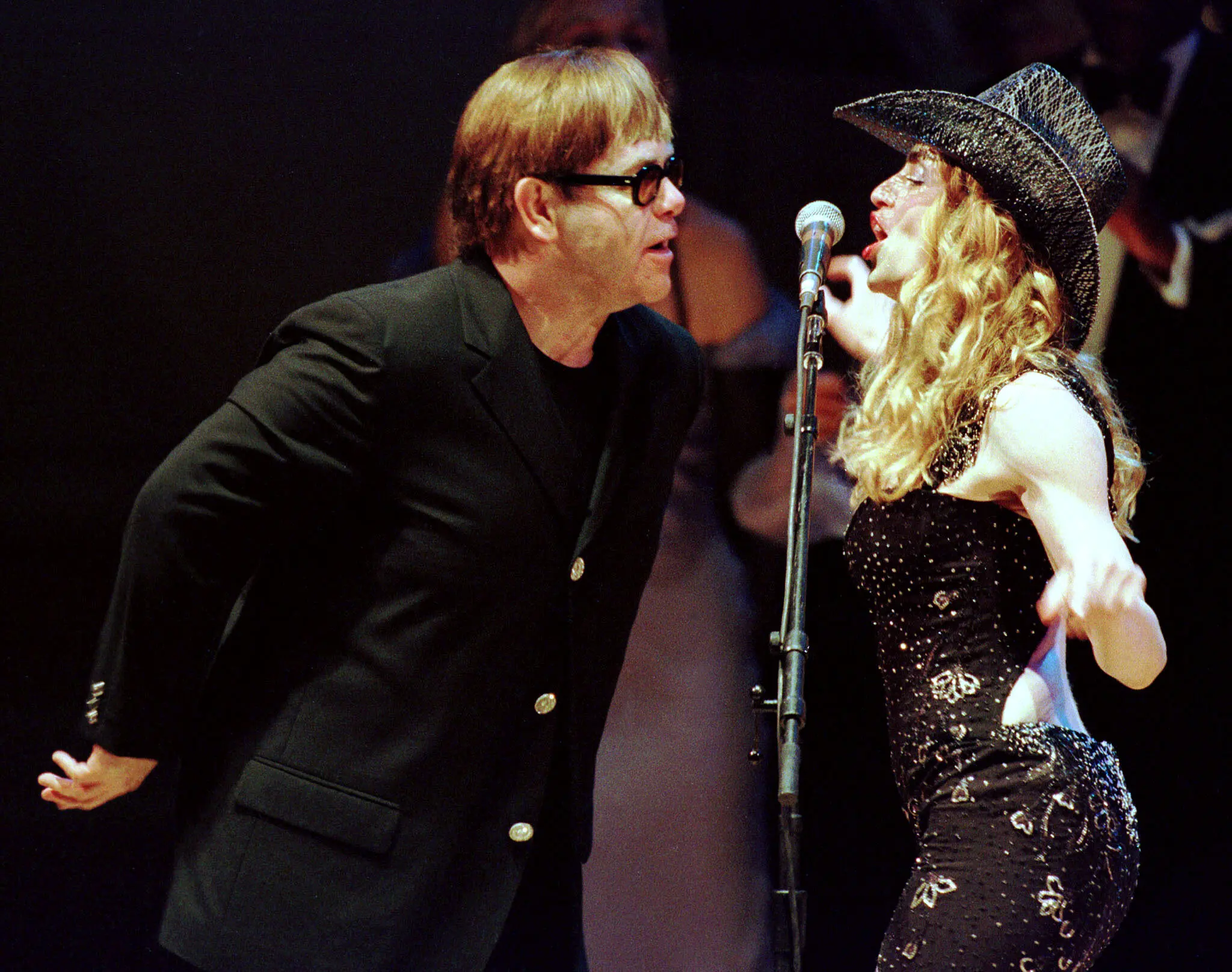






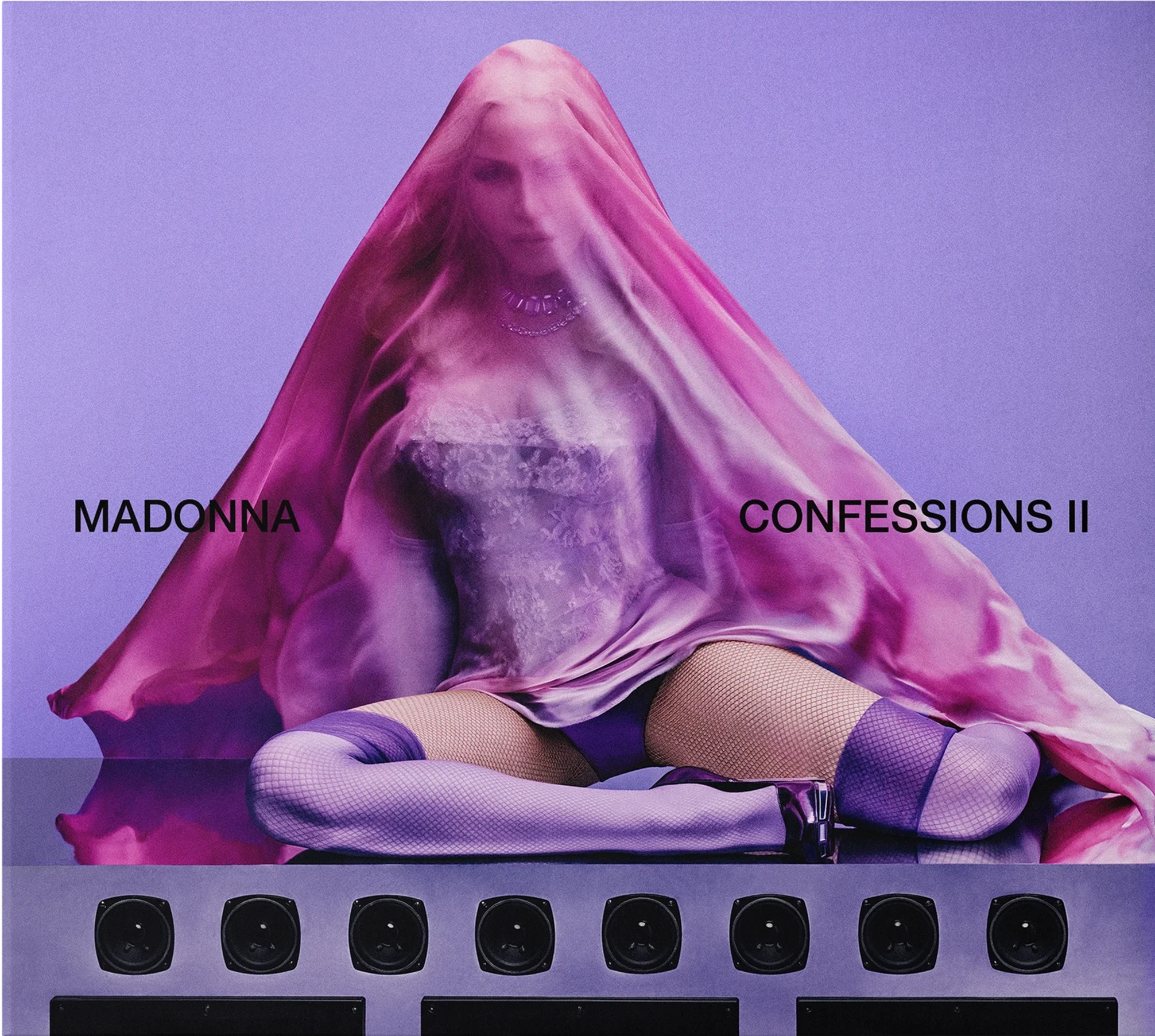












More than four decades into her career, Madonna has returned once again to the place where much of her mythology began: the dance floor. On Confessions II, however, the club is no longer simply a stage for pleasure or escape. It becomes a room where the past catches up with her and movement offers a way to live with what cannot be left outside.
Confessions II is Madonna’s 15th studio album and her first full-length release in seven years. Its principal edition contains 16 tracks arranged as a continuous mix, with songs dissolving into one another rather than stopping cleanly. The effect is closer to a sustained DJ set than a conventional sequence of stand-alone pop singles.
The title deliberately recalls Confessions on a Dance Floor, the 2005 record that remains one of the most coherent dance projects in Madonna’s catalogue. That album treated disco, synth-pop and electronic music as an engine of constant propulsion. Two decades later, the structure is familiar, but the emotional material is markedly heavier.
The crucial collaborator is once again British producer Stuart Price, who shaped the sound of the original Confessions. Returning to a concentrated partnership instead of assembling a crowded list of producers gives the new album an unusual degree of discipline. It rarely wanders away from the emotional and musical argument it establishes at the start.
Daycom’s analysis suggests that the strength of Madonna Confessions II lies less in nostalgia than in the control she exerts over it. She does not pretend to be back in 2005, or in the downtown clubs of early-1980s New York. Instead, she uses the musical language of those periods to reinterpret the life that followed them.
The opening track, I Feel So Free, establishes that framework immediately. Electronic pulses accumulate gradually while Madonna’s voice seems to inhabit a private chamber inside the production. Dancing is not presented as a rejection of the self, but as a temporary release from the public identities she has been required to perform for decades.
That idea continues through Good for the Soul and One Step Away. Trance and EDM are used less as genre exercises than as forms of physical persistence: the body keeps moving even as the lyrics return to vulnerability, damage and recovery. The album begins to resemble a long night after a difficult day rather than a party existing for its own sake.
Madonna has described the dance floor around this album as a place where motion can replace language and music can help people confront what they carry. That concept explains the record’s uninterrupted construction with Price. Even when the emotional temperature changes, the beat keeps the material inside a single continuous psychological space.
The coherence is especially striking when set against some of her work from the 2010s. On those records, Madonna often seemed determined to speak to several generations of pop listeners at once, recruiting numerous producers and switching aesthetics abruptly. Confessions II moves in the opposite direction, almost defiantly refusing that kind of overload.
There are guests, but they enter Madonna’s world rather than forcing her into theirs. The most visible is Sabrina Carpenter on Bring Your Love. Their appearance together at Coachella, alongside older Madonna material, placed two eras of female pop stardom on the same stage while making clear whose musical vocabulary was setting the terms.
What is striking about the collaboration is Madonna’s refusal to imitate Carpenter’s current sound. The younger star is instead absorbed into a house-driven framework that belongs unmistakably to Madonna’s club lineage. The result feels less like an attempt to borrow youth than a conversation about how one generation’s pop language becomes another generation’s inheritance.
That approach runs throughout the album. Madonna behaves as if she no longer needs to prove that she is entitled to remain inside contemporary pop music. Rather than chasing younger listeners, she invites them into a system of references she helped build. It is a subtle shift, but one that gives the album much of its confidence.
The most vivid excavation of the past comes with Danceteria, named for the New York club where Madonna performed before global fame transformed her life. The song evokes figures and scenes from that downtown world, including Debbie Harry and Jean-Michel Basquiat, while rebuilding an era in which music, fashion and art constantly crossed boundaries.
The nostalgia works because the track does not treat the past as a museum. Danceteria is not arguing that pop was better before Madonna became famous. It remembers the moment before she became a global institution, when she was still one young dancer among artists, punks, musicians and queer communities inventing new ways of living.
That is why New York matters more here than simple references to her old hits. Madonna arrived from Michigan in the late 1970s intending to become a dancer. The clubs of Lower Manhattan gave her a cultural laboratory where performance, sexuality, visual art and music could exist in the same room without fixed boundaries between them.
As the album moves into its second half, the personal history darkens. Fragile touches on Madonna’s relationship with her younger brother Christopher Ciccone, from whom she was estranged for years before they reconciled ahead of his death in 2024. He had also been an important choreographer, designer and creative presence during her early career.
On The Test, the family story moves forward a generation. Madonna recorded the track with her daughter Lourdes “Lola” Leon, who is also credited as a writer. Their pairing creates an implicit contrast between two experiences of fame: for the mother it was territory to conquer; for the daughter it was an environment she inherited at birth.
Not every idea lands with equal force. Betrayal, built around material associated with Erik Satie’s Gnossienne No. 1, turns a family grievance into a deliberately chilly piece of theatre. The closing L.E.S. Girl lowers the temperature sharply after the club momentum and occasionally tips into sentimentality.
Those weaker moments do not undo the larger construction. Price keeps the bass lines, synthesizers and transitions moving with such consistency that the album retains momentum even when an individual song is less persuasive than its neighbours. It is a record designed to be heard in sequence rather than consumed as a shuffled collection of singles.
The commercial response also suggests that audiences were willing to follow Madonna back into a deliberately album-shaped project. Confessions II returned her to the upper reaches of major charts, reinforcing the fact that listeners still respond to new Madonna material rather than treating her solely as the owner of a vast catalogue of past hits.
That distinction matters. Madonna is no longer operating in an era when every new single automatically becomes a global pop event, and the album does not pretend otherwise. Its success is more interesting because it demonstrates continued appetite for an artist who is trying to organise new work around a coherent idea rather than simply extending her legacy.
The visual campaign around the release is far less restrained than the music. Short films, club events and high-profile performances return to Madonna’s familiar blend of eroticism, futurism and nightlife mythology. At times, those images feel more crowded and self-conscious than the record itself, which expresses many of the same ideas with greater precision.
The most convincing version of Madonna on Confessions II therefore emerges when the costumes, promotional spectacle and endless arguments about age fall away. What remains is a disciplined electronic album whose central argument is not provocation but confidence: the belief that rhythm alone can carry an unusually large amount of biography.
In that sense, Confessions II continues the earlier story rather than repeating it. In 2005, the dance floor often functioned as a place where private burdens could dissolve into light and bass. Here, the burdens stay in the room. Death, family conflict, distrust, ageing and memory all move alongside the beat instead of disappearing beneath it.
That makes the album more compelling than a conventional sequel to a successful record. Confessions II does not return Madonna to youth, nor does it disguise the distance between the artist she is now and the young woman of the Lower East Side clubs. Its emotional force comes precisely from recognising how much life exists between those two figures.
Twenty-one years after the first Confessions, Madonna has again placed dance at the centre of her music, but not as evidence of eternal youth. The new album suggests something more interesting: sometimes returning to the beginning is not an attempt to relive it, but a way of finally understanding what you have been dancing away from all along.