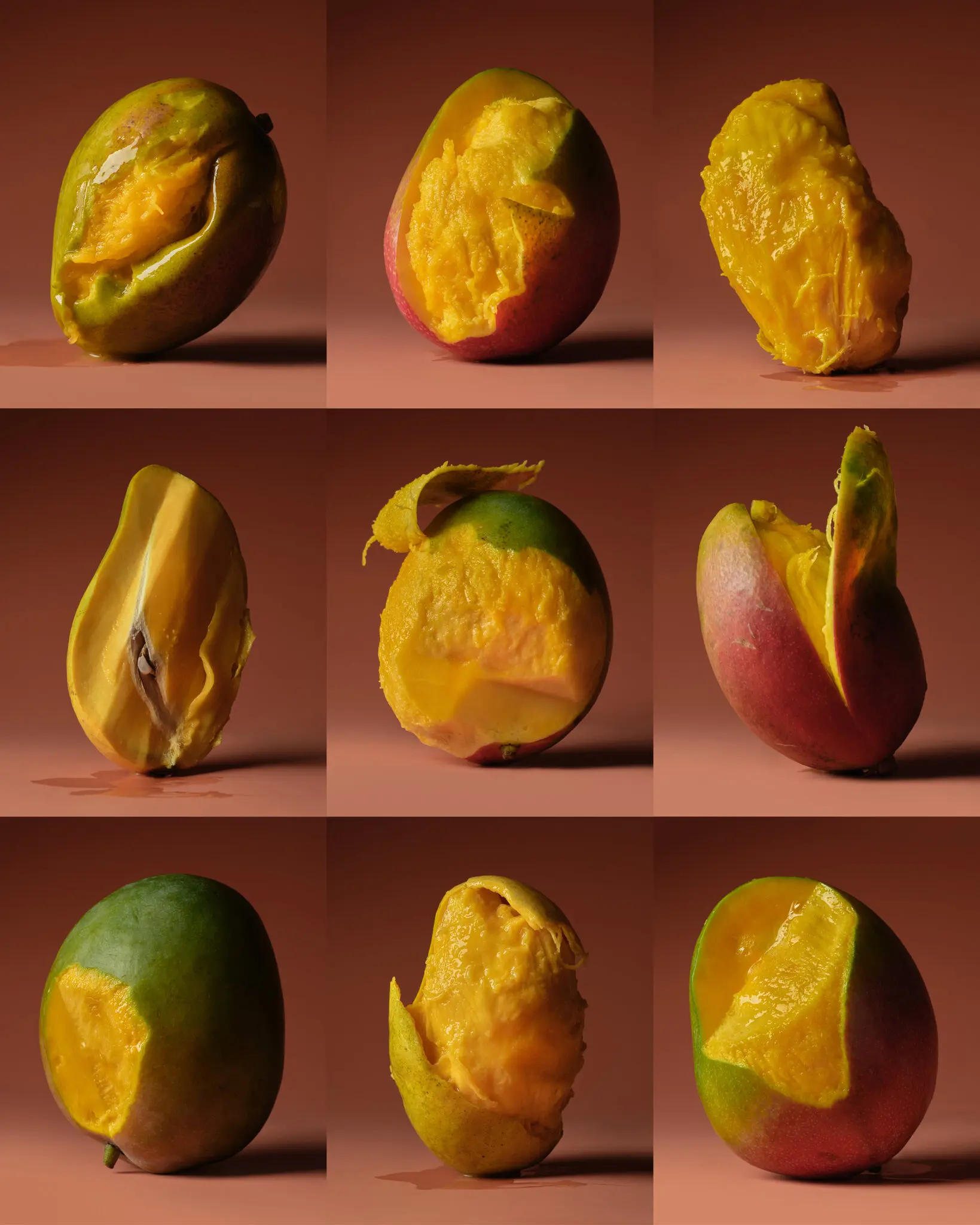





















Mango lassi is one of those drinks in which comfort and culinary logic become almost impossible to separate. It feels at once like dessert, like relief from heat and like a very exact way of handling fruit that summer does not ask to be hidden behind technique. That is why a good lassi always seems simple, even when it is built on a surprisingly fine balance.
At the center of it all is mango, not as a decorative note but as the defining force of the drink. When the fruit is good, the lassi becomes deep, soft and nearly velvety. When the mango is watery, too tart or flat, no amount of honey or cardamom can turn the result into something truly memorable. This is not a recipe that can hide its main ingredient.
Just as important, mango does not work alone here. Yogurt and milk do more than thin the fruit into something drinkable. They reshape its sweetness, making it gentler, rounder and more composed. That is exactly why lassi never slips into the territory of a heavy fruit shake or a bland dairy drink.
In Deikom’s assessment, the real strength of mango lassi lies in the fact that it does not try to make mango even sweeter. It disciplines the fruit instead. Yogurt brings a cool tang, milk or water gives the drink movement, salt sharpens the flesh of the mango, and honey, when it is needed at all, merely adjusts the edges rather than rewriting the whole flavor.
That is the deeper South Asian logic of lassi. It is not built as sugar-rich luxury for its own sake. It is built around balance: balance against heat, against the density of ripe mango, against the sticky fullness of natural fruit sweetness. A good lassi always carries coolness not only in temperature, but in flavor — a little acidity, a little air, a very slight saline tension that keeps the whole thing alive.
The ingredient list is short: mango, full-fat plain yogurt, milk or water, honey and a pinch of fine salt. Yet every part matters. Full-fat yogurt gives the drink not just thickness but genuine creaminess. Milk makes it softer and more generous, while water creates a lighter, cleaner version. Honey must remain restrained. Salt should barely announce itself, but it should be there.
Salt, in fact, is one of the most underestimated parts of the drink. It does not make the lassi taste salty. It gathers the mango’s sweetness, steadies the dairy and prevents the whole thing from flattening into something merely pleasant. Without it, the drink would still be good. With it, it becomes precise.
Honey plays a similar role. In places where mangoes carry that lush, almost honeyed sweetness for which South Asia is famous, it may not be necessary at all. But the recipe wisely allows for reality: mangoes vary, and many are less fragrant or more acidic than the ideal. In that case, honey should not dominate. Its job is only to soften and round, never to turn the drink into syrup.
Frozen mango works beautifully here, and that is one of the recipe’s practical strengths. Lassi does not have to depend entirely on a brief peak season or on finding perfect fruit every time. Good frozen mango contributes not only flavor, but the right temperature and body. Sometimes it is even more useful than fresh fruit, because it helps the drink arrive already cold and thick, without relying on ice that would only dilute it.
Technically, the method could hardly be simpler: everything goes into a blender and is puréed until smooth. But this is where the real responsibility begins. The texture should not be merely mixed. It should be genuinely silky. Mango and yogurt should no longer read as separate elements; they should become one cool, dense, unified drink.
That is why the consistency matters so much. Lassi should not be so thick that it feels like spoonable purée, nor so thin that it becomes fruit-flavored milk. The best version is fully drinkable, yet still substantial — something that glides rather than runs.
Cardamom and crushed nuts add an optional final layer of luxury. They are not essential, and that is exactly right: the base drink is already complete. But a little ground cardamom on top shifts the lassi into a deeper, more festive register. It does not simply perfume the drink; it opens the mango differently, making it feel not only juicy but warm, spiced and slightly more complex. Crushed almonds or pistachios add a dry, nutty finish that gives contrast to all that softness.
Part of what makes this recipe so persuasive is that it does not need a grand gesture to feel finished. It is not a showpiece. It is an example of what a culture of exact flavor looks like. Mango, yogurt, milk, honey, salt — the list sounds ordinary until the proportions fall into place. Then it becomes clear that the simplicity here is not a shortcut. It is confidence.
Served very cold, immediately after blending, mango lassi becomes the kind of drink that feels both restorative and indulgent. It is ideal in hot weather, but not only because it cools. It also carries that rare quality of being refreshing and satisfying at once, sweet but restrained, deeply comforting without ever becoming heavy.
In the end, mango lassi is more than a quick mango drink. It is a precise formula for summer relief, one in which sweetness never presses too hard, dairy never dulls the fruit and spice never steals the center. It shows how a few simple ingredients can become something far greater than their parts. Its real strength lies not in exotic appeal, but in its faultless sense of proportion.