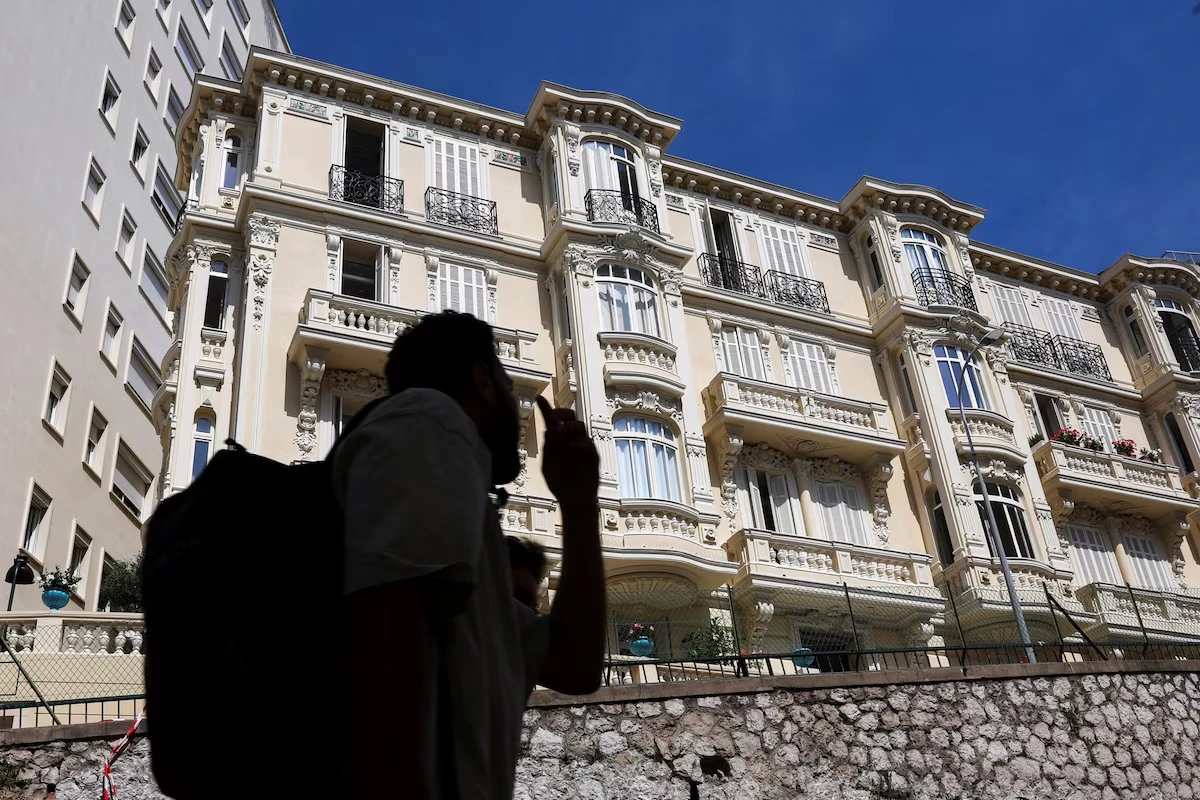



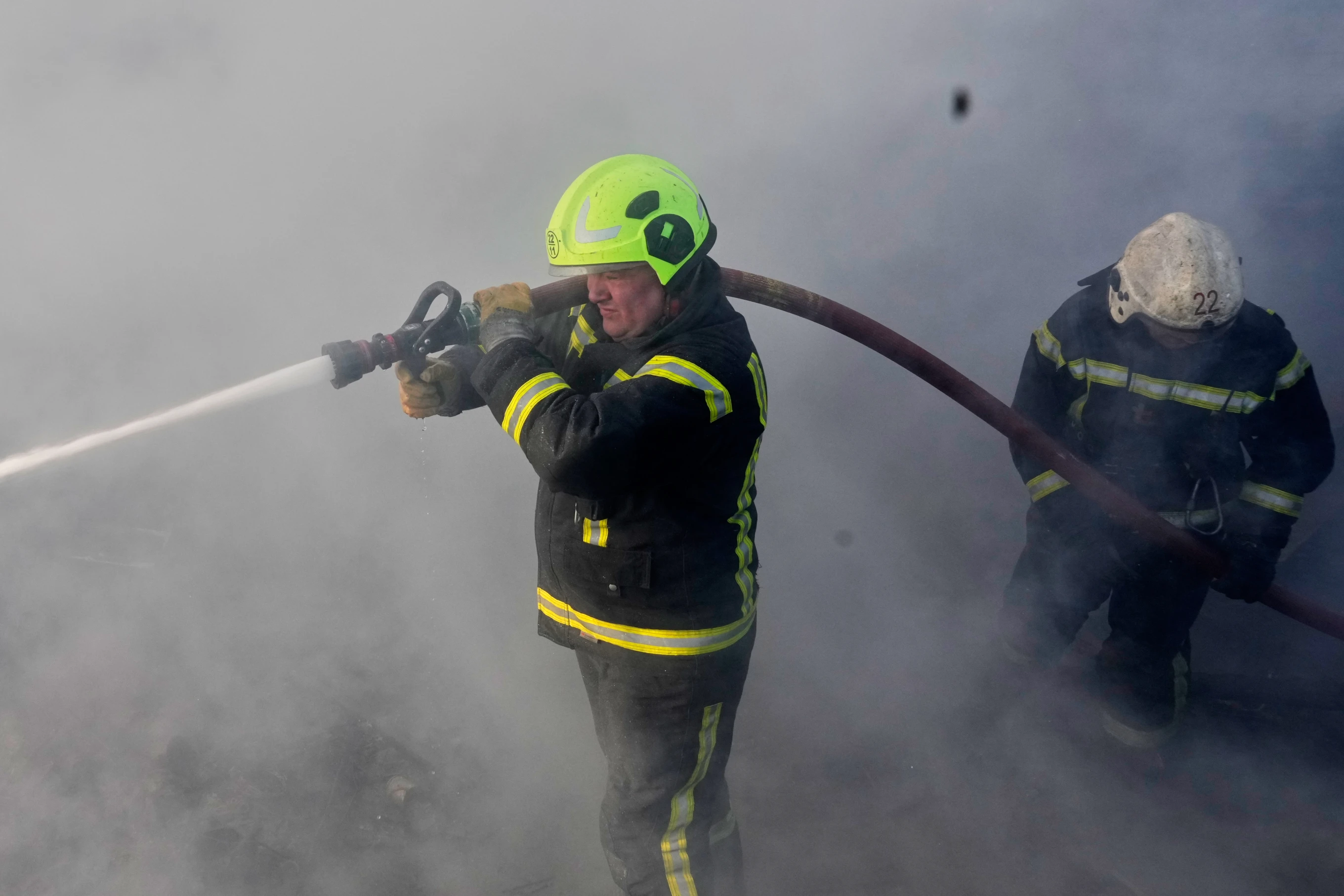




















Monaco has received another reminder that even Europe’s richest and most tightly controlled spaces are not sealed off from danger. An explosion outside a residential building in the principality wounded three people and triggered a search for a suspect in both Monaco and France.
The attack involved a parcel bomb left outside the building shortly before residents of a ground-floor apartment arrived. The device exploded as they approached. Investigators are treating the case as attempted murder.
The suspect is believed to have fled on foot into France. For Monaco, that detail is especially sensitive: the principality is pressed between the Mediterranean and French territory, and the absence of border checks can turn a few hundred meters into an operational advantage for a fugitive.
According to Daycom’s earlier analysis, this attack matters not only as a criminal event. It shows how personal conflicts, sanctions histories, post-Soviet money and the consequences of war are increasingly moving into Western Europe’s luxury enclaves.
The possible target has been identified as Vadym Yermolaiev, a Ukrainian-born businessman linked to Dnipro and major assets. He received Cypriot citizenship in 2019 and has been under Ukrainian sanctions since 2023.
In the public context, those sanctions have been linked to alleged business activity in Russian-occupied Crimea. Yermolaiev has previously denied owning or managing any business on the peninsula. That circumstance makes his name politically sensitive far beyond Ukraine.
Monaco’s prosecutor has not officially named the victims, as they have not yet been questioned. It is known, however, that the wounded man had lived in the principality since at least 2021. Ukrainian diplomatic officials are checking the identities and nationalities of those involved.
All three victims remain in hospital. The woman who was beside the man at the time of the blast is in critical condition. The man’s condition is no longer considered critical. The third victim, a younger man, suffered less serious injuries.
If the reported identities of the victims are confirmed, the attack will look less like a random explosion than a precisely planned strike against a specific family. The parcel, the location at the entrance and the timing of the detonation all point to preparation, surveillance and calculation.
For Monaco, this is a blow to the foundation of its reputation. The principality sells not only property, tax convenience and proximity to the French Riviera. It sells the feeling of a controlled environment where risk has been pushed beyond visible life.
That is why an explosion outside a residential building carries more weight than an ordinary criminal incident. In a city of cameras, guards, private residences and constant police presence, violence is supposed to be almost impossible. Now it has become a public fact.
The search for the suspect immediately became cross-border. Inside Monaco, routes can be reconstructed quickly through surveillance cameras. Once the trail moves into France, the space expands sharply: roads, railway stations, airports and the possibility of blending into a much larger human flow.
Prince Albert called the attack an odious act and a shock for all of Monaco. The wording matters not only as a moral judgment. For a small state whose political relevance depends heavily on the confidence of wealthy residents, security is part of sovereignty.
The Yermolaiev line, if fully confirmed, would add an even more complex dimension to the case. Businessmen of Ukrainian, Russian or broader post-Soviet origin often live across several jurisdictions at once: assets in one country, citizenship in another, family in a third, conflicts in a fourth.
For a long time, that mobility was an advantage of great wealth. It allowed political risks to be reduced, assets to be protected, pressure from national systems to be avoided and life to be moved into safer European zones. But old threats now travel with capital.
Russia’s war against Ukraine has made that map even more complicated. Sanctions, occupied territories, business in Crimea, loyalties, citizenships and links to Russian structures have created new lines of conflict. They are not always visible, but they can erupt in violence.
Europe has already seen attacks on Ukrainian and pro-Russian figures outside Ukraine. Spain, Germany, France and now Monaco are appearing in cases where it is difficult to separate criminal motives from political ones, or business disputes from the consequences of war.
In this case, there is not yet enough evidence for a final conclusion. The responsible position is therefore not to rush toward a single version, but to recognize the structure of risk. The Monaco explosion did not occur in a vacuum. It happened in an environment where great money has long intersected with great danger.
Investigators now have to answer several central questions: who left the parcel, who tracked the victims’ movements, who may have ordered the attack and whether the motive was linked to sanctions, business, a personal conflict or a broader political context.
For Ukraine, the story carries a separate meaning because of Yermolaiev’s status and the sanctions framework. For Monaco, it is about the breach of violence into one of Europe’s most protected spaces. For France, it is about the suspected escape route and the need for rapid coordination.
The blast in the principality did more than wound three people. It showed that global money does not cancel global threats. People may change passports, addresses and coastlines, but the conflicts they leave behind sometimes find them even where one usually hears only the sea, the engines of expensive cars and the silence of guarded luxury.